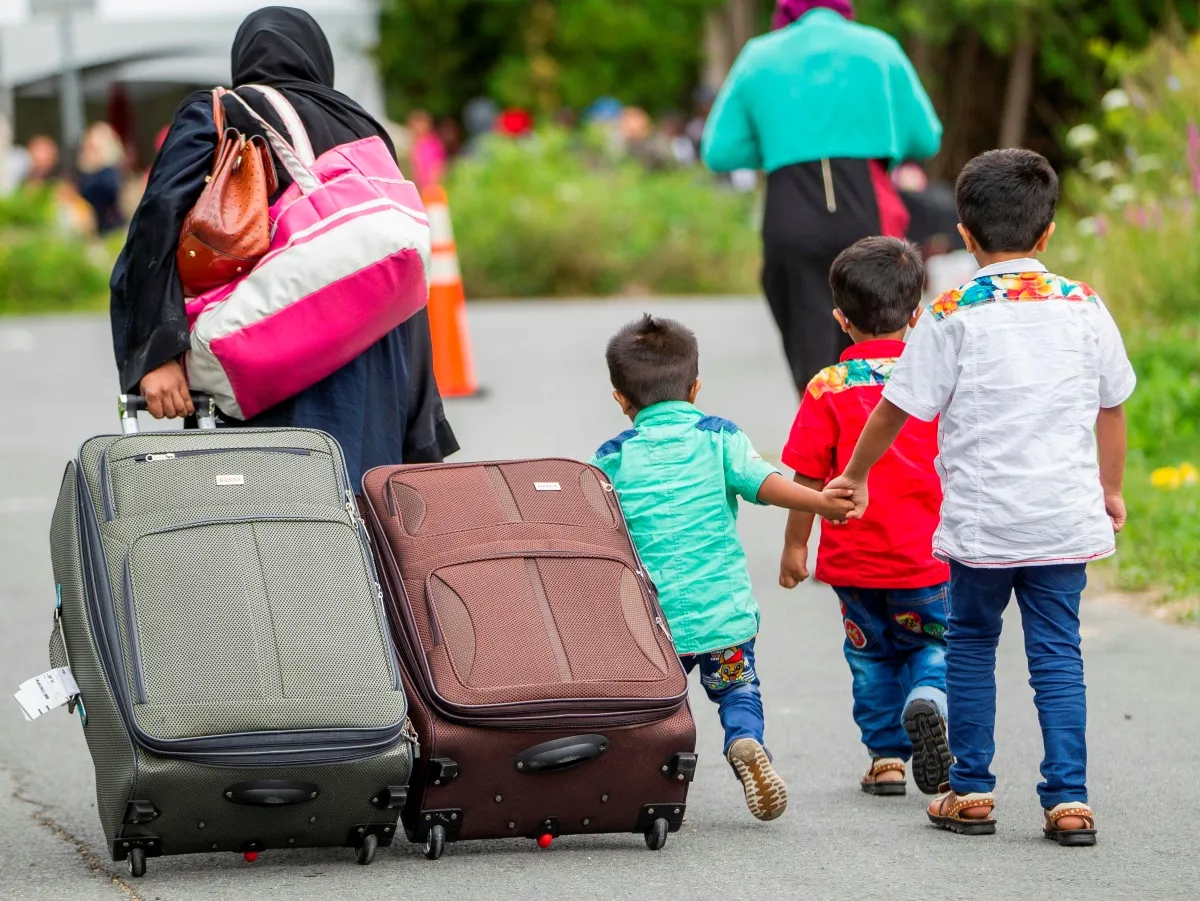
Skip to Content Subscribe Our Offers My Account Manage My Subscriptions FAQ Newsletters Canada Canadian True Crime Canadian Politics Health World Israel & Middle East Financial Post NP Comment Longreads Puzzmo Diversions Comics NP News Quiz New York Times Crossword Horoscopes Life Eating & Drinking Style Sponsored Play for Ontario Travel Travel Canada Travel USA Travel International Cruises Travel Essentials Culture Books Celebrity Movies Music Theatre Television Business Essentials Advice Lives Told Tails Told Shopping Buy Canadian Home Living Outdoor Living Kitchen & Dining Tech Style & Beauty Personal Care Entertainment & Hobbies Gift Guide Travel Guide Amazon Prime Day Deals Savings National Post Store More Sports Hockey Baseball Basketball Football Soccer Golf Tennis Driving Vehicle Research Reviews News Gear Guide Obituaries Place an Obituary Place an In Memoriam Classifieds Place an Ad Celebrations Working Business Ads Archives Healthing Epaper Manage Print Subscription Profile Settings My Subscriptions Saved Articles My Offers Newsletters Customer Service FAQ Newsletters Canada World Financial Post NP Comment Longreads Puzzmo Diversions Life Shopping Epaper Manage Print Subscription HomeNP CommentKelly McParland: After botching migration, the world makes it worseWhatever the intentions, it has to be said that efforts to handle a global search for refuge have been an overwhelming failureLast updated 1 day ago You can save this article by registering for free here. Or sign-in if you have an account.(FILES) Royal National Lifeboat Institution (RNLI) Severn class lifeboat, the City of London II, makes its way towards migrants travelling in an inflatable boat across the English Channel, bound for Dover on the south coast of England, on April 5, 2023. (Photo by Ben Stansall / AFP via Getty Images)It’s not often that Switzerland gets to boast a key moment in a matter of international interest.Enjoy the latest local, national and international news.Exclusive articles by Conrad Black, Barbara Kay and others. Plus, special edition NP Platformed and First Reading newsletters and virtual events.Unlimited online access to National Post.National Post ePaper, an electronic replica of the print edition to view on any device, share and comment on.Daily puzzles including the New York Times Crossword.Support local journalism.Enjoy the latest local, national and international news.Exclusive articles by Conrad Black, Barbara Kay and others. Plus, special edition NP Platformed and First Reading newsletters and virtual events.Unlimited online access to National Post.National Post ePaper, an electronic replica of the print edition to view on any device, share and comment on.Daily puzzles including the New York Times Crossword.Support local journalism.Create an account or sign in to continue with your reading experience.Access articles from across Canada with one account.Share your thoughts and join the conversation in the comments.Enjoy additional articles per month.Get email updates from your favourite authors.Create an account or sign in to continue with your reading experience.Access articles from across Canada with one accountShare your thoughts and join the conversation in the commentsEnjoy additional articles per monthGet email updates from your favourite authorsSign In or Create an AccountorIt’s a quiet place, Switzerland. Nine million people, no wars, lots of banks, great skiing. Not drawing attention to itself is a national habit.Every once in a while news leaks out, though, as it did this month when Swiss voters rejected a proposal to place a cap on population. The plan would have set a maximum limit of 10 million people between now and 2050. If somehow a few extra births took place, or an immigrant-too-many was admitted, the country would end its freedom of movement arrangement with the European Union.If that sounds self-defeating — cutting off 450 million people because you somehow acquire a few too many of your own — you would be among the 55 per cent who voted to reject the scheme.This newsletter from NP Comment tackles the topics you care about. (Subscriber-exclusive edition on Fridays)By signing up you consent to receive the above newsletter from Postmedia Network Inc.We encountered an issue signing you up. Please try againSo good on you. Nonetheless, the fact it came to a vote is unhappily reflective of the degree to which immigration has become a global dilemma, and the extent to which wealthier, more democratic powers have overwhelmingly buggered up their handling of it.Switzerland has always valued its privacy. Officially neutral for more than 200 years, it’s careful about who it accepts and how. It’s held numerous referenda related in one way or another to immigration, usually rejecting the more extreme among them. What’s notable about this latest is that it wasn’t targeted at illegal migrants, the usual headache of western powers, but any sort of migrant at all. The fact that Swiss migrants overwhelmingly come from its closest neighbours — EU countries dominate the mix — rather than people fleeing broken, impoverished, war-torn nations, indicates that in Swiss eyes one migrant is like another, and none of them is automatically welcome.Switzerland’s mulling of a population cap is mild by global standards. In Northern Ireland a knife attack involving a Sudanese refugee resulted in three nights of rioting, anti-immigrant demonstrations and extensive property damage. Masked gangs roamed the streets and kicked in doors amid burning homes and vehicles. Police called it “racist thuggery,” reportedly organized quickly and efficiently on social media.Public anger at immigration policies has been a leading factor in the United Kingdom’s decade of collapsing governments and adjacent rise of nativist animosity. Six prime ministers over 10 years -and soon the be a seventh after Keir Starmer’s resignation announcement Monday — amid failing public services and internecine party warfare has boosted the fortunes of the once-fringe Reform party, which both feeds on and fuels anti-immigrant sentiment, riding public discontent to a healthy lead in the polls.The Conservative and Labour parties, faced with the collapse of their shared century-long dominion over power, now vie to show they too can take a harsh hand to newcomers. Before their 2024 demise, the Conservatives’ signature remedy was a plan to ship illegals to Rwanda by air, paying heavily for the privilege, in the hopes that or some other country would then grant them a new refuge.Starmer’s Labour government axed that plan but kept many other restrictions and added several more, imposing new rules on workers, students, family reunions, refugee claimants and asylum applicants, and pledging a determined effort to halt the influx of “small boats” from France that drop thousands of migrants on Britain’s shores. It wasn’t enough: pundits predicted that Starmer’s successor could share his fate if he too failed to soothe immigration anger.That an avowedly left-wing government would see a hardline approach to migrants as an electoral advantage reflects the extent to which years of callow, opportunistic policy-making has soured public attitudes. Canada once took pride in its broad public backing for an immigration system seen as efficient, fair-minded and effective. The extent to which Justin Trudeau broke the back of it is evident in how readily Liberals now admit to the disaster.By flooding the country with low-skilled, cheap labour Trudeau critically maimed a much-admired operation, in the process chipping away huge chunks from the country’s supportive approach to new arrivals. Prime Minister Mark Carney now cites the need to undo the damage via immigration cuts as one reason for lagging growth in a struggling economy. It will take time for changes to have an impact in reducing the damage.Once deemed an advantage, immigrants are now judged a drag on the economy. So too is traditional spending on foreign aid. The 2025 budget included a $2.7 billion cut to aid spread over four years, a move Care Canada dismissed as self-defeating since aid “creates new markets for Canadian goods and opens the door to stronger trade relationships … for every $1 Canada spends on foreign aid, we see an average return of $1.19 in increased exports.”Canadian cuts followed the wholesale slashing of assistance programs in Washington, which shuttered the U.S. Agency for International Development, fired the staff, ended most of it programs and shifted what little was left to the State Department. That’s on top of the dispatch of masked, heavily-armed squads of immigration agents to forcibly seize suspected illegals for transport to detention centres.In 2024, the last year of the Biden administration, USAID spent US$21.7 billion, equal to 0.3 per cent of all federal spending. Canada’s Official Development Assistance totalled $9.1 billion, much of it in Africa although aid to Ukraine put it at the top of the list. Like Ottawa, the U.K. and Germany followed the U.S. in squeezing spending by cutting aid.Since the grossly misnamed Arab Spring there has been a largely non-stop migrant crisis across Europe and North America involving millions of people from Syria, Tunisia, Libya, Afghanistan, Nigeria, Sudan, Somalia, Iran and elsewhere in search of new lives, greater opportunity and a safer existence. In Canada the challenge was exacerbated by a decade of wildly misguided policy from a government offering false hope and misleading assurances to an army of students, workers and families.Whatever the intentions, it has to be said that efforts to handle a global search for refuge have been an overwhelming failure. Policies have become harsher, borders less penetrable, attitudes less open. In the process public sentiment has soured, prejudices have been fed and intolerance tolerated.It’s a sad reflection on the quality of government in supposedly advanced economies and the facility with which basic humanitarian instincts can be pushed to the side.National Post Join the Conversation This website uses cookies to personalize your content (including ads), and allows us to analyze our traffic. Read more about cookies here. By continuing to use our site, you agree to our Terms of Use and Privacy Policy.
Kelly McParland: After botching migration, the world makes it worse
Whatever the intentions, it has to be said that efforts to handle a global search for refuge have been an overwhelming failure
1,587 words~7 min read