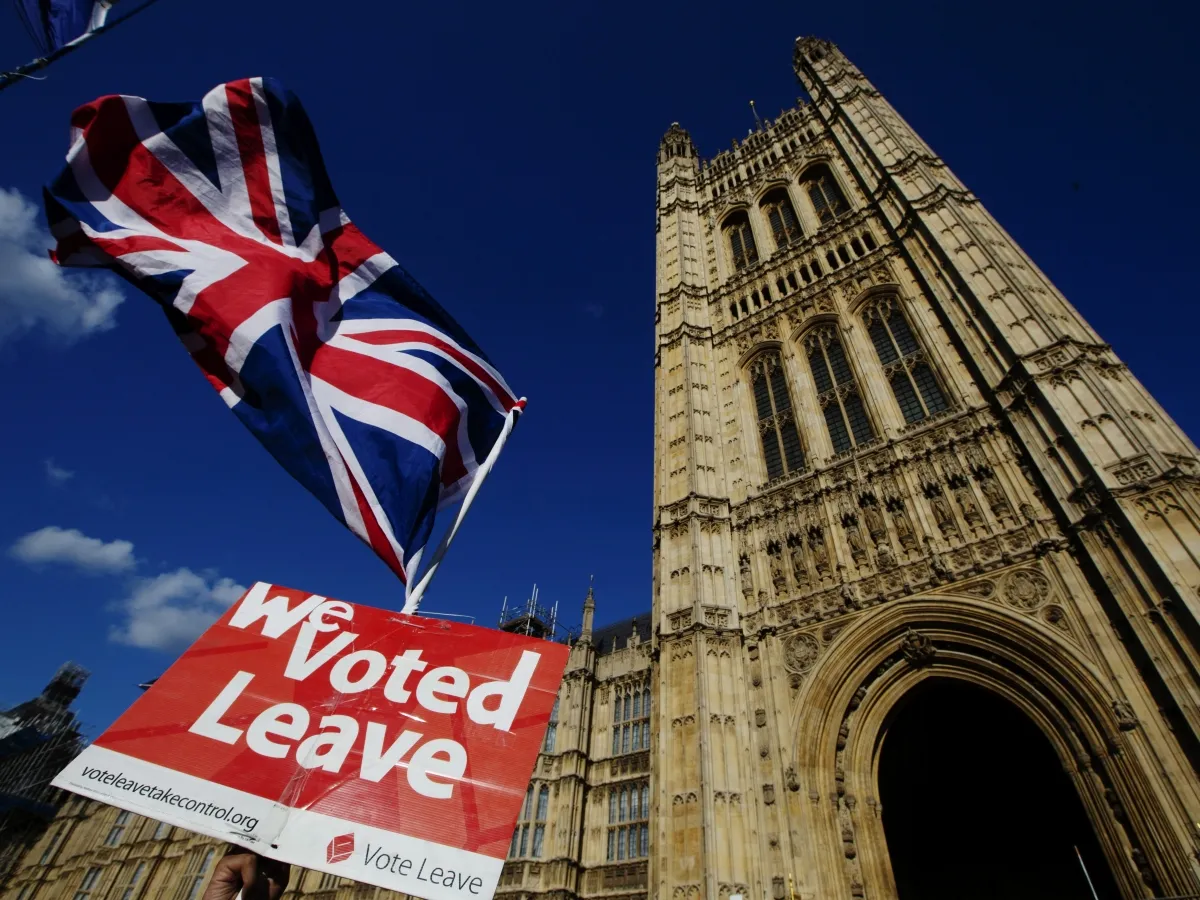
Skip to Content Subscribe Our Offers My Account Manage My Subscriptions FAQ Newsletters Canada Canadian True Crime Canadian Politics Health World Israel & Middle East Financial Post NP Comment Longreads Puzzmo Diversions Comics NP News Quiz New York Times Crossword Horoscopes Life Eating & Drinking Style Sponsored Play for Ontario Travel Travel Canada Travel USA Travel International Cruises Travel Essentials Culture Books Celebrity Movies Music Theatre Television Business Essentials Advice Lives Told Tails Told Shopping Buy Canadian Home Living Outdoor Living Kitchen & Dining Tech Style & Beauty Personal Care Entertainment & Hobbies Gift Guide Travel Guide Amazon Prime Day Deals Savings National Post Store More Sports Hockey Baseball Basketball Football Soccer Golf Tennis Driving Vehicle Research Reviews News Gear Guide Obituaries Place an Obituary Place an In Memoriam Classifieds Place an Ad Celebrations Working Business Ads Archives Healthing Epaper Manage Print Subscription Profile Settings My Subscriptions Saved Articles My Offers Newsletters Customer Service FAQ Newsletters Canada World Financial Post NP Comment Longreads Puzzmo Diversions Life Shopping Epaper Manage Print Subscription HomeNP CommentKelly McParland: The Brexit fiasco is separatism's future10 years after Brexit, the UK is still struggling to regain what it lost. It's not a formula meant to be copiedLast updated 0 minutes ago You can save this article by registering for free here. Or sign-in if you have an account.Protesters wave flags during a National 'rejoin the EU' march in central London on June 20, 2026. Photo by CARLOS JASSO /AFP via Getty ImagesI have a job opportunity for Sir Keir Starmer once he’s vacated his job as U.K. prime minister.Enjoy the latest local, national and international news.Exclusive articles by Conrad Black, Barbara Kay and others. Plus, special edition NP Platformed and First Reading newsletters and virtual events.Unlimited online access to National Post.National Post ePaper, an electronic replica of the print edition to view on any device, share and comment on.Daily puzzles including the New York Times Crossword.Support local journalism.Enjoy the latest local, national and international news.Exclusive articles by Conrad Black, Barbara Kay and others. Plus, special edition NP Platformed and First Reading newsletters and virtual events.Unlimited online access to National Post.National Post ePaper, an electronic replica of the print edition to view on any device, share and comment on.Daily puzzles including the New York Times Crossword.Support local journalism.Create an account or sign in to continue with your reading experience.Access articles from across Canada with one account.Share your thoughts and join the conversation in the comments.Enjoy additional articles per month.Get email updates from your favourite authors.Create an account or sign in to continue with your reading experience.Access articles from across Canada with one accountShare your thoughts and join the conversation in the commentsEnjoy additional articles per monthGet email updates from your favourite authorsSign In or Create an AccountorSir Keir and any of the other five men and women who served as prime minister over the past decade, turning 10 Downing St. into perhaps the world’s highest-profile Airbnb, could tour some of the Canadian outposts where talk of separation has taken a keen hold. They’d be a timely attraction in places like Wainwright and Drumheller, Lac Saint-John and Rimouski, where the bright and shiny future predicted of independence shines most brightly.The aim would be to share their experiences in the backwash of Brexit. Topic number one could be: what happens when a government and its people abandon established ties with their biggest market and closest political connections, rejecting the benefits of size that come from membership in a large, established and prosperous community with extensive global connections?This newsletter from NP Comment tackles the topics you care about. (Subscriber-exclusive edition on Fridays)By signing up you consent to receive the above newsletter from Postmedia Network Inc.We encountered an issue signing you up. Please try againThough the six PMs include a range of left, right and middle of the road political figures, each faced the same critical task, i.e. trying to fix the problems created by the decision to quit the European UnionThe theory behind Britain’s departure went like this: Mighty Britain, once among the world’s greatest empires, could thrive without its easy access to a market of 450 million people in 27 countries. It didn’t need the ability to live, work or play in any of those countries without concern for passports, visas, tax complications, business restrictions or myriad other issues that go with national borders. It didn’t need the jobs, the trade, the income, the interplay of cultures and the sharing of advantages available with membership in such a big and open community.Nope. This was Britain, after all. It wasn’t about to be dictated to by faceless bureaucrats in a faraway capital, even if many of them were elected by British voters. No longer would it cede its right to set its own rules to a collection of intrusive busybodies who failed to grasp its unique character and customs. Too right, brother.So it went, and look at the result. A series of revolving door prime ministers struggling to minimize the damage their country inflicted on itself, working to rebuild ties, revive the economy and clear the trade and business channels Brexit had clogged. None made much headway, and were quickly replaced by a restive population impatient for the rush of benefits they’d been promised by Brexiteers.The borders remain porous, the economy remains fragile, housing remains expensive, taxes remain onerous, social benefits are imperilled and the national health service looks increasingly on the brink of something unthinkable. And just try to find a dentist.Now Sir Keir is out and someone new will have a stab at curing the wound that’s festered since the day it was opened. The betting is heavily on a newly elected MP named Andy Burnham, whose popularity rests overwhelmingly on the fact he’s not Starmer. His magic formula for curing the ills that flummoxed his six predecessors remains unrevealed.Neither Quebec nor Alberta is a separate country, but each is contemplating a leap into the deep gorge of uncertainty that so inspired Brexiteers.In both, voters have been promised a brave new world much like the one featured in the Brexit campaign. No more bossing around from distant Ottawa, where no one understands their concerns or cares about their future.No more watching their resources siphoned off for the benefit of others. No more threat to their culture and customs. No more disregard for the litany of resentments built up over decades. No more outsiders poking in their unwanted noses, Canadian or otherwise.Nope. Alberta can go it alone. Quebec doesn’t need Canada. Alberta has oil. Quebec has its language. The rest they can build for themselves. Just like the U.K. could live without Europe, Canada’s two most disgruntled provinces figure they can demand a divorce and thrive once free from entanglements.Yet the complications that see Britons moaning their post-Brexit lot would just as quickly challenge the newly liberated provinces. Both would have small populations surrounded by bigger, richer countries with established economies and no reason to help the newcomers succeed.Quebec with its nine million people and ongoing deficits would lose about $30 billion in annual transfers, plus the political clout and protections that attain to the second biggest province in a G7 country. A French-speaking population that feels eternally threatened by Canada’s 30 million anglophones could expect considerably less sympathy from a country it chose to abandon, and none from the 340 million Americans to the south.Alberta would still have an economy based on a single product whose price it couldn’t control, but without the various subsidies, supports and financial backstops that come with its place in Canada. When Kinder Morgan gave up on the Trans Mountain pipeline it was Ottawa, not Edmonton, that could afford to buy and build it.There’s no reason to expect Canada would adopt a friendlier attitude to a breakaway province than Europe did to London after Brexit. There would certainly be no more need to protect Quebec dairy farmers by forcing other Canadians to pay higher prices for milk or cheese, or to continue with costly bilingualism programs enforced in 10 provinces for the benefit of one, or send billions in support payments to help fund hospitals, schools and social programs.Alberta would find itself land-locked with just two markets for its oil and gas and no compelling reason for Ottawa to help it increase access to the sea. The export price would depend on what those two buyers felt willing to pay, both having other sellers they could turn to.Alberta’s five million people would place it roughly equivalent to the status of Slovakia in Europe, but without the EU benefits. And that’s if all five million stayed: the 2021 census indicated 48 per cent of the province was born elsewhere; A Calgary chamber of commerce survey found almost half of its members are prepared to relocate their business if the province starts a separation process.The U.K. is a country of 70 million and a history measured in millennia, yet 10 years after Brexit it’s still struggling to regain what it lost. Tony Blair, who lasted a decade as prime minister before the revolving door began, says the first job of the next PM should be to “repair the relationship with the EU” in hope of regaining some of the strength and stature Britain used to enjoy. “Then in time, we’ve got to think as a country of where we fit in the world.”It used to know the answer to that question, but threw it away in a reckless vote that reduced its strengths and increased its vulnerabilities. Mistakes are made to be avoided, not copied.National Post Join the Conversation This website uses cookies to personalize your content (including ads), and allows us to analyze our traffic. Read more about cookies here. By continuing to use our site, you agree to our Terms of Use and Privacy Policy.
Kelly McParland: The Brexit fiasco is separatism's future
10 years after Brexit, the UK is still struggling to regain what it lost. It's not a formula meant to be copied
1,632 words~7 min read