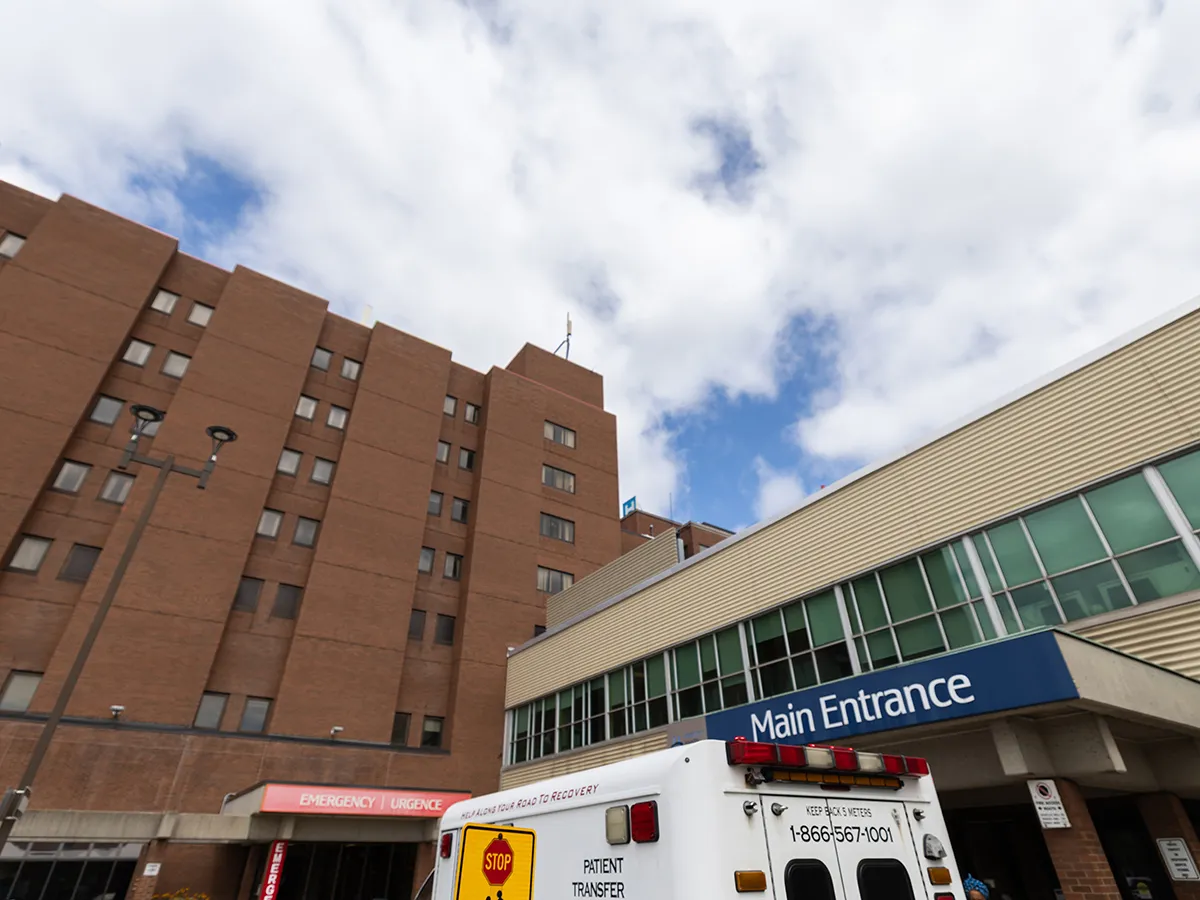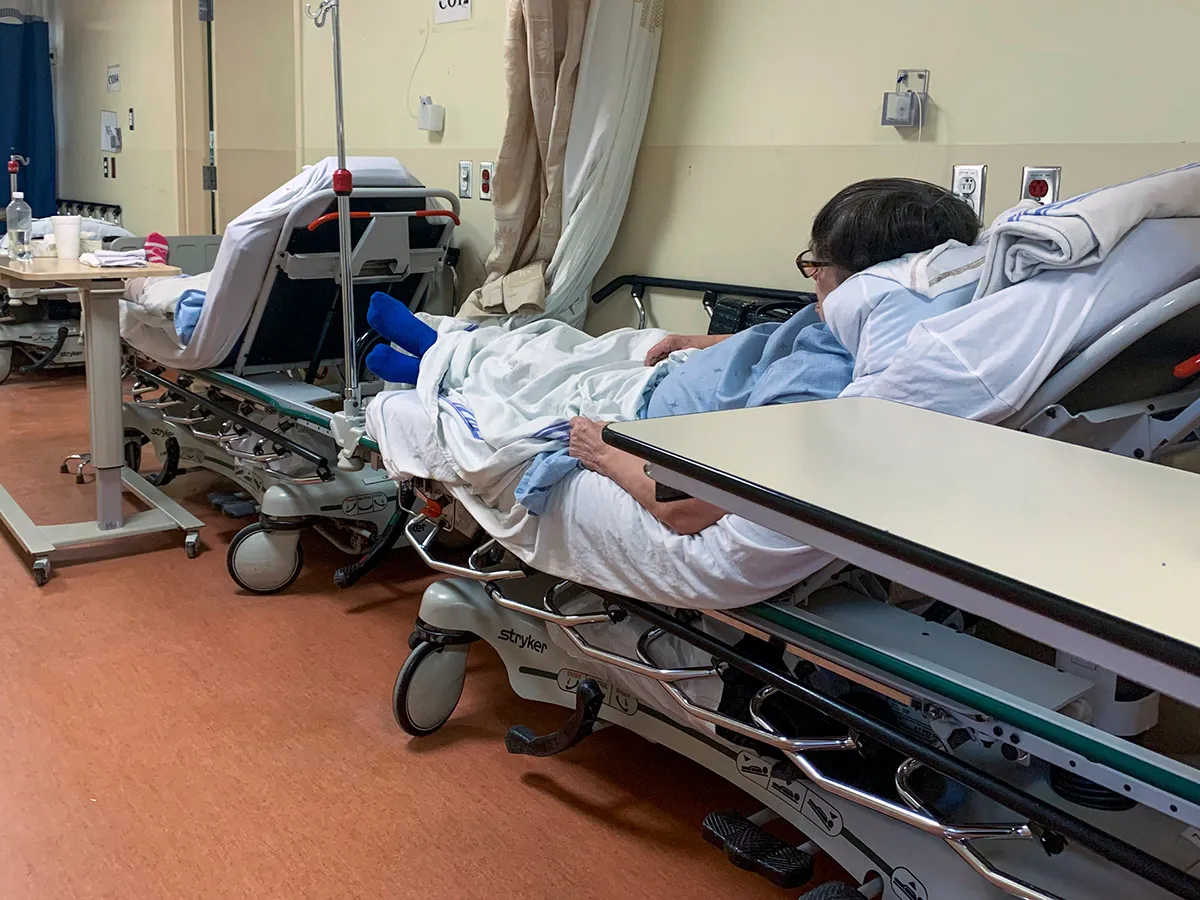
Skip to Content Subscribe Our Offers My Account Manage My Subscriptions FAQ Newsletters Canada Canadian True Crime Canadian Politics Health World Israel & Middle East Financial Post NP Comment Longreads Puzzmo Diversions Comics NP News Quiz New York Times Crossword Horoscopes Life Eating & Drinking Style Sponsored Play for Ontario Travel Travel Canada Travel USA Travel International Cruises Travel Essentials Culture Books Celebrity Movies Music Theatre Television Business Essentials Advice Lives Told Tails Told Shopping Buy Canadian Home Living Outdoor Living Kitchen & Dining Tech Style & Beauty Personal Care Entertainment & Hobbies Gift Guide Travel Guide Amazon Prime Day Deals Savings National Post Store More Sports Hockey Baseball Basketball Football Soccer Golf Tennis Driving Vehicle Research Reviews News Gear Guide Obituaries Place an Obituary Place an In Memoriam Classifieds Place an Ad Celebrations Working Business Ads Archives Healthing Epaper Manage Print Subscription Profile Settings My Subscriptions Saved Articles My Offers Newsletters Customer Service FAQ Newsletters Canada World Financial Post NP Comment Longreads Puzzmo Diversions Life Shopping Epaper Manage Print Subscription HomeHealthNewsCanadaCanadians are dying in emergency rooms as wait times climb to 48 hoursPeople are landing in emergency sicker, many with multiple underlying health problems in addition to whatever brought them to hospital, and staying longerLast updated Jun 25, 2026 You can save this article by registering for free here. Or sign-in if you have an account.Half of emergency patients spent four hours or less there, from the time they were registered or triaged to the time they left; 40% spent five to 14 hours, and one in 10 spent over 14 hours, an increase of 28% over 2018-19. Photo by Montreal Gazette/Postmedia/FileHundreds of thousands of sick and injured Canadians are spending up to two days or longer parked on hard stretchers or plastic chairs in the country’s swamped emergency departments, waiting for a scarce bed to open upstairs, and these delays can be deadly.Enjoy the latest local, national and international news.Exclusive articles by Conrad Black, Barbara Kay and others. Plus, special edition NP Platformed and First Reading newsletters and virtual events.Unlimited online access to National Post.National Post ePaper, an electronic replica of the print edition to view on any device, share and comment on.Daily puzzles including the New York Times Crossword.Support local journalism.Enjoy the latest local, national and international news.Exclusive articles by Conrad Black, Barbara Kay and others. Plus, special edition NP Platformed and First Reading newsletters and virtual events.Unlimited online access to National Post.National Post ePaper, an electronic replica of the print edition to view on any device, share and comment on.Daily puzzles including the New York Times Crossword.Support local journalism.Create an account or sign in to continue with your reading experience.Access articles from across Canada with one account.Share your thoughts and join the conversation in the comments.Enjoy additional articles per month.Get email updates from your favourite authors.Create an account or sign in to continue with your reading experience.Access articles from across Canada with one accountShare your thoughts and join the conversation in the commentsEnjoy additional articles per monthGet email updates from your favourite authorsSign In or Create an AccountorNew data show that, in 2024-2025, one in 10 emergency patients — 1.5 million people — spent more than 14 hours in emergency.Of the 16.1 million ER visits reported in total, 1.8 million people needed to be admitted to hospital.Get a dash of perspective along with the trending news of the day in a very readable format.By signing up you consent to receive the above newsletter from Postmedia Network Inc.A welcome email is on its way. If you don't see it, please check your junk folder.The next issue of NP Posted will soon be in your inbox.We encountered an issue signing you up. Please try againWhile half waited less than five hours for a bed after the decision was made to admit them, one in 10, or 180,000 people, languished 48 hours or more in emergency before they were moved to a ward bed or the operating room.Studies have shown that for every 82 people waiting more than six to eight hours to be transferred to a bed, one additional death will occur, meaning that “for those 180,000 patients waiting more than two days for an inpatient bed, we could expect 2,195 attributable deaths,” said Ottawa emergency physician Dr. Michael Herman.“This is not just inconvenient for patients, this is lethal.”The new report from the Canadian Institute for Health Information validates “what we’ve been saying on the frontline for years now,” said Herman, a director on the Canadian Association of Emergency Physicians’ board of directors.People are landing in emergency sicker, many with multiple underlying health problems in addition to whatever brought them to hospital, and staying longer.Two-thirds are being triaged as “high acuity,” meaning with conditions that are either life-threatening, such as cardiac arrest, or require rapid medical attention (severe chest pains, signs of sepsis, severely abnormal vital signs) — shooting down the “zombie myth that refuses to die” that waits times are being driven up by people with minor complaints, Herman said.“The data clearly show that’s not true. We’re seeing a decrease in our low acuity patients and yet wait times are still going up.”According to CIHI, severe, unstable cases have increased from 59 to 66 per cent of all emergency visits, or 1.7 million more visits since the pre-COVID year of 2018-2019.Across Canada, ER wait times are intensifying in overcrowded, short-staffed hospitals big and small, urban and rural. Stretchers and beds aren’t keeping pace with growing demand, creating backlogs and growing wait times and more frustrated people are leaving before being seen by a doctor.In 2024-25, 7.7 per cent of emergency visits — 1.2 million — involved someone leaving without being assessed by a doctor, according to the report.Pre-pandemic, it was 5.4 per cent, or roughly 800,000 visits.People aged 55 and older face the longest waits for a hospital bed. Unlike younger people, they can’t simply be moved into the first available bed. They often need to be in a specialized unit or isolation bed for infections like pneumonia.Emergency departments are witnessing historic levels of boarding, a risky and humiliating practice of holding admitted patients on stretchers in loud, crowded, chaotic hallways or any available makeshift space.The longer people, especially older people, stay in emerge when they’re admitted, the worse their outcomes, Herman said. ERs are set up for “brief, episodic care and high turnover,” he said. They aren’t resourced to provide the level of care the way an inpatient ward is, increasing the risk of deterioration and delirium.The report highlights that the emergency crisis is largely outside emergency’s control. It’s a decades-old, inflow-outflow problem.“It’s really the health system pressures that are manifesting in the emergency department,” said Cheryl Chui, director of health systems analytics at CIHI.Upstream stressors include an aging population with diabetes, hypertension, congestive heart failure and other chronic conditions, a lack of timely access to family doctors and specialists to help manage those chronic problems, and 200-day or longer waits for MRIs and other diagnostic tests that can force desperate people to turn to emergency.Downstream bottlenecks include a lack of home care and long-term care, slowing the flow of people out of hospital who no longer need to be there, which, in turn, blocks beds for new arrivals waiting to be admitted through emergency. Half the people needing placement in long-term care waited up to 44 days in hospital in 2024-25.Really, if you have symptoms that are concerning, please use the emergency departmentsChildren under 10 (most with fevers and infections), adults over 55 (injuries, infections, pneumonia, urinary tract infections and chronic illnesses) and Canadians living in lower-income neighbourhoods who are less likely to have a primary care doctor visited emergency departments the most last year.In total, Canada’s emergency departments handled at least 16.1 million visits, according to CIHI.Half of emergency patients spent four hours or less there, from the time they were registered or triaged to the time they left; 40 per cent spent five to 14 hours, and one in 10 spent over 14 hours, an increase of 28 per cent over 2018-19.Even as emergency departments got busier, the data show the sickest patients were seen first, Chui said. Half of patients triaged as the most urgent waited less than 12 minutes to be assessed by a doctor.But even then, 10 per cent of “high acuity” patients needing to be admitted waited nearly 47 hours before getting an inpatient bed or into the OR.Overall, for 88 per cent of visits, people were treated and sent home within 10 hours. But Herman said 10 hours is an unacceptably long time and exceeds every benchmark or limit recommended by the emergency doctors’ group.“But so many length of stay concerns exist outside the emergency department,” Herman said.“You might have a patient who shows up on your doorstep at 1 a.m. who you know needs admission, but you can’t get the (appropriate) consultant involved until 7 a.m. That’s six hours right there, through no fault of the emergency department whatsoever.”“It’s seen as an emergency problem; it’s seen as an emergency metric. But it’s really a hospital problem.”Saskatoon resident Barbara Martin waited eight hours in pain in emergency “with a leg dangling” from a fractured tibia and fibula. Because it was a trauma case, the first emergency sent her to a different hospital for trauma surgery. “After eight hours, the resident saw me and said, ‘I’ll have to admit you,'” Martin said in a brief vignette shared with the report’s authors. Martin was admitted to a hallway “for maybe 12 hours” before getting a ward bed.We're seeing a decrease in our low acuity patients and yet wait times are still going upChui said the ED wait times report isn’t meant to discourage people from going to emergency.“Really, if you have symptoms that are concerning, please use the emergency departments…. Everyone is working very hard and trying their best.”“What this report is trying to show is that it’s really a systems issue” and solutions needs to be coordinated likewise, “which is what makes it challenging,” Chui said. “It’s a complex systems problem.”In 2023, Canada had one of the lowest hospital beds per capita and highest acute bed occupancy rates among 32 OECD (Organization for Economic Cooperation and Development) countries, “signifying that hospitals have little capacity to handle surges in demand,” the report said.“It really needs to come down to accountabilities,” Herman said.At the provincial level, “Are we providing the resources, the primary care, the community supports, the long-term care that helps get these patients out of the inpatient wards and the support they need in the community?“At the hospital level, big or small, patient flow needs to be a 24/7 project,” he said. “We know how dangerous patient boarding in the emergency department is.”National PostOur website is the place for the latest breaking news, exclusive scoops, longreads and provocative commentary. Please bookmark nationalpost.com and sign up for our daily newsletter, Posted, here. Join the Conversation This website uses cookies to personalize your content (including ads), and allows us to analyze our traffic. Read more about cookies here. By continuing to use our site, you agree to our Terms of Use and Privacy Policy.
Canadians are dying in emergency rooms as wait times climb to 48 hours
A new report shows Canadians are spending more time in the emergency department, with one in 10 admitted patients spending two days or more.
1,853 words~8 min read