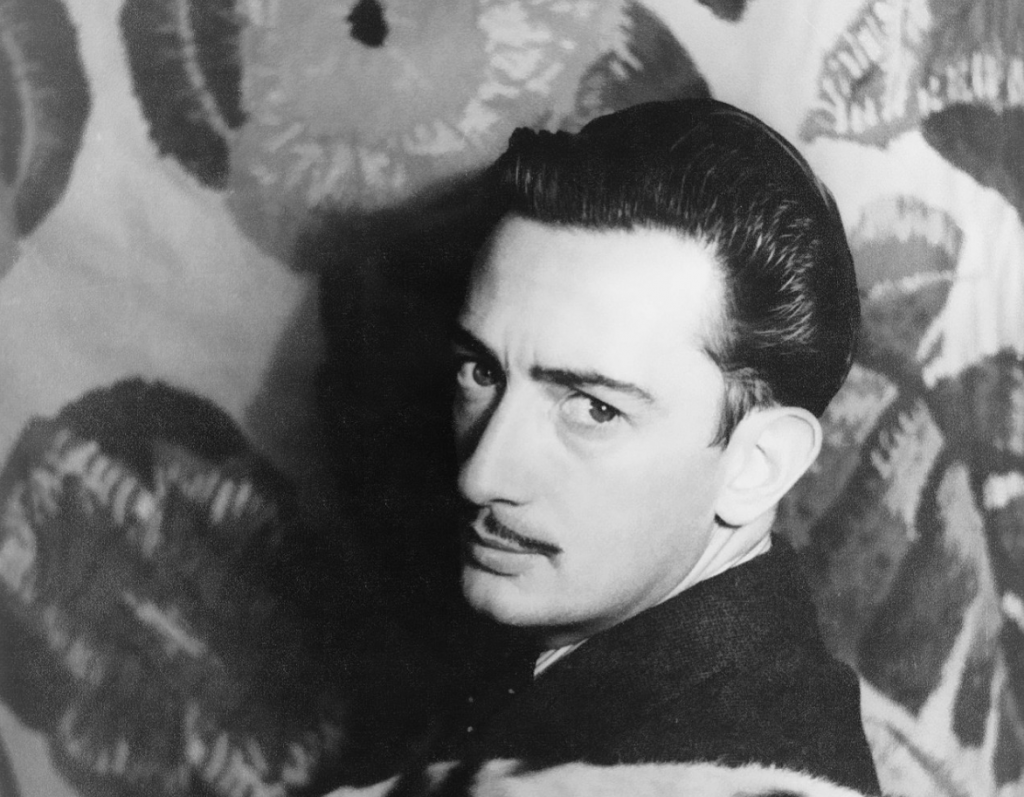
Image by Carl Van Vechten, via Library of Congress and Wikimedia Commons
We may be conditioned to offering an opinion at the push of a button, but before venturing on the question of whether we can, or should, separate the art from the artist, it seems ever prudent to ask, “Which art and which artist?” There are the usual case studies, in addition to the crop of disgraced celebrities: Ezra Pound, P.G. Wodehouse, and, in philosophy, Martin Heidegger. One case of a very troubling artist, Salvador Dalí, gets less attention, but offers us much material for consideration, especially alongside an essay by George Orwell, who ruminated on the question and called Dalí both “a disgusting human being” and an artist of undeniably “exceptional gifts.”
Like these other figures, Dalí has long been alleged to have had fascist sympathies, a charge that goes back to the 1930s and perhaps originated with his fellow Surrealists, especially André Breton, who put Dalí on “trial” in 1934 for “the glorification of Hitlerian fascism” and expelled him from the movement. The Surrealists, most of whom were communists, were provoked by Dalí’s disdain for their politics, expressed in the likeness of Lenin in The Enigma of William Tell. It’s also true that Dalí seemed to publicly profess an admiration for Hitler. But as with everything he did, it’s impossible to tell how seriously we can take any of his pronouncements.