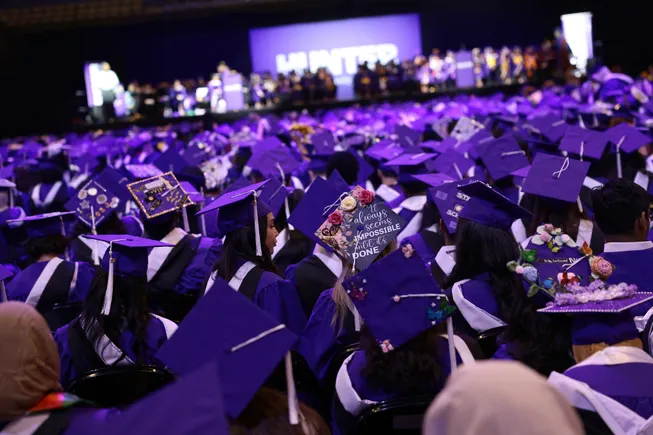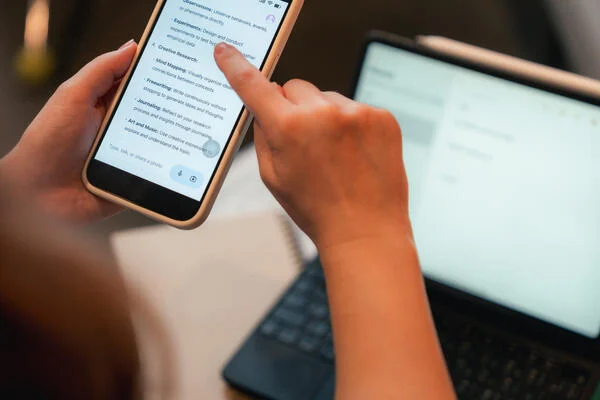
College graduates typically get their foot in the door through junior-level positions, but now “AI can eat that stuff for breakfast,” said Dan Hatch.
Photo illustration by Justin Morrison/Inside Higher Ed | alvarez and skynesher/E+/Getty Images | Ljupco and vi73777/iStock/Getty Images
Dan Hatch, a user experience and web design professor at Utah Valley University, has spent seven summers externing at technology companies to brush up on industry-specific skills that will give his students a leg up when they join the workforce. He enters each two-week externship with a similar mission: to understand how students get into the industry, how they gain experience and how they can get a job right out of college.
But this year, while spending a week in May at JobNimbus and a week in June at Awardco, something else was top of mind: How will students need to understand, work with and utilize artificial intelligence?
AI use in the workplace is booming. In April, Gallup found that 13 percent of American employees use AI daily in their jobs—up from 8 percent about a year prior—and 50 percent of employees use AI at least a few times per year. Meanwhile, AI’s capabilities are growing at breakneck speed. At this rate, the versions of ChatGPT, Gemini and Claude that students become familiar with during their freshman year will be very different from the AI models available when they graduate.