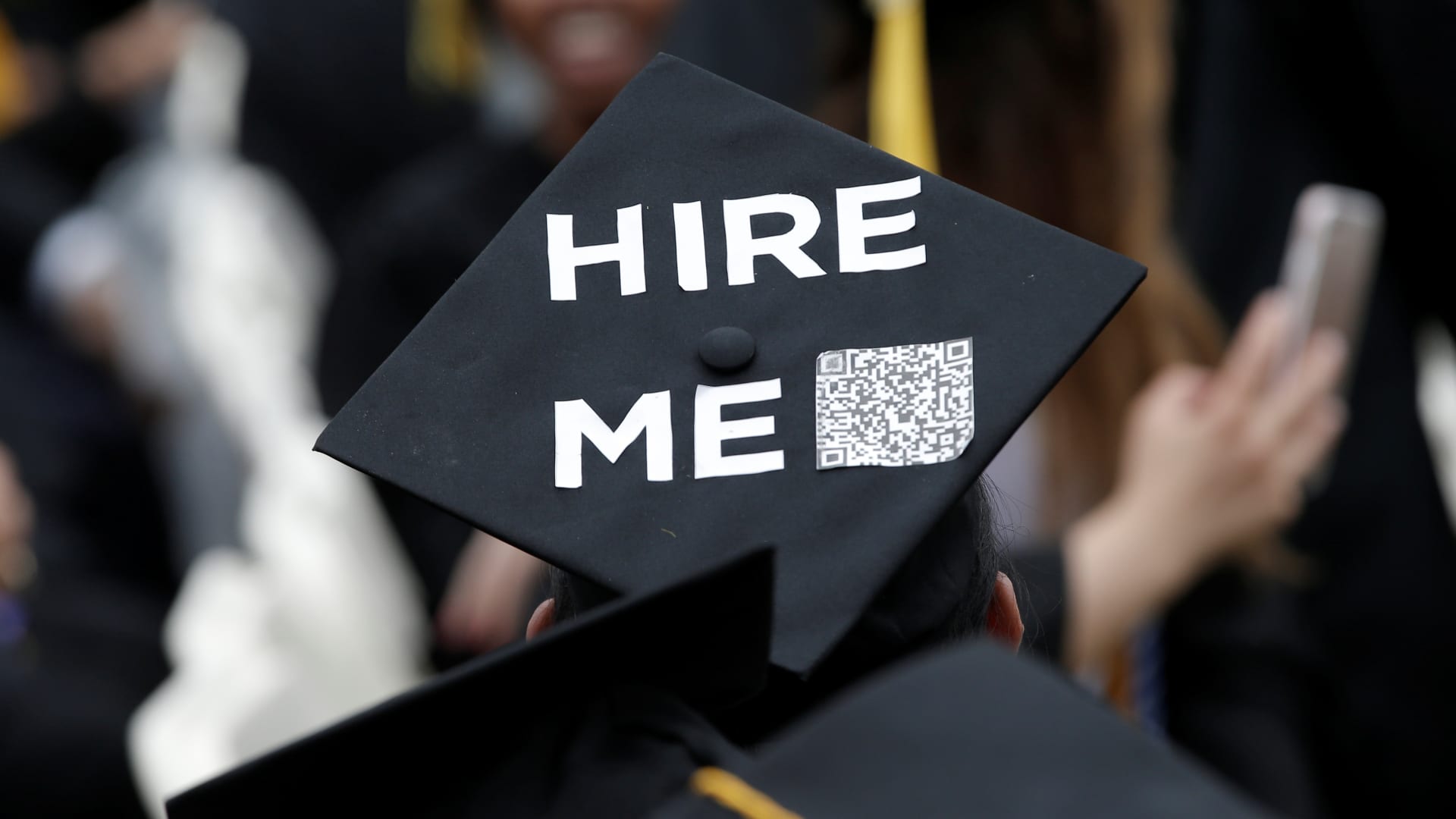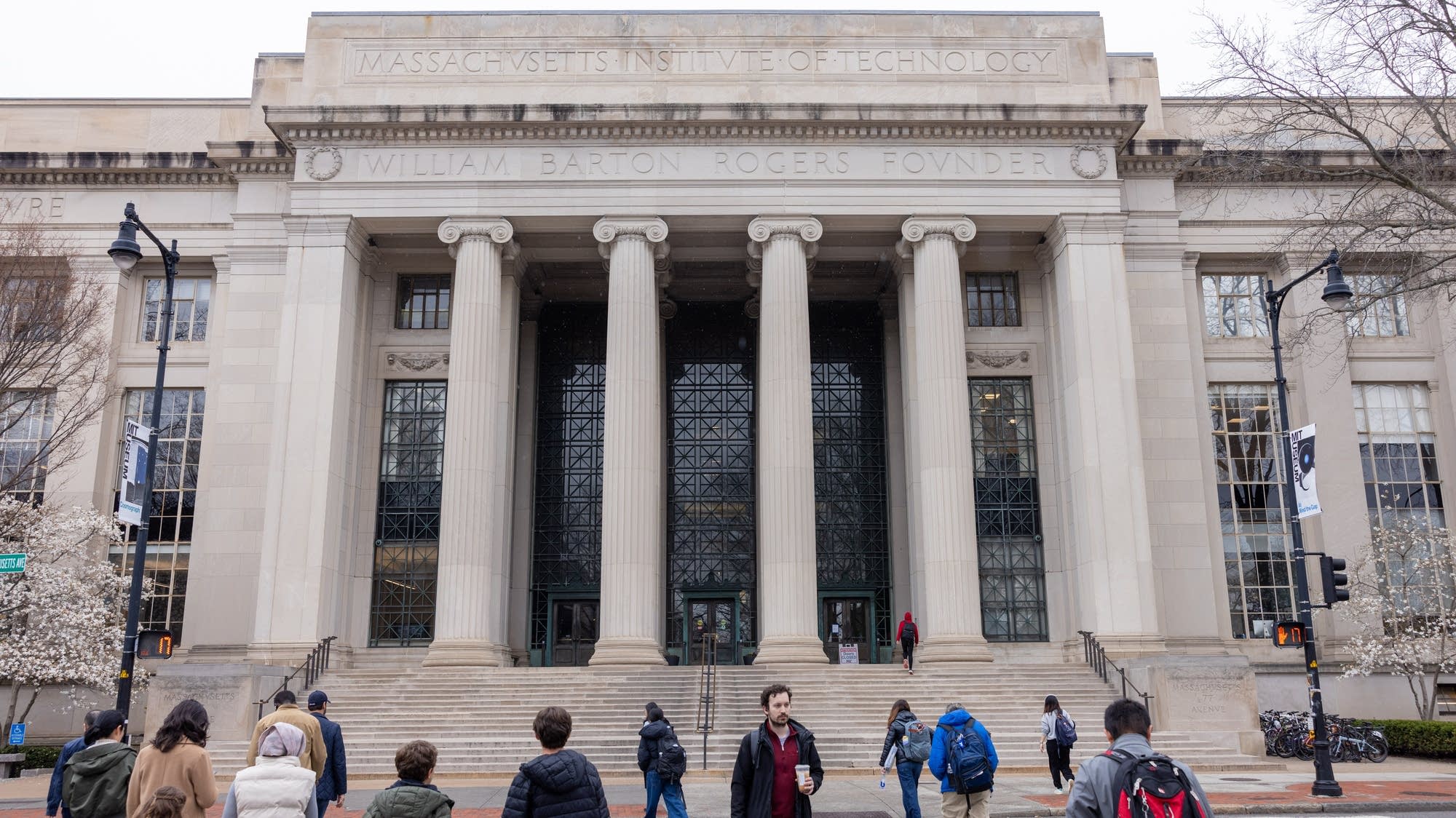
Welcome to May — the job market is currently awash in fresh graduates looking for that first post-college job, and it’s not an easy task. The unemployment rate for young college graduates jumped to 5.6% at the end of last year, entry-level job postings in the U.S. are down by a third since 2023, and grads are even up against artificial intelligence outsourcing.At the same time, some universities, and the students within, are making a big bet on AI to secure their future. When Massachusetts Institute of Technology, for example, unveiled a new program in 2022 called “AI and decision-making,” students showed up. Professor Asuman Ozdaglar is an engineering professor and a deputy dean of academics at MIT. She joined “Marketplace” host Kai Ryssdal to discuss how universities are staying ahead of the curve with the labor market, and how professors think about teaching for an industry that’s still changing so rapidly. The following is an edited transcript of their conversation.Kai Ryssdal: First of all, let's say that I could get into MIT, but then I decide I want to be a an AI major — as it were, AI and decision making. What would I learn? What am I going to be taught?Asuman Ozdaglar: Yes, so AI-D major is a new major. It was designed by the [Electrical Engineering and Computer Science] department, actually, even before the ChatGPT was released. So we were planning for this big wave of new technologies. But what it teaches you is really about building these powerful AI systems, how to design them, how to understand them, how to build them, and how you deploy these systems across the economy.Ryssdal: Don’t have to read the newspapers too closely to imagine that this is an extremely popular program at MIT, yes?Ozdaglar: Yes, it is the second largest major after the computer science major right now.Ryssdal: And then these jobs that these students are going to get once they graduate, I mean, are they going to go work for ChatGPT and Anthropic and all that? I mean, what do you imagine? Ozdaglar: They can, but it's such a broadly applicable tool set that many students also are interested in using this in, you know, health tech, or, you know, finance. So I believe this will basically enable the graduates to find job prospects in a variety of different sectors.Ryssdal: Let me ask you the epistemic question here, and, look, this is from a layperson's perspective on the outside as opposed to you, the actual computer scientist. But it seems that this field is changing so very quickly. How do you keep up with teaching students when all these changes are happening at such speed?Ozdaglar: It's a very good question. It's a challenge. It used to be, before this AI wave, you develop a class, you teach it for, you know, whatever, 20 years. Of course, every year you change it a bit, but this is a completely different ball game. Like every six months you need to update your course materials. You need to introduce new courses because there are new paradigms that emerge within a few months time frame. I just also want to highlight, though, that we believe there are some foundations that are critical for the students to learn so that it's not just generative AI and ChatGPT. They learn about foundations of how to use this intelligence for enhancing human experience, human work, human education, all of those domains, so that no matter how the technology changes, these students can adapt their skills to the new set of tools and developments. Ryssdal: Can I ask you the human question here, professor? Because a lot of us on the outside of the computer science and AI world are looking at the speed and the power of this technology, and you know, there's some alarm. And I guess I wonder where you stand on that.Ozdaglar: Yeah, that's another very good question. So new technologies have always impacted society. It's not just particular to AI, but this one is, first of all, very rapid. It affects a lot of different sectors simultaneously. And then, because of the natural language interface, many, many people with varying expertise levels can use it. So it's a very different kind of technology. And for that reason, I think there's great need for being cautious and attentive, I think, to where it will be used, how it will be used. So that's the reason why we put a human-centered aspect of the AI major, which sort of highlights our thinking around these issues being critical to the development of the technology itself.
The AI industry is still in flux, and university programs are trying to keep up
“Every six months you need to update your course materials,” said MIT Deputy Dean of academics Asuman Ozdaglar. “You need to introduce new courses because there are new paradigms that emerge within a few months’ time frame.”
772 words~4 min read