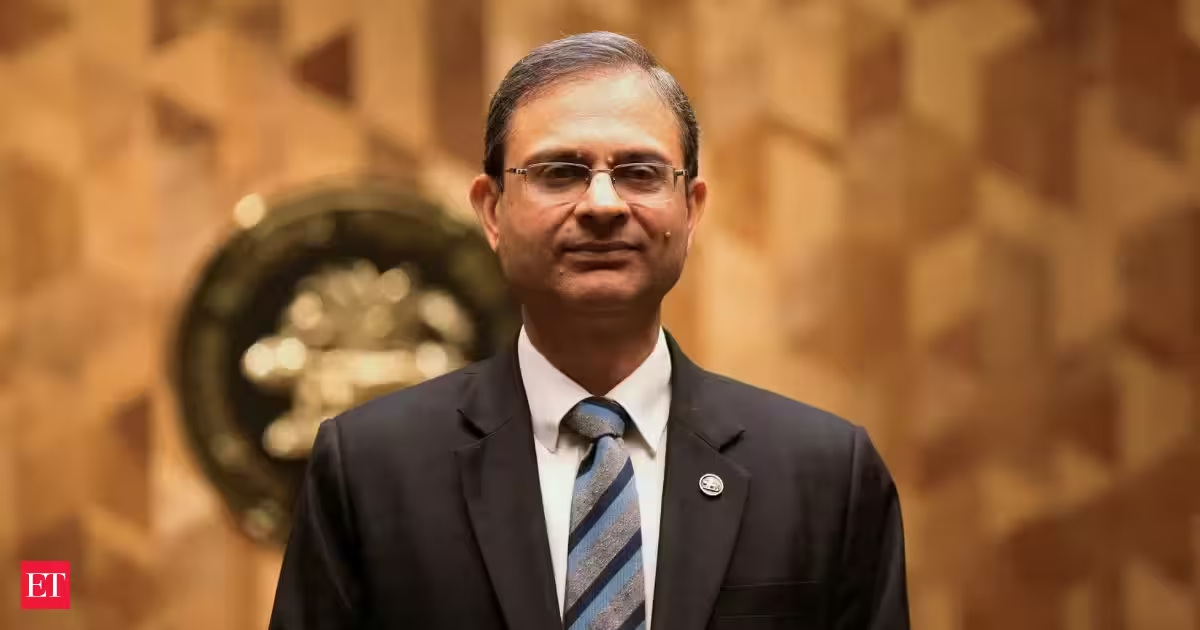
India could grow by more than 7% this year — outpacing the Reserve Bank’s current forecast — if global oil prices stay near $70 a barrel, according to a member of the RBI rate-setting panel.The easing in geopolitical tensions in West Asia is poised to improve the outlook for Asia’s third-biggest economy, reducing risks to both inflation and growth, Nagesh Kumar, an external member of the Reserve Bank of India’s monetary policy committee, told Bloomberg in an interview. The reassessment marks a sharp contrast with about three weeks ago, when the RBI downgraded growth estimates for the year through March 2027 to 6.6% citing heightened uncertainty over the conflict in West Asia. Kumar said subsequent progress in US-Iran peace talks had reduced concerns over oil supplies moving through the Strait of Hormuz, and may prompt the RBI to revise its forecasts within just one policy meeting. India imports about 90% of its oil needs and is highly exposed to swings in global energy prices.Cooling crude oil prices“If this peace process holds and oil prices remain around $70 a barrel, it should be possible for the Indian economy to close the current year at 7% plus,” Kumar said. Such an outcome aligns with the country’s medium-term potential growth rate and would keep India on track to remain the world’s fastest-growing major economy. However, the pace is still not stellar enough for the country of more than 1.4 billion people to achieve Prime Minister Narendra Modi’s goal of becoming a developed nation by 2047.The RBI will next publish updated forecasts during its next monetary policy review scheduled on August 5 when, Kumar said, it’s also likely to revise lower inflation projections to within its 4% target, from 5.1% for the current fiscal year.His comments come after Governor Sanjay Malhotra on Wednesday provided the clearest signal yet that policymakers are in no hurry to raise rates given elevated uncertainty around the growth and inflation outlook.Inflation outlookAlready, some economists including those at Citigroup Inc. have pushed back rate hike expectations following the recent decline in oil prices. Kumar echoed that assessment, arguing that the recent inflation shock was driven by tightness in oil markets rather than excess demand. “This is an inflation which is not demand-driven inflation but a cost-push kind of inflation, and it is beginning to self-correct with oil prices coming down,” he said.Others such as Goldman Sachs Group Inc. still expect one-to-two hikes by March, citing upside risks to inflation.Kumar downplayed concerns that price gains could be broad-based.“Second-round effects so far are very muted, if at all,” he said, adding that the recent increase in energy costs had not significantly filtered through the wider economy.With inflation risks receding, Kumar said the policy focus should remain on supporting growth. “I think we need to be concerned about growth and boosting growth in whichever way possible is certainly very important,” he said, adding that policymakers will look at both monetary and fiscal levers to bolster the economy.One risk that could complicate the outlook is the monsoon, though Kumar sought to calm nerves about weaker rainfall this year, saying agriculture has become less weather-dependent over time and that reservoir levels remain above historical averages.India’s cumulative rainfall was 43% below normal as of June 22, raising concerns about crop output and rural demand. “My feeling is that we may come out of this crisis very soon and be on track like in the last year once again,” Kumar said. More stories like this are available on bloomberg.com©2026 Bloomberg L.P.Published on June 25, 2026
RBI may revise growth to top 7% this year: MPC member
RBI may raise India's growth forecast to over 7% this year, aided by easing geopolitical tensions and stable oil prices.
588 words~3 min read