Staff writer, with CNA
As yesterday marked five years since Hong Kong's Apple Daily was forced to close, former staff and readers said the paper's disappearance is still felt in the city's media landscape, where critical voices have narrowed and new online outlets have struggled to fill the gap.The newspaper, known for its outspoken criticism of Beijing, was forced to cease operations on June 24, 2021, a week after the Hong Kong authorities raided its newsroom, arrested senior executives and froze company assets under the national security law.
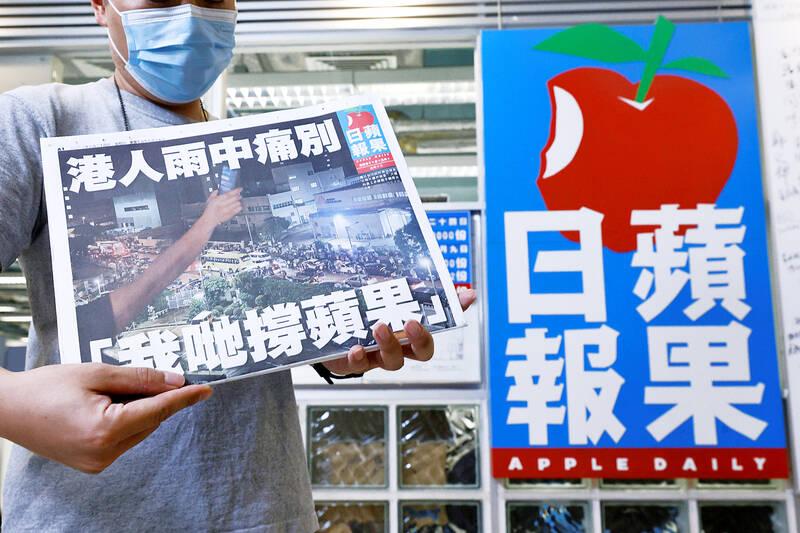
An Apple Daily member of staff poses with his final edition of the newspaper at its headquarters in Hong Kong, on June 24, 2021.
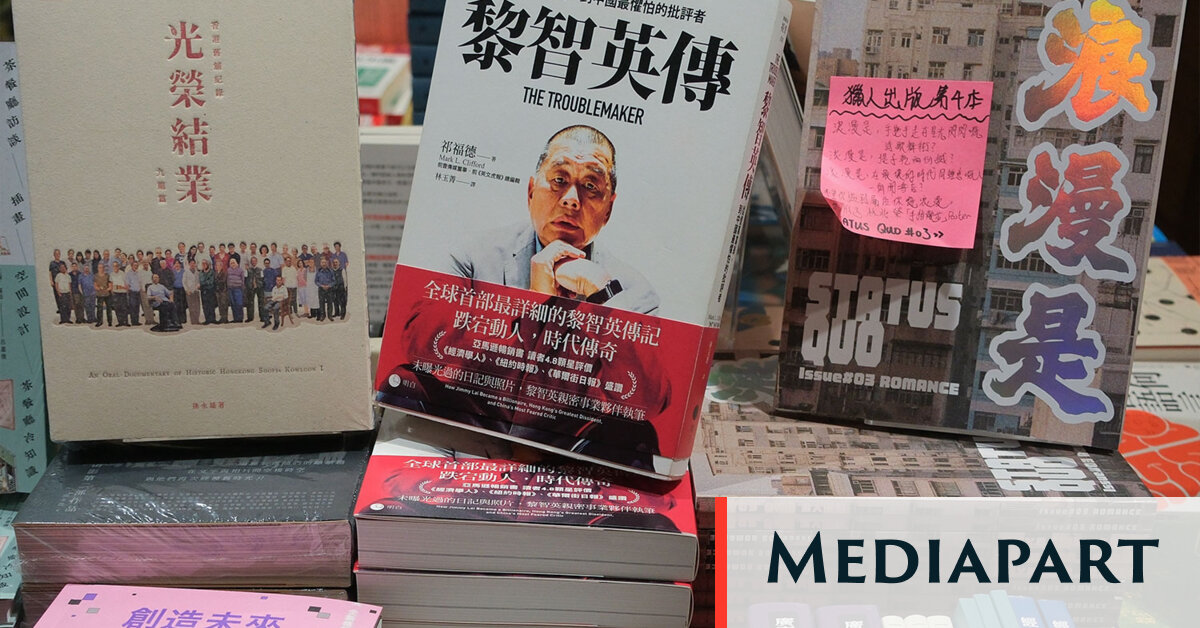
Founded by media tycoon Jimmy Lai (黎智英) in 1995 and once one of Hong Kong's largest Chinese-language newspapers, Apple Daily printed a record 1 million copies in its final edition.
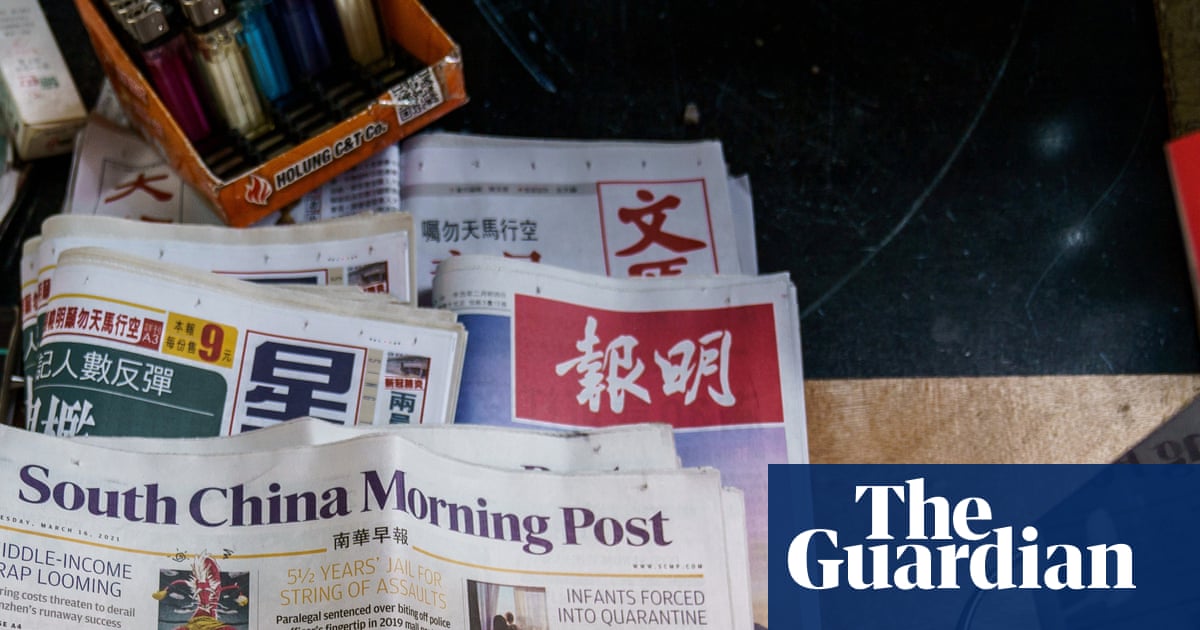
Changes felt by journalists, readersMichael, a pseudonym for a reporter who worked at Apple Daily for about 10 years until its last day, told CNA that the world felt "different" after the newspaper ceased publication.Apple Daily's high circulation and visibility at newsstands allowed it to shape public discussion through reporting angles that critics often called sensationalist but supporters valued as critical and distinctive, he said.In contrast, mainstream media outlets in Hong Kong today tend to approach stories from similar angles -- a shift that has become more pronounced since the national security law took effect in June 2020, he said."When you walk past a newsstand, everything looks the same. You don't even feel like reading it," he said.Echoing Michael, a longtime Apple Daily reader surnamed Lau (劉) said he has shifted to online media over the past five years because mainstream outlets have become more similar in their coverage and perspectives.Citing as an example a case in which staff at the Hong Kong Economic and Trade Office in London were charged under the UK's National Security Act, he said local mainstream media outlets gave the case limited coverage.Such limited reporting showed that the media's role as the "fourth estate" has gradually weakened in the former British colony, he said.Narrowing space for journalismHong Kong's media environment changed gradually after the closures of Apple Daily and Stand News -- a pro-democracy online media outlet that shut down in late 2021 after police raided its newsroom and arrested senior staff, said Francis Lee (李立峯), a journalism professor at the Chinese University of Hong Kong.Investigative reporting has declined and coverage of political issues gradually shifted toward more straightforward factual reporting, partly because of risk management, he said.Noting that fewer commentators are available to speak on political issues than in the past, he said the question now is "whether people are willing to comment at all, and how much they feel able to say."While new online outlets have become alternative sources of information, they cannot fully replace Apple Daily because they reach a more limited audience and lack the resources and staffing the newspaper once had, he said.Waiting for imprisoned colleaguesHowever, for some former staff, the closure itself is not the hardest part to accept.Joan, a pseudonym for another former Apple Daily reporter, said she most often thinks about colleagues who are still in prison, adding that she is counting the days until they can reunite.Lai, 78, was sentenced in February to 20 years in prison after being found guilty of publishing seditious materials and conspiring to collude with foreign forces, while six former Apple Daily senior staff members were handed prison terms ranging from six years and nine months to 10 years.Joan said she often thinks of her imprisoned colleagues in everyday moments, such as when deciding what to eat for dinner or where to go on a day off."We have the freedom to choose, but they don't -- and for as long as 10 years," she said.