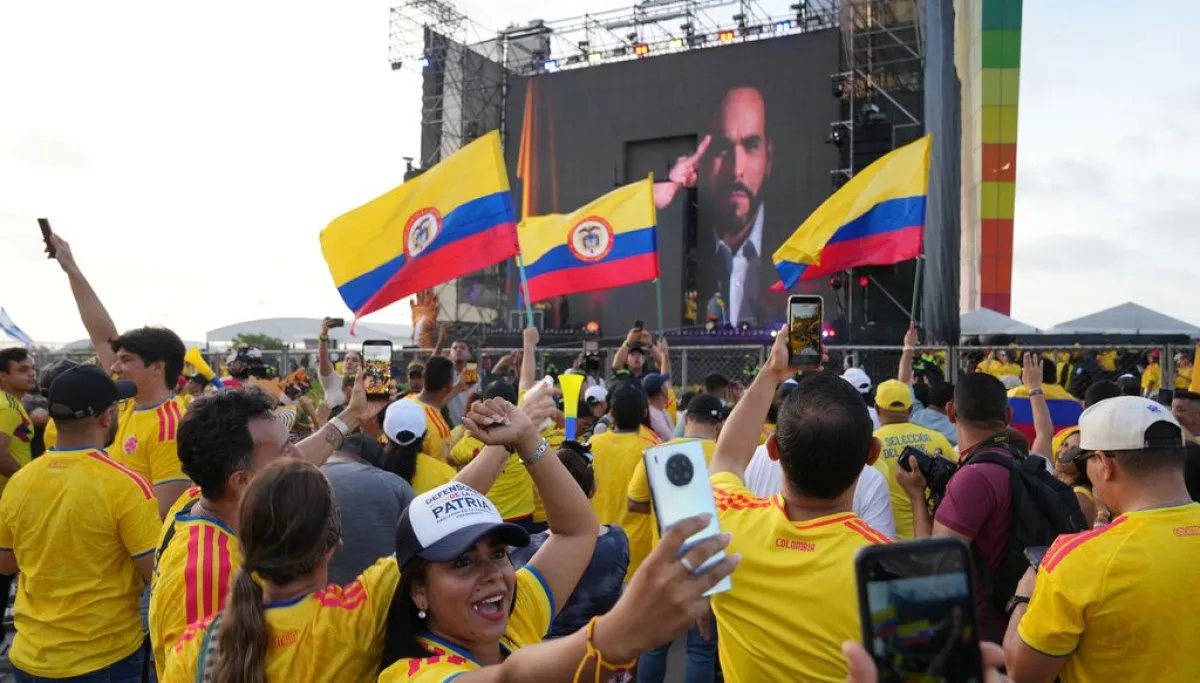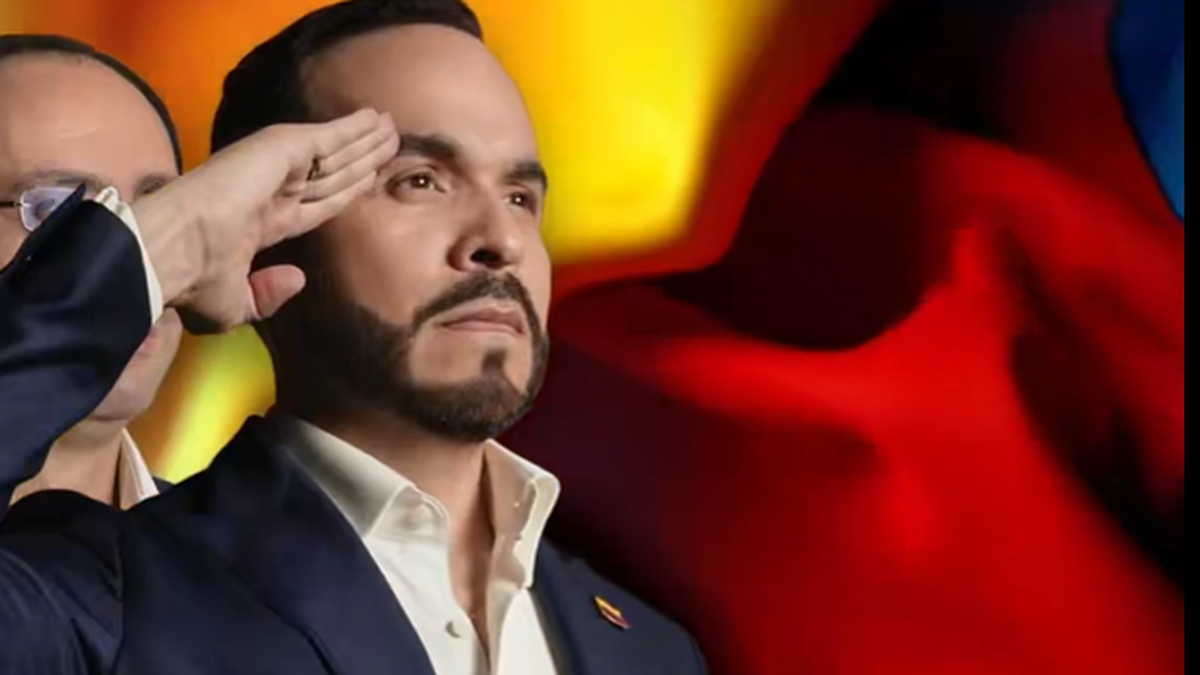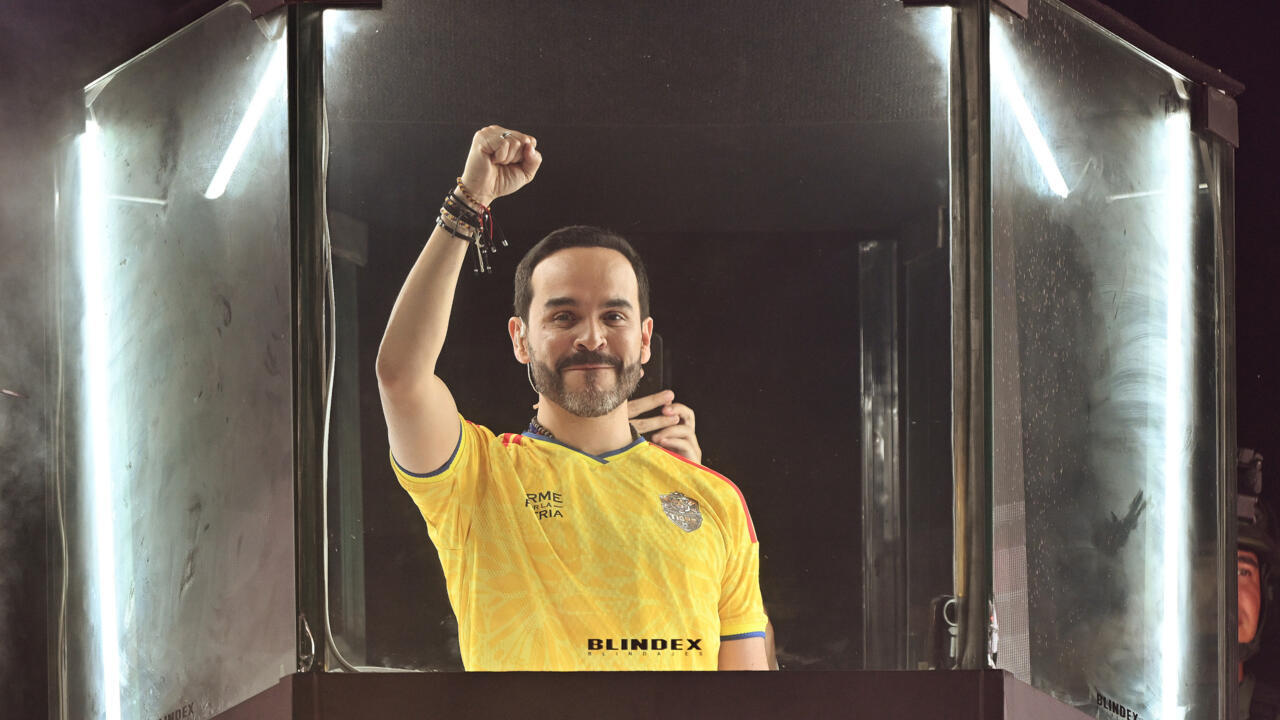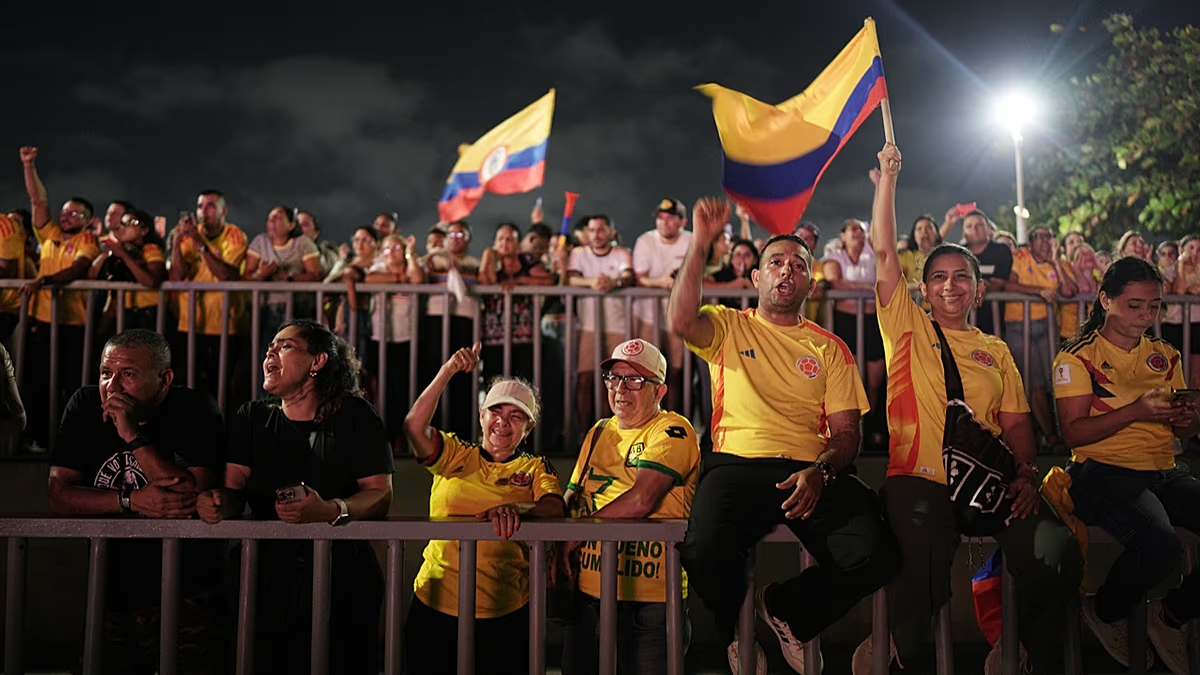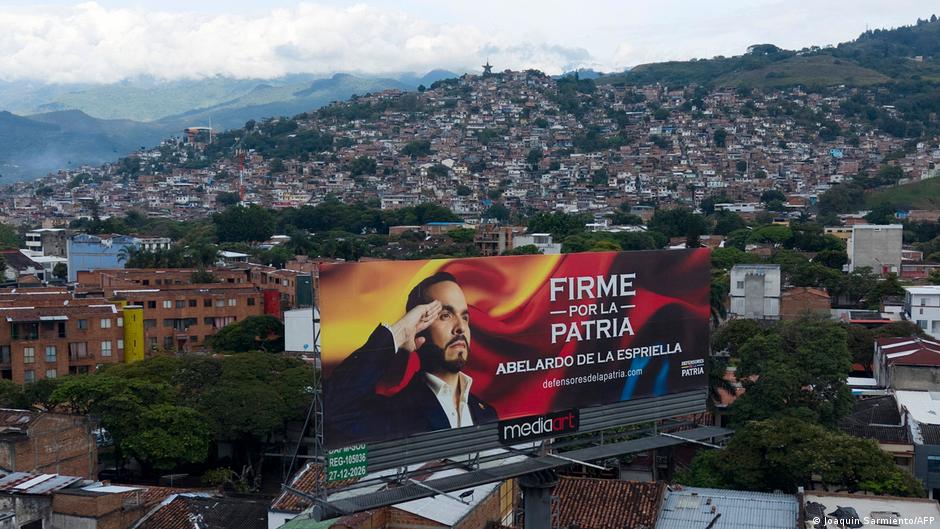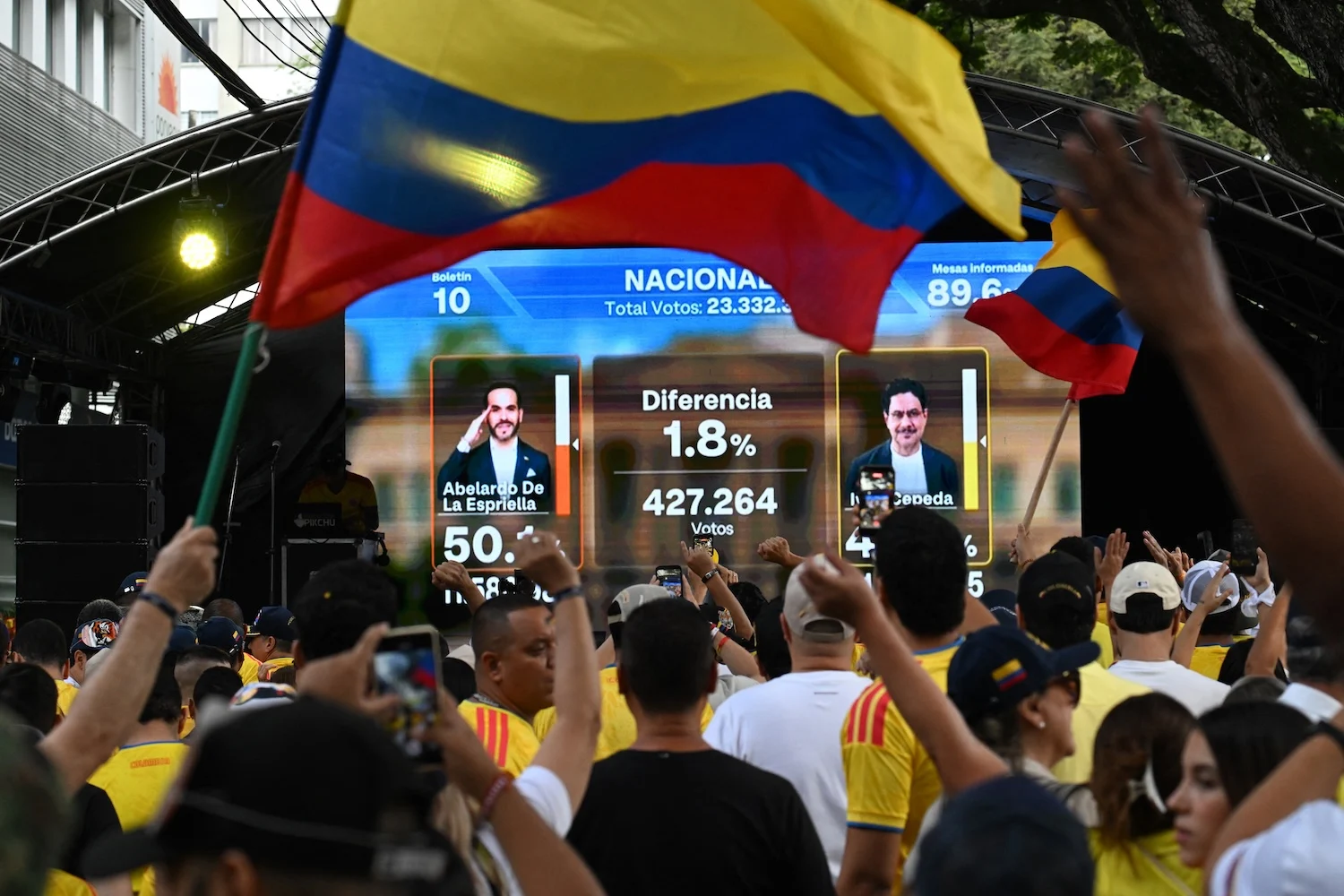
Colombia’s June 21 second-round presidential election between leftist candidate Iván Cepeda, of the incumbent Historic Pact party, and right-wing businessman Abelardo de la Espriella, of his own Defenders of the Homeland movement, fit into the pattern of recent elections in South America.
Following de la Espriella’s endorsement by U.S. President Donald Trump, and with his victory on Sunday, Colombia now joins Argentina, Chile, Ecuador, El Salvador, Honduras, and quite likely Peru in a growing Trump-adjacent political wave in the region.
There are reasons to worry that this new wave of Hispanic Trumpistas will consolidate executive power at the expense of the checks and balances of democratic government, as has occurred already under Salvadoran President Nayib Bukele and President Daniel Noboa in Ecuador.
But these leaders will eventually leave office, either through term limits or defeat at the ballot box. The longer-term threat to democracies in Latin America is that the center in many countries’ politics has disappeared.
De la Espriella won by a whisker (49.7 percent to Cepeda’s 48.7 percent), and his inability to even secure a majority highlights a rough road ahead—not just for the new president-elect but also for Colombian governance and political comity as well. Such a close-run, right-turning race is not unique to Colombia and “El Tigre,” as he likes to refer to himself.