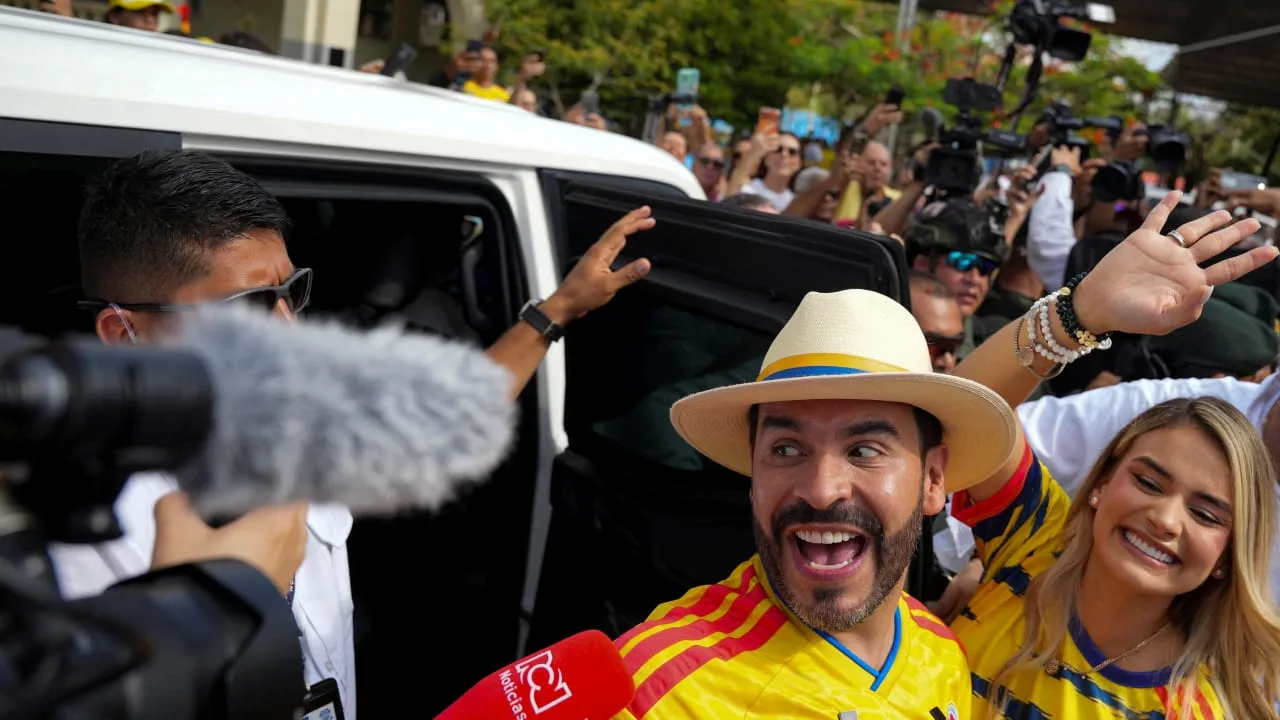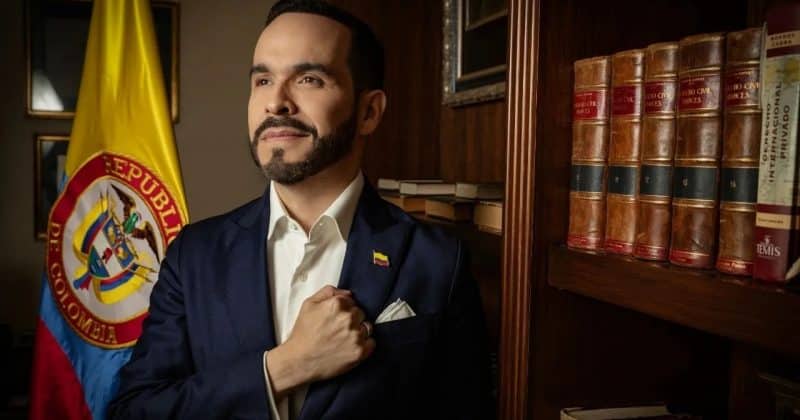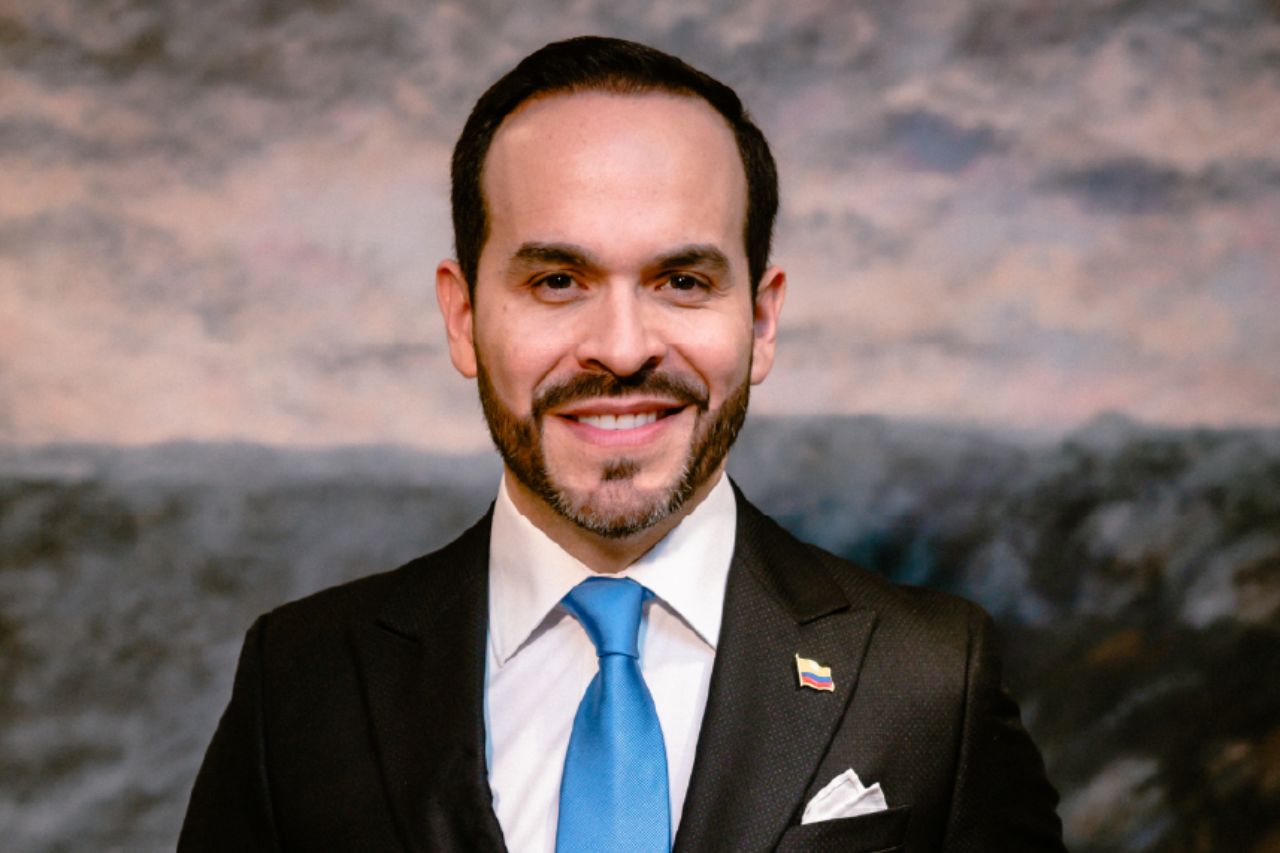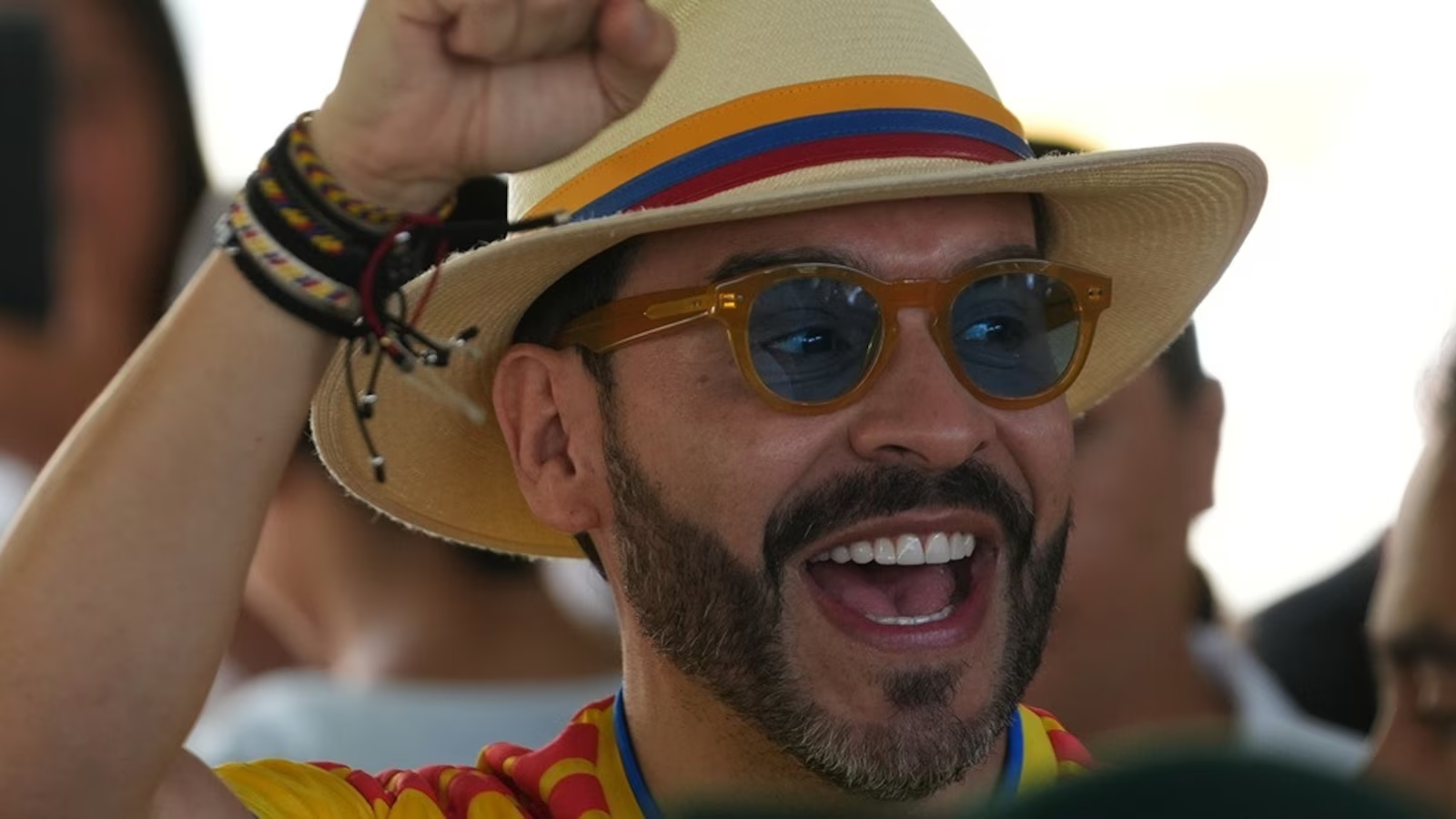
New Delhi: Colombian lawyer and political newcomer Abelardo De la Espriella has won the Colombian presidential election, defeating Left-wing senator Iván Cepeda in a closely contested race Sunday. The election marks a significant shift in Colombian politics and contributes to a broader global trend of rising Right-wing populism.
The 47-year-old right-wing candidate secured 49.66 percent of the vote, defeating 62-year-old Cepeda, who fell short of roughly 2,50,000 votes with 48.70 percent, according to Colombia’s national registrar.US President Donald Trump celebrated the Colombian election result on Truth Social Sunday, writing: “He Won, BIG!” De la Espriella later said Trump had personally congratulated him during a phone call following the election.
De la Espriella campaigned on a hardline law-and-order platform, vowing to roll back key elements of outgoing President Gustavo Petro’s security strategy. His campaign centred on strengthening the military, expanding Colombia’s oil and gas sector, lowering taxes, and reducing the size of the state“I will govern for all Colombians, for those who voted for me and for those who chose the other candidate,” De La Espriella told supporters gathered in the Colombian city of Barranquilla.A lawyer with the self-proclaimed nickname of ‘El Tigre’ (The Tiger), De la Espriella entered the presidential race as a political outsider. Throughout the campaign, he blamed the Petro administration for rising insecurity, economic stagnation, and what he described as excessive government intervention.De la Espriella’s victory ends the four-year Left-wing rule under Petro, Colombia’s first Leftist president, whose administration entered office in 2022 promising sweeping social reforms and a ‘total peace’ strategy aimed at ending decades of armed conflict through negotiations with armed groups.While Petro’s government expanded welfare programmes and pursued talks with insurgent groups, critics of his administration assert that Colombian security conditions have worsened in several regions, arguing that armed groups have expanded their influence and economic growth remains slow. Many of Petro’s flagship reforms also faced resistance in Congress, limiting their implementation.Colombia joins global shift