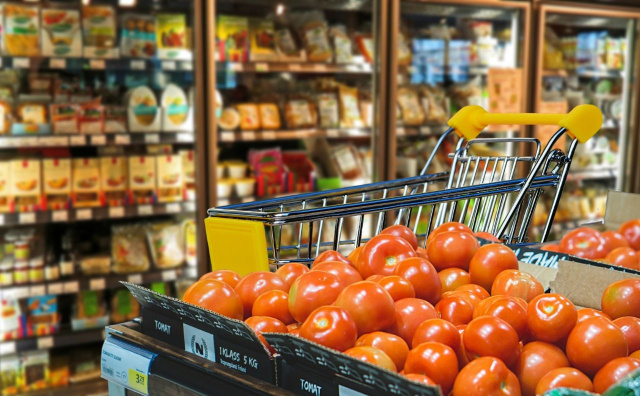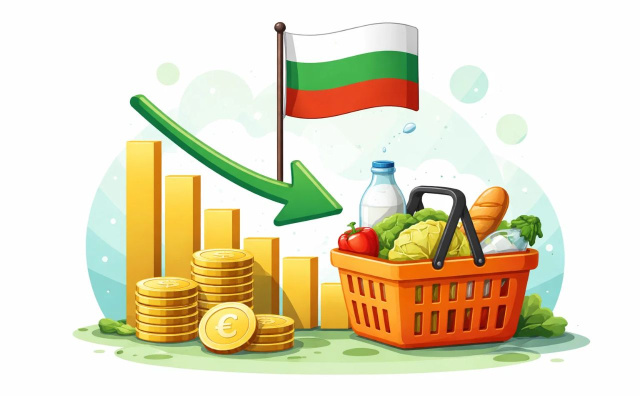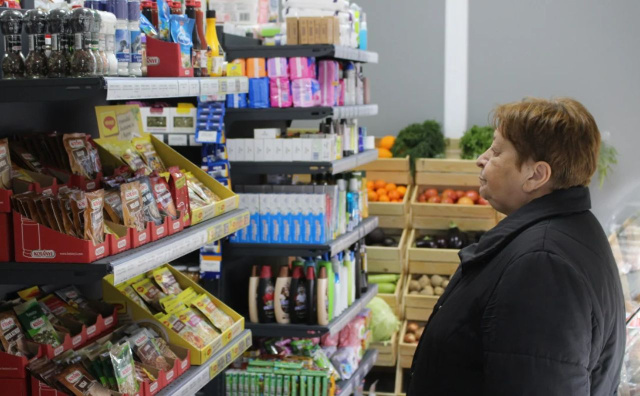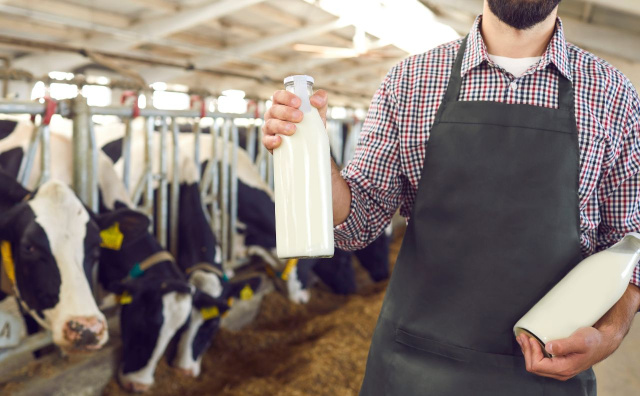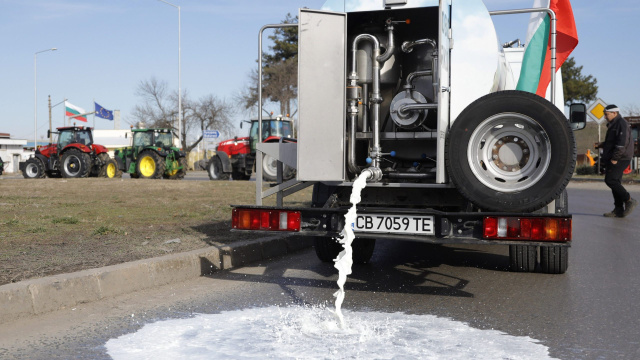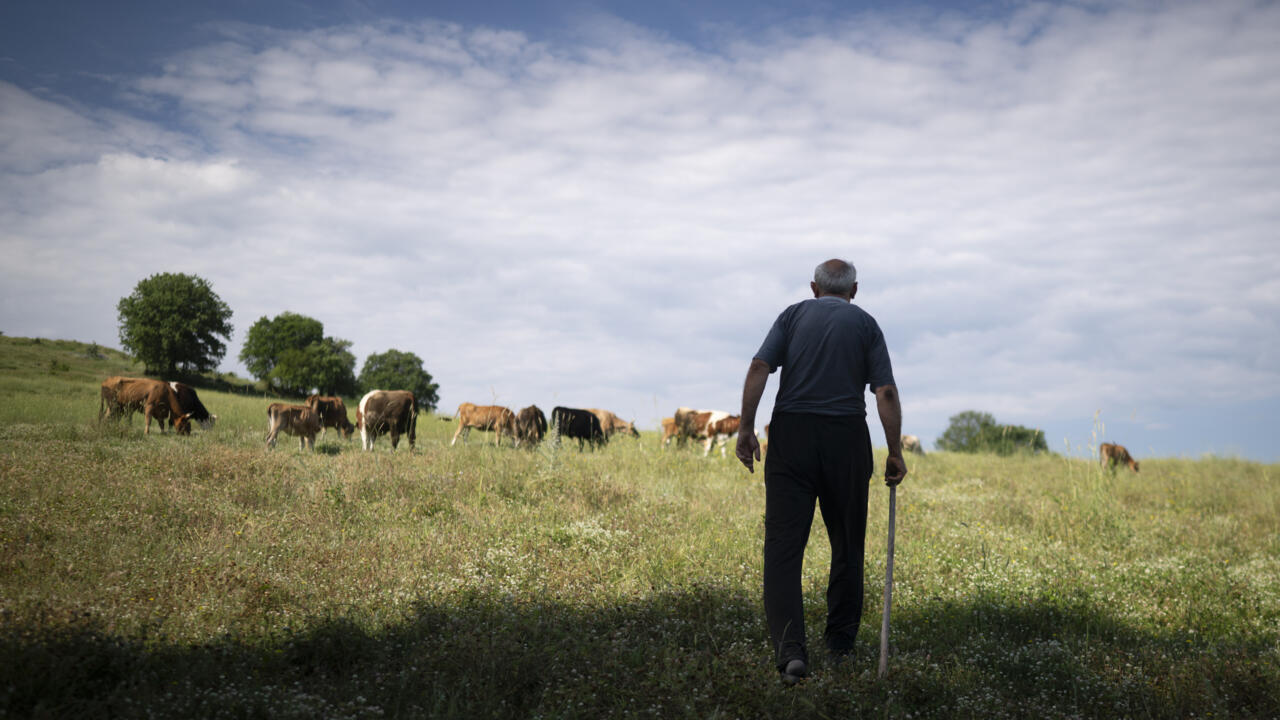
Despite its long tradition, the farming output of Bulgaria -- the European Union's poorest member -- has been falling as production costs are eating into margins.In shops, Bulgarian fruit and vegetables are gradually being replaced by imported products.Milk production has taken a particularly hard hit, oddly enough in a country whose reputation is closely tied to yogurt."This will be our last year," Deliev said, driving his cows to pasture in the Rhodope mountains.His farm in a meadow close by the village of Sofiytsi in southern Bulgaria backs onto the wooded slopes of the mountain range associated with the mythological musician Orpheus.
After nearly 20 years with his animals, Daliev is thinking of giving up © Nikolay DOYCHINOV / AFP
The 59-year-old Deliev raises nearly 100 cows there, but after almost 20 years spent with his animals, he too is thinking of giving up.He blames the purchase price of milk, which is too low, and subsidies that are too small and mostly benefit large grain producers.Data from the EU's statistical office, Eurostat, show the number of dairy cows in Bulgaria fell by around 40 percent between 2010 and 2024.Local data has shown the same goes for production -- in 2024, Bulgaria produced 687.6 million litres of cow's milk, a drop of nearly 20 percent against 856.1 million litres churned out in 2020.– 'The last in the village' – In turn, the Bulgarian Commission for the Protection of Competition (CPC) said that imports of milk and dairy products have risen by 43 percent since 2020."The simplest explanation is the decline in the total number of cows and the closure of many small farms," economist Adrian Nikolov of the Institute for Market Economics (IME) told AFP.