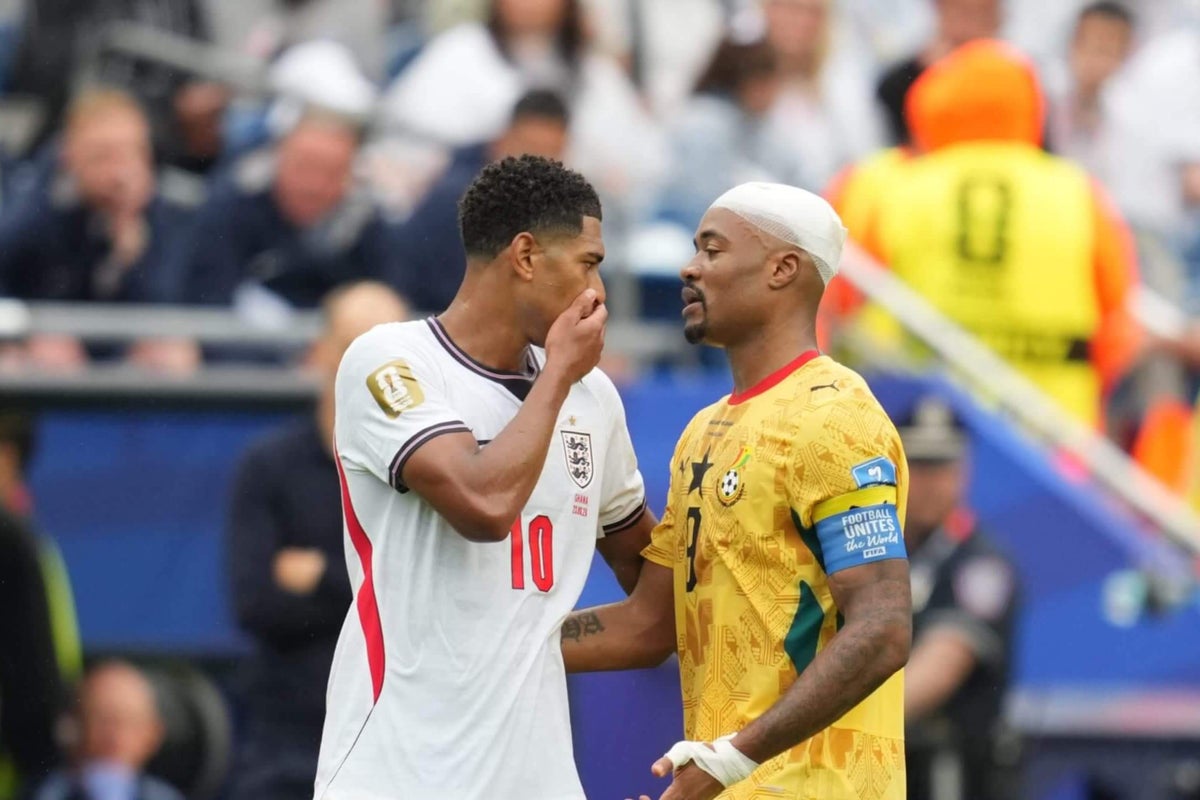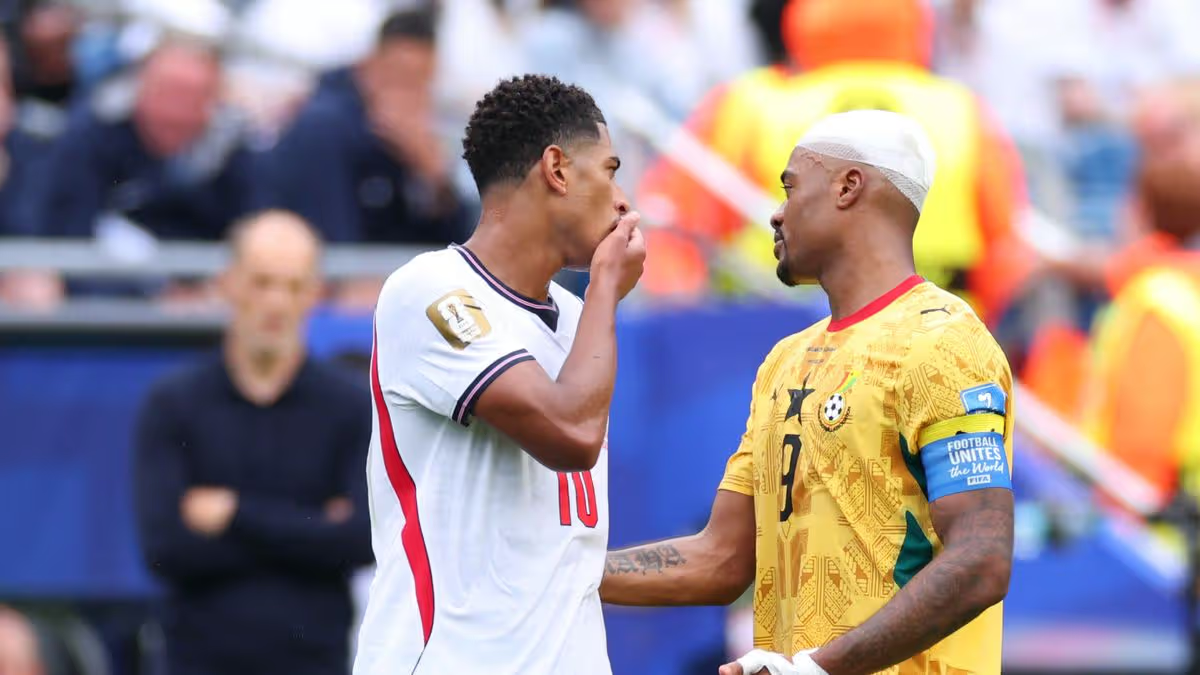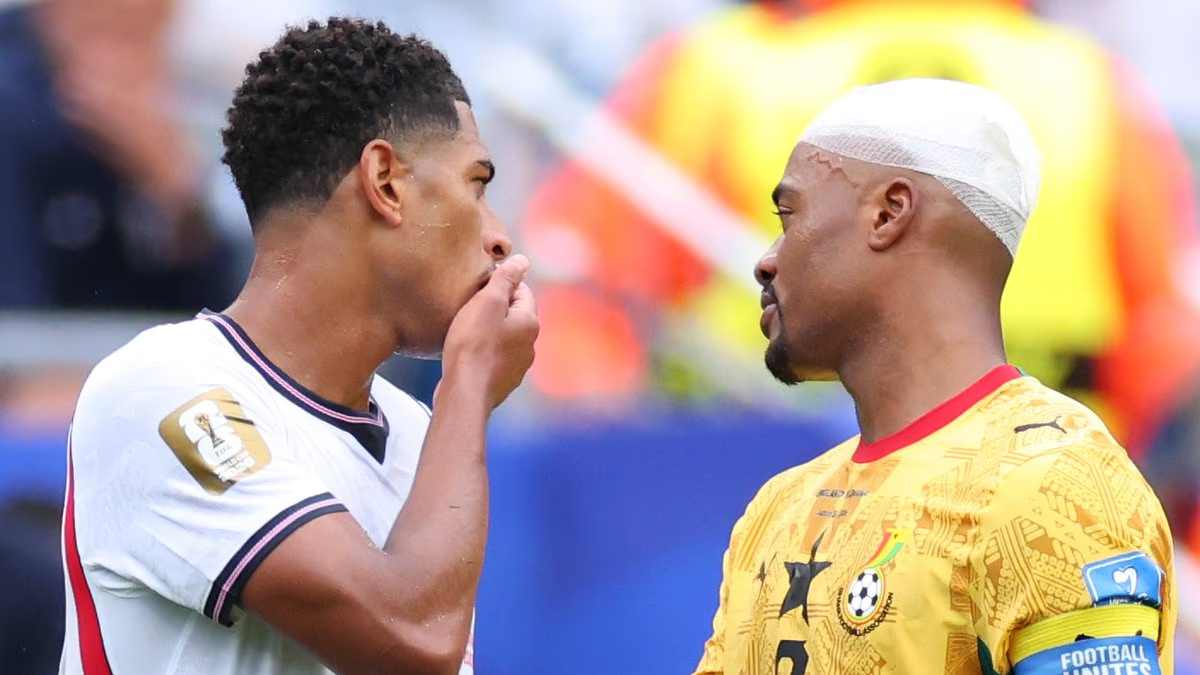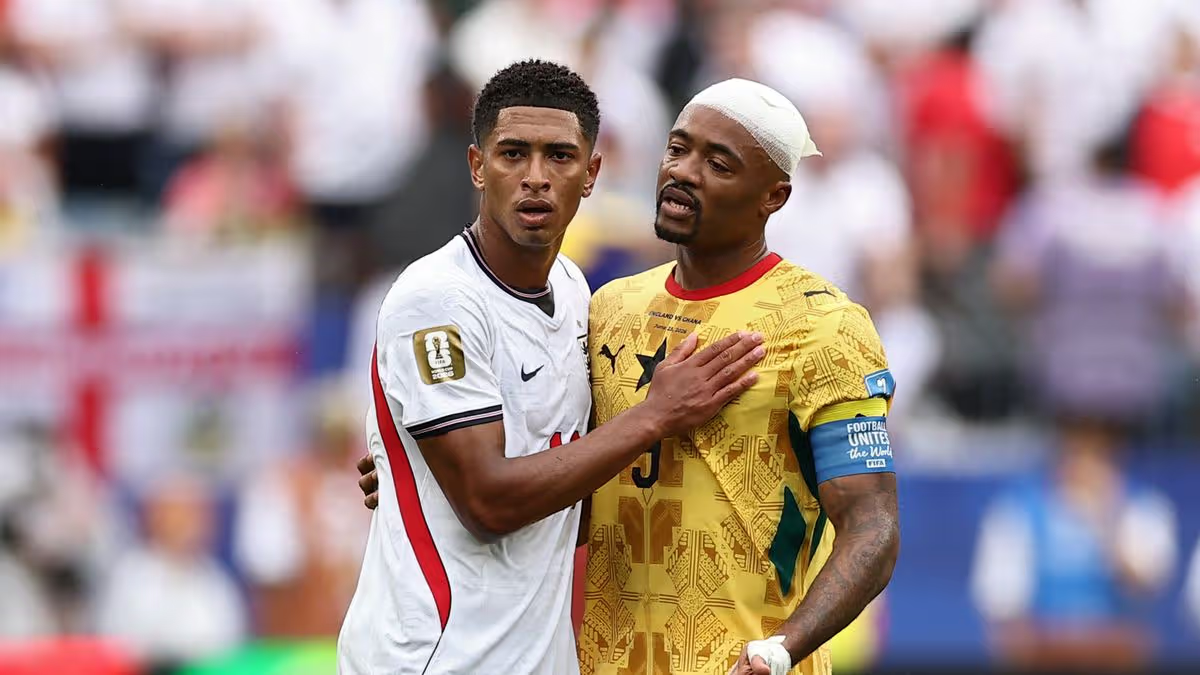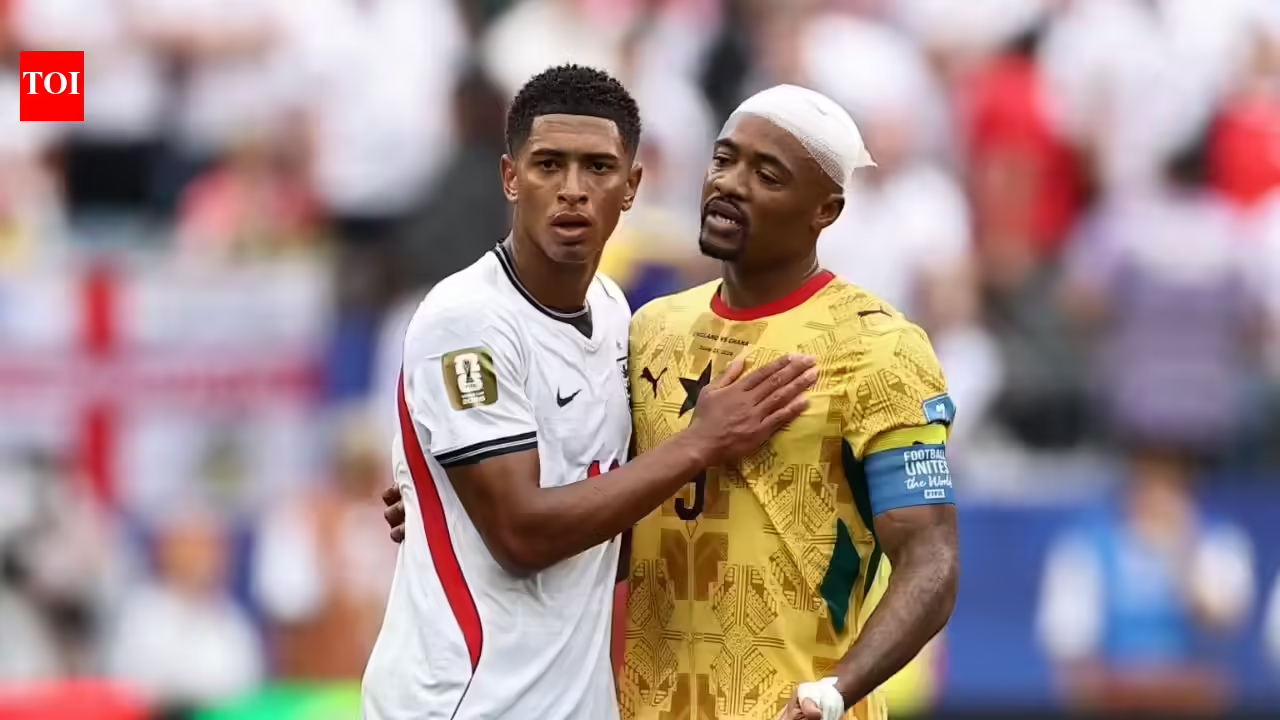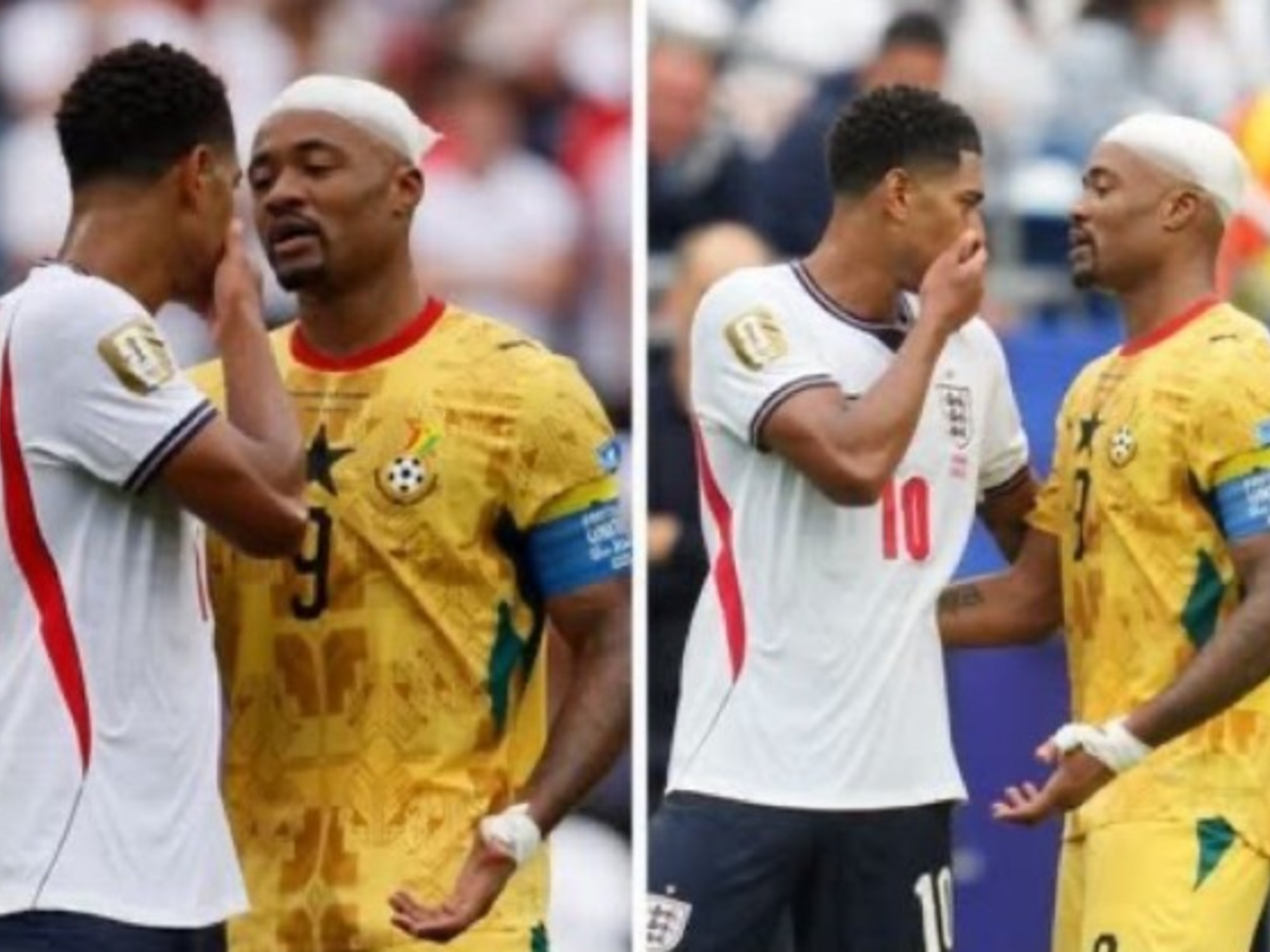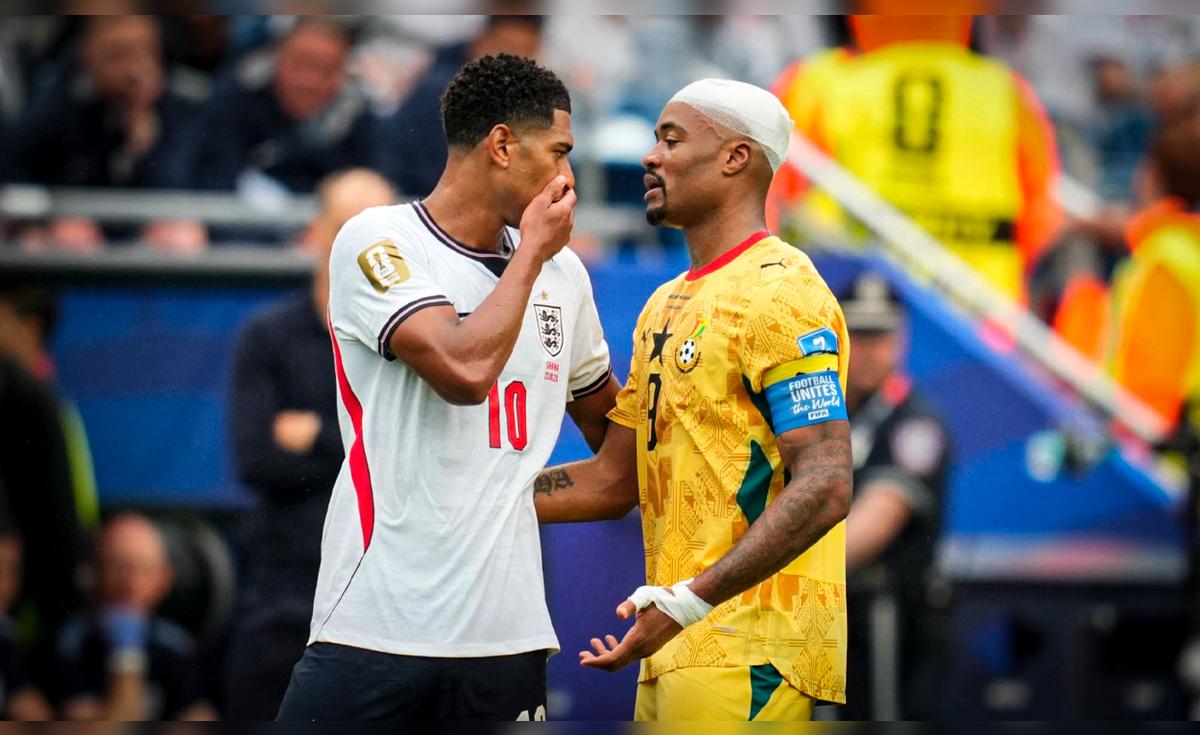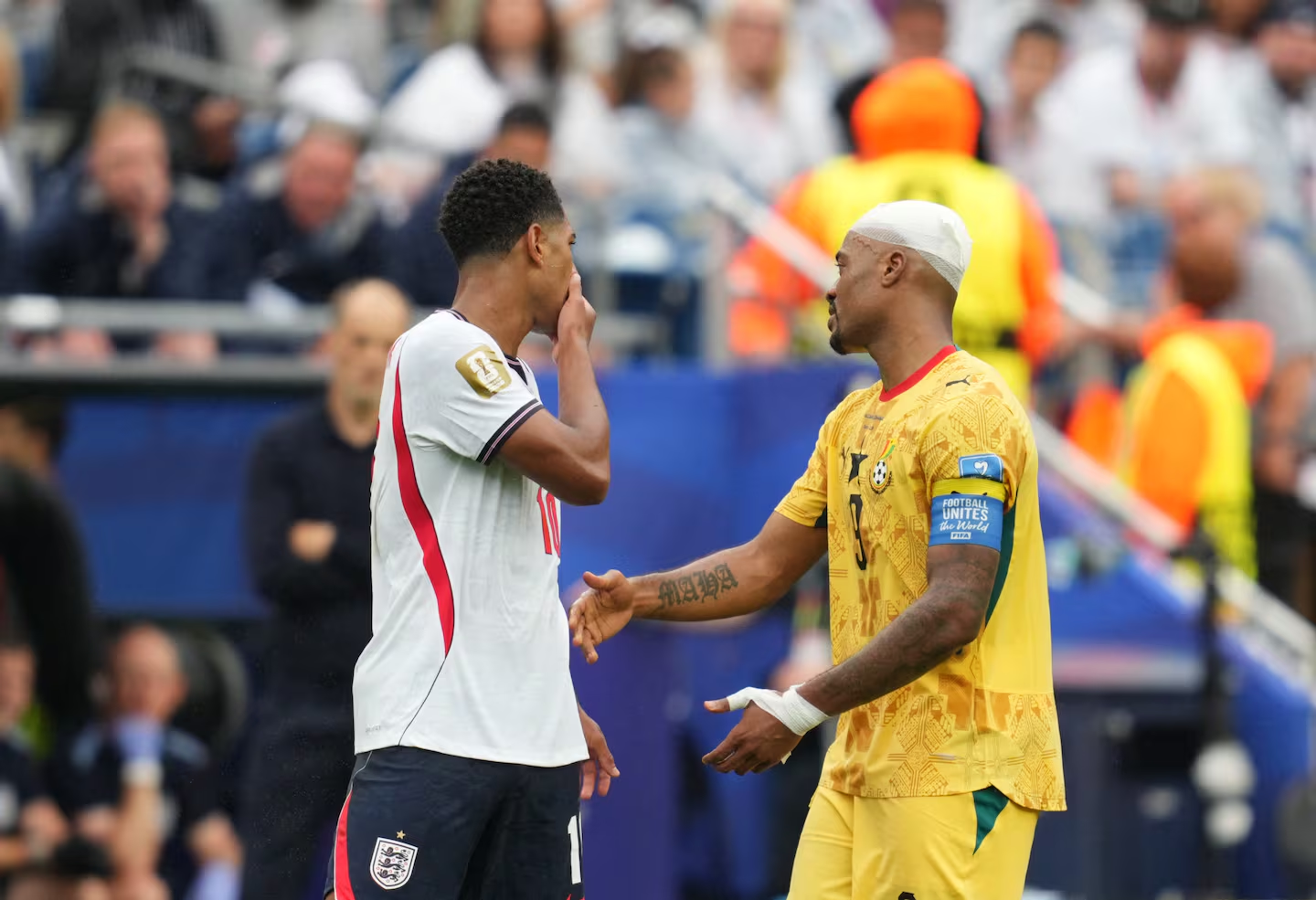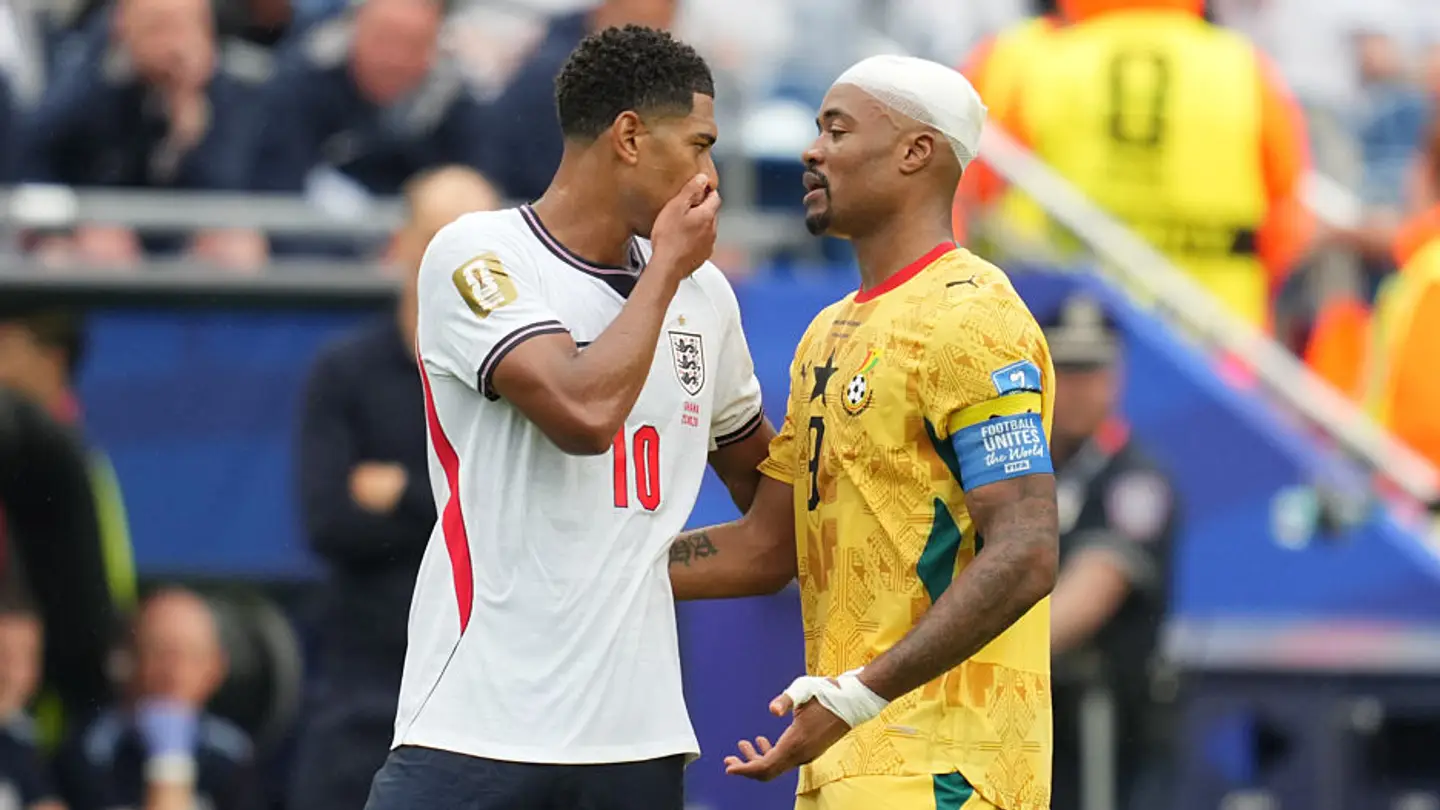
England midfielder Jude Bellingham was caught covering his mouth when speaking to Ghana striker Jordan Ayew during Tuesday’s goalless draw, prompting many to question why he was not shown a red card in accordance with FIFA’s new World Cup rules. The governing body states that a player who covers their mouth while confronting an opponent will be sent off, a rule that had Paraguay forward Miguel Almirón marching down the tunnel in the first half of his side’s 1–0 win over Türkiye on Friday. The 32-year-old covered his mouth during an altercation with Mert Müldür and paid the price.Yet when Bellingham acted in a similar manner against Ghana, there was no punishment for the Real Madrid star. A red card would have made the 22-year-old ineligible to represent the Three Lions against Panama in their group stage finale, but now he is free to participate in the all-important clash at MetLife Stadium, whereas Almirón must serve a one-game suspension.There is a key difference in the two incidents, though, that explains the punishment for Almirón and lack thereof for Bellingham. Compete against the world. | SPORTS ILLUSTRATEDWhy Bellingham Got Away With Covering His Mouth vs. GhanaThere was no heated exchange between Jude Bellingham (left) and Jordan Ayew. | Charly Triballeau/AFP/Getty ImagesAlthough Bellingham was at the center of a heated clash with the Ghana coaching staff at Gillette Stadium, his interaction with Ayew was not a hostile one. The two players appeared to be just chatting, unlike Almirón, who confronted Müldür after a melee broke out between Paraguay and Türkiye players.ESPN revealed Bellingham’s conversation with Ayew was deemed not “confrontational” and therefore did not warrant a red card for the England international. Referee Hector Said Martinez Sorto correctly allowed the No. 10 to stay in the game without a sanction.The decision reflected the distinction highlighted by FIFA’s head of referees Pierluigi Collina before the tournament. “Players can continue to cover their mouth with an arm and the shirt because they may chat with friends,” he said. “It’s normal to a chat before, during or after the match. So if the conversation is a friendly conversation, they can continue to do it without any problem.“When the conversation is confrontational, covering the mouth means that you are doing something very wrong, potentially, and the sanction is the red card.”Where the ‘Prestianni Rule’ OriginatedGianluca Prestianni (left) has been sanctioned for his comments toward Vinicius Jr. | Eric Verhoeven/Soccrates/Getty ImagesThe new law enacted at the World Cup is referred to as the ‘Prestianni Rule’ after Benfica winger Gianluca Prestianni covered his mouth to allegedly hurl racist insults at Real Madrid star Vinicius Junior.Prestianni pleaded his innocence by insisting he called the Brazilian a homophobic slur instead, which earned him a six-game ban from UEFA that FIFA upheld. The shameful incident prompted the governing body to create the ‘Prestianni Rule’ to combat players covering their mouths when confronting an opponent with suspected discriminatory language. “This thing about covering the mouth is for us a very, very important rule,” FIFA president Gianni Infantino told SNTV following Almirón’s red card against Türkiye.“It’s about respect. It’s about the example that we should give. If you have nothing to hide, you don’t cover your mouth when you speak to somebody.“The rules have been made very clear to everyone.”READ THE LATEST WORLD CUP NEWS, ANALYSIS AND INSIGHT FROM SI FCAdd us as a preferred source on GoogleFollow
Why England’s Jude Bellingham Wasn’t Sent Off for Covering His Mouth vs. Ghana
The England international avoided Miguel Almirón’s fate thanks to a key distinction.
565 words~3 min read