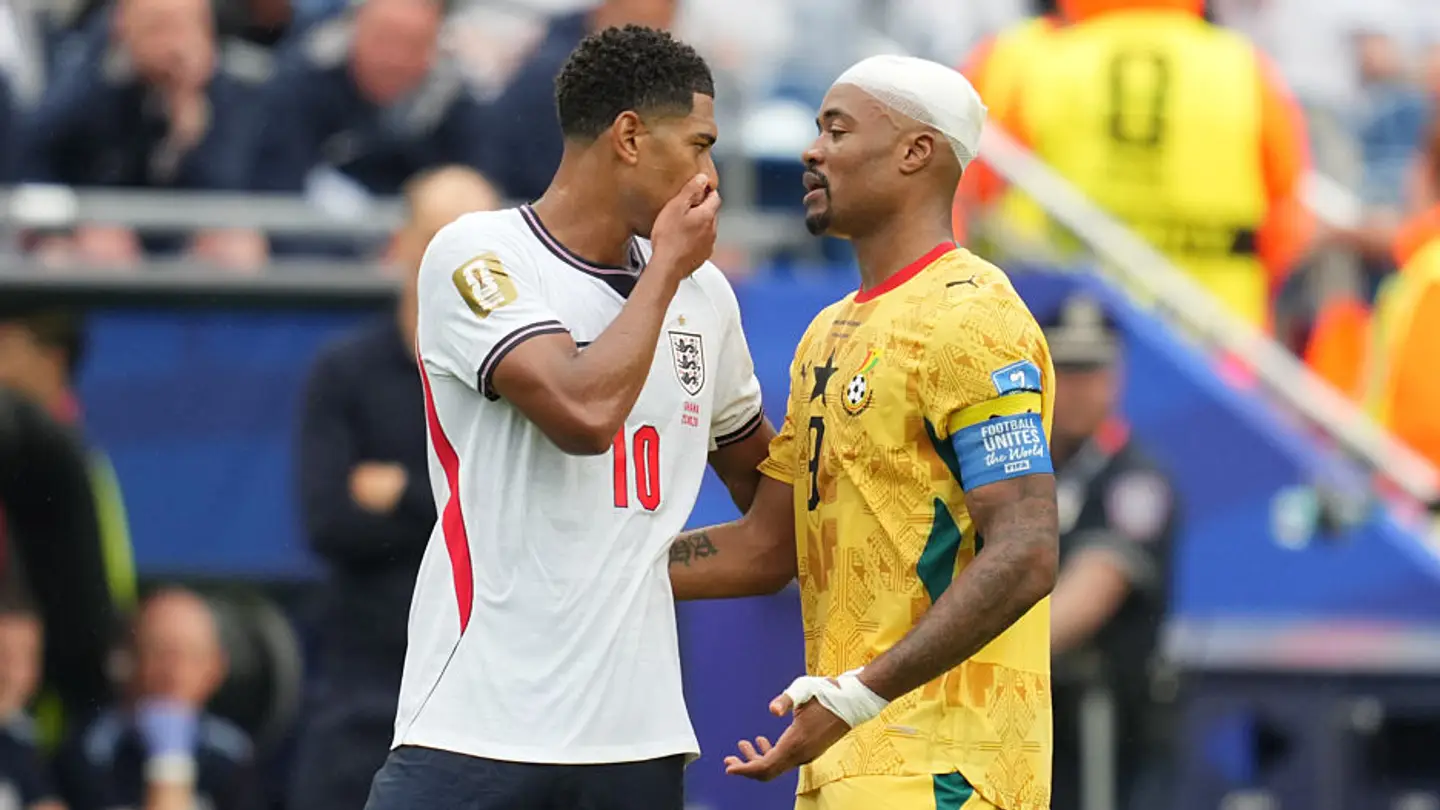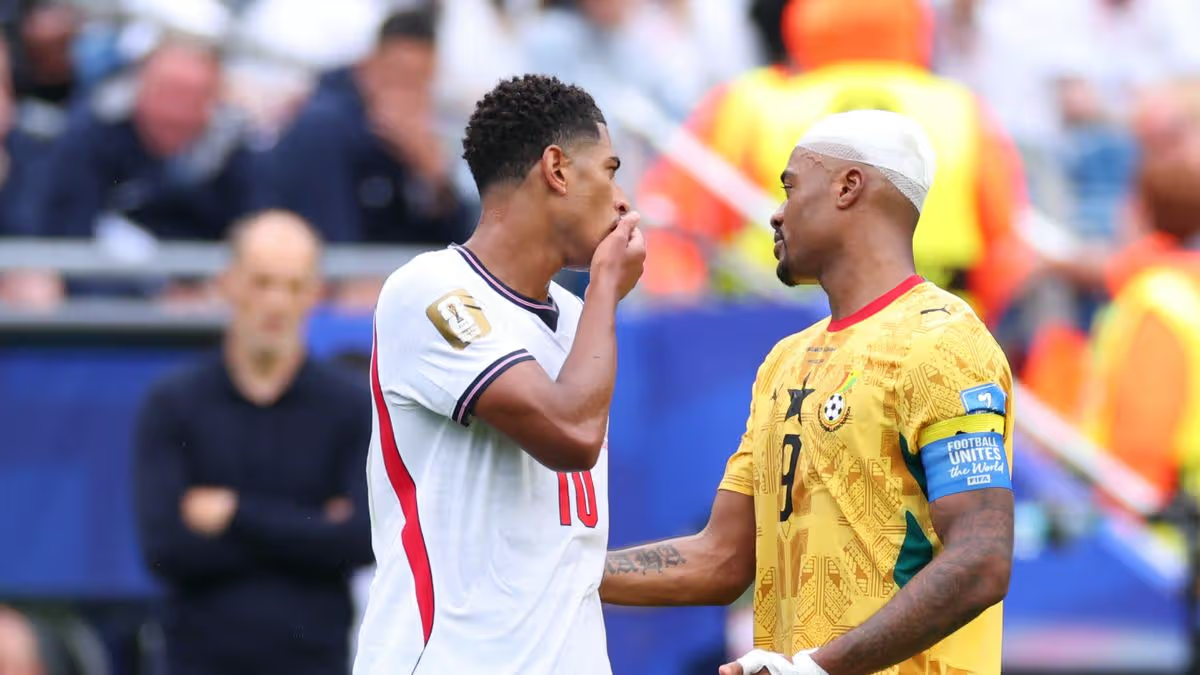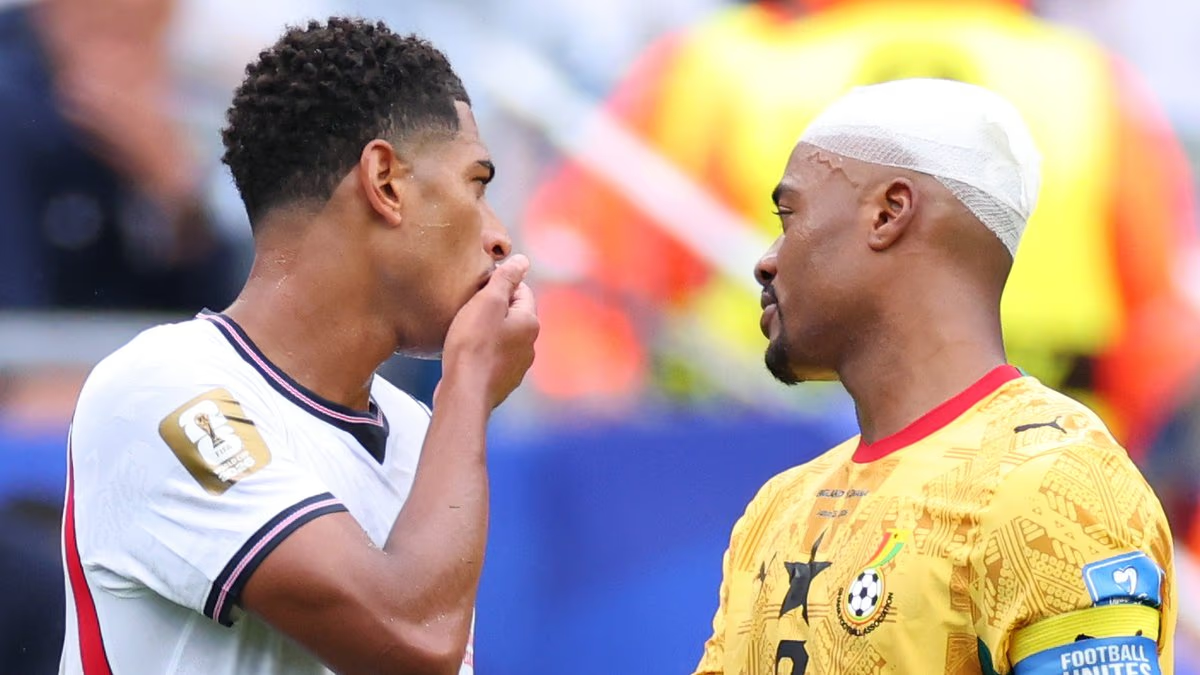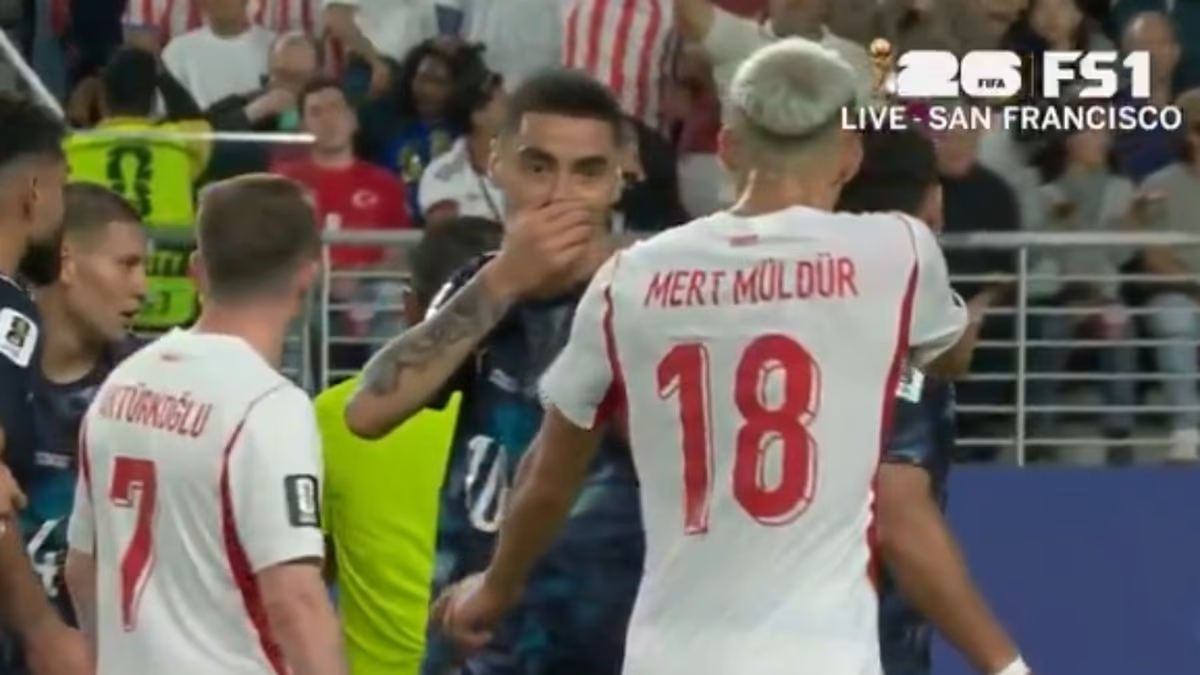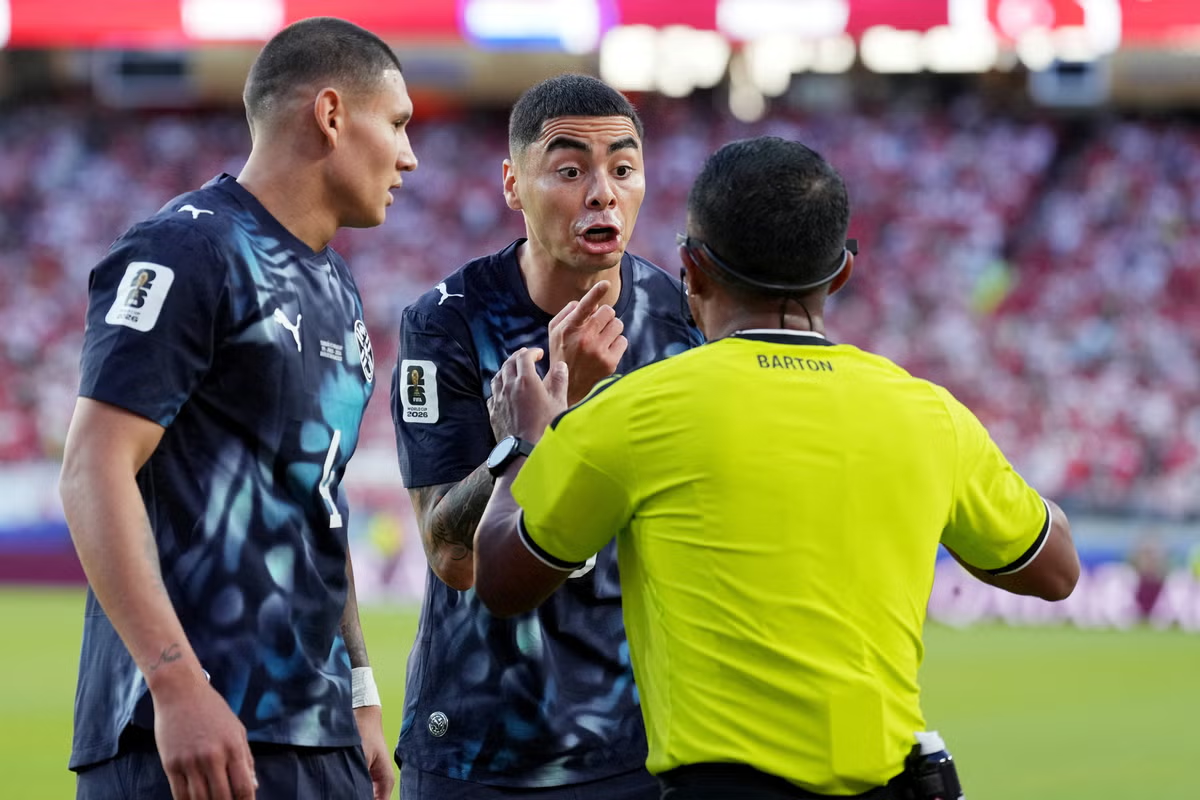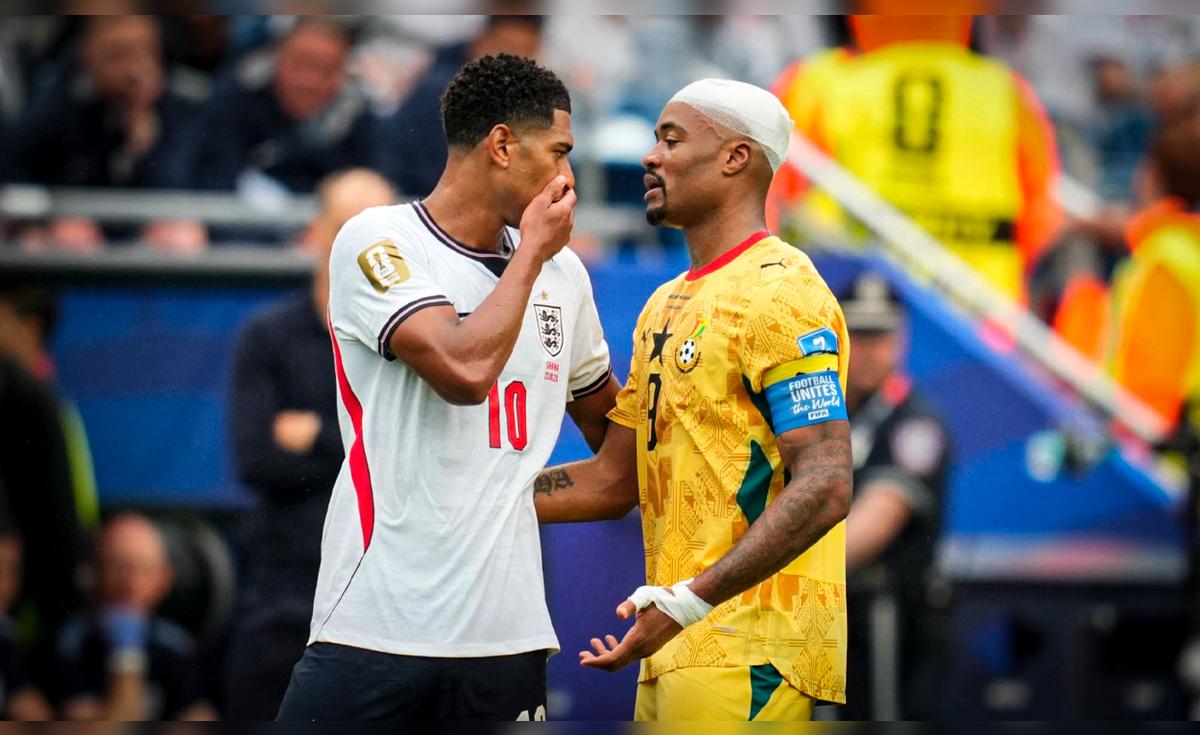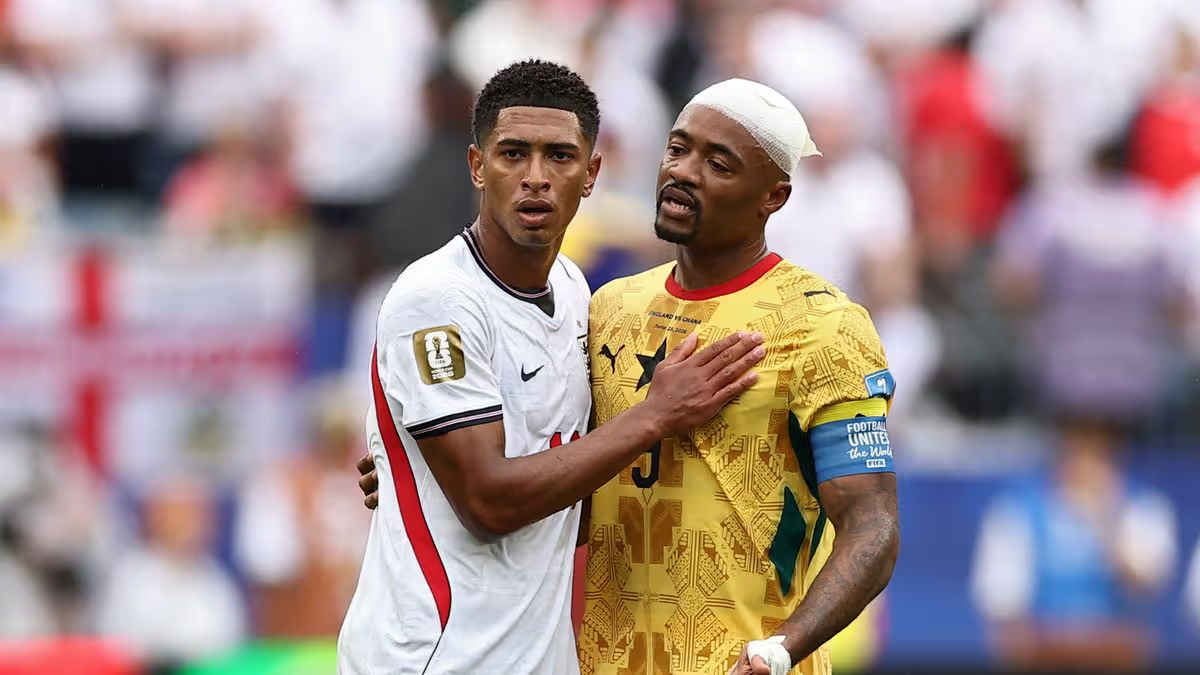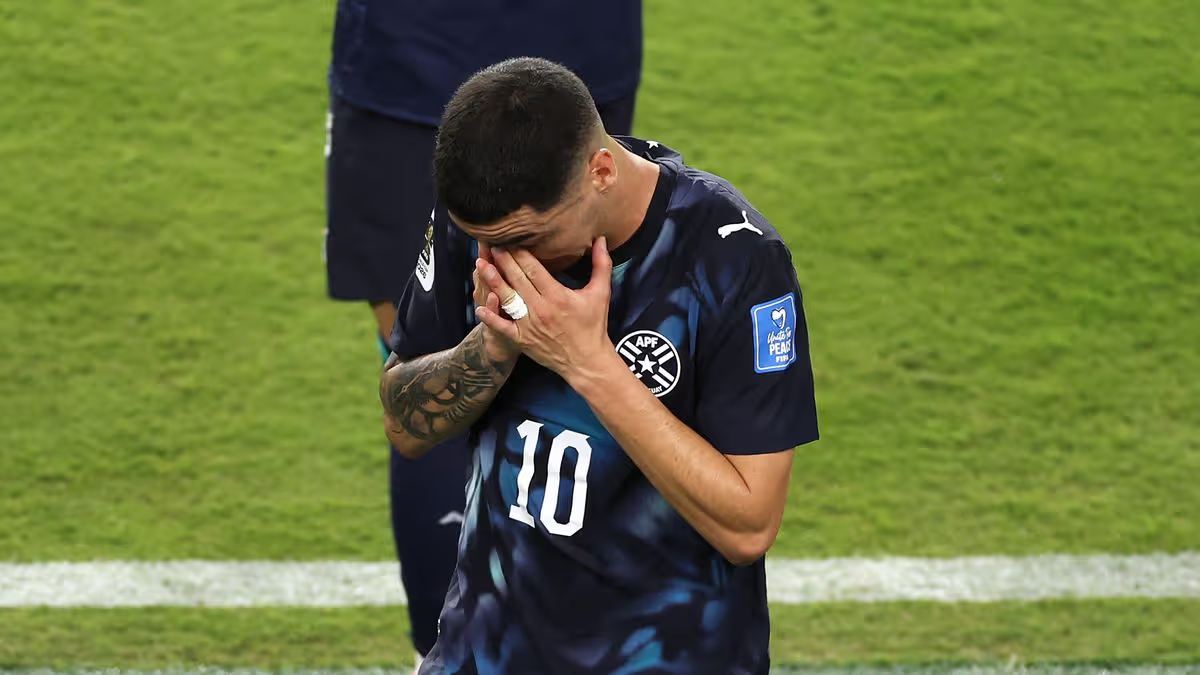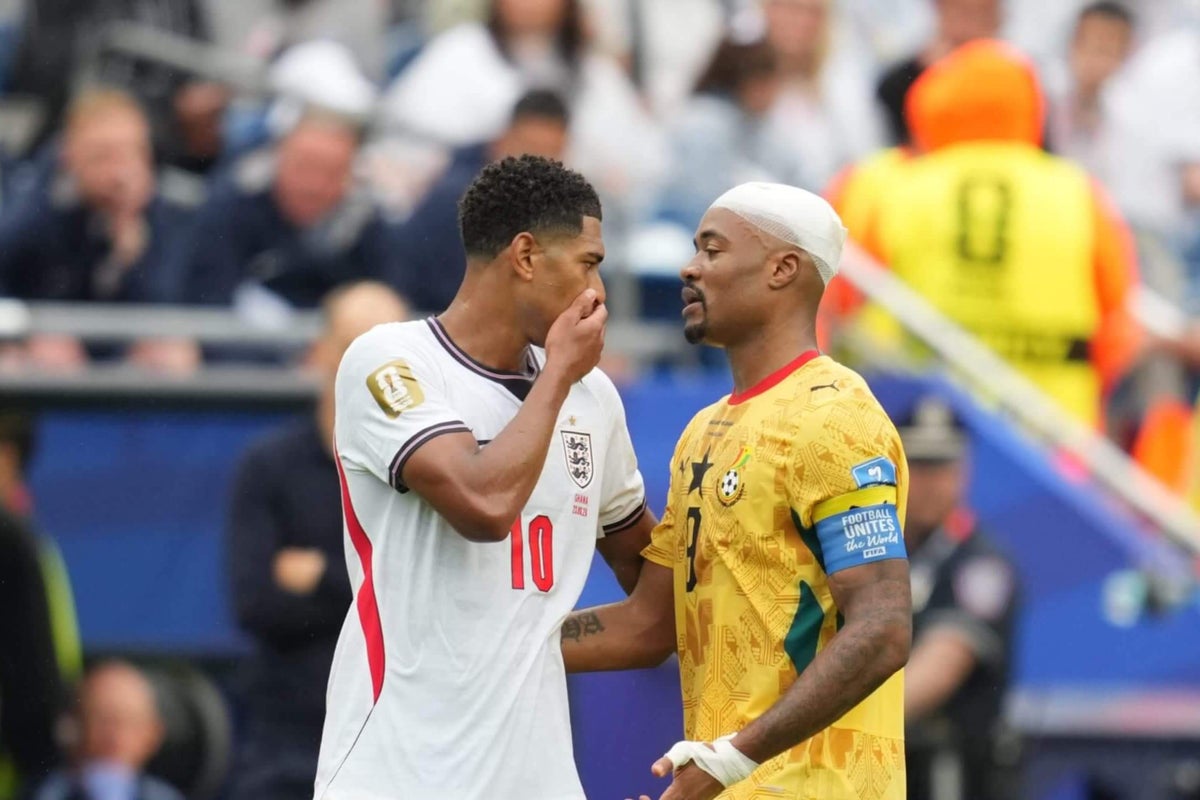
England midfielder Jude Bellingham was pictured covering his mouth while speaking to Ghana forward Jordan Ayew during Tuesday’s World Cup group stage fixture — an image that had some viewers revisiting the rulebook.Paraguay forward Miguel Almiron was sent off when he covered his mouth while speaking to Turkey defender Mert Muldur on Friday — the first-ever red card for such an offence, after the introduction of a new rule ahead of this summer’s tournament.This led to some viewers questioning why Bellingham, 23, did not receive the same punishment at Boston Stadium.However, there is not a blanket ban on the gesture and the circumstances surrounding the exchange are key, meaning it was the correct decision to not dismiss the Real Madrid midfielder against Ghana. The Athletic explains the intricacies of the rule and why Bellingham stayed on the pitch.Why was Bellingham not sent off and why was there confusion?The law states that a red card is shown to players covering their mouths in instances of confrontation.Covering the mouth has long been commonplace in football, with players using the gesture to prevent opponents and television cameras from identifying tactical instructions or private conversations.FIFA has told referees not to punish the action automatically and instead assess whether the conversation forms part of a confrontation.
Why Jude Bellingham was not shown a red card for covering his mouth at the World Cup
Paraguay forward Miguel Almiron was sent off when he covered his mouth — but the new rule is not a blanket ban on the action.
611 words~3 min read