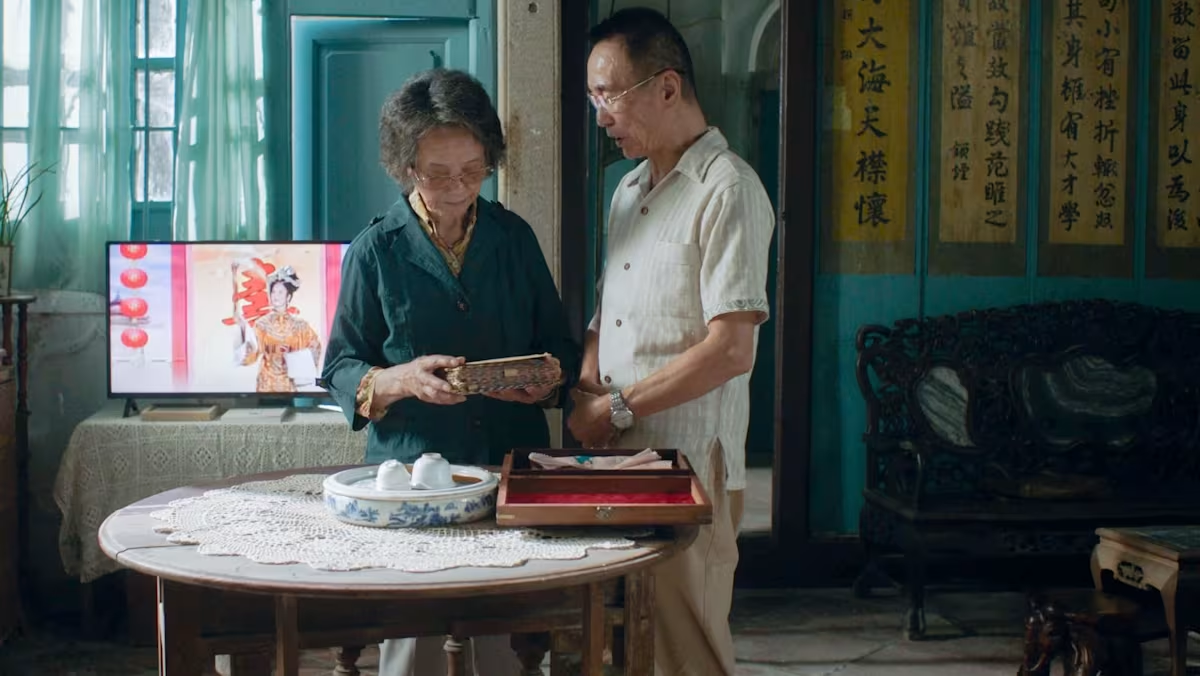
SINGAPORE: Why did a film from China, shot almost entirely in Teochew language on a modest budget with mostly non-professional actors, create such a storm in Singapore? Tickets for the initial eight screenings of Dear You in Teochew were reportedly snapped up in under two hours. Days later, all 4,800 tickets to eight additional screenings were sold out about an hour after they became available on Monday (Jun 22). Some declared online that they would cross the Causeway to Johor Bahru just to watch the film in its original language. The Infocomm Media Development Authority (IMDA) had earlier decided that a Mandarin-dubbed version would be used for general release, with the Teochew version only allowed for festival and niche screenings. This has sparked swift and passionate debate about Singapore's language policies. Local filmmakers Eric Khoo and Jack Neo wrote a forum letter, calling the policy “outdated”. My colleague Luke Lu penned a CNA commentary questioning whether it is time to rethink restrictions on Chinese “dialects” in mainstream media. But is this really all about the policy?
BUZZ OVER FILMS WITH DIALECTIt seems that every time a film uses a Chinese “dialect”, it creates a buzz disproportionate to the occasion. Two years ago, How To Make Millions Before Grandma Dies, a Thai film with only a handful of lines in Teochew, touched a raw nerve across Singapore, mine included. Over two decades ago, Jack Neo's Money No Enough, with its generous portions of Hokkien, was a home run at the local box office. Other films have drawn similar, if quieter, public fascination.What is it about films with “dialect” in them?Everyone has been quick to point to the Speak Mandarin Campaign. Launched in 1979, it aimed to make Mandarin the unifying language for Singaporean Chinese, sacrificing in the process Hokkien, Teochew, Cantonese and other non-Mandarin Chinese languages. (They are not actually “dialects”, which are variants of a single language.)In fact, the campaign was so successful that these languages no longer threaten Mandarin. It is English that does. The conditions that justified restricting “dialect” media in 1979 do not describe Singapore in 2026. The policies speak of the ghost of a past anxiety. But the ghosts alone cannot explain how passionate the response has been.