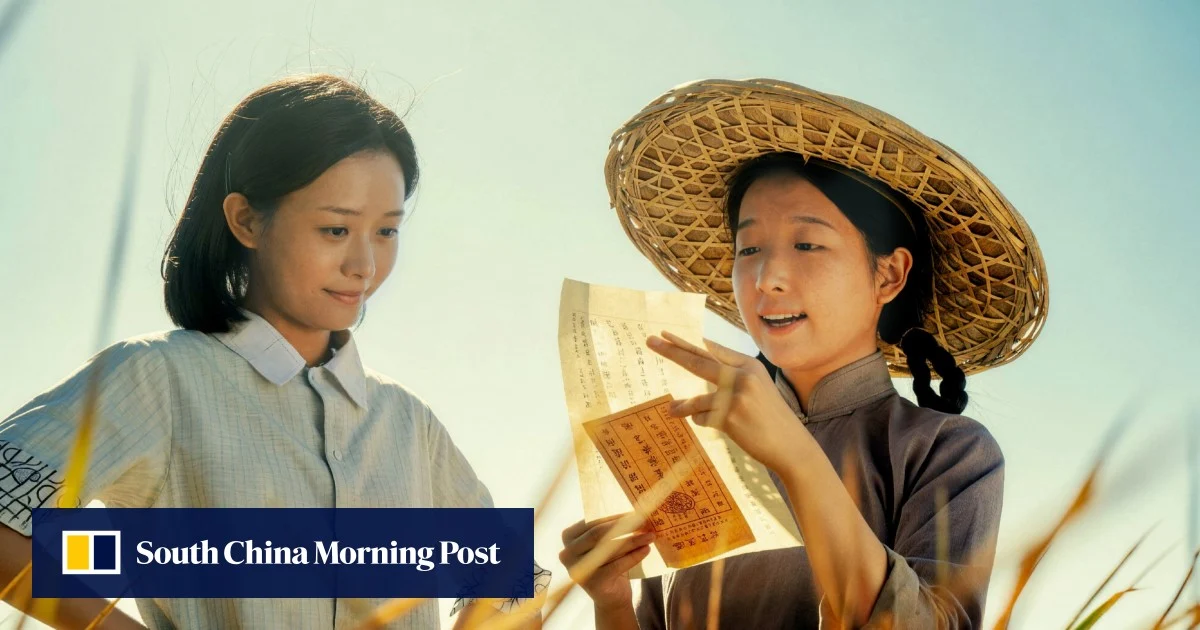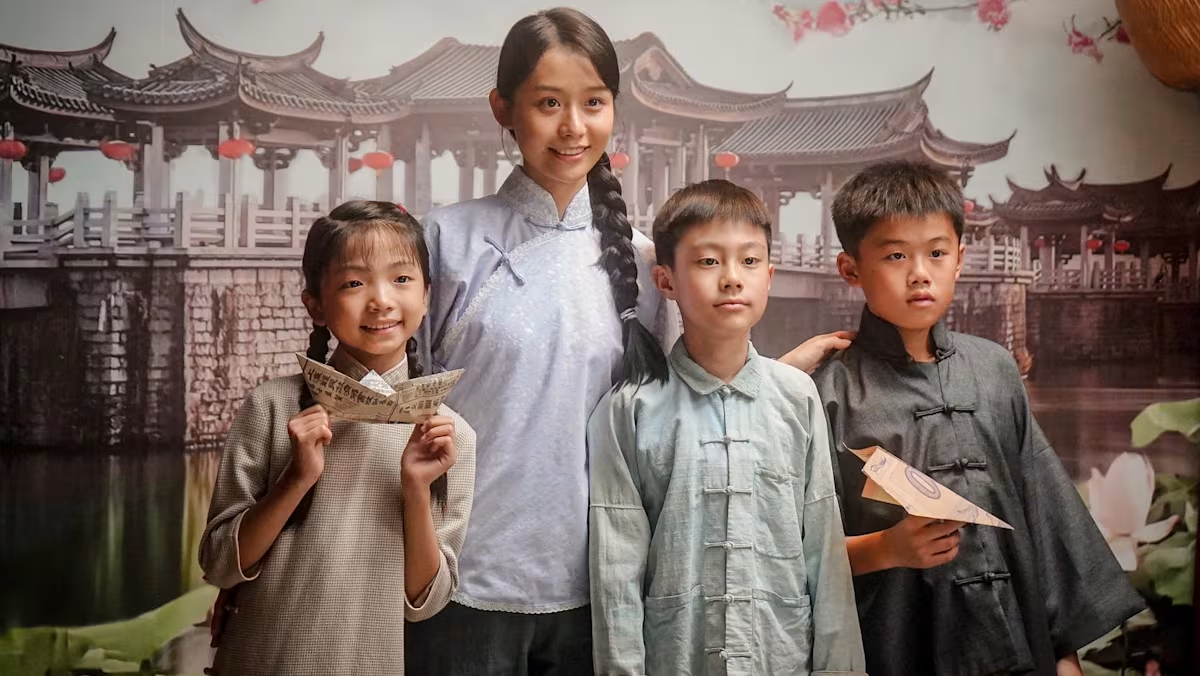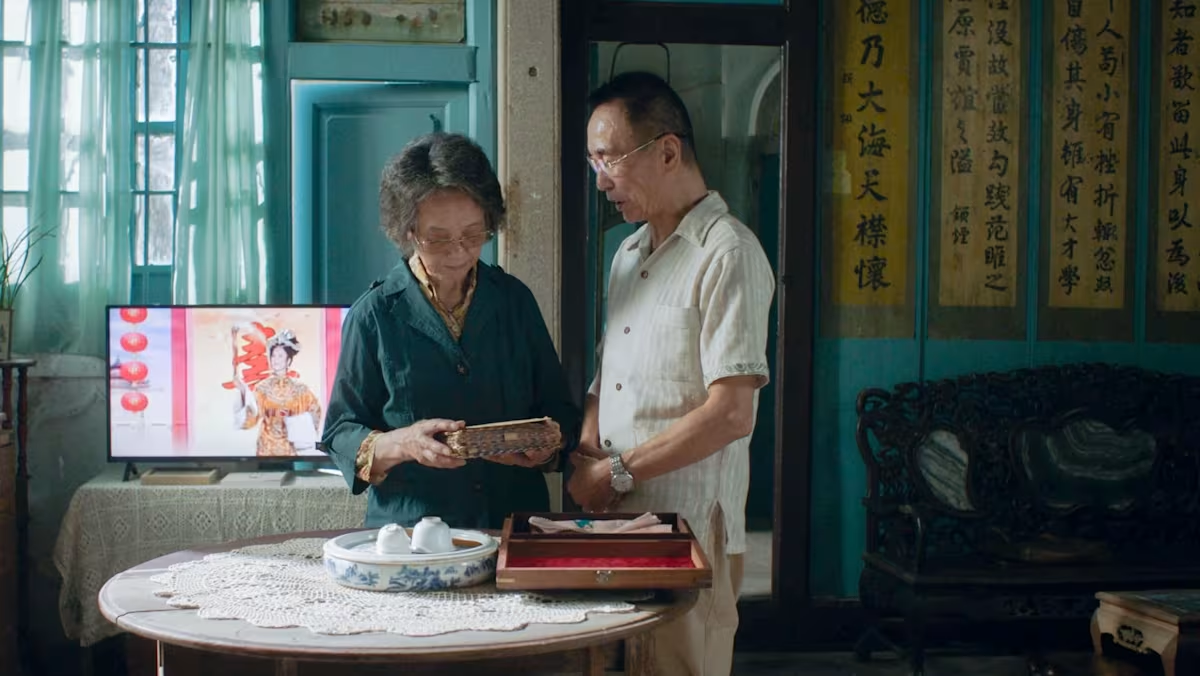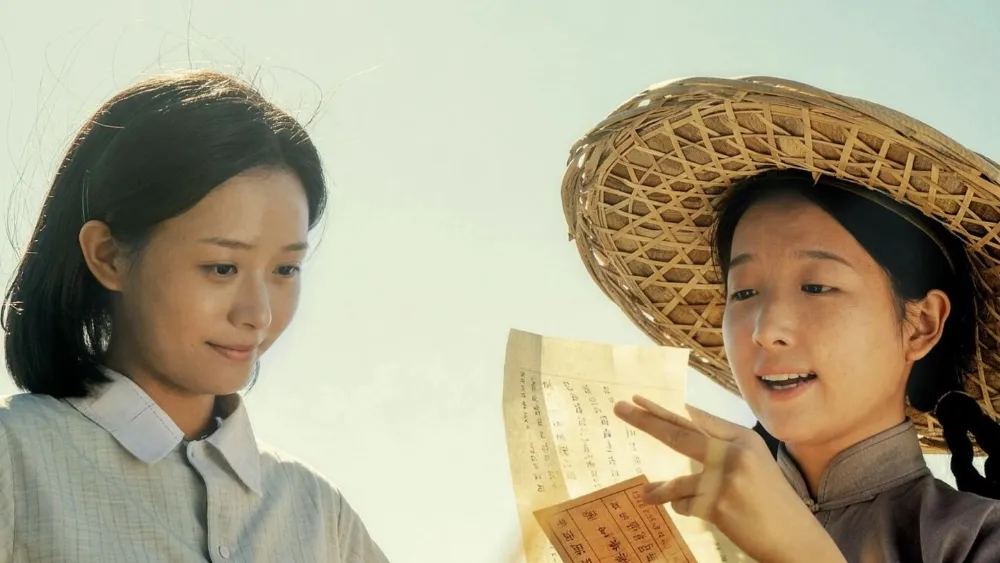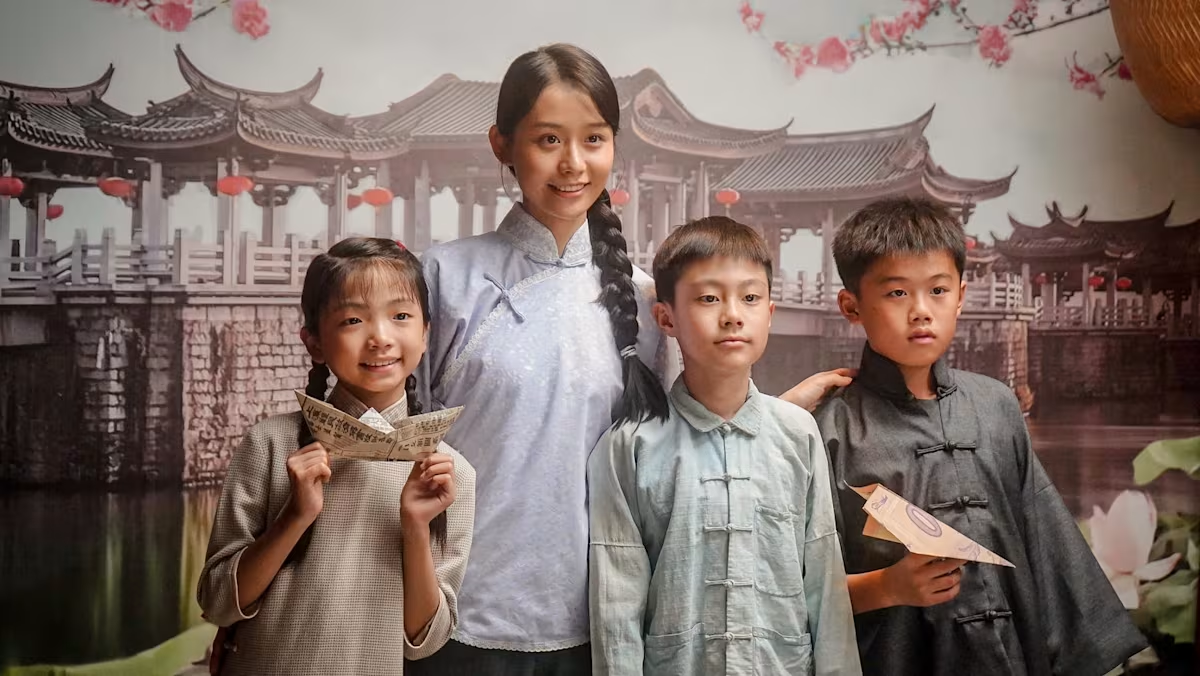
The film 'Dear You' follows a man uncovering his family’s past through qiaopi — letters and money sent back to relatives in China by migrants working abroad. — Picture via X/GSC (New users only) It's tax relief season! Get up to RM300 when you save with Versa! Plus, enjoy an additional FREE RM10 when you sign up using code VERSAMM10 with a min. cash-in of RM100 today. T&Cs apply. By Malay Mail Tuesday, 16 Jun 2026 6:17 PM MYT KUALA LUMPUR, June 17 — A hit Chinese film that has struck an emotional chord with Singapore’s Teochew community is also reigniting debate over language, heritage and identity after reports that its commercial release in the city-state will be in Mandarin rather than its original Teochew dialect.According to the South China Morning Post (SCMP), Dear You has become a cultural phenomenon among many Singaporean Chinese, particularly those of Teochew descent, for its portrayal of migration, family sacrifice and remittance letters sent home by overseas Chinese.The film follows a man uncovering his family’s past through qiaopi — letters and money sent back to relatives in China by migrants working abroad.Singaporean Kristen Chng told SCMP the film reminded him of his grandfather, who left Guangdong province as a teenager and settled in Singapore, regularly sending remittances home despite having little money himself.“My grandfather moved to Singapore in his teens and had a habit of sending qiaopi home to support his family and the war effort despite having so little,” Chng was quoted as saying.The film, which has earned more than 1.6 billion yuan (RM943 million) at the Chinese box office since its release in April, has generated significant anticipation in Singapore ahead of its cinema debut this week.However, members of the local Teochew community expressed disappointment after learning that the version screened commercially would be dubbed in Mandarin, with only limited screenings of the original Teochew-language version available, according to the report. Teochew community member Eng Ting Ting said the film mirrored her grandfather’s own journey to Singapore and said she had hoped her children could experience the story in its original dialect.Academics interviewed by the publication said the original language carried cultural nuances that could be lost in translation and represented a valuable opportunity for younger generations to reconnect with their heritage.Singapore’s Infocomm Media Development Authority said the Mandarin-dubbed version would be screened commercially, while the original Teochew version would be available at selected premiere screenings and special events.The issue has also revived discussion about Singapore’s decades-old language policies.The republic’s “Speak Mandarin Campaign”, launched in 1979, promoted Mandarin as the common language among Chinese Singaporeans and reduced the use of dialects such as Teochew, Hokkien and Cantonese in mainstream media.Teochew speakers form one of Singapore’s largest Chinese dialect groups, accounting for about one-fifth of the republic’s ethnic Chinese population, according to official census data.SCMP reported that some younger Singaporeans have increasingly sought to reconnect with their roots through heritage trips to ancestral villages in China and efforts to learn dialects spoken by their grandparents.One such advocate, 21-year-old Donald Lee, said dialects played an important role in preserving family connections across generations.“There is a particular kind of loneliness in not being able to understand your own grandparents,” he told SCMP.“No policy could ever measure this feeling, but it’s exactly the kind of thing dialects exist to prevent.”
Hit Chinese film ‘Dear You’ sparks debate in Singapore as Teochew speakers lament Mandarin-only release
KUALA LUMPUR, June 17 — A hit Chinese film that has struck an emotional chord with Singapore’s Teochew community is also reigniting debate over language, heritage and...
554 words~3 min read