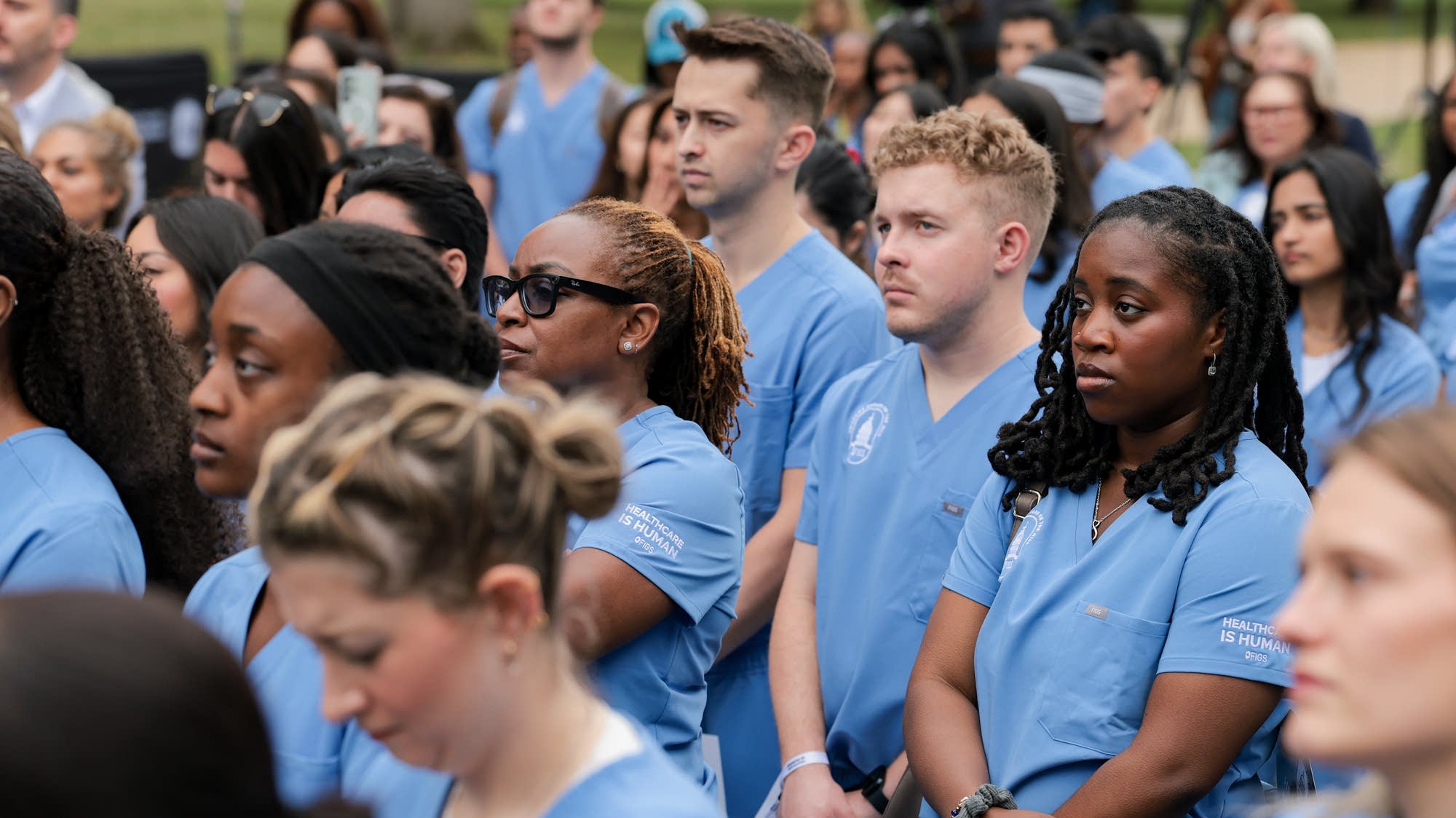
Starting on July 1, new graduate students will face a limit on how much money they can borrow from the federal government.Students in most programs will be able to take out no more than $100,000 worth of federal loans, regardless of the cost of the degree.The cap is twice that in professional programs, including law school and medical school but not including graduate nursing or physician assistant programs. Now, advocacy groups are suing the Department of Education to try to change that. The median tuition for a physician assistant or associate program is about $100,000. Add in living expenses, and Chantell Taylor at the American Academy of Physician Associates said it’s common for a degree to cost $200,000. “If P.A.s are not entitled to the higher student loan caps, many will simply not enter the P.A. profession,” Taylor said. Several lawsuits are aiming to get P.A. and graduate nursing programs included on the list of professional degrees eligible for higher loan caps.If that doesn’t happen, Betsy Mayotte at the nonprofit The Institute of Student Loan Advisors said lots of students will have to take out private loans. “And not everybody qualifies for a private loan. And even if they do, private loans don't have the safety nets and lower payment options that federal loans do,” Mayotte said.Mayotte said that may make some people opt out of P.A. and nursing degrees altogether and make others less inclined to take lower-paying jobs in rural areas where there is already a shortage of healthcare providers.
New federal student loan limits threaten the supply of physician assistants, advocates say
A new cap on borrowing from federal student loan programs isn’t enough to cover the cost of many P.A. and advanced nursing degrees, advocates say.
252 words~1 min read