Learn what agentic systems are, how AI agents work, and how agentic AI automates complex, multi-step workflows across enterprise use cases.
by Databricks Staff
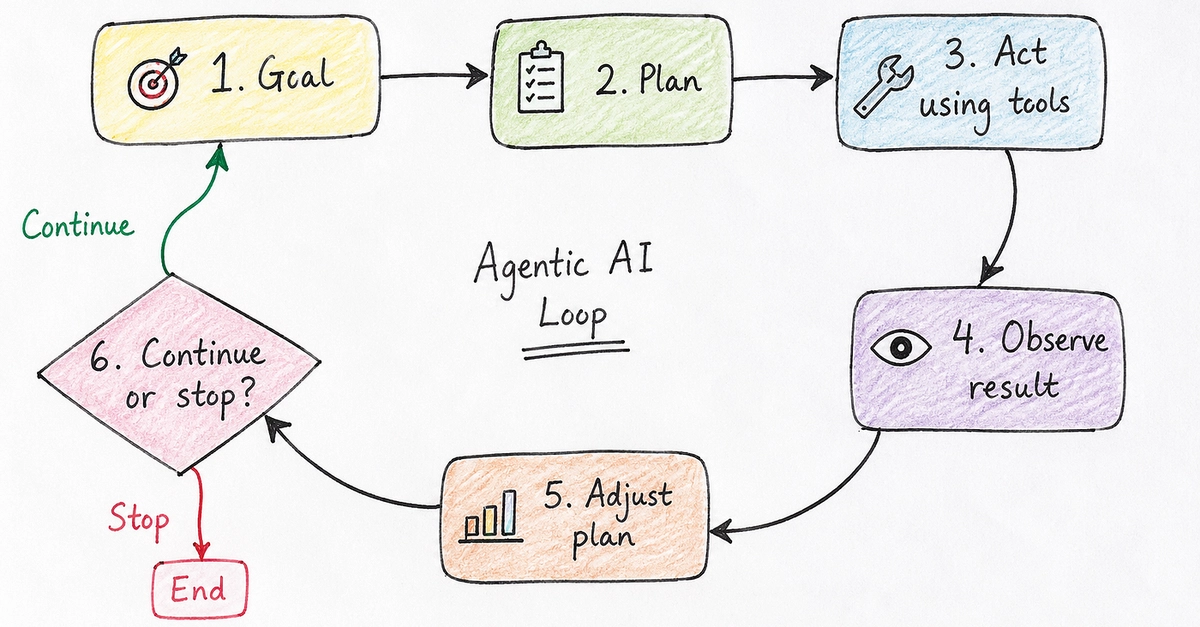
Agentic AI is a class of artificial intelligence in which software systems autonomously plan, execute, and adapt multi-step workflows to achieve specific goals — with minimal human intervention at each step. Where conventional AI tools wait for a prompt and return a single response, agentic systems operate as persistent actors: they perceive context, reason over objectives, call external tools, and refine their behavior based on outcomes.
A traditional AI model receives an input and produces an output; an agentic AI system receives a goal and pursues it across multiple steps, tools, and decisions until the objective is met or a human operator intervenes. This distinction — between responding and acting — is what makes agentic AI a fundamentally advanced form of artificial intelligence and a distinct category from generative AI or traditional machine learning systems.
Choosing between agentic AI, generative AI, and traditional AI models is now a core decision in enterprise AI strategy. The sections below define the key terms, trace how AI agents work, and map the use cases where agentic systems deliver the greatest business value — including agentic analytics, enterprise automation, and operational management.