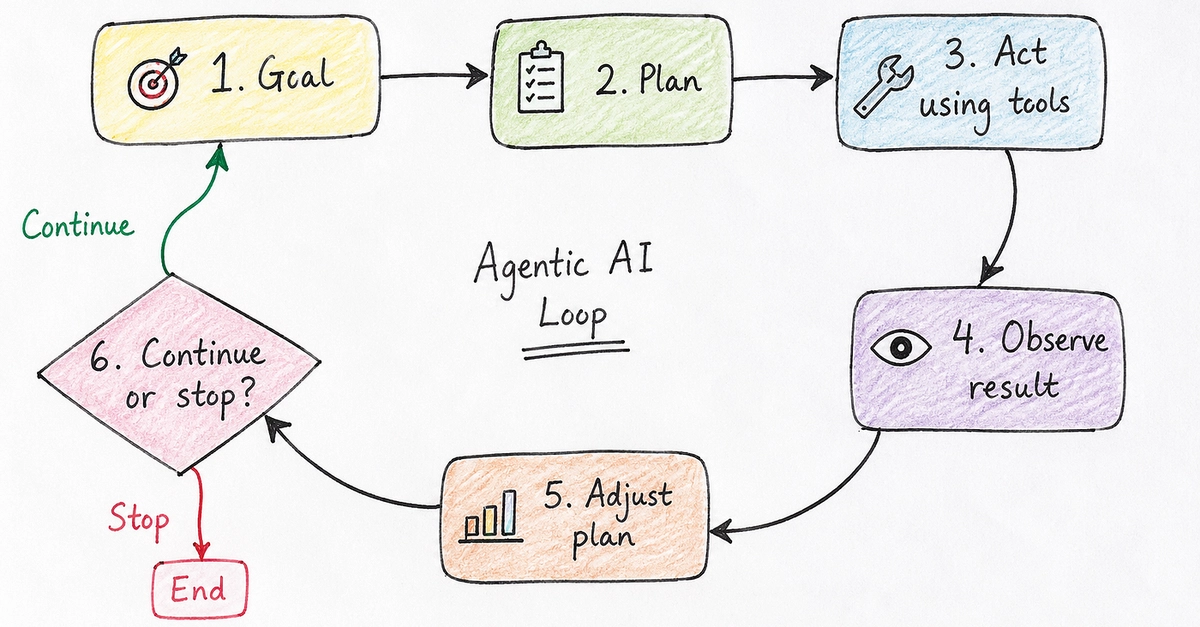
Agentic AI is software built on a large language model (LLM) that can pursue a goal by taking actions on its own. It uses tools, calls APIs, runs code, and reacts to what it sees, rather than just answering one prompt at a time. The plain definition of what is agentic AI: a model that runs in a loop, deciding its own next step until the goal is met. Because the work shifts from generating text to taking actions, oversight has to change too.
This explainer covers what agentic AI is, how an agent works, what makes it both powerful and risky, where you'll meet it, and why "just add a human" doesn't automatically make it safe. It also covers how to start governing agents instead of reviewing their outputs.
What agentic AI is (vs. a chatbot)
A chatbot, or any single LLM call, is one round trip. You send a prompt, the model returns text, and that's it. The model produces words; a human decides what to do with them. Nothing happens in the world unless a person acts on the answer.
An AI agent is different in one decisive way: it can act. Give it a goal, and it doesn't just describe a solution. It works toward it by using tools. It can read your files, query a database, send an email, run a shell command, edit code, or browse a website. Then it observes the result and keeps going. The human is no longer the only one taking actions in the loop. The agent is.