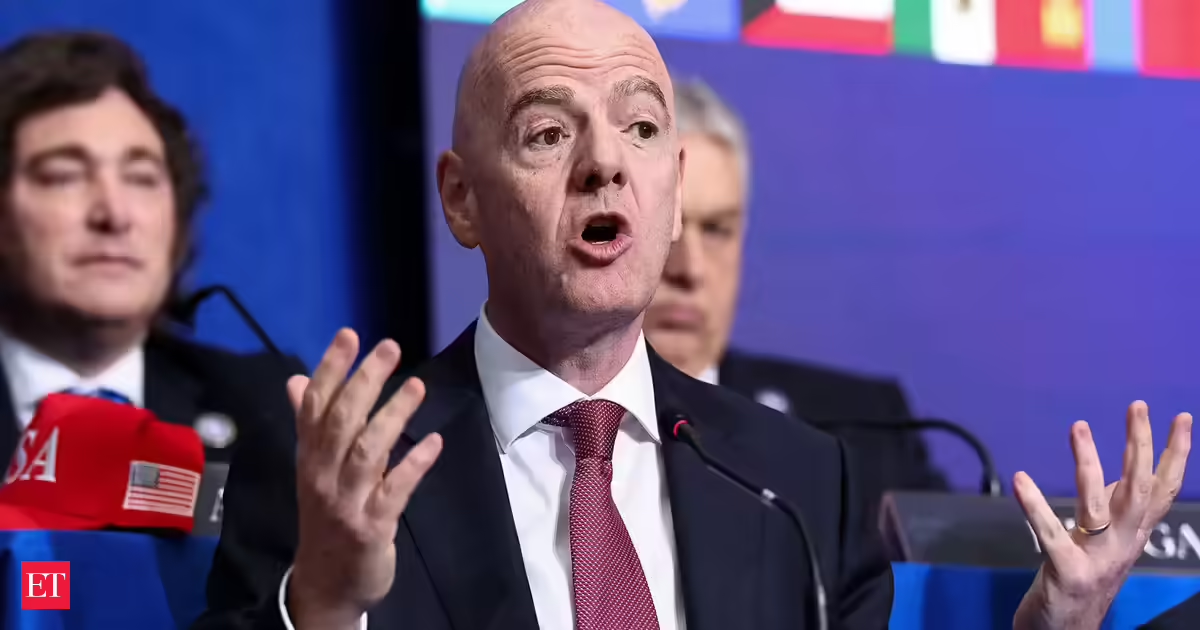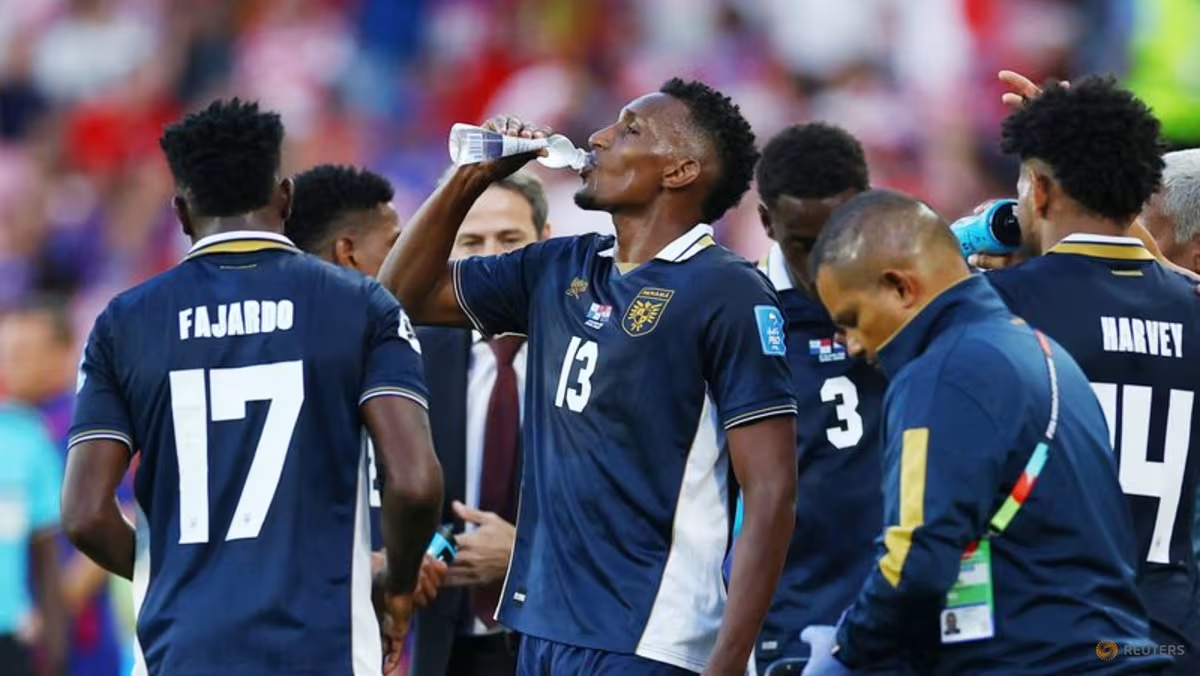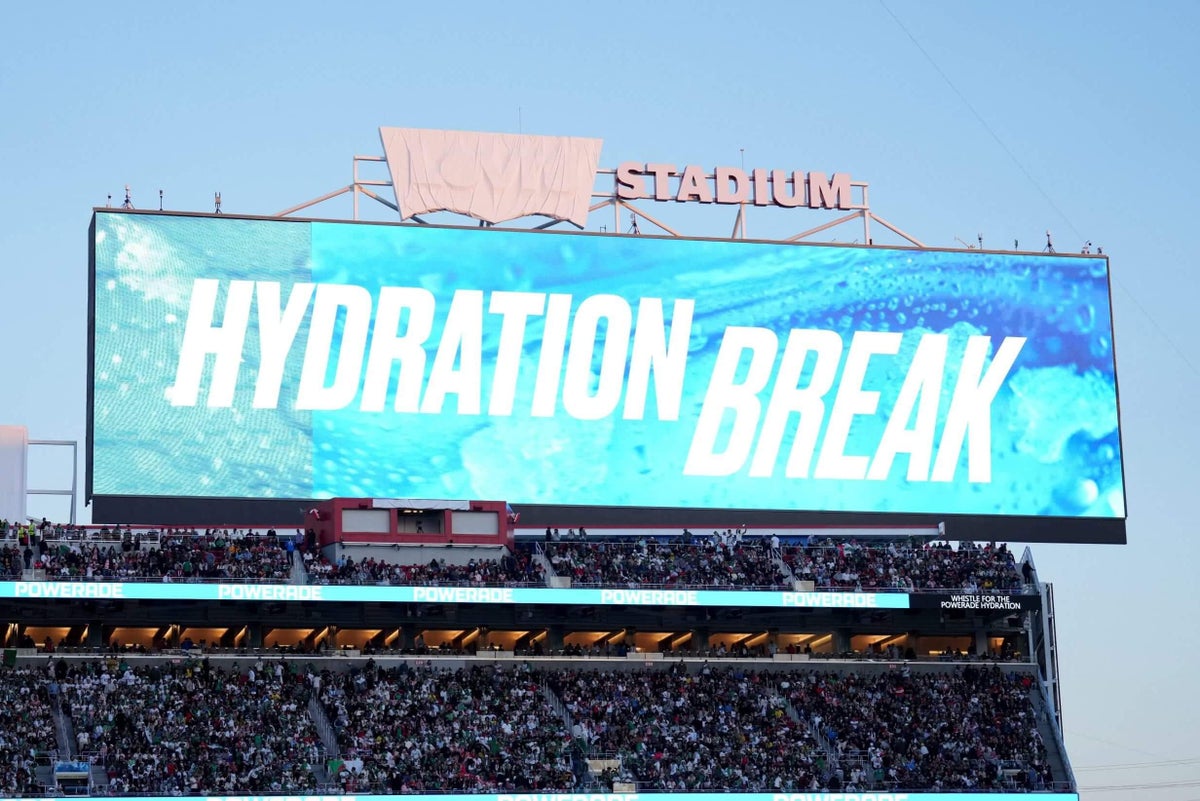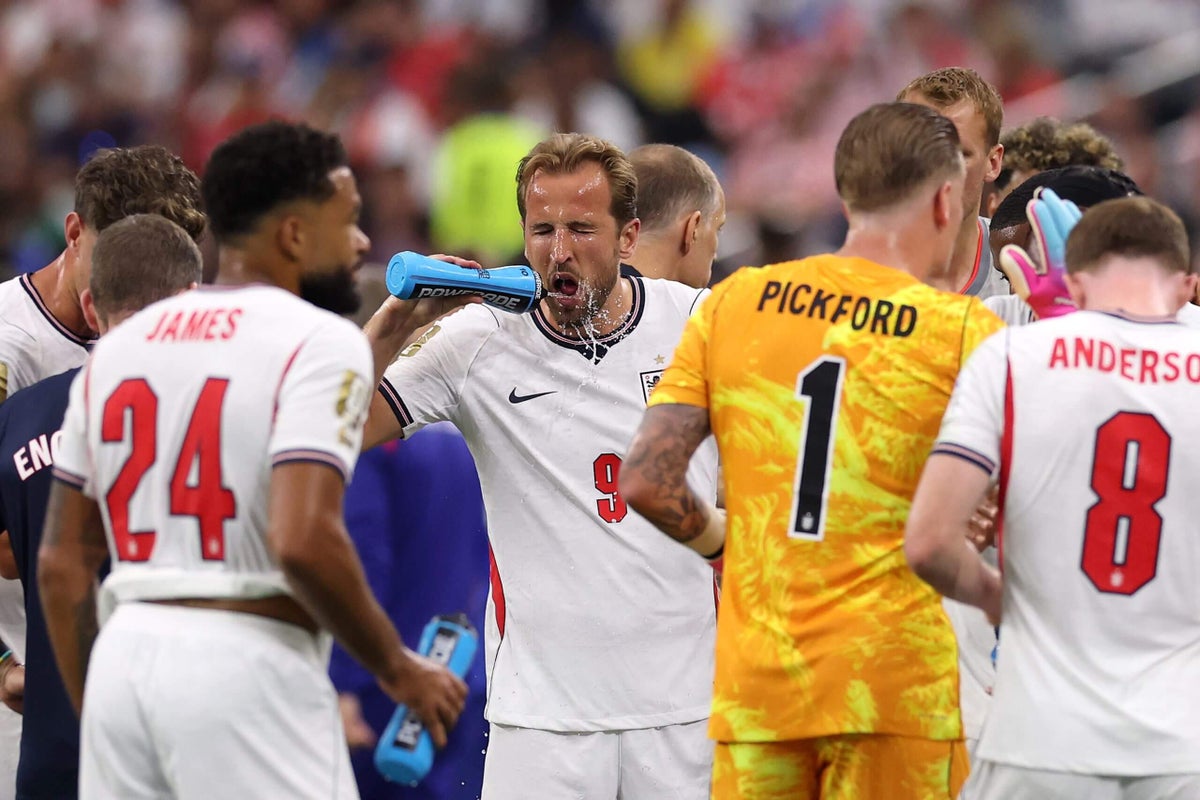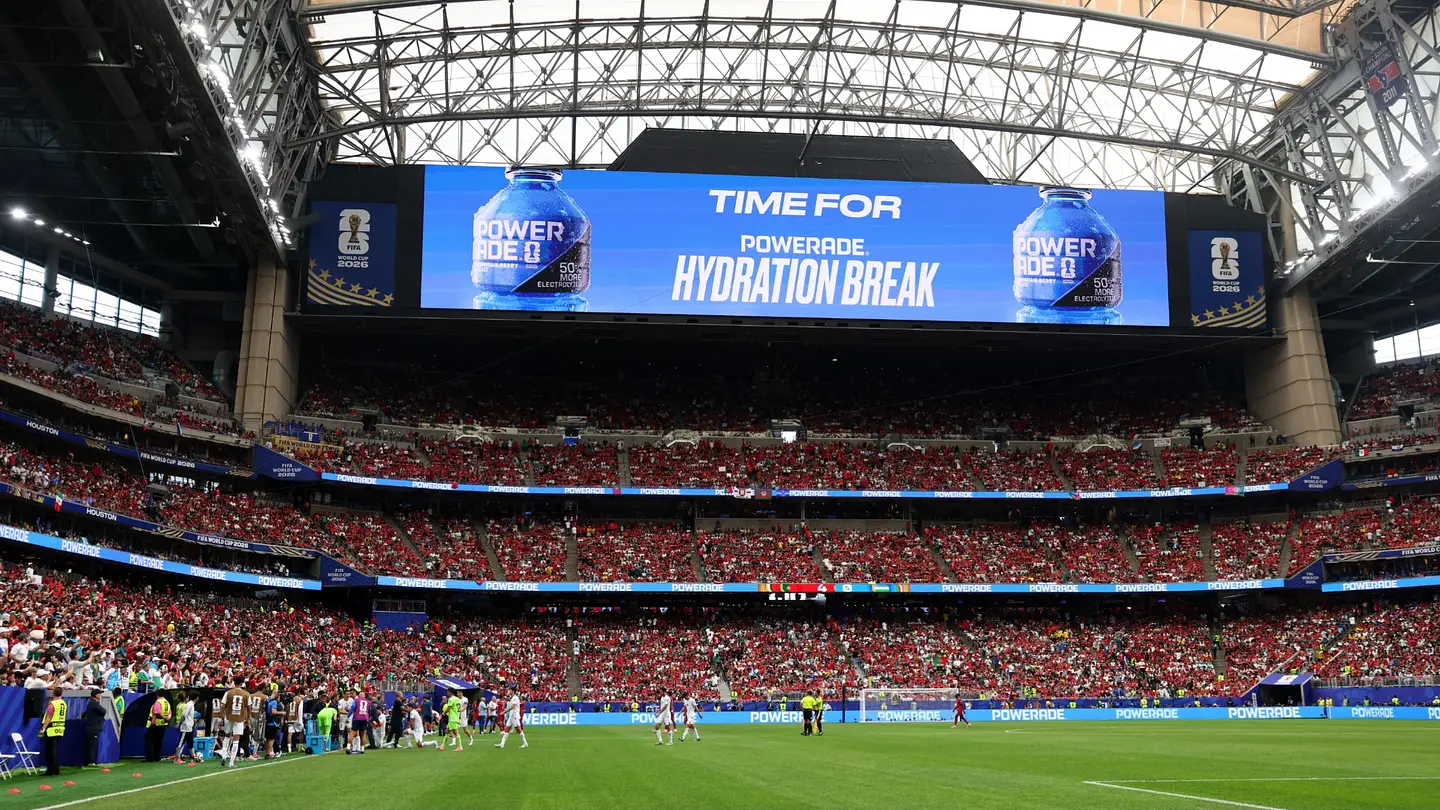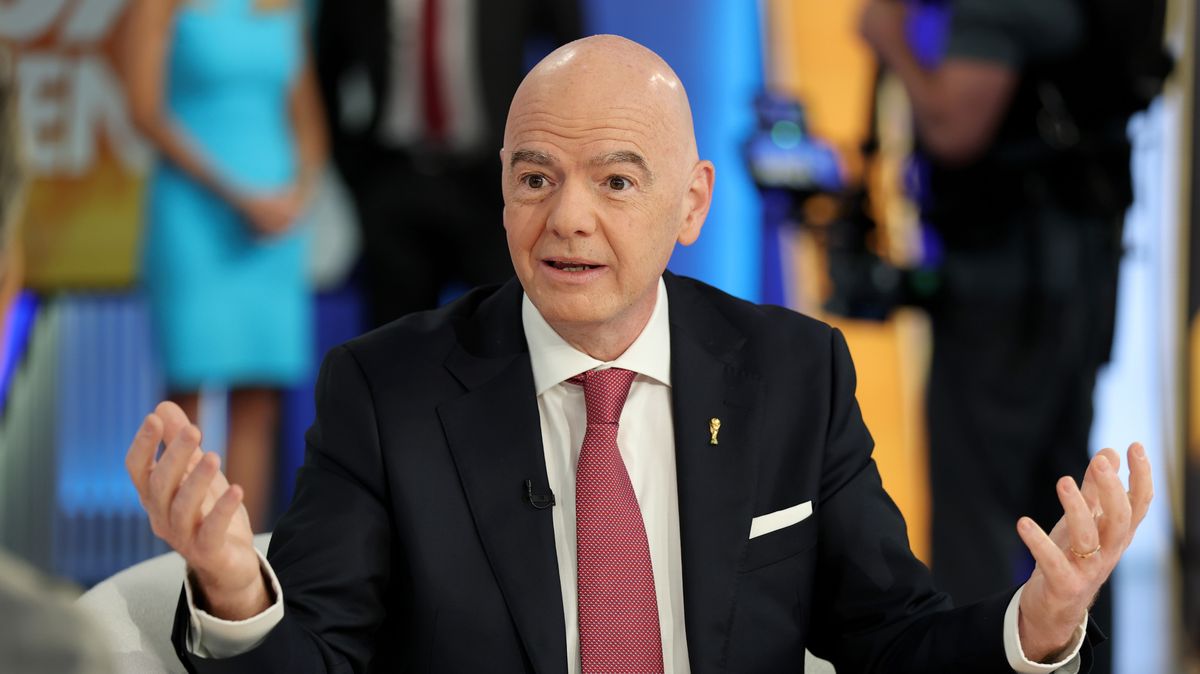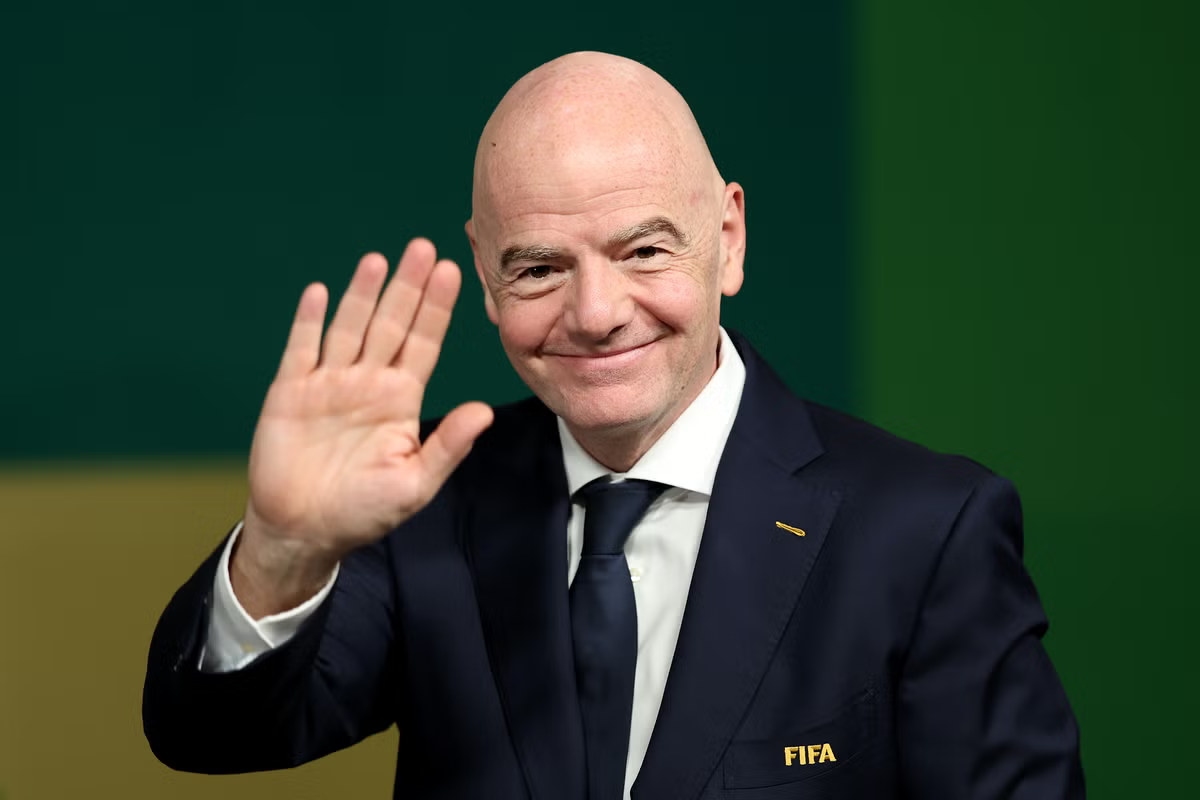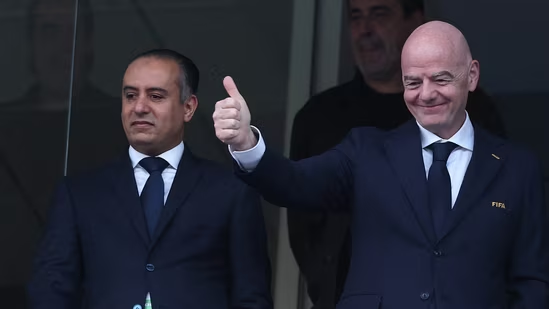
FIFA president Gianni Infantino has rejected suggestions that mandatory hydration breaks at the 2026 FIFA World Cup were introduced for commercial gain, insisting that the decision was taken only with sporting fairness and player welfare in mind.Gianni Infantino has stressed that the Hydration breaks no commercial benefits to FIFA. (Getty Images via AFP)Hydration breaks have become one of the major talking points of the tournament, with FIFA introducing three-minute pauses midway through each half of every match. While the governing body has maintained that the rule is aimed at helping players cope with demanding conditions across the United States, Mexico and Canada, critics have questioned why the breaks are being used even in matches where the weather is not extreme.The policy has also triggered suspicion among fans because the pauses create natural advertising windows for broadcasters. Infantino, however, dismissed the suggestion that FIFA was financially benefiting from the stoppages.“There is no additional revenue for FIFA, as all commercial agreements were signed well in advance. So, this is not a financial issue for us. For us, it is purely a sporting matter,” Infantino said, speaking to media in New York in comments published by FIFA.Infantino says fairness and player welfare drove the decisionInfantino said the heat remained the central reason behind the policy, but added that FIFA also wanted consistency across matches. With the expanded World Cup stretching over 39 days and teams potentially playing eight matches, he argued that giving players a pause during games was important.“The main reason is the heat, but we also have to understand that in a competition like the World Cup, played over 39 days, with teams potentially playing eight matches in those 39 days, having a moment to rest is extremely important,” Infantino said.He also stressed that FIFA did not want some teams to benefit from tactical pauses in hot conditions while others did not get the same opportunity in relatively cooler games.Also Read: World Cup 2026 Round of 32 race: 7 teams through, 5 out, and 36 nations still fighting for survival“What matters even more to us is ensuring that all teams, in every match, are playing under the same conditions,” Infantino said.“It’s very difficult to accept that a coach might have the opportunity to influence a match by making adjustments simply because it’s hotter, while in another match, where the temperature is slightly lower, the same coach doesn’t have the same opportunity,” he added.Infantino also suggested that the breaks may have helped players maintain intensity deep into matches. “Until the last seconds of the match, players attack, and so on,” he said. “And maybe – maybe not – but maybe it’s also thanks to this little break that the players have, and after they can come back on the field and show what they can do.”However, the rule has not convinced everyone. England manager Thomas Tuchel said the breaks have changed the rhythm of football more than he expected.“I think that it interrupts and changes the identity of the football match, much more than I thought,” Tuchel said, as quoted by Reuters. “So now it breaks the match almost in four quarters, and I think it changes the characteristic of the match more than I thought,” he added.Tuchel admitted that the breaks can help coaches pass instructions, but said football loses something when momentum is repeatedly stopped.“I like it as a coach, of course, to have influence and have my team together, but overall I think I like football more when it’s played in one go, in one half, because it builds a momentum,” Tuchel said.The debate now sits at the heart of FIFA’s 2026 World Cup experiment. The heat concern is real, but by making the breaks universal rather than condition-based, FIFA has invited a larger question: whether football’s natural flow is being reshaped in the name of uniformity.
FIFA president Gianni Infantino rejects commercial motive behind mandatory hydration breaks: ‘No additional revenue’
Gianni Infantino defended hydration breaks at the 2026 World Cup, stating that they prioritise player welfare and fairness rather than commercial gain. | Football News
638 words~3 min read