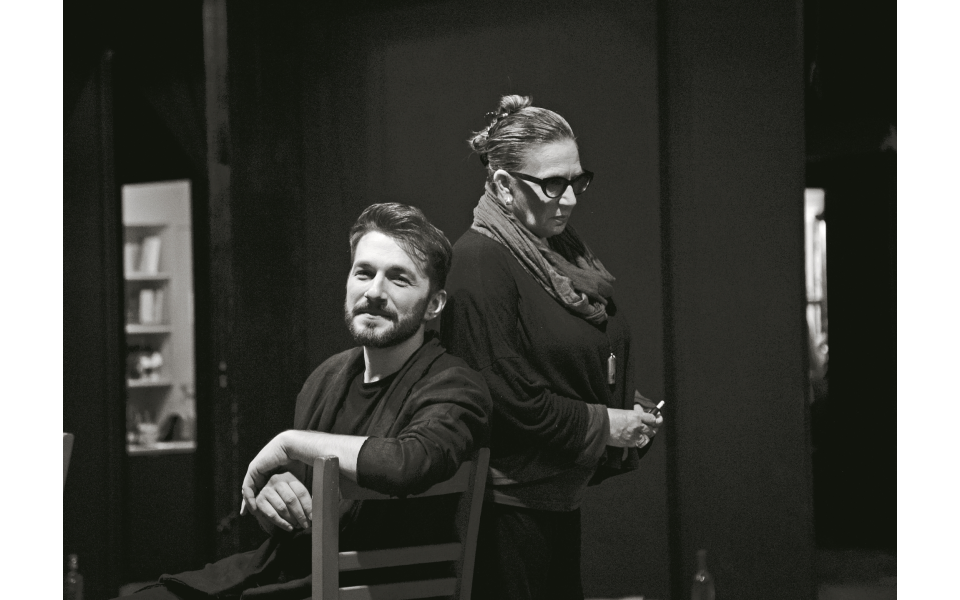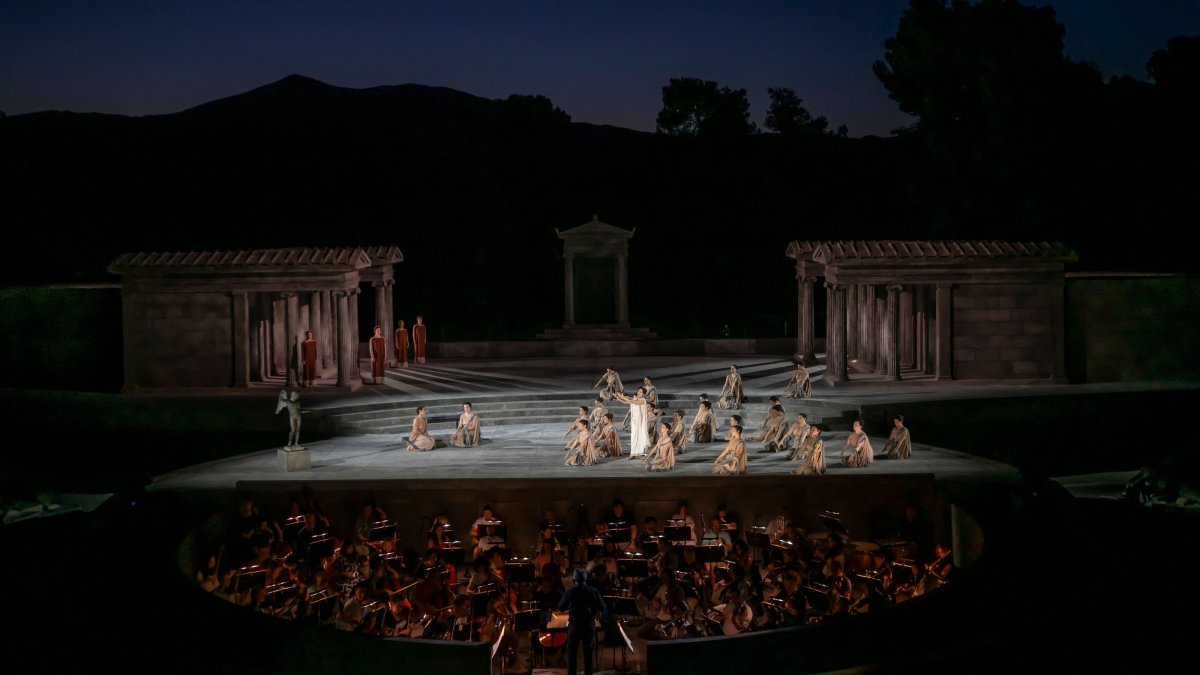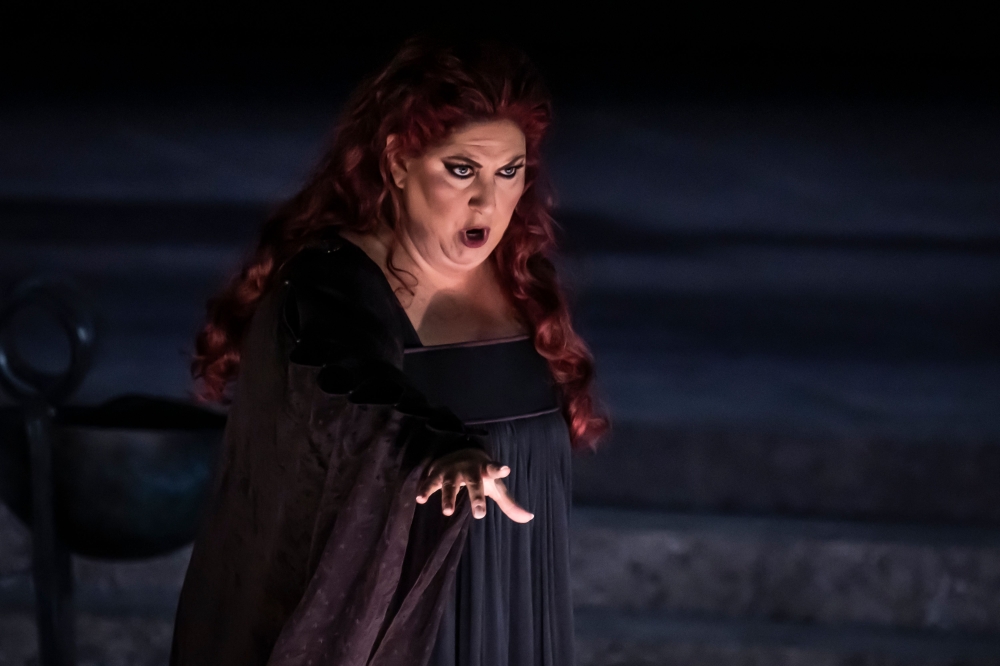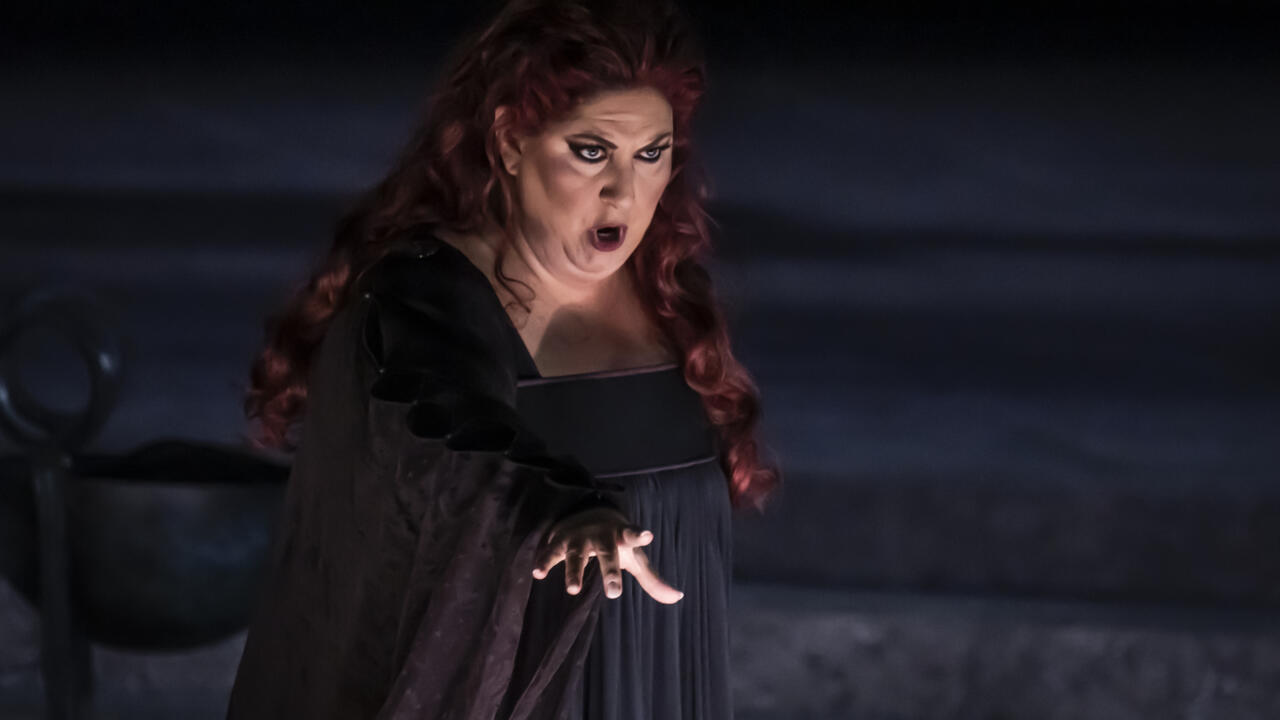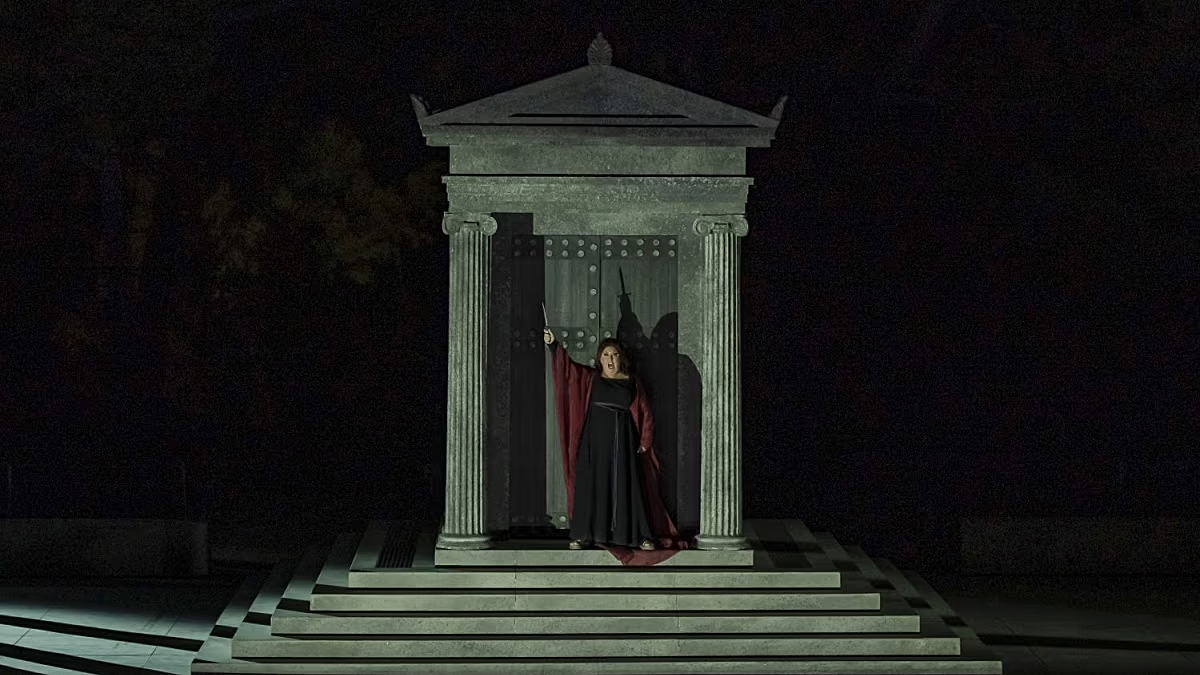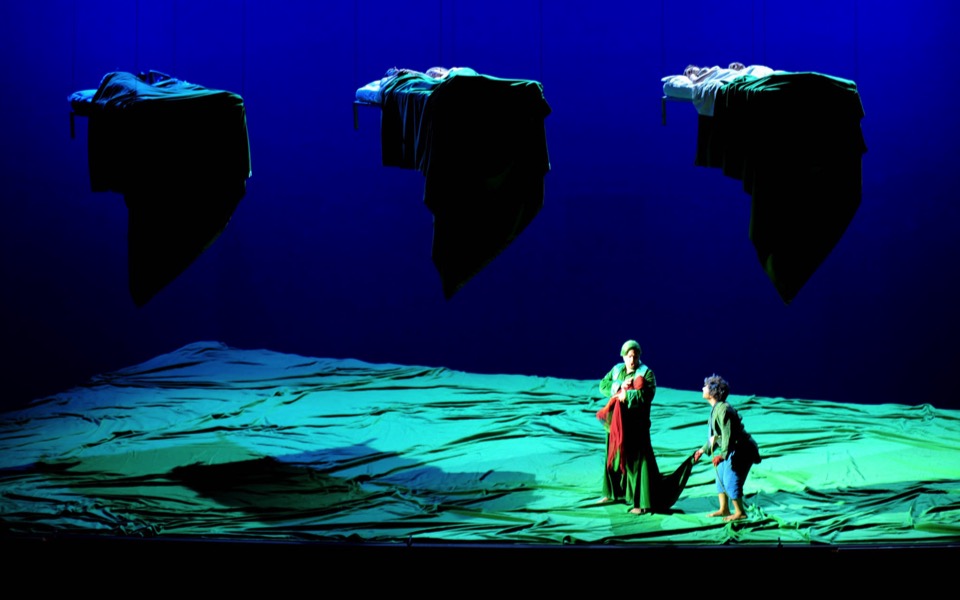
A scene from a 2008 production of Benjamin Britten’s ‘A Midsummer Night’s Dream,’ directed by Robert Carsen, back when the Athens Festival program also included operas. [Haris Bilios]
Another edition of the Athens Epidaurus Festival has begun, under new management. Among its opening shows was a tribute to Giorgos Loukos, who served as its artistic director from 2005 to 2015, and is credited with radically transforming the institution. The festival he delivered when his tenure ended was a lot different from what it was when he took over, with his chief accomplishment being that he introduced the notion of curation on what was, until then, a hodgepodge of forms and genres. The new concept also brought new venues, and as far as classical music and opera were concerned, this entailed redirecting them from the open-air Herod Atticus Theater to indoor spaces.
The Roman odeon had become synonymous with classical music since the festival’s establishment in 1955. It brought the Greek public major symphonic orchestras, dance groups and opera companies at a time when Athens did not have any suitable venues for productions of the caliber of the New York Philharmonic, for example.
By the time Loukos took over, the Herod Atticus Theater had amply fulfilled its purpose of serving these arts. The inauguration of the Athens Concert Hall in 1991 was a game-changer, offering, all year round, what the Athens Epidaurus Festival only offered in the summer – and under much more suitable conditions, too. Classical music demands reflective surfaces, while large-scale opera and ballet productions require the right stage mechanism. The Herod Atticus Theater made up for these shortcomings with its charming ambience and moonlit location beneath the Acropolis. These could not continue to carry it forward, though. The festival could no longer rely on a mishmash of spectacles; it needed a comprehensive and high-caliber cultural offering. So, Loukos did the right thing for classical music and opera by moving these productions to the Athens Concert Hall and keeping the Herod Atticus for concerts by popular acts that appealed to a broader audience. How he utilized the historic theater as a whole is a different discussion entirely.