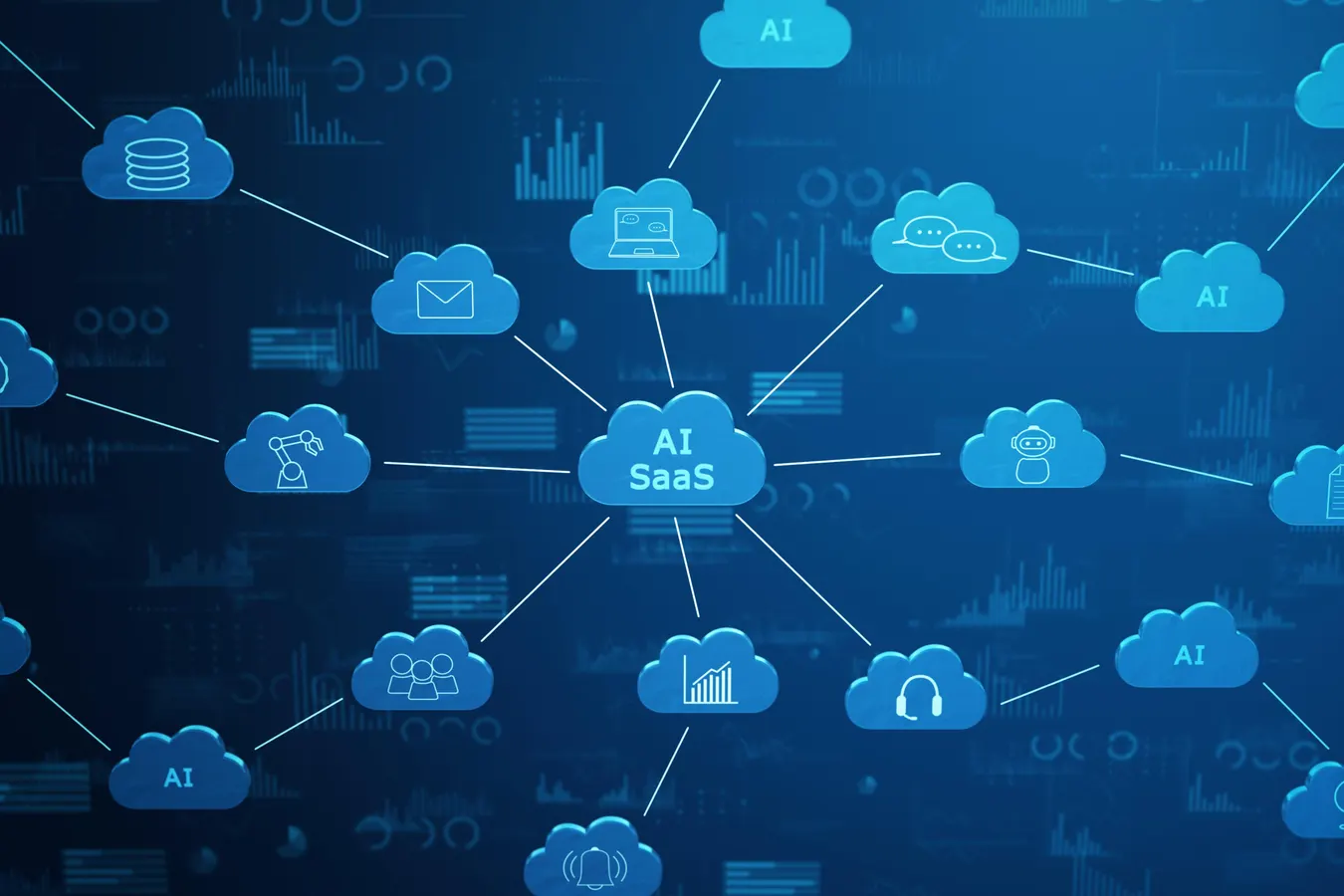
gettyAs AI makes it easier and faster to build software, traditional software as a service differentiators are becoming harder to defend. Features that once required significant time, technical talent and investment to develop can now be replicated more quickly, giving customers more options and raising the bar for lasting value.For SaaS companies, staying relevant will require a sharper focus on advantages that aren’t so easy to copy. Below, members of Forbes Technology Council share the competitive strengths they believe will matter most as AI reshapes the software landscape and how SaaS companies can build on them.Trust As A Core Product AdvantageTrust is the only moat AI can’t replicate overnight. A competitor can copy your roadmap in weeks. They can’t copy a decade of your customers’ data, the integrations wired into their operations, or the confidence built from years of not breaking things. The companies treating trust as a product decision rather than a compliance checkbox are building something that doesn’t get commoditized. - Ankit Agrawal, EquifaxSecurity, Reliability And GovernanceIn an AI world, SaaS differentiation shifts from features to execution. The moat is security, reliability and operational excellence. It’s deep domain expertise baked into defaults and ecosystem distribution that makes adoption easy and integratable with other systems. The winners treat operations and governance as a product and do not underinvest post-launch, because reliability signals decide trust and continuity. - Saurabh GuptaForbes Technology Council is an invitation-only community for world-class CIOs, CTOs and technology executives. Do I qualify?Complex Problem-Solving In Hard-To-Copy AreasAI can copy software. It cannot copy hard problems. The SaaS companies that survive will own the messy parts—payments, compliance, fraud, regulation and money movement—things that take years of real-world experience to get right. Features get cloned in weeks. Domain depth does not. The future belongs to SaaS that solves what others cannot, not SaaS that looks pretty. - Agustín Guerra, VangweExceptional User Experience And Personalized SupportAs AI levels the playing field for core features, SaaS companies must strengthen their focus on exceptional user experience and personalized support. In healthcare, this means designing intuitive interfaces, ensuring seamless integration with clinical workflows, and providing responsive, knowledgeable assistance that builds trust and fosters long-term relationships with users. - Will Conaway, Tuxedo Cat ConsultingOperational IntelligenceAs AI makes software easier to replicate, I think operational intelligence becomes the real advantage. Many companies can build features quickly. Fewer understand how businesses actually make decisions, collaborate and move work forward daily. It’s like giving two chefs the same ingredients. The one who understands the kitchen workflow creates an exceptional experience every time. - Ajay Jayagopal, StorylaneProprietary Data Feedback LoopsProprietary data and the workflows built around it will become differentiators. Anyone can clone features now, but they can’t clone the data you’ve accumulated from real customer usage or the trust that lets you keep collecting it. That feedback loop—your data improving the product, which deepens engagement, which yields more data—is what stays hard to copy. - Srijith Ravikumar, AmazonDeep Vertical Expertise And IntegrationSaaS companies need deep expertise and integrations within the verticals. AI will commoditize product development; however, edge cases and deep integrations are where the real value is. For example, in healthcare, you might be able to build an amazing standalone product, but if it doesn’t connect deeply into the EHR, nobody will purchase the solution. People want an interconnected system, not standalone tools. - JP Montoya, Solum HealthExceptional Developer ExperienceFor years, many SaaS companies sold the idea that they could save organizations from developers through low-code abstraction. Now, AI is breaking that premise within organizations. SaaS companies that empower builders inside the organization will be the most relevant. The ones who focus on developer experience have a head start. - Jeffrey Highman, TruaCustomer-Centric Institutional KnowledgeThe moat won’t be features; it will be “earned taste.” AI can copy buttons but not the judgment baked into thousands of messy customer moments. SaaS teams should capture their concierge knowledge: edge cases, rescue plays and timing cues. Turn that into workflows competitors can mimic but not feel. - Joel Frenette, TravelFun.aiProprietary Data And High-Stakes Decision SupportAs AI makes workflows agentic and UI more irrelevant, SaaS models will need to completely evolve. Advantages that remain are proprietary data that cannot be replicated, integrations tied to hard assets or systems of record, and defensible positions in decisions that require human accountability. Surviving companies will sell what the software knows and what customers cannot afford to get wrong. - Ed Montes, IntelligoIndustry-Specific Workflow IntelligenceAs AI commoditizes software features, SaaS companies will need to strengthen proprietary workflow intelligence. The advantage won’t come from having AI but from a deep understanding of a customer’s industry, processes and operational realities—understanding that generic models cannot replicate. - Elias Stahl, HILOSQuality Assurance And Long-Term ReliabilityInvest in a serious QA discipline. As AI speeds feature development, anyone can ship something that works on day one. Staying reliable on day 300 is the hard part. You can clone a SaaS app, but you can’t clone the testing standards and release processes built over the years. That maturity will separate enterprise-grade products from AI-generated codebases racing to market on brittle foundations. - Konstantin Klyagin, RedwerkDeep Client Ecosystem IntegrationAI has proven to lower the entry barrier for software development, as replicating features and products happens almost instantly. The moat of SaaS companies that are facing an existential crisis shifts from “what” their platform offers to “how” deeply integrated they are into the client’s ecosystem, which is what will prevent them from being replaced by just another new AI software. The licensing cost could be against the SaaS companies, but value-add and interconnectedness are irreplaceable. - Eshaan Jain, Mphasis SilverlineOriginal Thinking And Unique Problem-SolvingThe real competitive advantage for SaaS companies will be creativity, innovation and deep customer understanding. Features can be copied. Code can be accelerated by AI. But original thinking, strong positioning and the ability to solve real problems in a unique way will be much harder to replicate. - Darko Pavic, Fiscal SolutionsAgent-Ready Product DesignFeatures are no longer a moat. As AI commoditizes SaaS, your strongest position is agentic readiness. Design beyond the human interface and the API. Build for the agents that will orchestrate your tool inside larger workflows. You may not need to build AI in; you just need to be ready when AI shows up. - Gary Daemer, InfusionPoints, LLCBusiness Outcomes And Workflow AdoptionAs AI capabilities become more accessible, SaaS companies can no longer rely on features alone for differentiation. The real advantage will come from three things: delivering measurable business outcomes, leveraging data moats and domain expertise, and embedding AI deeply into customer workflows. The companies that win won’t be those with the smartest AI models but those that can turn AI into trusted, autonomous systems that drive ROI at scale. - Chih-Han Yu, AppierShared Customer IntelligenceAs AI lowers the cost of building software, functional parity becomes common. The advantage that endures is proprietary data network effects, where each customer’s usage makes the platform more valuable to every other customer. That collective intelligence cannot be replicated simply by deploying better models. - Prasad Maderamitla, SalesforceDeeper Customer UnderstandingWhen the product itself gets easier to copy, the moat shifts to customer understanding. Truly comprehending the problem space will be more important than ever. SaaS companies that dig deep into customers’ day-to-day workflows, bottlenecks and challenges and then guide them to the solutions they need (not necessarily what they asked for) will provide outsized value. - Michael Zuercher, PrismaticStronger Customer RelationshipsEven before the advent of AI, “me too” software has proliferated. We believe competition benefits everyone, but for thriving companies, the most important source of advantage is customer relationships that cut across the impersonal SaaS dynamic. Instead, new pain points emerge that drive innovation, and data flows freely to widen the competitive moat. - Brian Reshefsky, EDGE
SaaS Competitive Advantages That AI Can’t Easily Replicate
As AI makes it easier and faster to build software, SaaS companies will need to cultivate a sharper focus on advantages that aren’t so easy to copy to stay relevant.
1,297 words~6 min read