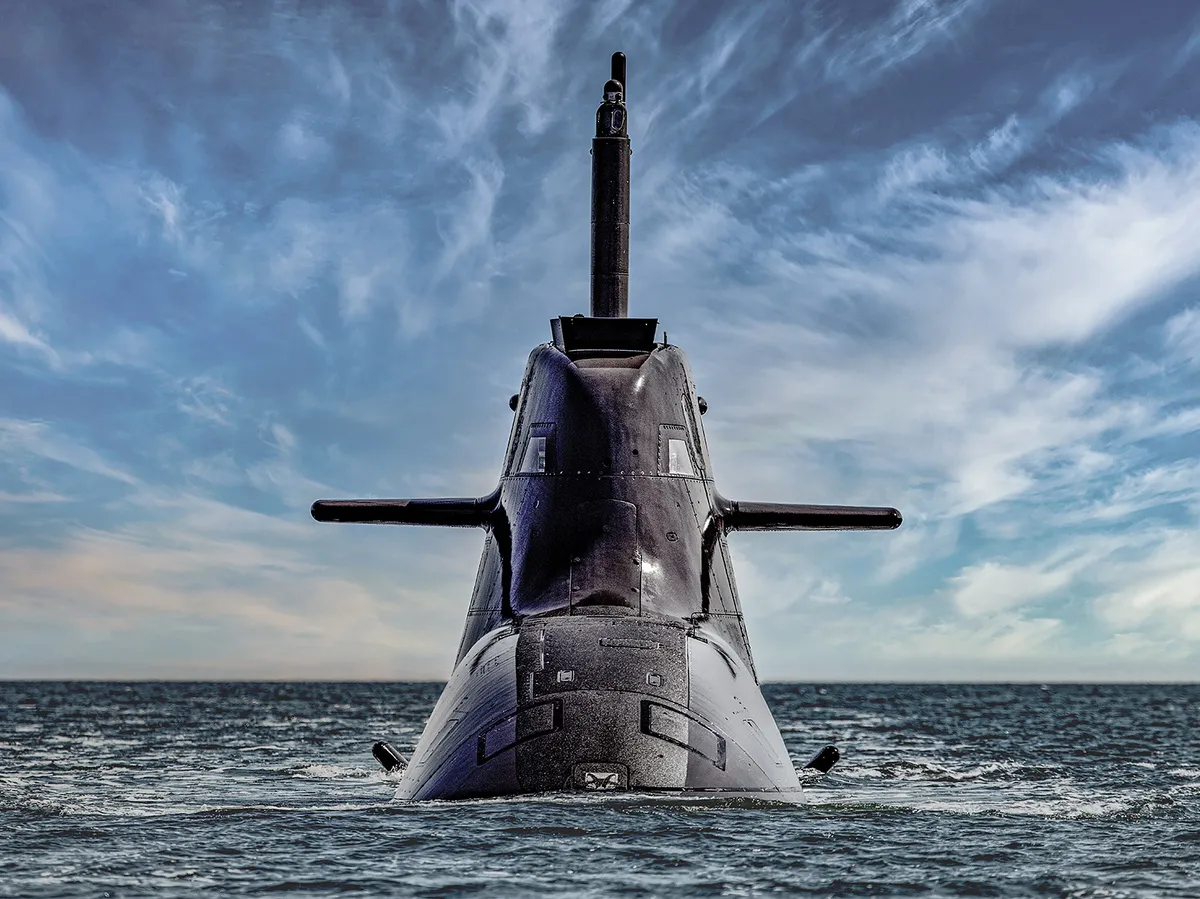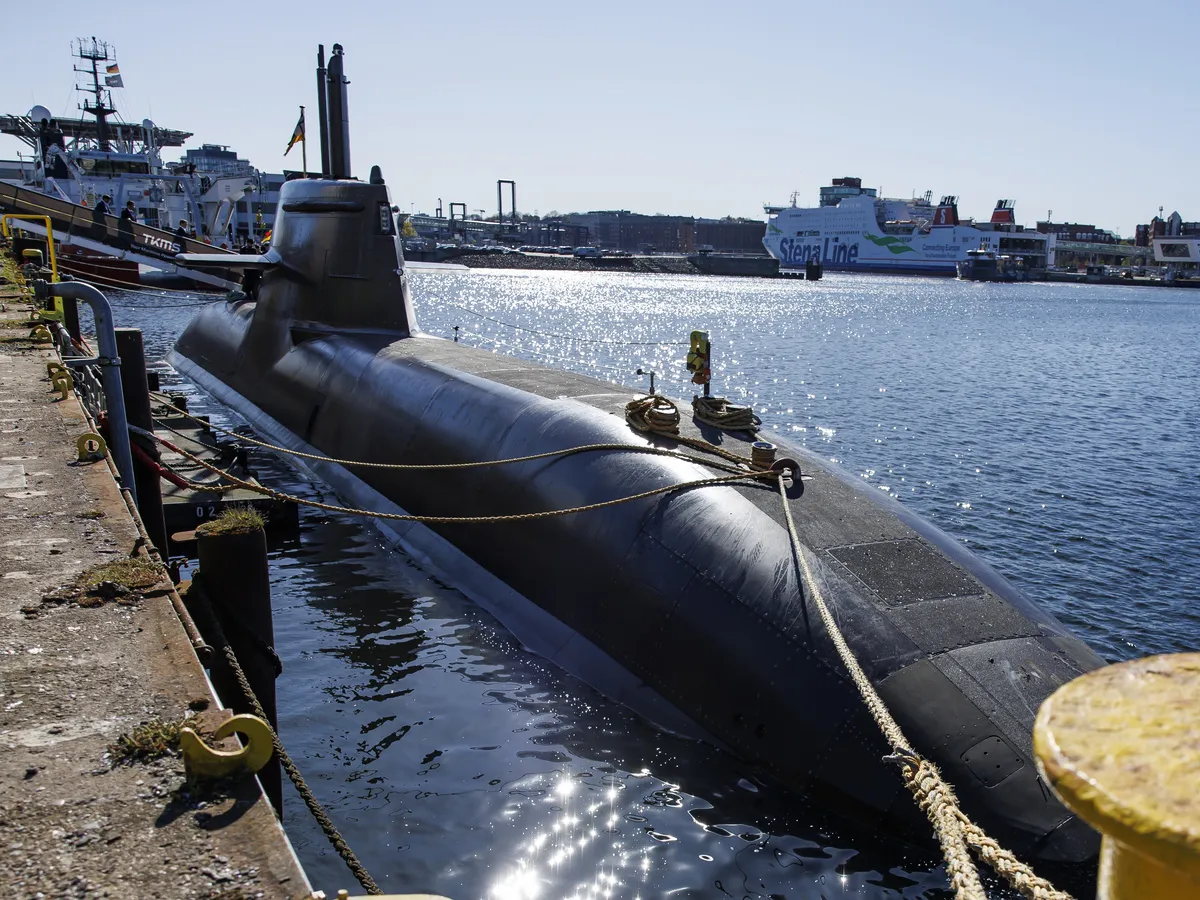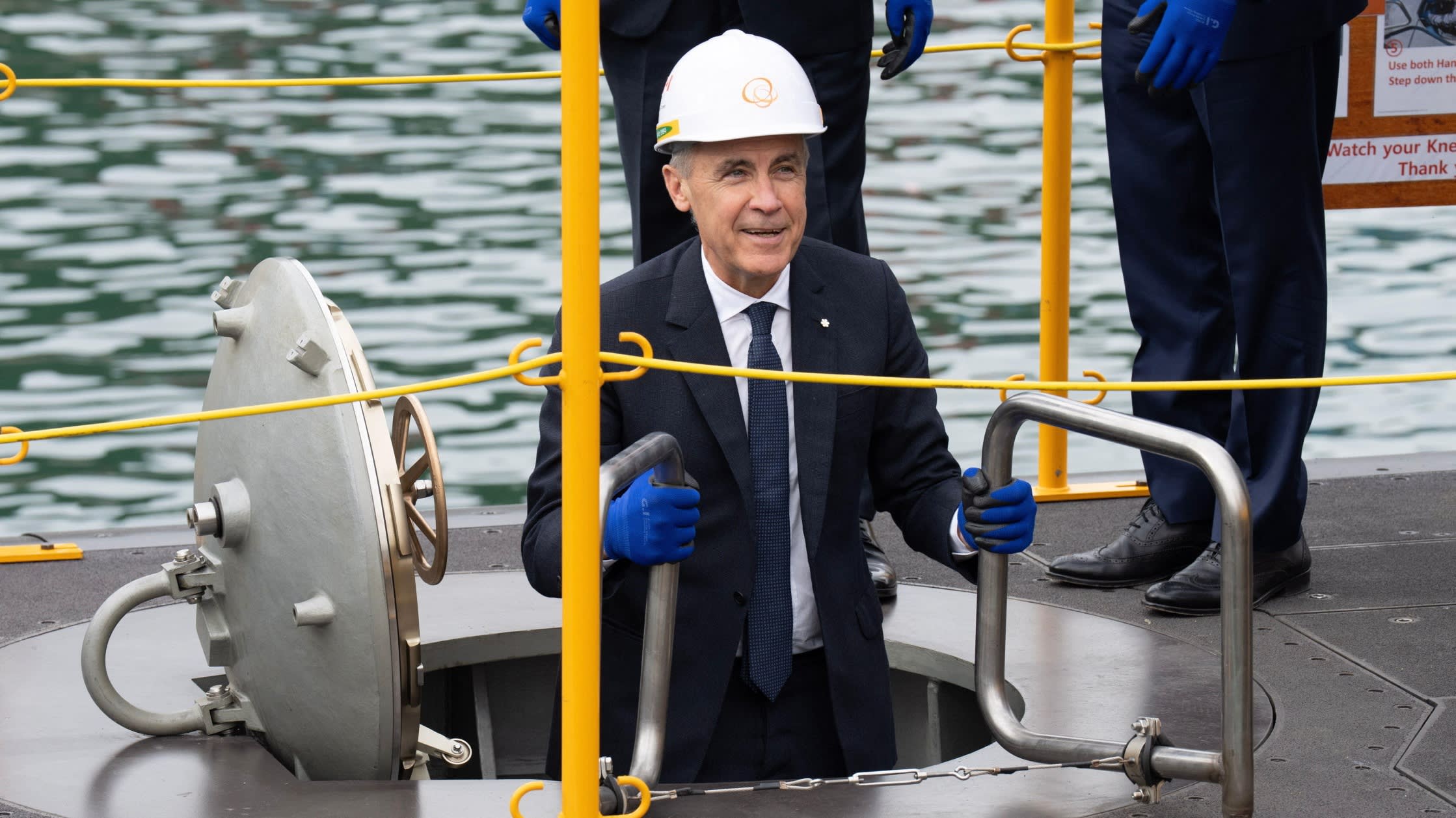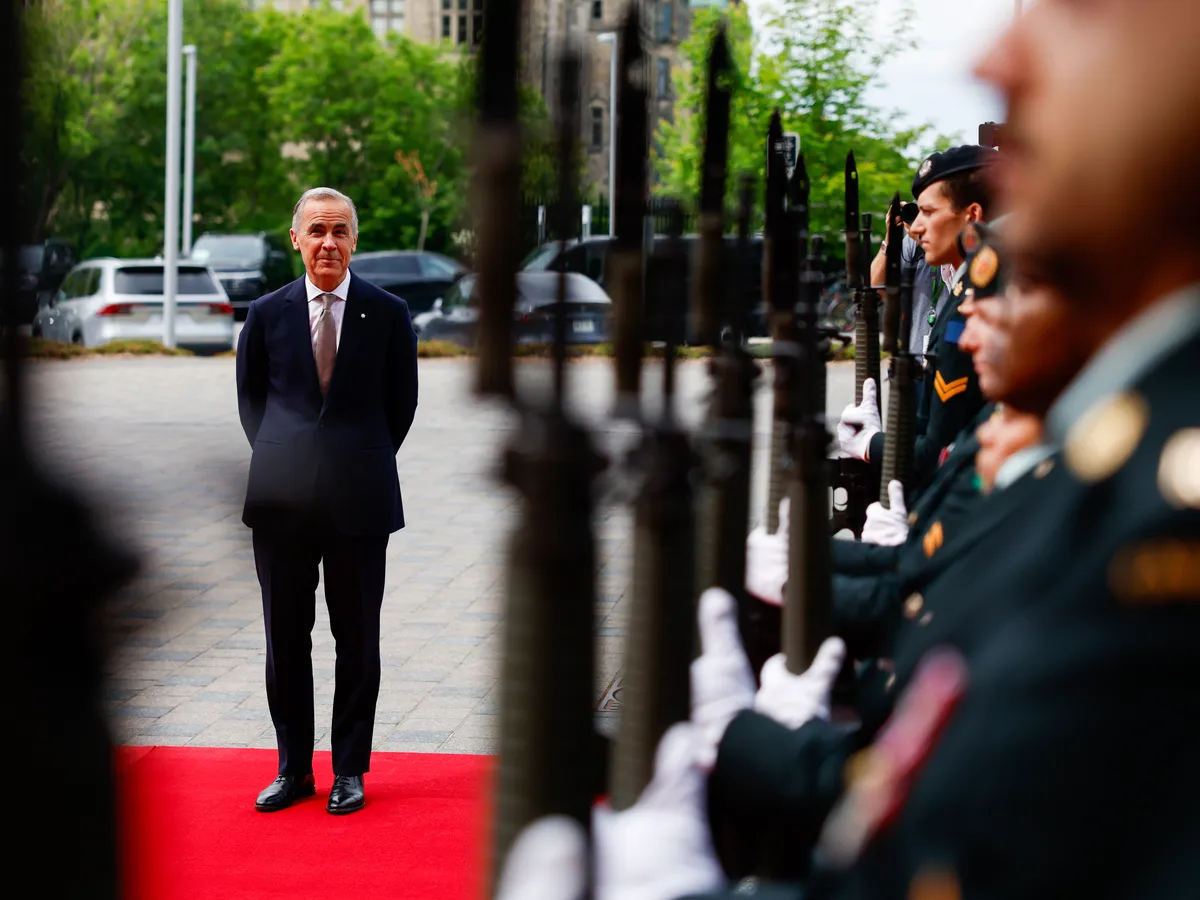
Skip to Content News Archives Economy Energy Oil & Gas Renewables Electric Vehicles Mining Commodities Agriculture Real Estate Mortgages Mortgage Rates Finance Banking Insurance Fintech Cryptocurrency Work Wealth Smart Money Wealth Management Investor Personal Finance Family Finance Retirement Taxes High Net Worth FP Comment Executive Women Puzzmo Newsletters Financial Times Business Essentials More Innovation Information Technology FP500 Podcasts Small Business Lives Told Tails Told Shopping Financial Post Store Obituaries Place a Notice Advertising Advertising With Us Advertising Solutions Postmedia Ad Manager Sponsorship Requests Classifieds Place a Classifieds ad Working Profile Settings My Subscriptions Saved Articles My Offers Newsletters Customer Service FAQ News Economy Energy Mining Real Estate Finance Work Wealth Investor FP Comment Executive Women Puzzmo Newsletters Financial Times Business Essentials HomeNewsCarney squeezes Germany and Korea as he dangles huge submarine dealCanada is close to a decision on who will win the order to build as many as a dozen vessels, and the stakes are largeAuthor of the article:Last updated 40 minutes ago You can save this article by registering for free here. Or sign-in if you have an account.Prime Minister Mark Carney waits on the red carpet by the Mackenzie Gate to wait for the arrival of Prime Minister of Croatia, Andrej Plenkovic in Ottawa on June 22, 2026. Photo by HYUNGCHEOL PARK/PostmediaIn late May, a South Korean attack submarine slipped into a harbour in Victoria, B.C. — a floating sales pitch for one of the largest military contracts in Canadian history.Subscribe now to read the latest news in your city and across Canada.Exclusive articles from Barbara Shecter, Joe O'Connor, Gabriel Friedman, and others.Daily content from Financial Times, the world's leading global business publication.Unlimited online access to read articles from Financial Post, National Post and 15 news sites across Canada with one account.National Post ePaper, an electronic replica of the print edition to view on any device, share and comment on.Daily puzzles, including the New York Times Crossword.Subscribe now to read the latest news in your city and across Canada.Exclusive articles from Barbara Shecter, Joe O'Connor, Gabriel Friedman and others.Daily content from Financial Times, the world's leading global business publication.Unlimited online access to read articles from Financial Post, National Post and 15 news sites across Canada with one account.National Post ePaper, an electronic replica of the print edition to view on any device, share and comment on.Daily puzzles, including the New York Times Crossword.Create an account or sign in to continue with your reading experience.Access articles from across Canada with one account.Share your thoughts and join the conversation in the comments.Enjoy additional articles per month.Get email updates from your favourite authors.Create an account or sign in to continue with your reading experience.Access articles from across Canada with one accountShare your thoughts and join the conversation in the commentsEnjoy additional articles per monthGet email updates from your favourite authorsSign In or Create an AccountorDays later in Ottawa, Germany’s defence minister stood alongside his Canadian counterpart, making a different case: that the future of Canada’s navy lies in closer alignment with Europe, and with a German-made sub.Canada is close to a decision on who will win the order to build as many as a dozen vessels, and the political and financial stakes are large. One executive involved in the process estimates the contract may ultimately be worth more than $70.4 billion when decades of support and maintenance are included.Breaking business news, incisive views, must-reads and market signals. Weekdays by 9 a.m.By signing up you consent to receive the above newsletter from Postmedia Network Inc.A welcome email is on its way. If you don't see it, please check your junk folder.The next issue of Posthaste will soon be in your inbox.We encountered an issue signing you up. Please try againIt’s also a test of Prime Minister Mark Carney’s strategy of trying to leverage a new foreign policy and defense spending into economic gains. The former central banker won power last year by persuading voters he could protect Canada from U.S. President Donald Trump’s tariff assaults by forging stronger relationships with the rest of the world.Spending heavily on military equipment and troops is a sharp pivot away from the approach of his predecessor, Justin Trudeau — one Carney hopes to convert into investment and manufacturing and technology jobs. So his cabinet has been squeezing the Germans and South Koreans to offer sweeteners in their bids, such as automotive investment, that might help Canada offset the economic damage done by Trump’s trade war.Like all political strategies, it involves tradeoffs. The submarine decision forces Carney into a choice between a rising Asian economic powerhouse that Canada wants to get closer to, and longtime allies in the North Atlantic Treaty Organization. It will affect the country’s military capabilities, industrial base and alliances for decades.For months, Canada has been wooed by South Korea’s Hanwha Ocean Co. and HD Hyundai Heavy Industries Co., facing off against a German-Norwegian group led by Thyssenkrupp Marine Systems. Both bidders have put forward sweeping proposals that go well beyond submarines.Two distinct visions have emerged. Hanwha is offering a submarine design already in service, promising faster delivery — a claim it underscored by docking its KSS-III in Victoria that day.The TKMS bid, centered on the Type 212CD being developed by Germany and Norway, emphasizes interoperability with NATO allies and deeper strategic alignment with Europe, a message reinforced in Ottawa by German Defence Minister Boris Pistorius.The submarine contract is a rare prize — the largest of its kind currently on the global market — and it may become the biggest defense purchase in Canadian history, according to David Perry, president of the Canadian Global Affairs Institute. Factoring in decades of operation and maintenance, the total cost may approach $120 billion, he said.“We’re really looking at cementing a combination of an economic partnership and a strategic political partnership with whoever wins this thing for the next 75 years,” he said.The competition has unfolded across continents. Carney and other senior officials have travelled to Korea, Germany and Norway, while delegations from each country have made a series of trips to Canada. The campaign has blended defence arguments with economic diplomacy, as each side positions itself not just as a supplier, but as a long-term partner.The German government is confident Canada will choose its bid, and that Pistorius’s lobbying will pay off, according to a person familiar with the matter who was not authorized to speak publicly. South Korean President Lee Jae Myung has also raised the deal with Carney, but told reporters he “couldn’t really gauge the outcome.”“Overall, expectations are fairly high, but it’s not easy to be optimistic,” Lee said. “It’s been very hard to get a clear read on the situation.”Canada sped up the procurement, and there’s no time to waste. Despite having the world’s longest coastline, spanning three oceans, it has just one seaworthy submarine today, Carney has previously said. And it’s under pressure from the U.S. to spend more on defending its vast Arctic reaches, which are drawing ever more attention from Russia and China.Hanwha has pledged to deliver four submarines by 2035. The German-Norwegian boats, still under development, trail slightly — though both countries have pledged to transfer one of their own subs to Canada, narrowing the gap by enabling delivery of four vessels by 2036.Vice-Admiral Angus Topshee, commander of the Royal Canadian Navy, has described both designs as “excellent.” Hanwha’s larger KSS-III features vertical missile launch capability, while the TKMS Type 212CD is designed to make detection extremely difficult.So the decision may come down to economics, and Carney’s government has been forceful in pushing the bidding groups to add sweeteners that help Canadian industries that have been hurt by U.S. tariffs, such as steel and autos.South Korea and Germany are both large auto exporters. At one point, Industry Minister Melanie Joly declared, “we want a car plant” tied to the procurement. Hanwha responded with a pitch to build armored vehicles in Canada — if it wins the submarine contract.Both bidders lined up a broad array of conditional partnerships, including AI deals with Canadian firm Cohere Inc. and agreements tied to Canada’s ambitions for sovereign space launch. TKMS signed up with E3 Lithium to incorporate Canadian critical minerals into its supply chain and turned to firms such as CAE Inc. and Seaspan Corp. to support the fleet.Hanwha, for its part, teamed with Algoma Steel Group Inc. on materials supply and tapped Babcock Canada for training and sustainment.Perry, of the Canadian Global Affairs Institute, said the scale of Canada’s demands is unusual. “There’s not a precedent for it,” he said, adding that the structure of the competition — narrowed to two strong contenders with no clear front-runner — has escalated the stakes.For South Korea, winning the deal would help establish it as a major submarine exporter, said Philippe Lagassé, an associate professor at Carleton University. For Germany, the commercial stakes are lower, he said — it’s already an established maker of submarines with NATO ties.The two campaigns have struck different tones. Lagassé described South Korea’s campaign as energetic and high-profile — including television ads that feature one of Canada’s most famous broadcasters — while Germany’s has appeared more restrained. The Germans “find a lot of the showmanship distasteful,” he said.Those differences have even prompted discussion of an unusual compromise: splitting the fleet, with German submarines assigned to the Atlantic coast and South Korean vessels to the Pacific. Defense experts and government officials — including Carney himself — have cast doubt on that idea, which would add complexity and cost.Both bidders have invested heavily in the competition, raising expectations and deepening engagement with Canada.“There will be a diplomatic repair priority for whoever doesn’t win this contract,” said Roland Paris, an international affairs professor at the University of Ottawa.With assistance from Laura Alviž, Soo-Hyang Choi, Brian Platt, Thomas Seal and Mario Baker Ramirez Join the Conversation This website uses cookies to personalize your content (including ads), and allows us to analyze our traffic. Read more about cookies here. By continuing to use our site, you agree to our Terms of Use and Privacy Policy.
Carney squeezes Germany and Korea as he dangles huge submarine deal
Canada is close to a decision on who will win the order to build as many as a dozen vessels, and the stakes are large. Read more.
1,670 words~8 min read