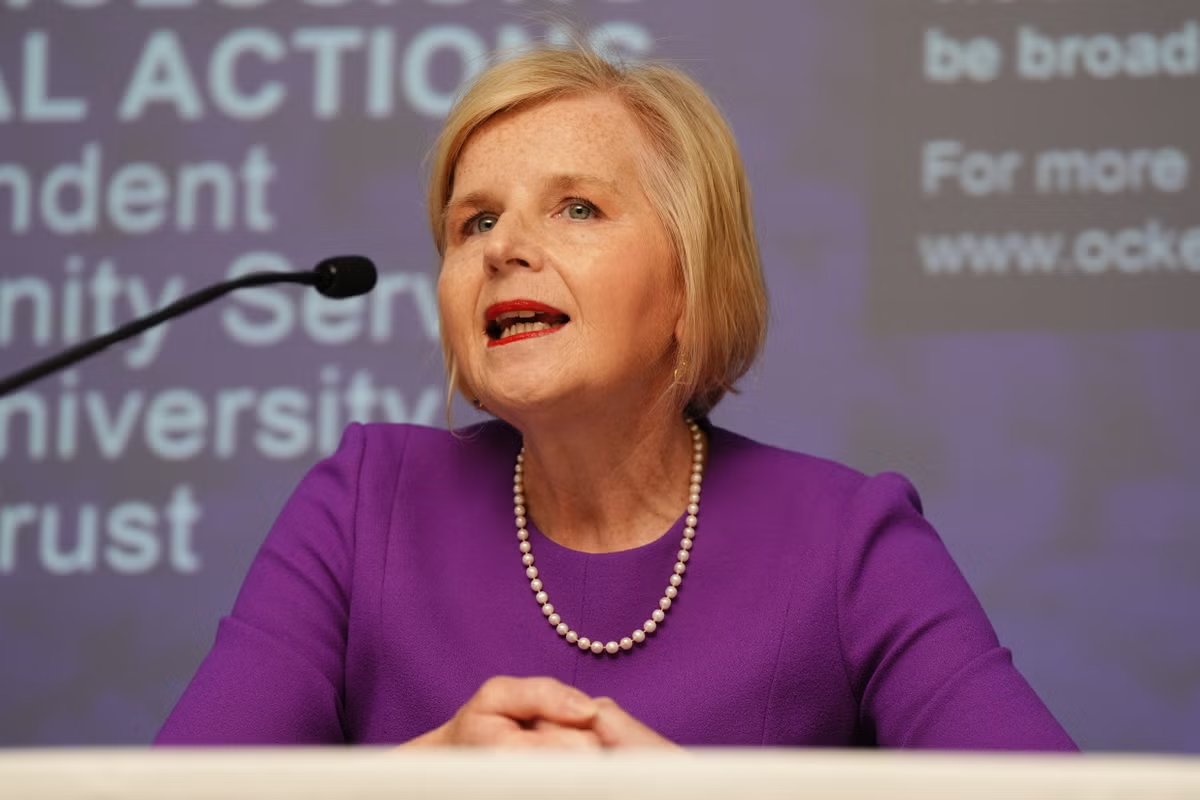
A damning inquiry into maternity services failures in Nottingham has revealed hundreds of cases of harm to women and babies, in what is the largest maternity review in NHS history. The inquiry covered 2,500 cases and found more than 500 examples of potentially avoidable harm to mothers and babies at Nottingham University Hospitals NHS Foundation Trust. Led by Donna Ockenden, the inquiry found leaders at Nottingham University Hospitals NHS Trust (NUH) knew there were serious issues in its maternity department going back years, but failed to take action to prevent more deaths.The report, published on Wednesday, delivered several key findings. Hundreds of cases of harmThe inquiry looked at 2,500 cases, and of those found hundreds of incidents of potentially avoidable harm in 444 maternity cases examined up to May 2025, as well as in 76 neonatal (newborn) cases.Experts on the review concluded there were “potentially avoidable” outcomes in relation to 94 still births, 120 babies suffering a form of brain injury, nine children with cerebral palsy and 62 neonatal deaths.The report details 30 cases of potentially avoidable harm related to women suffering life-threatening haemorrhages, and 12 reviews into babies were found to have significant or major concerns relating to brain damage due to a lack of oxygen.Failures in care “may have or substantially impacted on the outcome in six deaths” of women.The review also detailed cases where babies died, including from oxygen starvation, mismanaged labour, hospital-acquired infections and poor postnatal care delivered by midwives and doctors.Failures to escalateLooking at the catalogue of errors spanning many years, the report found failures in the monitoring of babies, poor CTG interpretation, a failure to recognise that babies were in distress during labour and a failure to escalate some cases to senior doctors.Specifically, the report warned there were multiple examples of “poor telephone risk assessment” of women ringing in with concerns during pregnancy and labour, alongside missing documentation and a “culture of discouraging women to attend in-person”.Some women in labour suffered delays in being examined and there were cases where staff were reluctant to escalate concerns and transfer to the labour ward “due to professional cultures.”There were delays in recognition and escalation of postpartum haemorrhage, as well as major obstetric haemorrhage, causing women harm.With antenatal care, women repeatedly described feeling unheard, inadequately informed and unsupported when expressing anxiety, particularly in relation to reduced foetal movements or emerging medical complications.There was inadequate communication support for women whose first language was not English.In postnatal care, some mothers with very high blood pressure or who were deteriorating were not adequately assessed and there were “failures in the recognition and management of the unwell or poorly feeding baby”. Some patients received phone calls when they should have been seen in person. “In several cases the consequences of these failures were severe and irreversible,” the report said. Toxic cultureThe inquiry team warned of a “bullying and toxic culture” at the trust over years. The review team heard how some staff members were “specifically and consistently mentioned as forming intimidating cliques that were/are well known, but not confronted or challenged.”There was also “evidence that harm was sometimes downgraded” by the trust, while some families were told babies had died of natural causes when that was not true. Staff also “reported experiences shaped by longstanding cultural challenges, including hierarchy, bullying (particularly by some labour ward co-ordinators), nepotism and aggressive behaviour”.Staff reported “a culture of organisational denial” over the years, where poor outcomes “were regularly dismissed as ‘known complications’.”Warning signs missedThe report details an almost two-decade long chronology of missed opportunities by the trust, wider NHS and regulators to address the failing maternity service. It reveals that explicit concerns over maternity in NUH were being raised as early as 2015. Between 2015 and 2022, six external reviews were commissioned, and concerns were escalated to both NHS England and the Care Quality Commission throughout this time. The inquiry team found that leadership instability was a “major contributing factor” affecting the quality and safety of maternity services. Between 2017 and 2021, there was “sustained turnover in senior maternity leadership positions” and senior operational roles.From at least 2012, there was a “running theme of poor governance within maternity”, including serious incidents not being investigated and a failure to learn and change after incidents.Calls for actionThe report sets out a series of additional immediate and essential actions for the trust and national bodies covering the following areas:Listening to women and familiesWorkforce planning and safe staffingTraining and multi-professional learningRisk assessment throughout pregnancyIncident investigation Governance and board accountabilityCulture, teamwork and psychological safetyMothers who have died and post-death careThe review specifically calls for mothers, families and staff to be able to seek additional urgent clinical review if they have concerns under the principles of Martha’s Rule. In response, the Department for Health and Social Care has announced it will roll out Martha’s Rule to all maternity services. Actions for the trust include:The trust must introduce structured, ongoing reassessment of risk at every contact, with clear pathways for referral when risk levels change NUH must provide clear, timely and compassionate communication to families about what happened to themTraining must strengthen staff confidence in recognising and escalating clinical concerns and the trust must introduce standardised communication tools and escalation protocolsNUH must align neonatal resuscitation practice with national Neonatal Life Support (NLS) guidance, strengthen training to ensure early signs of serious illness are identified, and enhance access to 24/7 specialist advice
Toxic culture and missed opportunities: Key findings from maternity scandal report
At least 94 babies may have suffered avoidable stillbirths due to failings in the care of mothers and babies by Nottingham University Hospitals NHS Trust
899 words~4 min read