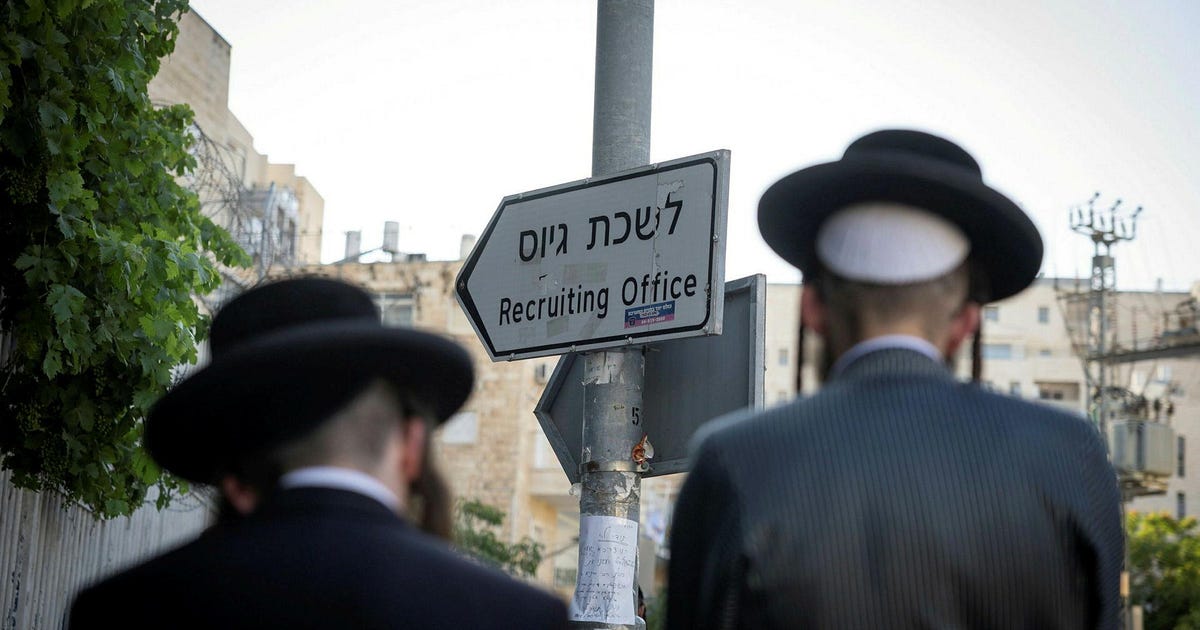
Skip to Content Subscribe Our Offers My Account Manage My Subscriptions FAQ Newsletters Canada Canadian True Crime Canadian Politics Health World Israel & Middle East Financial Post NP Comment Longreads Puzzmo Diversions Comics NP News Quiz New York Times Crossword Horoscopes Life Eating & Drinking Style Sponsored Play for Ontario Travel Travel Canada Travel USA Travel International Cruises Travel Essentials Culture Books Celebrity Movies Music Theatre Television Business Essentials Advice Lives Told Tails Told Shopping Buy Canadian Home Living Outdoor Living Kitchen & Dining Tech Style & Beauty Personal Care Entertainment & Hobbies Gift Guide Travel Guide Amazon Prime Day Deals Savings National Post Store More Sports Hockey Baseball Basketball Football Soccer Golf Tennis Driving Vehicle Research Reviews News Gear Guide Obituaries Place an Obituary Place an In Memoriam Classifieds Place an Ad Celebrations Working Business Ads Archives Healthing Epaper Manage Print Subscription Profile Settings My Subscriptions Saved Articles My Offers Newsletters Customer Service FAQ Newsletters Canada World Financial Post NP Comment Longreads Puzzmo Diversions Life Shopping Epaper Manage Print Subscription HomeNP CommentYoni Goldstein: Israel shouldn’t force ultra-Orthodox to fight. It should encourage themIsrael should encourage voluntary Haredi service while preserving Torah studyLast updated 44 minutes ago You can save this article by registering for free here. Or sign-in if you have an account.Ultra-Orthodox Jewish men rally following the arrest of a young man who refused to serve in the Israeli the army, as they protest outside the Atlit military prison near the northenr coastal city of Haifa, on December 9, 2013. The Ultra-Orthodox community places great value on religious scholarship and believe that Torah study plays a role in protecting the Jewish people. Following Israel's establishment in 1948, they were allowed to forego military service in favor of religious studies. Today their are some 3000 Ultra-Orthodox men serving in the Netzach Yehuda, an all-Haredi (Ultra-Orthodox community known as Haredim) battalion, some of whom are going against the wishes of many in their community. AFP PHOTO / JACK GUEZJACK GUEZ/AFP/Getty Images Photo by AFP PHOTO / JACK GUEZJACK GUEZ/AFP/Getty ImagesDuring Israel’s War of Independence in 1948, then-Prime Minister David Ben-Gurion decided to exempt approximately 400 ultra-Orthodox scholars from the nascent Jewish state’s army service. It was an inconsequential number at the moment, in an army that would grow to more than 100,000 soldiers by the end of that year, and the reasoning was logically sound and deeply compassionate. The Holocaust, just three years in the past, had almost completely destroyed the ultra-Orthodox community, its way of life and places of study. Ben-Gurion recognized the need to preserve what remained and to rebuild. It was not only a basic act of humanitarianism, but represented a keen understanding that the ultra-Orthodox had an important, even essential, part to play in the Jewish future — one that Israel must still find a way to preserve without forcing a confrontation that neither side can afford.Enjoy the latest local, national and international news.Exclusive articles by Conrad Black, Barbara Kay and others. Plus, special edition NP Platformed and First Reading newsletters and virtual events.Unlimited online access to National Post.National Post ePaper, an electronic replica of the print edition to view on any device, share and comment on.Daily puzzles including the New York Times Crossword.Support local journalism.Enjoy the latest local, national and international news.Exclusive articles by Conrad Black, Barbara Kay and others. Plus, special edition NP Platformed and First Reading newsletters and virtual events.Unlimited online access to National Post.National Post ePaper, an electronic replica of the print edition to view on any device, share and comment on.Daily puzzles including the New York Times Crossword.Support local journalism.Create an account or sign in to continue with your reading experience.Access articles from across Canada with one account.Share your thoughts and join the conversation in the comments.Enjoy additional articles per month.Get email updates from your favourite authors.Create an account or sign in to continue with your reading experience.Access articles from across Canada with one accountShare your thoughts and join the conversation in the commentsEnjoy additional articles per monthGet email updates from your favourite authorsSign In or Create an AccountorIn the intervening years, Israel has struggled with Ben-Gurion’s ultra-Orthodox deal, known as “torato u’manuto,” which translates as “his Torah is his sole occupation.” The first effort to evolve torato u’manuto in the late 1970s, spurred by then-Primer Minister Menachem Begin, removed limitations on ultra-Orthodox deferments, which had been capped for some time at 800. In 1998, Israel’s Supreme Court ruled that torato u’manuto was no longer valid, leading to the Knesset’s establishment of the Tal Law in 2002, which granted all yeshiva students exemption from army service.This newsletter from NP Comment tackles the topics you care about. (Subscriber-exclusive edition on Fridays)By signing up you consent to receive the above newsletter from Postmedia Network Inc.We encountered an issue signing you up. Please try againThe Tal Law was ruled unconstitutional by Israel’s Supreme Court in 2012, and since then various Israeli governments have tried to thread an impossible needle that would satisfy the ultra-Orthodox who continue to believe in the inviolability of torato u’manuto and the rest of the country’s Jewish population which faces mandatory conscription in their late teens and reserve duty for decades after (Israeli-Arabs are exempt from army service). Following the Supreme Court’s 2024 ruling that ultra-Orthodox men must be conscripted, the matter has been thrust further to the forefront of Israeli politics, with successive governments formed, dissolved and left to teeter over the matter amid massive public protests on both sides of the debate. Meanwhile, more than 60,000 yeshiva students continue to not serve in the Israeli army, spending their time studying in seminaries called yeshivas instead.There is little doubt that Israel needs these ultra-Orthodox men to help fight now. With each passing year, and especially since October 7 and what feels like perpetual, existential war for the Jewish state, Israel requires everyone to step up and make sacrifices to guarantee the country’s continued existence. Young conscripts and older reservists are exhausted by the gargantuan effort to defend Israel, and their families are left to pick up the pieces in their increasingly long absences.It is not as though the Israel Defense Forces are entirely devoid of religious conscripts — in fact, it’s quite the opposite: the Religious Zionist movement, a population that makes up less than 15 per cent of the country’s population, nevertheless comprises approximately 40 per cent of infantry officer graduates. This demographic is filled with its own kippahs, yeshivas, even forelocks, and yet has found creative and inspiring ways to bring Torah study and army service together. In the late 1990s, I studied for a year-and-a-half at one of that community’s yeshivas and watched in awe as my study partners and roommates moved entirely naturally between the study hall and the barracks.Religious Zionists in Israel have proven that there is a way to effectively modernize torato u’manuto. By contrast, there has been only middling success in efforts to form ultra-Orthodox units in the IDF that seek to support the community’s lifestyle and ideals while incorporating national service. Far more popular within the ultra-Orthodox community are large, sometimes violent gatherings that block highways and thoroughfares in protest of any attempts at conscription, egged on by powerful political forces that wield the balance of power. The rest of the country’s Jewish population watches in increasing exasperation.What’s fair is fair, and ultra-Orthodox avoidance of army service appears to be patently unfair. Even the Chabad movement, itself ultra-Orthodox by most definitions, has found its own means to integrate army service into its way of religious life. A famous story within Lubavitch tells of a yeshiva student who asked Rabbi Menachem Mendel Schneerson, the group’s most recent spiritual leader, for a blessing to be exempt from IDF service — to which the rebbe responded: “Who says your blood is redder than the blood of your fellows?”And yet, is this a hill Israel and the global Jewish community need to continue to take a firm stand on? What do we hope will change? Practically speaking, there is little to be gained by forcing the ultra-Orthodox into the army when they have shown time and again that they simply will not go, no matter what laws or social pressure are put in place to punish them. Further, it seems unlikely that Israel could have any kind of functioning government without the community’s clout anytime soon, and there is no room for error or political stasis.At the same time, the premise of torato u’manuto remains sound: Judaism still needs the ultra-Orthodox to uphold a historic, religious way of life — perhaps more than ever in an increasingly soulless and anti-religious world. The rest of us may have a sense that the West is headed in the wrong direction, but the ultra-Orthodox are the only group actively taking a stand against it on a daily basis. You don’t need to be part of their community to understand that Judaism, like so many aspects of life that we have taken for granted until fairly recently, has little hope of surviving untethered from its roots, the core concepts of faith that have kept us together for thousands of years.Like it or not, the ultra-Orthodox keep Judaism connected directly to our history and to a basic understanding that faith plays a key, perhaps even predominant, role in our collective future. It is a modern service, even as it appears anachronistic.Moses Maimonides, the 12th-century rabbi and scholar, epitomizes the way many of us might hope the ultra-Orthodox would act in the present day. His life blended faith and active leadership, within and without the Jewish community, serving at the same time as a religious thinker and guide on the one hand, and a court doctor to the Ayyubid Sultanate in Egypt (after being exiled from Spain) on the other. It was a hectic life, and Maimonides wrote of the deep exhaustion it caused him.Ben-Gurion’s original intention may have been meant for the Maimonides’s of his time, the special few for whom there is a higher communal and spiritual calling. Of the 60,000-plus ultra-Orthodox Jews currently not serving in the IDF, few will ever reach even a fraction of those heights. But collectively, they have a role to play in Israel’s future and Judaism. Israel might be best off seeking to understand how to most effectively make that happen, rather than pushing them into a box they have no intention of ever entering. Or, as Maimonides wrote in his opus Mishnah Torah: “Free will is granted to all men.”National Post Join the Conversation This website uses cookies to personalize your content (including ads), and allows us to analyze our traffic. Read more about cookies here. By continuing to use our site, you agree to our Terms of Use and Privacy Policy.
Yoni Goldstein: Israel shouldn’t force ultra-Orthodox to fight. It should encourage them
Israel should encourage voluntary Haredi service while preserving Torah study
1,790 words~8 min read