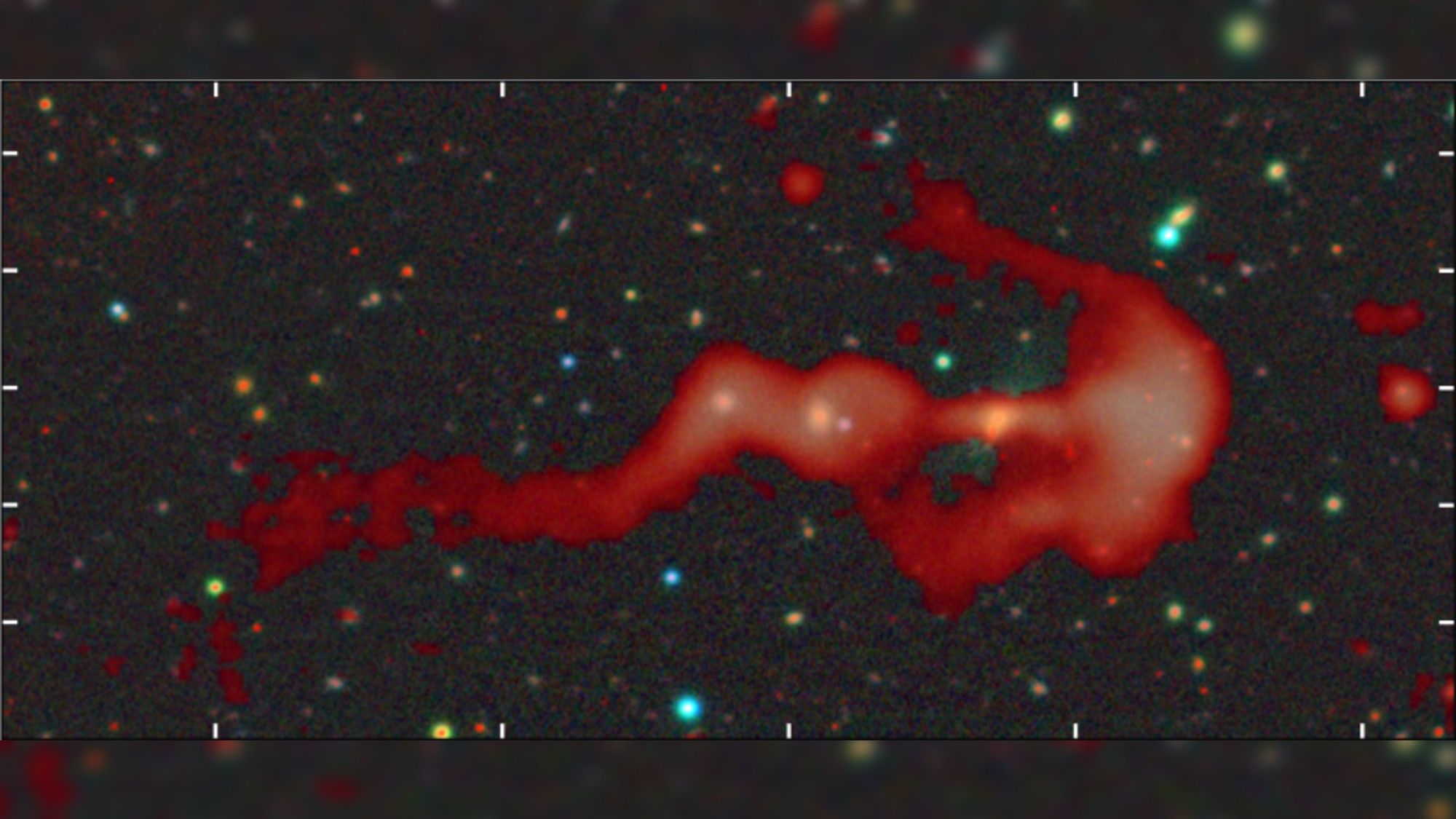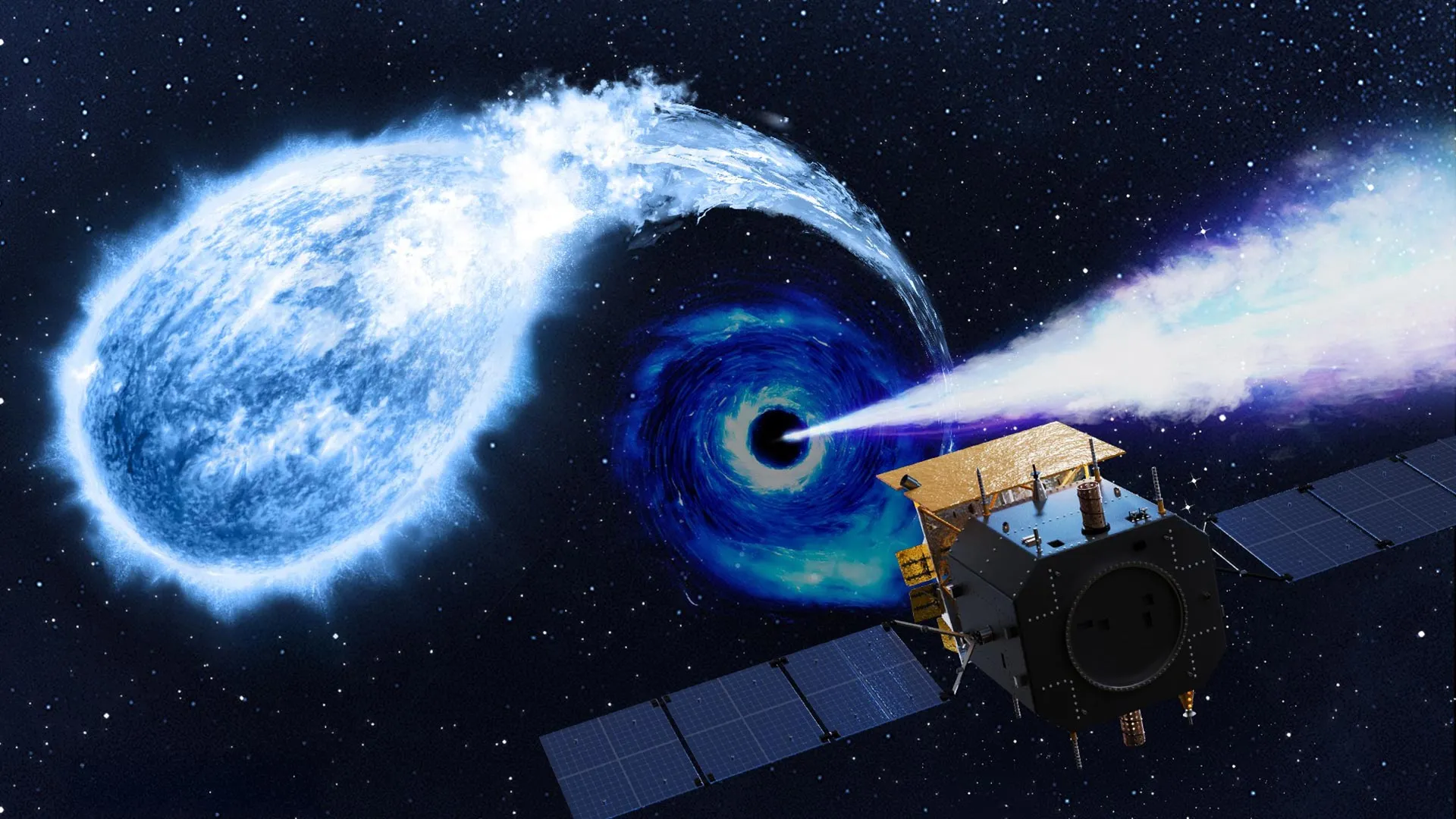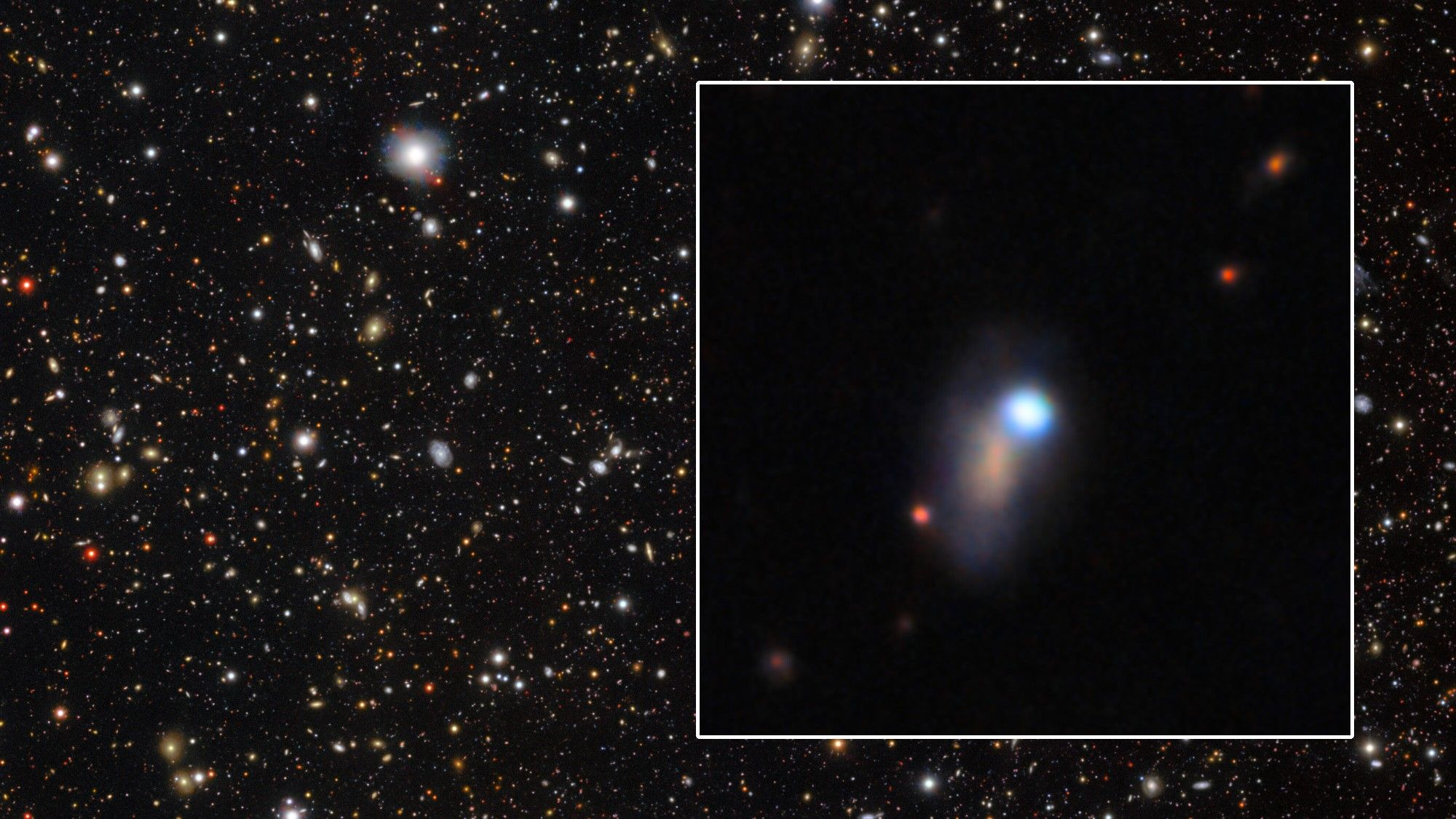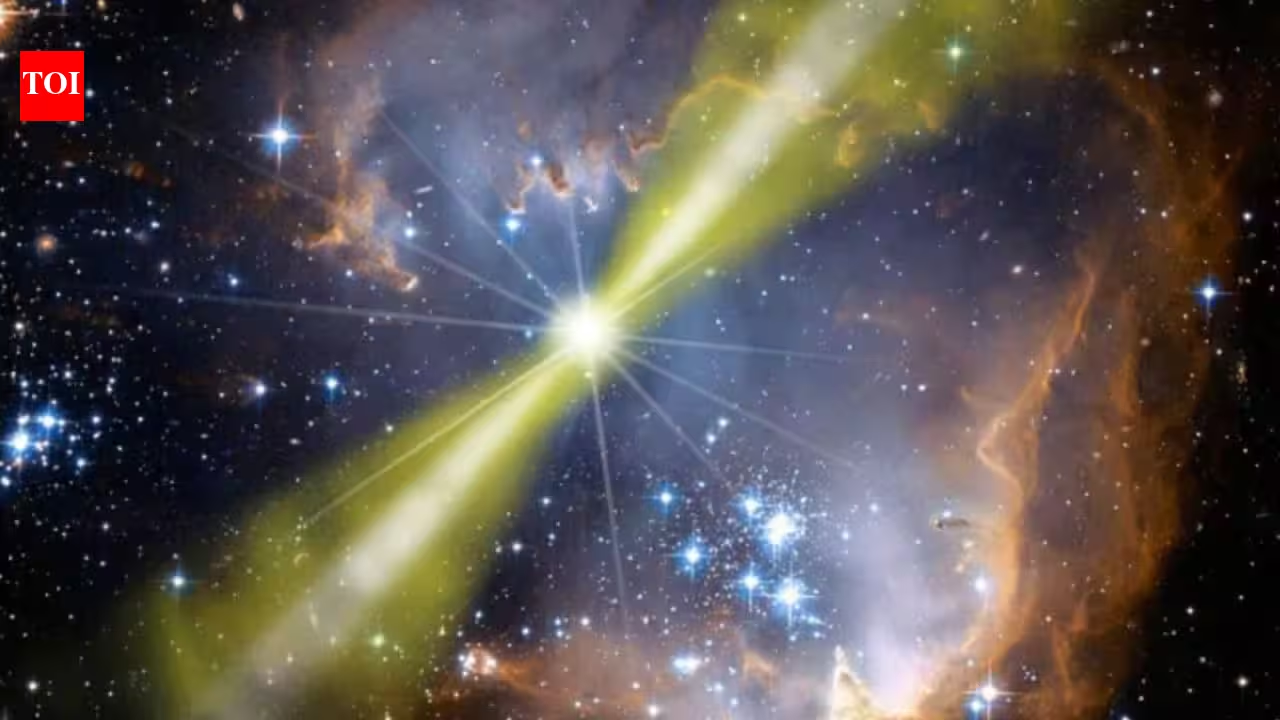
Astronomers have identified a strange and fast-fading cosmic event that appears to defy existing categories of known astronomical explosions. Detected by China's Einstein Probe space telescope, the object, designated EP240305a, produced unusual bursts of X-rays and radio emissions that do not fully match any known type of stellar explosion, black hole event, or gamma-ray burst.The discovery was detailed in a study published on June 13, 2026, in Monthly Notices of the Royal Astronomical Society.The Einstein Probe detected EP240305a on March 5, 2024, while conducting its routine survey of the X-ray sky. The transient source immediately stood out because it emitted two distinct X-ray flares separated by roughly 200 seconds of relative quiet.Researchers quickly launched a worldwide follow-up campaign using telescopes operating across multiple wavelengths, including X-ray, optical, near-infrared, and radio observatories. The goal was to determine whether the event belonged to any known class of cosmic transient.What they found only deepened the mystery.The X-ray emission faded dramatically within a matter of days, indicating that the source was short-lived. At the same time, radio observations revealed a much slower decline that continued over several weeks. This radio behavior suggested the presence of an evolving jet, a stream of energetic material moving outward from the source.Scientists also identified a faint near-infrared counterpart at the event's location. However, no corresponding optical signal was detected despite targeted observations.Why astronomers ruled out several known explanationsTo understand the nature of EP240305a, researchers compared its characteristics with a wide range of known astronomical phenomena.One possibility was a tidal disruption event, which occurs when a star is torn apart by the immense gravity of a black hole. Some tidal disruption events launch powerful jets and produce bright X-rays. However, these events typically remain visible for months, whereas EP240305a faded within days.Astronomers also considered whether the source could be an X-ray binary system, where a neutron star or black hole feeds on material from a companion star. Typical X-ray binary outbursts evolve much more slowly than EP240305a and generally do not produce the kind of radio emission observed in this case.Another possibility was a thermonuclear burst on the surface of a neutron star. Yet the measured X-ray temperature was too low, and the long-lasting radio signal was inconsistent with such explosions.Researchers further ruled out magnetar giant flares, violent eruptions from highly magnetized neutron stars, because those events usually occur and fade within fractions of a second. The flares from EP240305a lasted several minutes.Among all the possibilities examined, EP240305a showed the strongest similarities to gamma-ray bursts (GRBs), some of the most energetic explosions known in the universe.The source displayed a double-flare pattern that resembles the "double bursts" occasionally observed in GRBs. Its X-ray light curve also evolved in a manner consistent with known gamma-ray burst behavior. In addition, the gradual fading of the radio emission closely matched predictions for a GRB afterglow produced by an expanding jet.Yet there was one significant problem: No gamma rays were detected.Gamma-ray bursts are named after the intense gamma-ray flash that marks their beginning. In the case of EP240305a, astronomers observed many GRB-like features but failed to detect the gamma-ray signal normally associated with such events.This unusual combination has led researchers to classify the source as a possible "gamma-ray-dark GRB-like transient."What could explain the missing gamma rays?Scientists have proposed several explanations for why a gamma-ray burst-like event might appear without detectable gamma rays.One possibility is that the jet was pointed slightly away from Earth. In such an off-axis configuration, observers may miss the strongest gamma-ray emission while still detecting lower-energy radiation and the later radio afterglow.Another explanation involves a "choked jet." In this scenario, a jet begins to form but fails to completely break through surrounding material, preventing a bright gamma-ray flash from escaping into space.At present, available observations do not allow astronomers to determine which explanation is correct.A new class of fast X-ray transient?The discovery raises the possibility that astronomers are beginning to uncover an overlooked population of faint cosmic explosions that have remained hidden from previous surveys. Many traditional instruments were designed to detect brighter and more obvious events, potentially missing weaker transients such as EP240305a.The study's authors note that highly sensitive observatories like the Einstein Probe, combined with rapid follow-up observations across multiple wavelengths, are opening a new window into these unusual phenomena.
Einstein Probe discovers mysterious cosmic explosion unlike anything astronomers have seen before
A peculiar cosmic event, dubbed EP240305a, has baffled astronomers with its rapid X-ray fade and lingering radio signals. Detected by China's Einstein Probe, this transient phenomenon exhibits characteristics similar to gamma-ray bursts but crucially lacks the expected gamma-ray signature. Scientists are exploring possibilities like an off-axis jet or a choked jet to explain this "gamma-ray-dark GRB-like transient," potentially revealing a new class of cosmic explosions.
711 words~3 min read