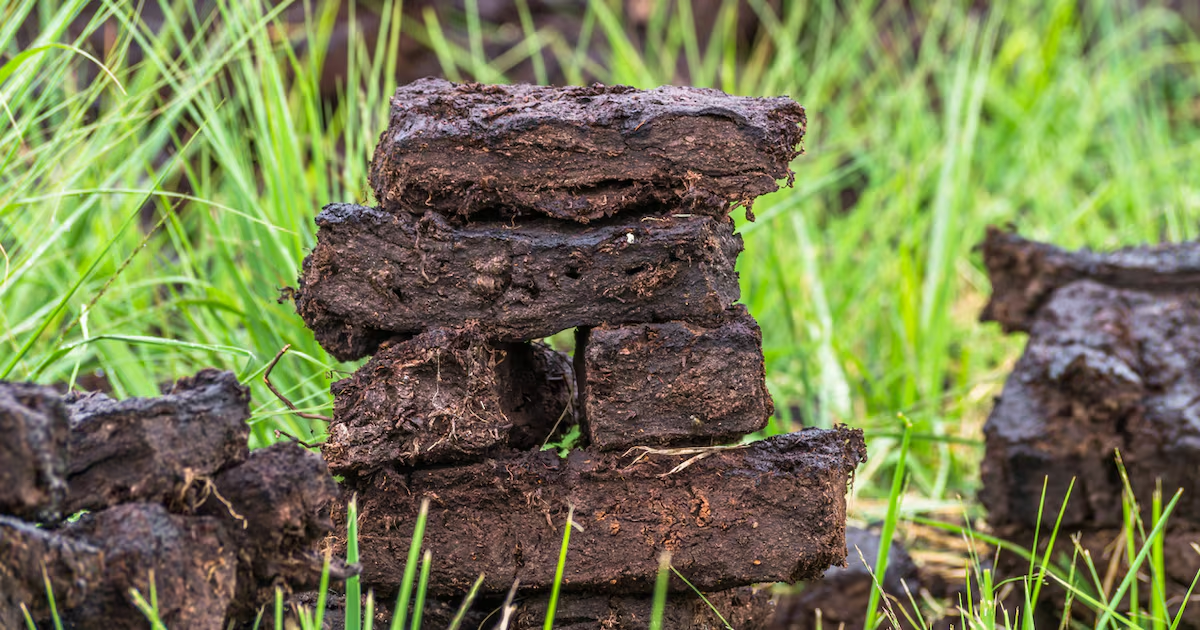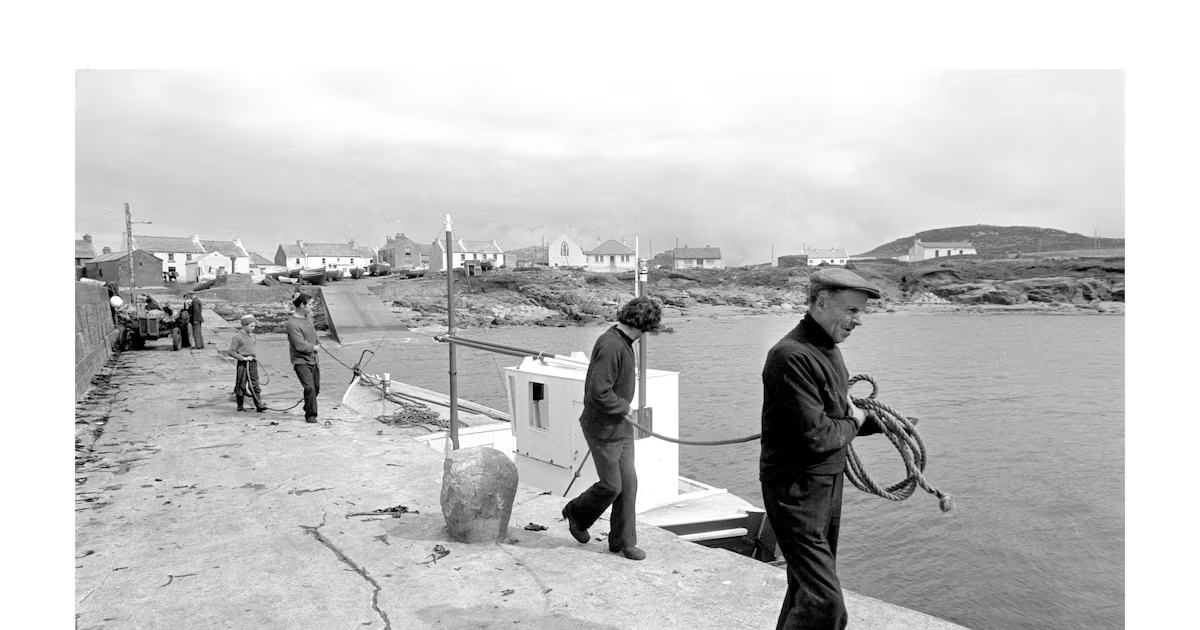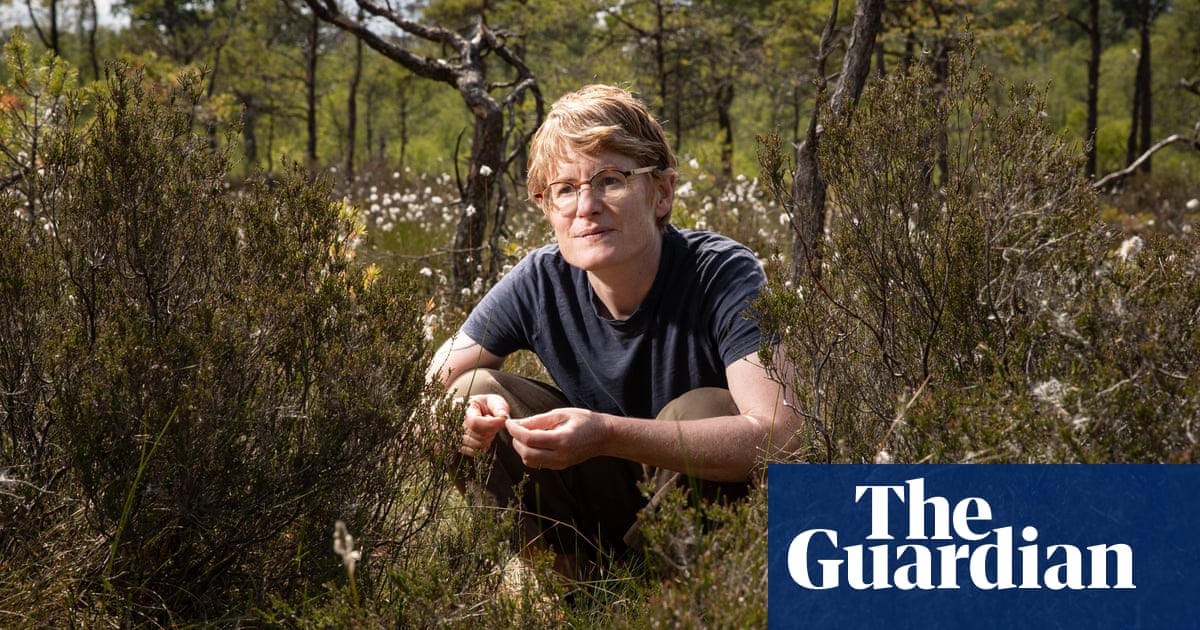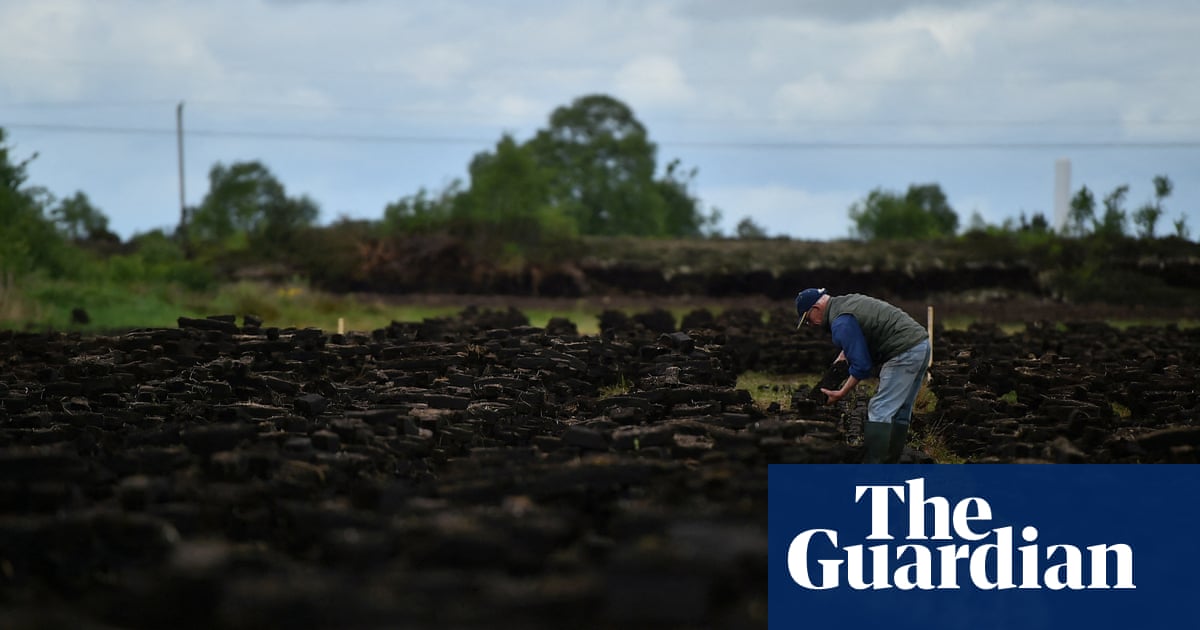
“You can read Ireland’s history in the boglands. They hold millennia in their layers,” says photographer Shane Hynan of his project, Beofhód (meaning Beneath in English).The boglands, known as portachs in Irish, cover roughly 1.2m to 1.5m hectares or about 14% to 17% of the country’s total land area. The raised bogs of the Irish Midlands are made of peat that forms at a rate of 1mm a year (0.04in) in low-lying, poorly drained basins or former lakes. As the historical geographer Kevin Whelan observes in the Atlas of the Irish Rural Landscape, “the bog has been etched as deeply into the human as into the physical record in Ireland – to an extent unrivalled elsewhere.”
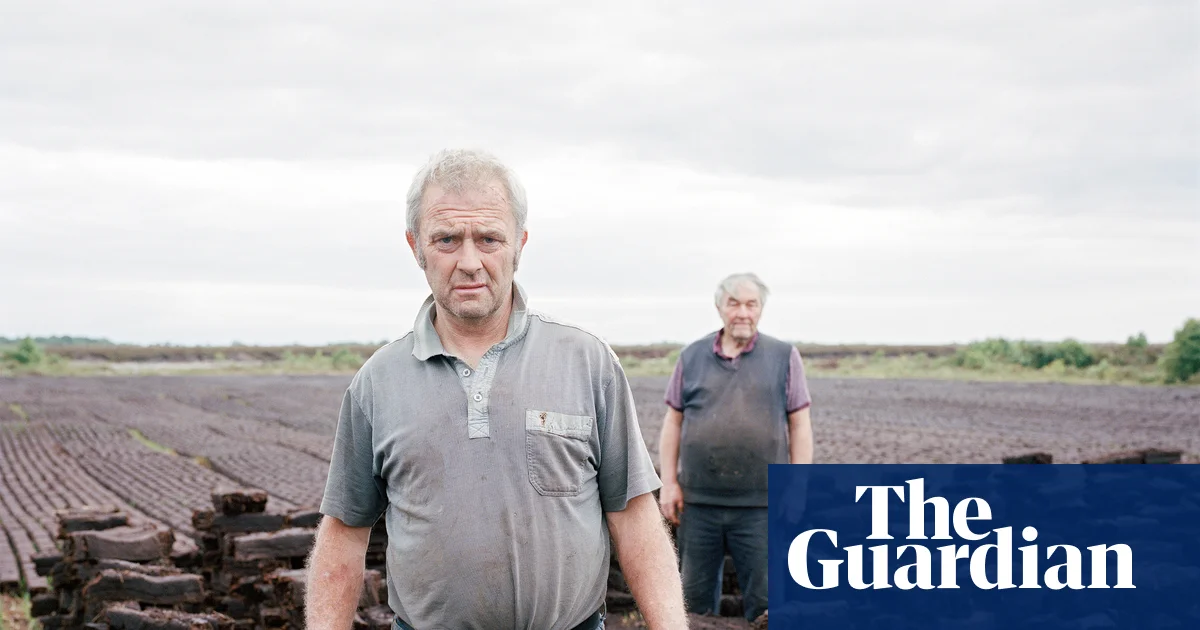
Eddie and Con footing turf for domestic use, Knockirr Bog, County Kildare, 2022.
Hynan first became fascinated by them after an extended period of living abroad. “I’d gone from being an insider to an outsider. When I came home, I noticed how much the bogs had changed. In a good way, I saw fewer men cutting. In a bad way, I saw no money in the work any more.”For generations turf from the bog was dried and cut into blocks, forming the primary fuel for rural households. Households using turf may spend up to €800 a year on heating, less than a quarter of the average Irish household’s annual energy bill. “It’s very, very cheap fuel. They can control the quality and quantity of it; you can’t really do that with anything else,” Hynan says.