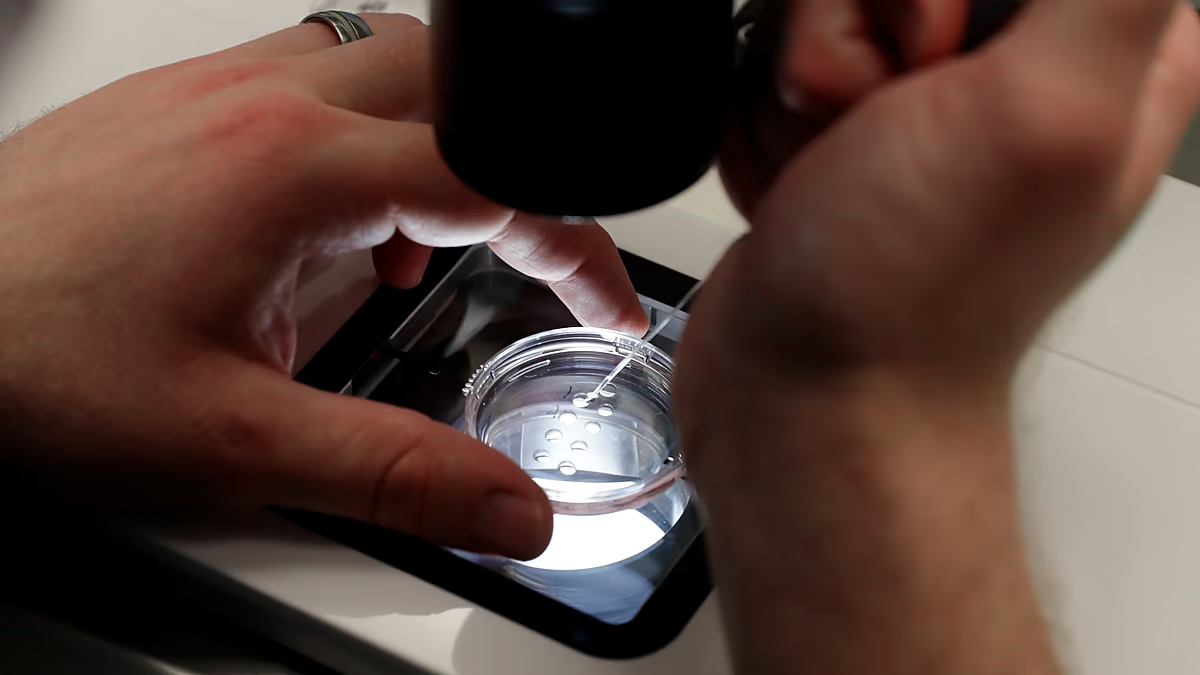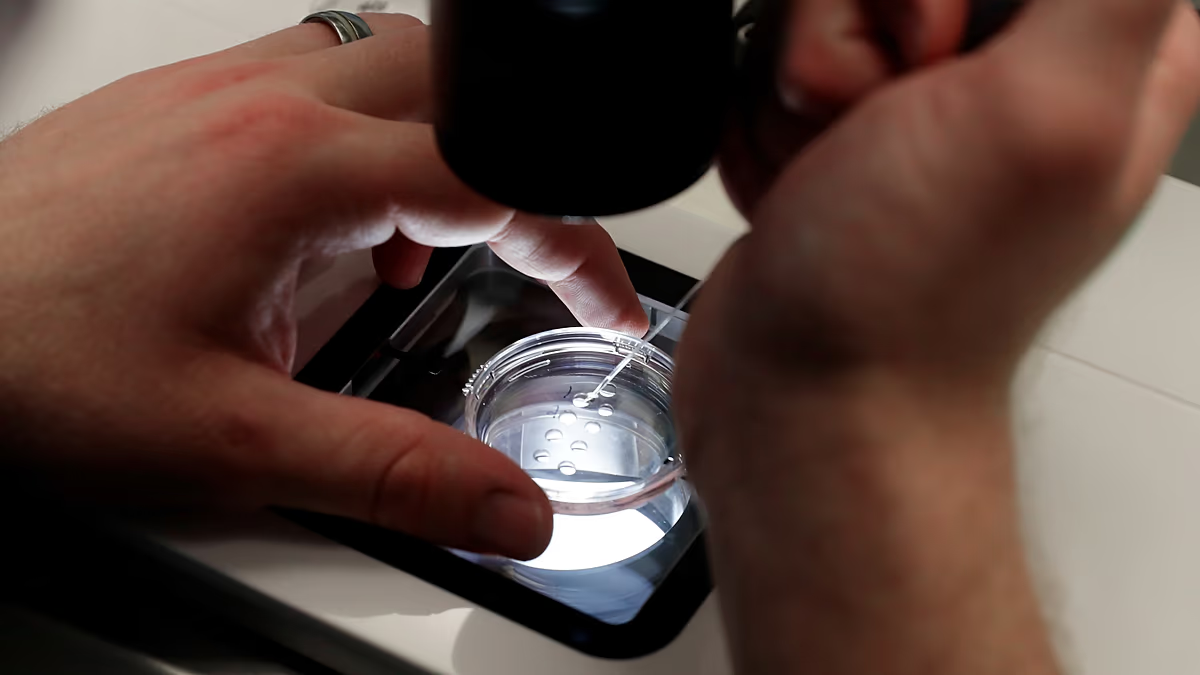
Most "add-on" treatments offered alongside in vitro fertilisation (IVF) are not proven to boost fertility and could be a costly waste of time, new research indicates. Experts warn that patients face widespread misinformation, with clinics, online forums, and social media often overstating the benefits of these unproven therapies. A study, published in Lancet Obstetrics, Gynaecology and Women’s Health, examined 85 existing clinical trials. It focused on fertility add-ons like steroids for inflammation, plasma injections, and genetic testing. Researchers found either no effect on fertility, inconclusive results, or only a small, uncertain benefit for a few procedures.“In many cases, the quality of evidence was poor, contributing to uncertainty regarding effectiveness, and many studies (of those originally considered) were excluded for trustworthiness concerns,” they added.The study found either no effect on fertility or inconclusive results for: acupuncture (inserting thin needles into points on the body); corticosteroids to reduce inflammation and suppress immune system activity; endometrial receptivity testing (a biopsy to assess gene expression patterns); intralipid infusion when a liquid containing fats is put into the blood; injection or infusion of platelet-rich plasma into the blood or womb and pre-implantation genetic testing to check whether embryos have the expected number of chromosomes (in people without family history).The review found weak evidence for some possible benefit for three IVF add-ons, including EmbryoGlue (thought to improve the chance of the embryo implanting in the womb).Patients are being bombarded with widespread misinformation, while clinics, forums and social media can overstate the benefits, experts said (Getty/iStock)The study found this may increase the probability of pregnancy by about 25% and some improvement in the proportion of live births, however the effect on live birth rates was not considered robust.There was also weak evidence to suggest endometrial scratching of the womb lining may increase the probability of live birth by 20%.There was further limited evidence for reducing miscarriage by 40% with physiological intracytoplasmic sperm injection (PICSI) – a technique used to select sperm based on their ability to bind to hyaluronic acid, which may be a sign that the sperm is mature and capable of fertilising an egg. However, there was no real evidence it improved live birth rates.Author Dr Sarah Lensen, from the University of Melbourne, said: “In many countries, infertility care is largely provided by private clinics where IVF is highly commercialised, with some add-ons costing thousands of dollars.“Our review finds a lack of evidence that most of the IVF add-ons we assessed provide any benefit to patients.“Unproven add-ons can lead to false hope, greater financial strain and unnecessary medical procedures at what already can be a very difficult time for patients.“IVF clinics and clinicians should carefully consider whether it is appropriate to offer unproven add-ons, as their availability is often perceived by patients as implicit endorsement of benefit.”Of 157 potentially eligible trials, 72 were excluded on trustworthiness grounds, the researchers said.In a second study, experts found 92% of the IVF patients surveyed in Australia relied heavily on IVF clinic websites for information and more than 60% of patients reported using social media platforms such as Facebook and Reddit for information to guide their decisions around IVF.Dr Lensen said: “There is widespread misinformation about IVF add-ons with private clinic websites and patient forums on social media – major information sources for patients – often overstating the benefits and omitting the costs and risks of add-ons.“Our trial shows an evidence-based website, free from commercial interests, increased understanding and information satisfaction among IVF patients, addressing a clear unmet need.“Although developed in Australia, the evidence is applicable to IVF patients globally and we hope to see this new resource endorsed and used by fertility specialists, clinics and patients around the world.”Dr Lensen told a media briefing IVF is very common, with more than 75,000 cycles in the UK every year.She said success rates are “modest” at around 40% per cycle and come at “huge emotional and financial burden” to families.Add-ons designed to enhance IVF are used with the “aim or the claim” they will improve success, she said.Dr Lensen said that after one or more failed IVF cycles or embryo transfers “there’s a natural human reaction to think ‘something needs to change because this isn’t working so what are we going to do different to get a different result’?”She added: “Even though we know the success rate of IVF is low, and we expect a large proportion of patients to have multiple transfers without success, people don’t think of it in that logical way of rolling a dice and getting a six straight away.”She said some patients are highly active on social media and do their own research and come into clinic asking questions about possible treatments.For some patients it can feel “quite desperate” and they do “not want to leave any stone unturned” in trying to become pregnant, she added.
Most ‘add-on’ IVF treatments do not improve fertility, study says
Researchers found that the ‘add-ons’ either had no effect on fertility, inconclusive results or a small but uncertain benefit for a handful of procedures
801 words~4 min read