See more This is Money on Google - save us as a Preferred SourceBy JOHN-PAUL FORD ROJAS, DEPUTY BUSINESS EDITOR Updated: 23:28 BST, 23 June 2026
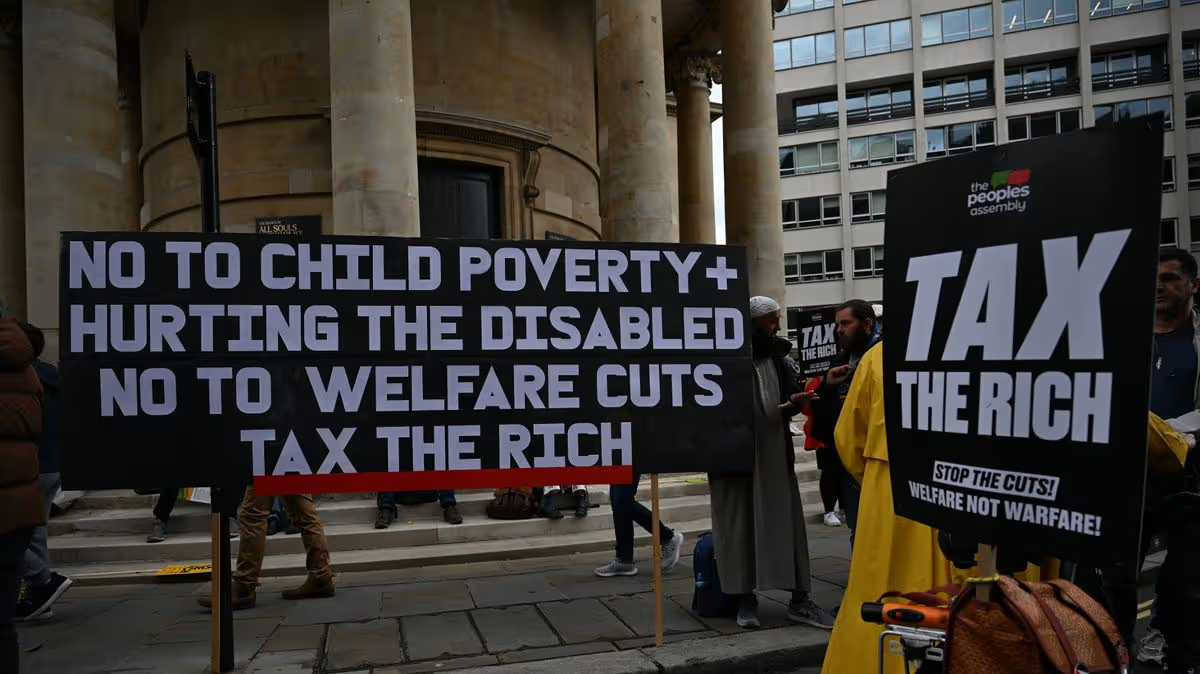
Benefit overpayment and tax shortfalls are costing Britain nearly £70 billion a year – adding to the pressure on public finances as spending demands mount.The Office for Budget Responsibility (OBR) said the government spent £10.3 billion too much on welfare in the most recent financial year, up from £9.4 billion the year before.Universal credit fraud was responsible for the bulk of the sum, according to the government.Meanwhile HM Revenue and Customs data showed a £59.2 billion shortfall in the taxes it collected in the 2024-25 financial year.That was up from £52.8 billion the year before – despite the government's efforts to try and close the 'tax gap'.The staggering sums are significant at a time when public finances are increasingly stretched. The money being lost adds to pressure on public financesLast year, the shortfall between money spent by the government and the amount collected in taxes meant the Treasury had to borrow £128 billion.And Chancellor Rachel Reeves has little room to manoeuvre. At the time of the spring statement in March, she had just £24 billion 'headroom' against her targets of bringing down debt and borrowing.The tens of billions being wasted on benefit overpayments and under-collected tax also dwarf the sums the centre of the row over defence spending.Defence Secretary John Healey resigned this month after he was told his budget would only be increased by £13.5 billion, far short of the £28 billion military chiefs said they needed and the £18 billion that Mr Healey eventually requested.Tuesday's OBR figures showed that of £10.3 billion in benefit overpayments, £7.4 billion related to universal credit.The Department for Work and Pensions said 81 per cent of universal credit overpayments last year were due to suspected fraud by claimants. It said 10 per cent was due to claimants' inadvertent errors and 9 per cent the result of errors by officials.Meanwhile, HMRC said the 'tax gap' between the level of tax due and that actually paid was mainly due to underpayment by small businesses.They accounted for 62 per cent of the gap, which was largely due to unpaid corporation tax.Tax evasion accounted for 12 per cent of the tax gap, HMRC said.Rachael Griffin, tax and financial planning expert at Quilter, said: 'Closing even a fraction of the £59.2 billion tax gap could play a meaningful role in supporting the public finances without the need for further headline tax rises.'Improving how the system works in practice, particularly for small businesses and those newly entering self assessment, may prove just as important as any changes to tax rates in the months ahead.'Simplifying a tax system that continues to grow ever more complex should be high up on the to-do list.'HMRC chief executive John-Paul Marks said: 'Today's estimates reflect the changing world in which HMRC operates, where it is becoming more difficult to tackle non-compliance through traditional approaches alone.'That is why our aim is a well-designed modern tax system that makes it easier to get things right first time and harder to get things wrong, and which allows us to respond effectively to non-compliance and tackle criminal activity.'