Image by Pixabay via Pexels | Not representative
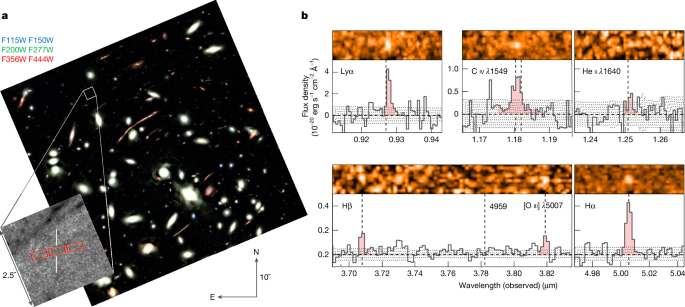
An international team of astronomers led by the Department of Astronomy at Tsinghua University has discovered an unusually metal-poor galaxy that may contain signs of first-generation star formation. The galaxy, named Metal-Pristine Galaxy COSMOS Redshift 3 (MPG-CR3), or CR3, was identified using observations from the James Webb Space Telescope (JWST), the Very Large Telescope (VLT), and the Subaru Telescope.
The findings, published in The Astrophysical Journal Letters, describe CR3 as the most metal-poor galaxy known from the period known as "cosmic noon," around 11.5 billion years ago. Cosmic noon refers to a period when the universe was producing stars at its highest rate and galaxies were growing rapidly. In astronomy, "metals" refers to all elements heavier than helium, including oxygen, carbon, and iron. Because CR3 contains so few of these heavier elements, researchers say it closely resembles what scientists expect the earliest galaxies in the universe may have looked like.
The discovery is significant because it could offer clues about Population III (Pop III) stars, the first generation of stars thought to have formed after the Big Bang. These stars are believed to have formed from gas made almost entirely of hydrogen and helium, before heavier elements were created inside stars and spread across the universe through supernova explosions. Hence this is why CR3 has been referred to as a "living fossil."