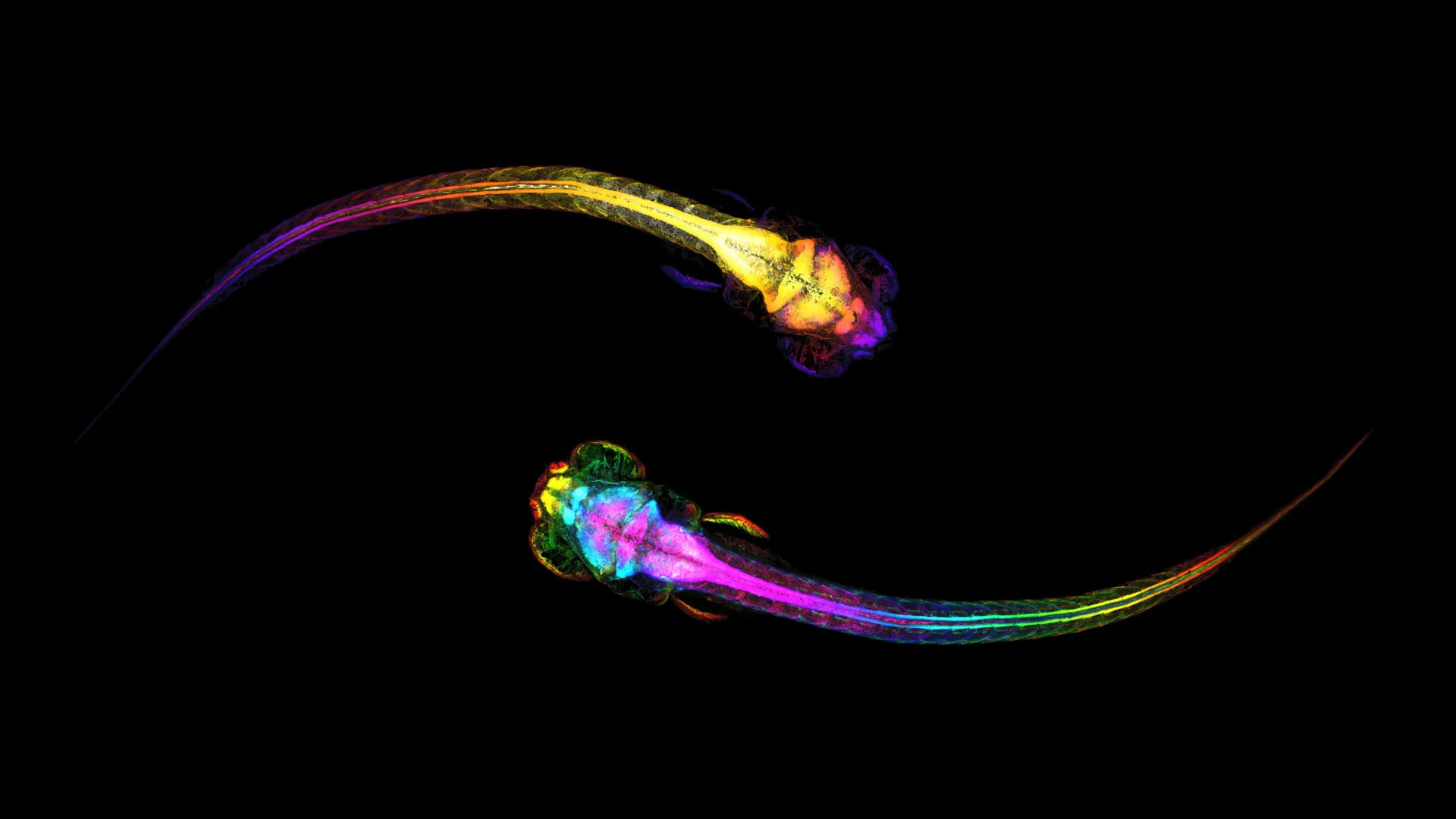
video: Professor Robert Hindges and Dr Phoebe Reynolds discuss their research into how early life visual experience influences the structure and function of the eye in zebrafish and affects their behaviour in a visual virtual reality task.
view more
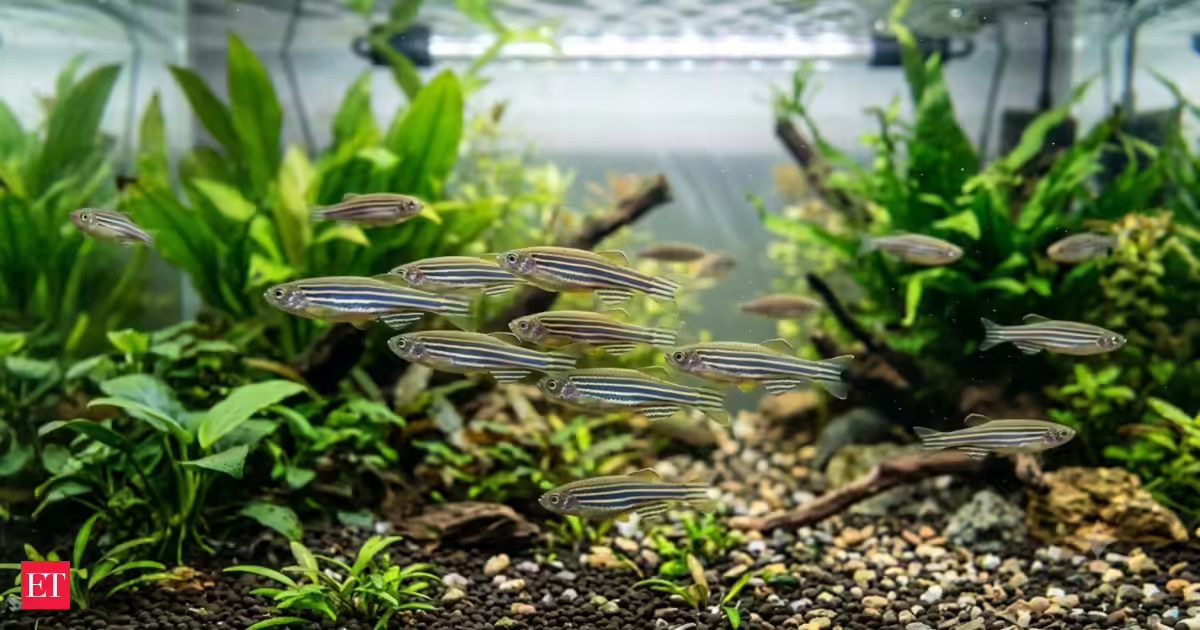
The environment experienced by young zebrafish influences both the shape and electrical activity of the neurons in the eye, which impacts subsequent behaviour.
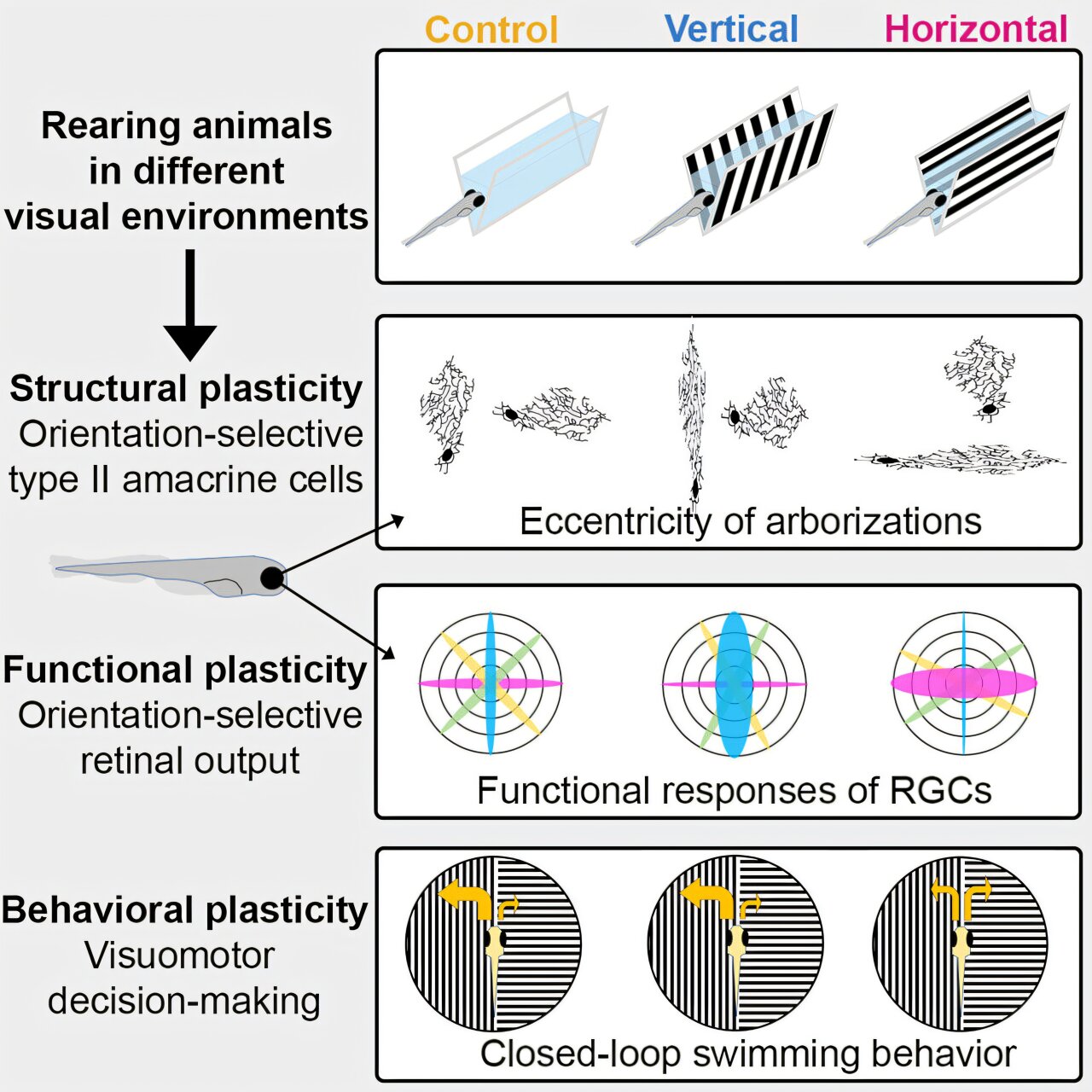
Neuroscientists at King’s College London studied the fish in the first five days of their life to investigate whether visual features of the environment they grow up in affect how the cells in the eye develop. The study, published in Neuron, found that fish growing up surrounded by horizontal stripes develop neurons with different shapes and responses compared to fish growing up surrounded by vertical stripes.
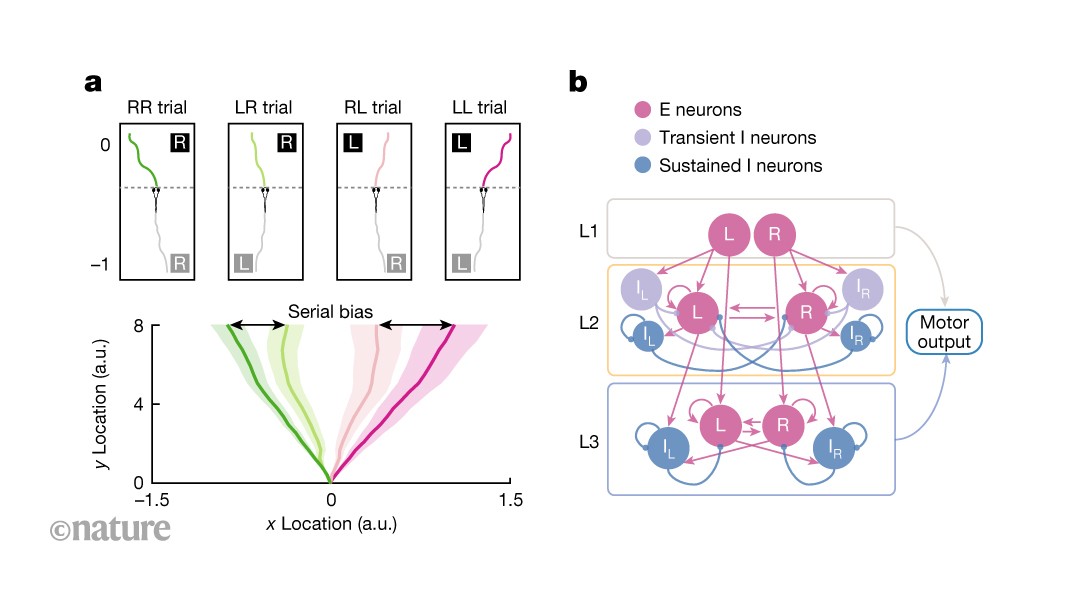
Using a virtual reality behavioural test, developed in collaboration with the University of Konstanz, researchers showed these structural and functional differences in the neurons influence how the fish behave. Zebrafish have an innate preference to swim towards stripes that are parallel to the orientation of their body. The study used virtual reality to test the strength of preference and found that this instinct is greatly reduced in fish who grow up in a horizontally striped environment whereas it is retained by those who grow up surrounded by vertical lines.