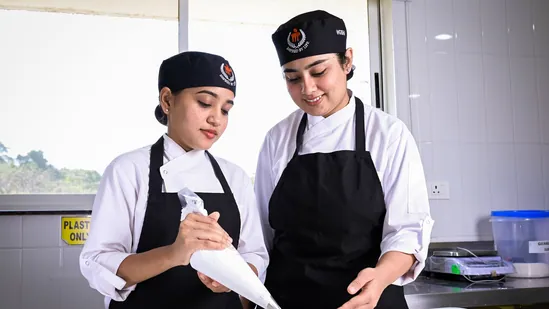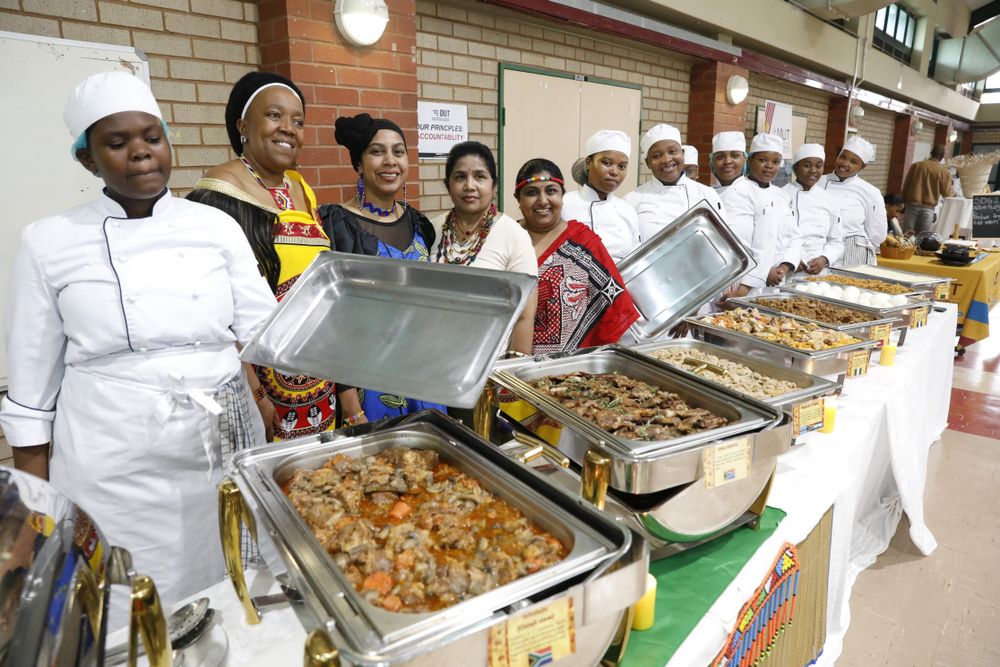
Students and lecturers from DUT Hospitality and Tourism department with meals prepared by second year catering management students at their Annual African Food Festival. In a recent publication, the South African Hoteliers Report indicates that 77% of South African hoteliers are exploring new technologies, 76% do not yet have a formal AI strategy – often leading to a skills gap.
Anthony Joss
Many hospitality businesses are struggling with a long-standing challenge that the rapid adoption of AI and automation is compounding: finding and retaining the right people.
AI, automated booking systems, cloud-based management platforms, smart scheduling and inventory tools – and more – are reshaping hospitality operations. And, as technology takes care of the administrative burden that has traditionally consumed large portions of employees’ efforts, staff have more time to create genuine emotional connections and deliver the personalised service that guests remember.
But there is a disconnect. In a recent publication, the South African Hoteliers Report indicates that 77% of South African hoteliers are exploring new technologies, 76% do not yet have a formal AI strategy – often leading to a skills gap. Globally, 76% of hotels report staffing shortages, and 77% of South African hoteliers identify human capital as the biggest obstacle to long-term sustainability.