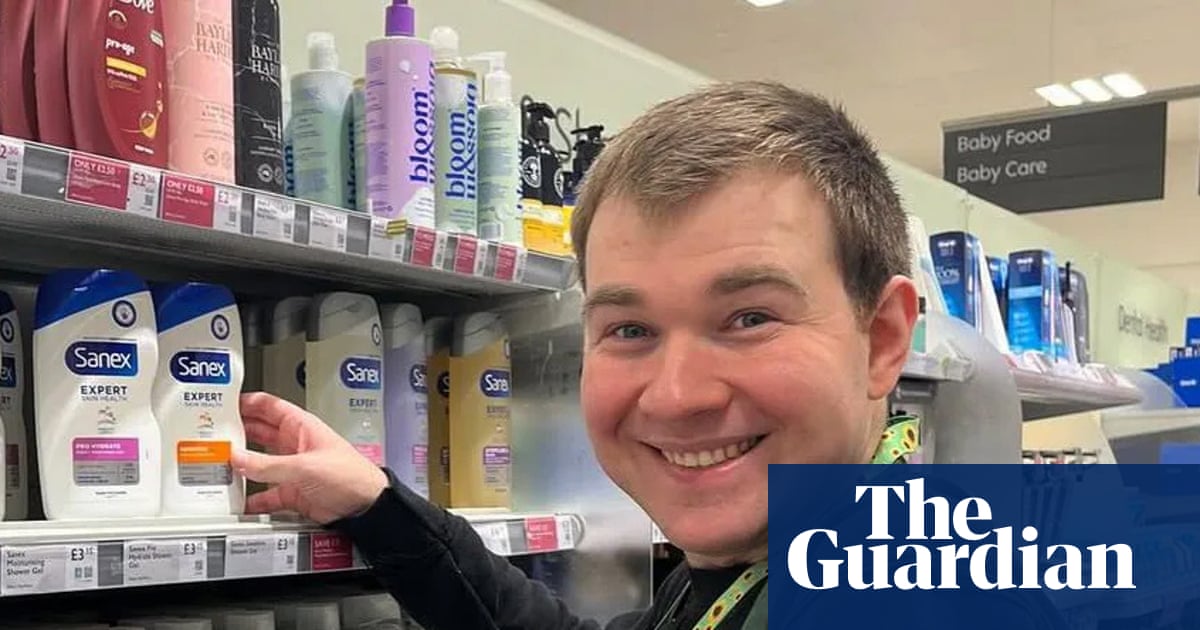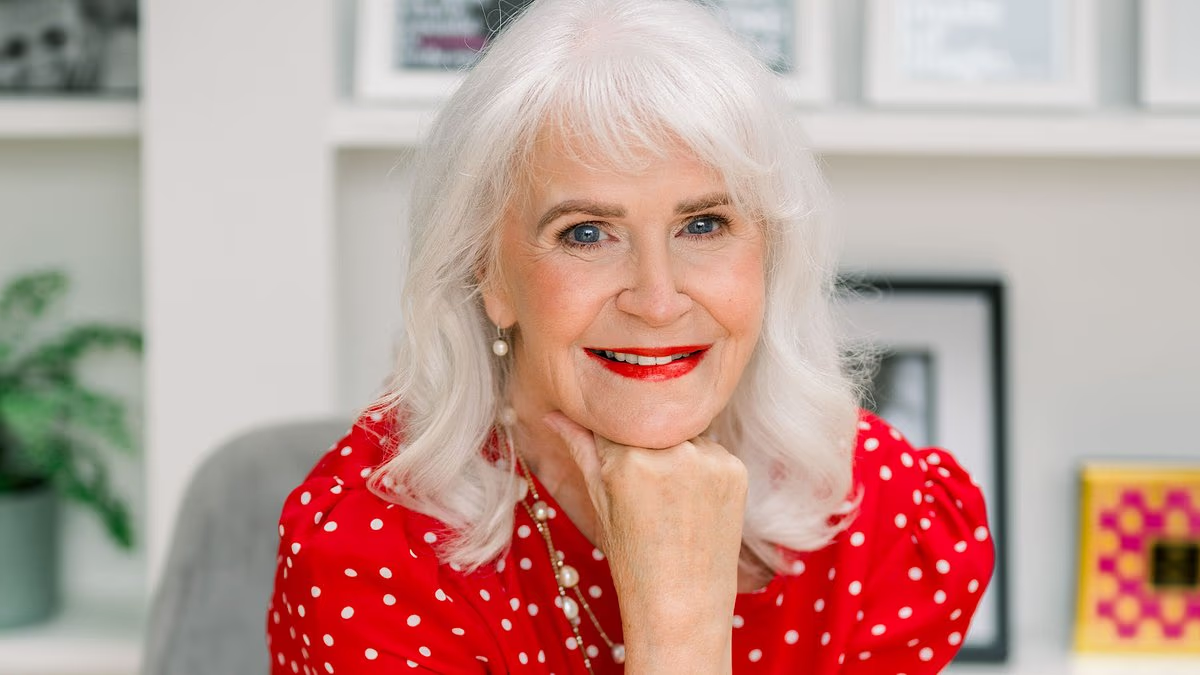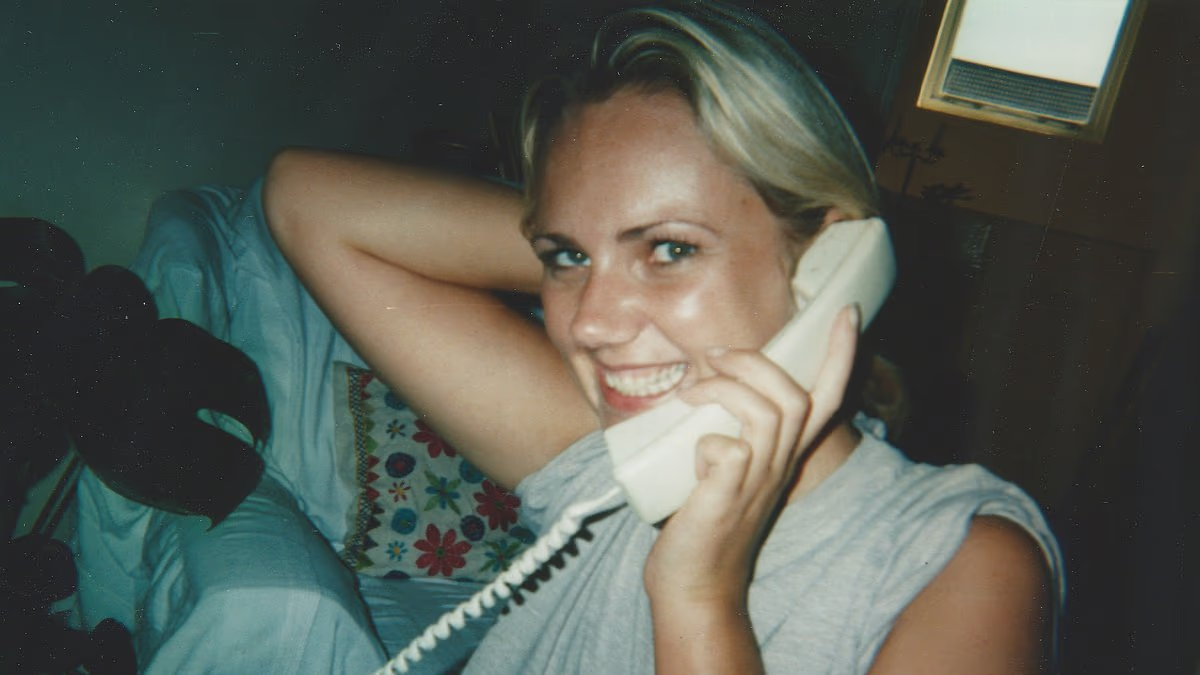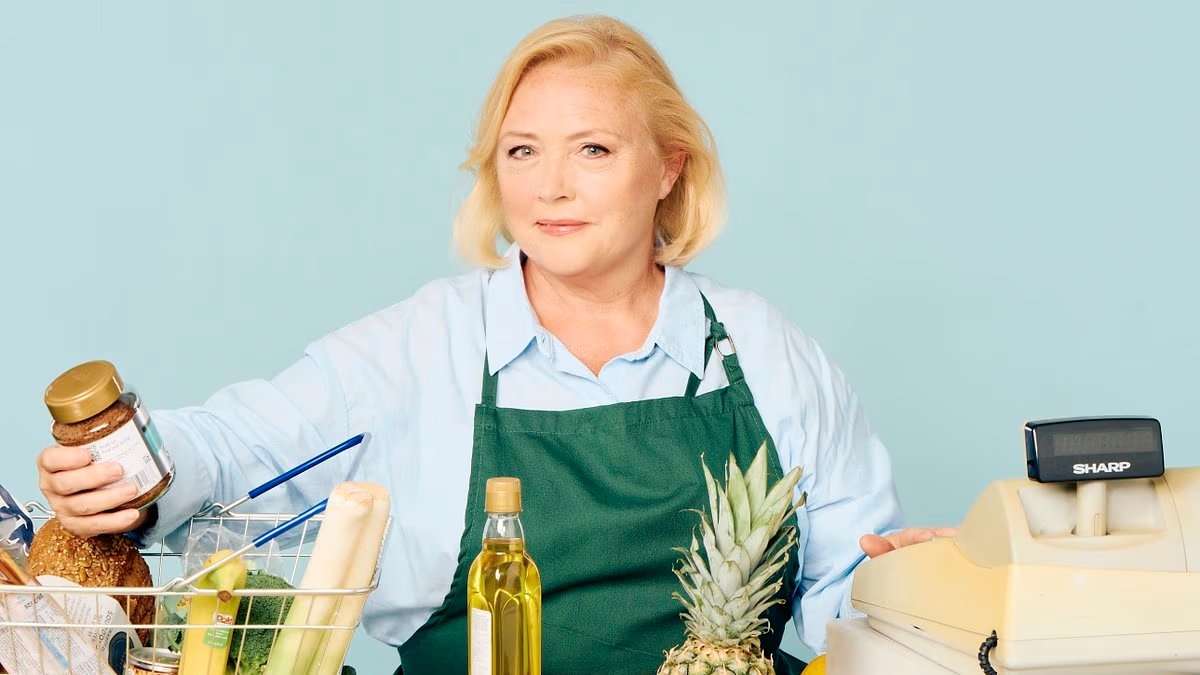
After 35 years as a top executive in TV, I recently found myself standing in the chilled aisle at Waitrose stacking yogurts.Now, four days a week, I tie my green pinny around my waist to start my shift manning the checkout, processing the Deliveroo orders or restocking the shelves at my local store in Brighton.I earn in a week what I used to earn in a day and it’s exhausting.This, apparently, is my ‘third quarter’. But it’s not about retirement or winding down. I am doing very little gardening and I haven’t taken a single cruise. In fact, having just turned 60, I am working harder than ever. I have reinvented myself, yes, but only as a means of surviving.Looking back, the writing had been on the wall for a while. At first, it was almost imperceptible: fewer TV commissions, longer gaps between projects, the phone ringing a little less often than it used to.As a freelance executive producer, for most of my career I’d moved seamlessly from one production to the next. I made food, travel and lifestyle programmes for the BBC, ITV and Channel 5, travelling the world and working with some of Britain’s most loved national treasures, from Delia Smith and Loyd Grossman to Alan Titchmarsh, Timothy West and Prunella Scales, and the Hairy Bikers.If one series ended, another was already waiting in the wings.Part of me blamed the changing television industry for the lack of work. The middle ground of factual television has been hit hard by streaming and social media, after all. As a freelance executive producer, Nicky Taylor, second-left, travelled the world on projects, working with national treasures like author and broadcaster Loyd Grossman, centreBut another part couldn’t help wondering whether age had something to do with it, too.Some people would say that none of this should have come as a surprise. Isn’t this the point at which women are supposed to quietly step aside, prune the roses, take the occasional holiday to Madeira and leave the exciting opportunities to new, younger blood?Ha, fat chance. Like many women of my generation, I’ve spent most of my money bringing up three children, now aged 25, 27, and 28, after I divorced my husband when I was 36. I still have years before I can draw my full pension, a mortgage to pay on my four-bedroom house in Brighton and ever-increasing bills to meet.In other words, I don’t work because I fancy keeping busy – I work because I have to.Of course I loved what I did before, too. Travelling through France and Italy with Loyd Grossman was a ball, and even watching music producer Pete Waterman fall into a canal was fun – but what I really loved was the sense of possibility. There was always another idea to pitch, another adventure just around the corner.What I didn’t realise at the time was how much of my identity had become wrapped up in my work. Until, gradually, it wasn’t any more.Other life changes proved similarly derailing. A seven-year relationship I thought would carry me into my dotage suddenly imploded, and together with the lack of work, it felt like a bomb going off. One minute I knew exactly what the next ten years looked like, and the next I hadn’t the faintest idea. It wasn’t just the loss of work, it was the loss of certainty.And it wasn’t just me. Talented editors with extraordinary CVs were – and are – struggling to find work. Around me, producers and directors were becoming Uber drivers and delivery men.People who have spent decades making some of Britain’s best-loved programmes were piecing together freelance jobs simply to pay the bills.For the first time in my working life, I felt genuinely vulnerable.The first things to disappear were the little luxuries. The health club had to go. Giving up my membership to private members’ club – and famous media haunt – Soho House, felt significant but, oddly enough, that wasn’t the cancellation that really made me stop and think. It was my artisan olive oil subscription. Nicky collaborated with stars such as Alan Titchmarsh prior to starting her job at the Waitrose checkoutsWhen your career is wobbling and your personal life is going through a major reset, mourning a monthly delivery of hand-pressed Tuscan olive oil sounds ridiculous, but that’s to miss the point. The big changes often arrive disguised as small ones, until all of a sudden you realise life has shifted beneath your feet and bears little resemblance to the one you used to have.I didn’t take it lying down. I updated my CV, contacted recruiters and rang former colleagues. I worked my network – but gradually realised that nobody was coming to rescue me. If I wanted a future, I was going to have to build it myself. Could I start again?I started saying yes to almost everything. Care work, Waitrose, dog boarding (where busy owners give me their dogs to look after overnight), after-school science clubs, even covering classes at Plumpton further education college near me in East Sussex.I started studying to teach English as a foreign language. I even briefly investigated becoming a driving instructor and, to the horror of several friends, spent one memorable evening researching whether there might be a late career as a professional dominatrix. Nothing felt entirely off the table any more. Including Waitrose. I remember unwrapping my Waitrose uniform. The last time I’d worn a uniform regularly was at school. There it was: crisp blue shirt, green apron, name badge.I took it home, put it on and looked at myself in the mirror. A few years earlier I’d been pitching television ideas to commissioners. Now I would be learning product codes and supermarket procedures.The biggest surprise wasn’t the work itself. It was how much there was to learn. The technology, the systems, the tills.Three months on and it still feels completely overwhelming at times. And standing alongside colleagues 40 years younger than me, who seem to absorb everything instantly, I realise I have to work hard just to keep up. Which, oddly enough, I rather enjoy.Television was thrilling, but it was also hard. The pressure of constantly having to come up with ideas, win commissions, manage teams, stretch tiny budgets and somehow make something brilliant out of very little was stressful and mentally draining. Whereas once Nicky pitched television ideas to commissioners, she now focuses her attention on learning product codes and restocking shelvesThere is a strange relief in doing jobs that are immediate and useful like stacking shelves. My days are equally as tiring as my former high-powered job, but they are hugely varied, too.Take one morning last week when, with my dog walking hat on, I’d wrestled with two labradors fighting over a sausage roll in the boot of my car. Then by mid-morning I was standing in front of a class of equine management students at Plumpton college.By lunchtime I’d changed into a care uniform and was visiting elderly clients. And a few hours after that, I was wearing a white lab coat helping children make that fake snot at an after-school science club.I’ve come to recognise that there is dignity in work that simply needs doing. And if anybody wants to laugh because I once made television programmes and now serve customers at Waitrose, let them.I’ve taken plenty of unexpected turns in life. This just happens to be one of the more practical ones. One thing I’ve noticed is that people sometimes seem more willing to talk to me now. Just recently I was on the till serving a mum I knew from my children’s school days 15 years ago.In the past we had exchanged the usual polite chat at the school gates, but this time she actually stopped and told me how difficult things had become for her family and how worried she had become about money.I remember thinking afterwards that I’m not sure she would have shared that with me back then. Perhaps she saw me differently, or perhaps I saw her differently.Either way, I think people see more of the real me now than they ever did when I had a big job title attached to my name.Last year I could have played it safe. As a single woman I could have bought a small flat, reduced my outgoings and quietly eased my way towards retirement.Instead, while I still had my career in TV, I bought my house in Brighton with a sizeable mortgage and an expensive renovation project attached.I know it wasn’t sensible, but I didn’t want to spend the next 20 or 30 years just watching life from the sidelines. Among other jobs as a care worker and after school science club assistant, Nicky is also a dog boarder – which involves taking care of pets overnightThe more I talk to people, the more I realise this isn’t only my story. We’re part of a generation caught in a curious middle ground. Our parents are living longer, healthier lives, which is wonderful and means many of the assumptions previous generations made about retirement no longer apply.My dad died suddenly when I was 28, but my mother is 83, fiercely independent and thankfully showing no signs of slowing down. Meanwhile, a growing body of thinking says us 60-somethings are living through an entirely new stage of life that previous generations never really experienced.Psychologist Lucy Standing, co-founder of Brave Starts, a career coaching service for older people, and Victoria Tomlinson, author of the self-help books Next-Up and Expiry Date, call it the ‘third quarter’ – those decades of productive life after the point at which previous generations started to wind down.The challenge is that society hasn’t quite caught up.Career paths are designed around younger people, yet there is a huge pool of talent, knowledge and energy sitting right in front of us.What Lucy and Victoria argue is that this period of our lives isn’t about retirement at all, but instead about reinvention.One of the funniest things about working at Waitrose is printing those yellow reduction stickers. Sometimes I look at them and think society treats older people in exactly the same way.Once you reach a certain age, you’re expected to quietly accept that your value has somehow diminished.Well, I don’t buy that for a second. I’m not past my sell-by date. If anything, I feel as though I’m standing on the brink of something completely new.For years I thought success meant knowing exactly who you were. I was defined by my job title. The truth is now I no longer fit neatly into a box. And that’s fine – I am quite happy to forge my own way. And to stack yogurts.
I was a top TV executive but now, at 60, I stack shelves at Waitrose
After 35 years as a top executive in TV, I recently found myself standing in the chilled aisle at Waitrose stacking yogurts.
1,778 words~8 min read