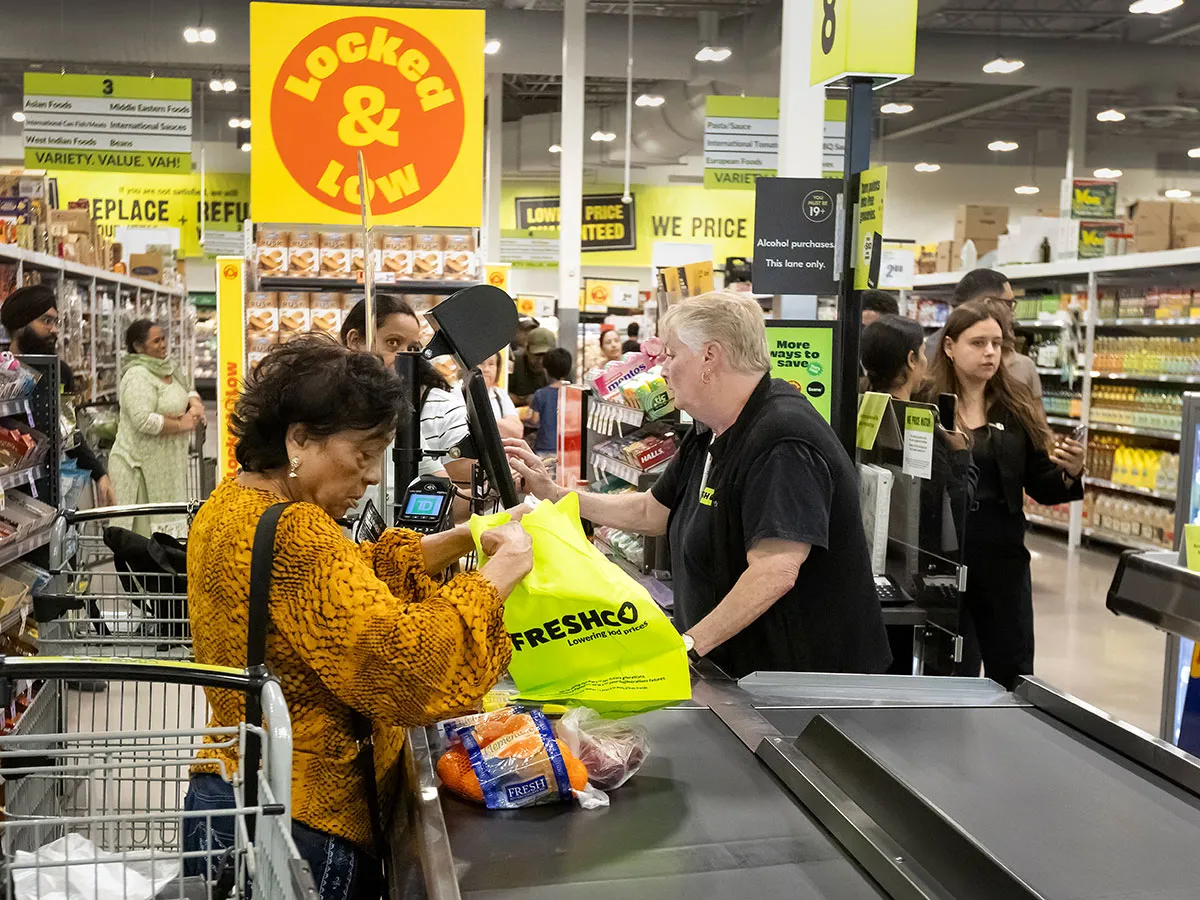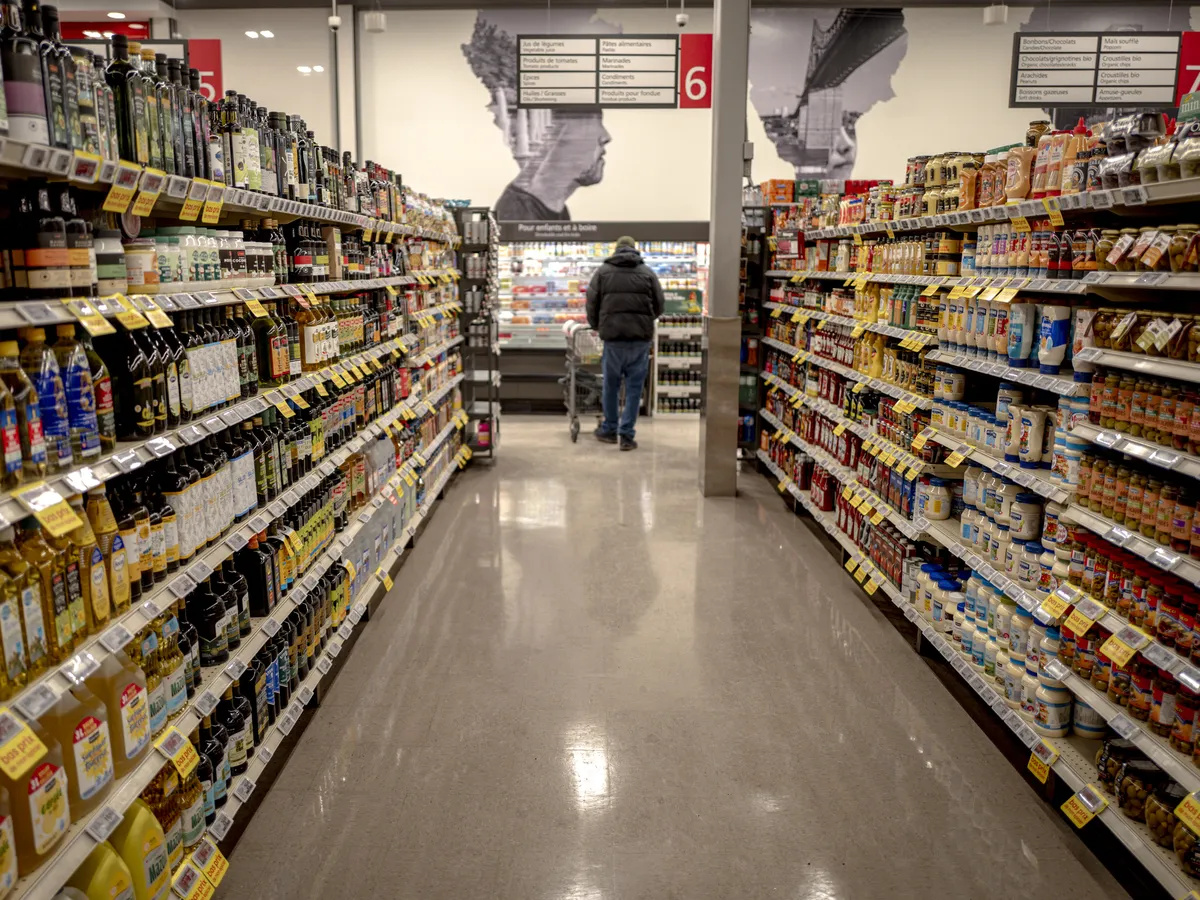
Skip to Content News Archives Economy Energy Oil & Gas Renewables Electric Vehicles Mining Commodities Agriculture Real Estate Mortgages Mortgage Rates Finance Banking Insurance Fintech Cryptocurrency Work Wealth Smart Money Wealth Management Investor Personal Finance Family Finance Retirement Taxes High Net Worth FP Comment Executive Women Puzzmo Newsletters Financial Times Business Essentials More Innovation Information Technology FP500 Podcasts Small Business Lives Told Tails Told Shopping Financial Post Store Obituaries Place a Notice Advertising Advertising With Us Advertising Solutions Postmedia Ad Manager Sponsorship Requests Classifieds Place a Classifieds ad Working Profile Settings My Subscriptions Saved Articles My Offers Newsletters Customer Service FAQ News Economy Energy Mining Real Estate Finance Work Wealth Investor FP Comment Executive Women Puzzmo Newsletters Financial Times Business Essentials HomeFP CommentMatthew Lau: Why are food prices so high? Ottawa, investigate thyselfThe Competition Bureau wants to know why food prices keep rising. It should start with policies that raise costs and restrict supplyLast updated 54 minutes ago You can save this article by registering for free here. Or sign-in if you have an account.A person shops at a grocery store in Montreal, Que. Photo by ANDREJ IVANOV/AFP via Getty Images filesIn the face of sharply rising food prices in recent years, the Competition Bureau last week announced “an examination of competition across Canada’s food supply chain.” But if the goal is to examine where anti-competitive forces conspire to raise food prices and reduce choice for Canadians, no very lengthy examination is required. The answer is clear: the federal government is the problem.Subscribe now to read the latest news in your city and across Canada.Exclusive articles from Barbara Shecter, Joe O'Connor, Gabriel Friedman, and others.Daily content from Financial Times, the world's leading global business publication.Unlimited online access to read articles from Financial Post, National Post and 15 news sites across Canada with one account.National Post ePaper, an electronic replica of the print edition to view on any device, share and comment on.Daily puzzles, including the New York Times Crossword.Subscribe now to read the latest news in your city and across Canada.Exclusive articles from Barbara Shecter, Joe O'Connor, Gabriel Friedman and others.Daily content from Financial Times, the world's leading global business publication.Unlimited online access to read articles from Financial Post, National Post and 15 news sites across Canada with one account.National Post ePaper, an electronic replica of the print edition to view on any device, share and comment on.Daily puzzles, including the New York Times Crossword.Create an account or sign in to continue with your reading experience.Access articles from across Canada with one account.Share your thoughts and join the conversation in the comments.Enjoy additional articles per month.Get email updates from your favourite authors.Create an account or sign in to continue with your reading experience.Access articles from across Canada with one accountShare your thoughts and join the conversation in the commentsEnjoy additional articles per monthGet email updates from your favourite authorsSign In or Create an AccountorCase in point: just two days after the Competition Bureau’s announcement, newly published Statistics Canada data showed that as of last Dec. 31 the Canadian agricultural sector’s combined balance sheets included $49.2-billion worth of quota — that is, $49.2-billion worth of artificial, government-enforced monopoly rights to sell agricultural products at inflated prices. That is no small amount. In fact, producers’ artificial monopoly rights are worth more than the total value of their inventories of crops, poultry, and “market livestock” — i.e., livestock for sale or in the process of production for sale, excluding breeding livestock — which was only $47.0 billion.Get the latest headlines, breaking news and columns.By signing up you consent to receive the above newsletter from Postmedia Network Inc.A welcome email is on its way. If you don't see it, please check your junk folder.The next issue of Top Stories will soon be in your inbox.We encountered an issue signing you up. Please try againAlso last week, the Montreal Economic Institute published a new report on the cost of governmental supply management to Canadian consumers. It estimates the inflated food prices generated by production quotas and high tariffs cost each Canadian $224 per year. Statistics Canada’s income surveys and low-income cut-off thresholds suggest these excess costs push approximately 120,000 Canadians below the poverty line.As if to underline its commitment to inflating food prices through anti-competitive measures that harm the poor, last Friday Ottawa announced a new tariff of 10 per cent on imports of canned vegetables for up to 200 days. This came only weeks after Food Banks Canada said in a new report: “Food bank usage has more than doubled since 2019, reflecting not only acute hardship but also the existence of a widening pool of households that are one shock away from instability to collapse.” Thankfully, because of international trade obligations, canned vegetables from the U.S., Mexico, Israel, Chile and developing countries will not be subject to the new tariff.Quotas and tariffs are not the only major form of government-enforced anti-competitive behaviour in Canada’s food supply chain, however. The Department of Agriculture and Agri-Food, Canadian Grain Commission, and Canadian Dairy Commission — which together employ more than 6,000 bureaucrats — are expected to spend $3.7 billion this fiscal year on a wide range of anti-competitive activities.These include: more than $180 million for three separate supply management initiatives that give taxpayers’ money to the same producers who gouge consumers with their $49.2 billion of artificial monopoly rights; $55 million in grants “to support” the Canadian wine industry; more than $110 million for “agricultural” climate solutions; a separate $18 million for an agricultural clean technology program; and more. Why are all these spending programs anti-competitive? Because having government pick winners and losers through massive taxpayer subsidies and central planning initiatives is the opposite of market competition, which requires businesses to deliver better products, greater choice and more affordable prices to satisfy consumers.Expanded food labelling requirements are yet another example of a federal government initiative that curtails competition and inflates prices. Laws that require bilingual labels drive up costs for grocers, inflating prices and discouraging new entrants. In addition, at the beginning of 2026, the federal government imposed new labelling requirements for front-of-package warnings on foods that Health Canada considers too high in saturated fat, sugars or sodium. The government estimated back in 2022 that the direct cost of the regulations would be approximately $98 million per year.In a competitive market, producers should be free to label their food however they wish, so long as they do not engage in deception or fraud, and consumers should then be free to choose. If the labels did not include enough nutritional information, or were not in the right language, consumers could reject them, forcing producers to change to what consumers demanded. It makes no sense to think bureaucrats in Ottawa, who have never met nor spoken to the vast majority of Canada’s 41 million people, know better than the 41 million themselves what they want to see on their food packages and labels.If the Competition Bureau really wants to examine anti-competitive behaviour that concentrates power and disempowers consumers, its investigative efforts should be focused squarely on the federal government, whose anti-competitive agenda includes tariffs, quotas and various spending programs and regulatory expansions undertaken by Agriculture and Agri-Food Canada, Health Canada, and other departments and agencies. Indeed, given its own history of hassling grocery stores over how they compete — again, instead of letting consumers decide — the Competition Bureau should probably investigate itself. Join the Conversation This website uses cookies to personalize your content (including ads), and allows us to analyze our traffic. Read more about cookies here. By continuing to use our site, you agree to our Terms of Use and Privacy Policy.
Matthew Lau: Why are food prices so high? Ottawa, investigate thyself
The Competition Bureau wants to know why food prices keep rising. It should start with policies that raise costs & restrict supply. Read on.
1,276 words~6 min read