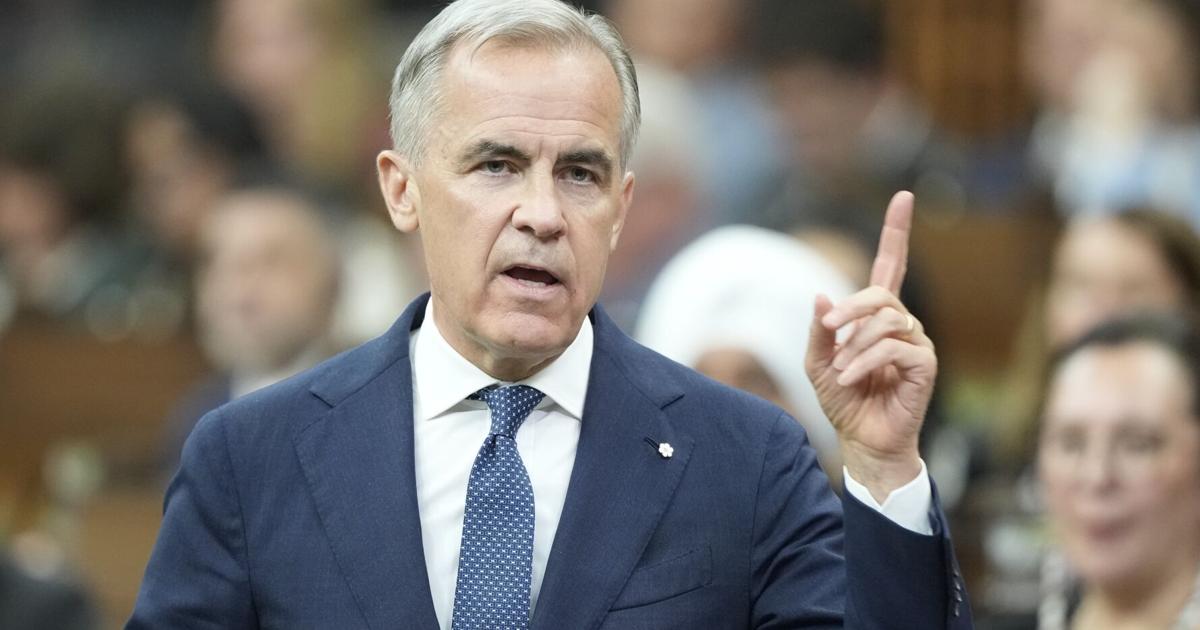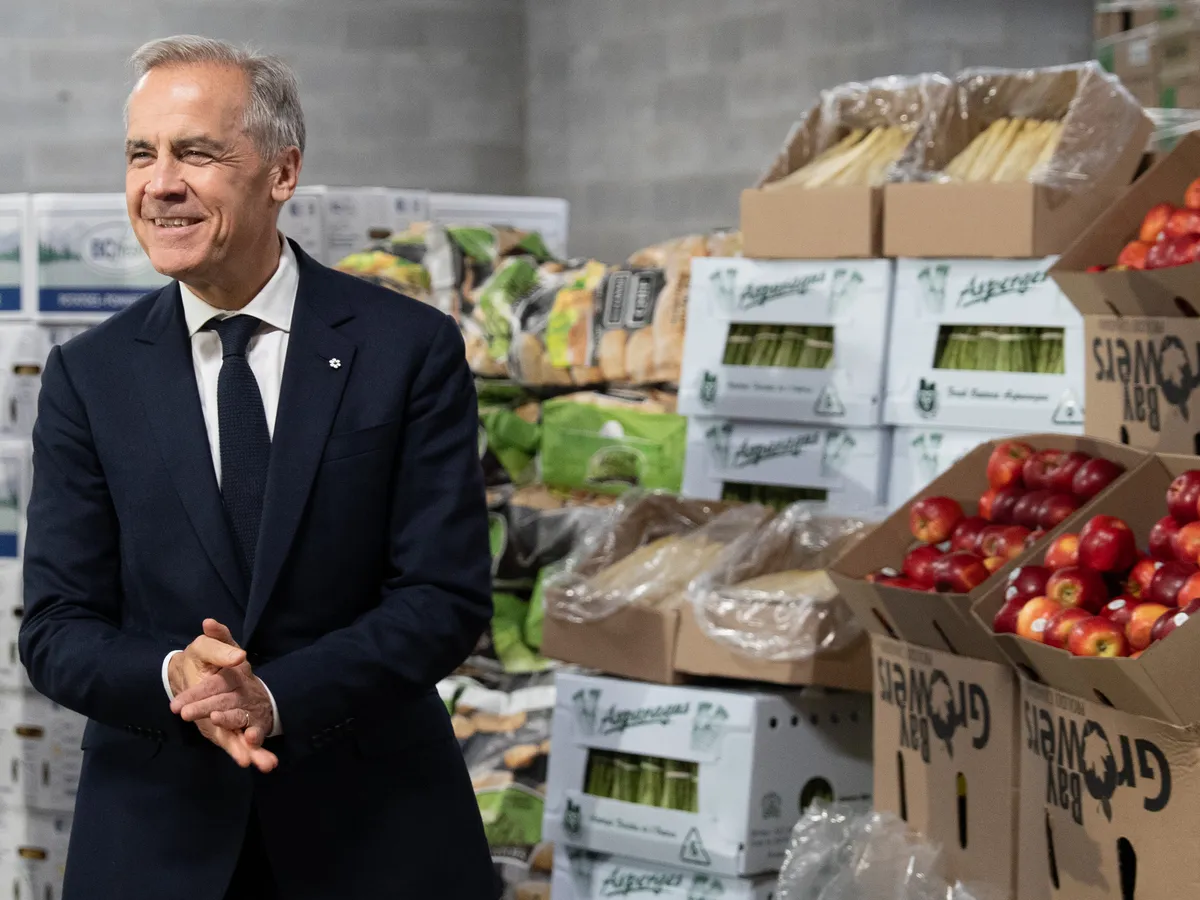
Skip to Content News Archives Economy Energy Oil & Gas Renewables Electric Vehicles Mining Commodities Agriculture Real Estate Mortgages Mortgage Rates Finance Banking Insurance Fintech Cryptocurrency Work Wealth Smart Money Wealth Management Investor Personal Finance Family Finance Retirement Taxes High Net Worth FP Comment Executive Women Puzzmo Newsletters Financial Times Business Essentials More Innovation Information Technology FP500 Podcasts Small Business Lives Told Tails Told Shopping Financial Post Store Obituaries Place a Notice Advertising Advertising With Us Advertising Solutions Postmedia Ad Manager Sponsorship Requests Classifieds Place a Classifieds ad Working Profile Settings My Subscriptions Saved Articles My Offers Newsletters Customer Service FAQ News Economy Energy Mining Real Estate Finance Work Wealth Investor FP Comment Executive Women Puzzmo Newsletters Financial Times Business Essentials HomeAgricultureNewsEconomyWhy cutting food prices while reducing imports may be a challenge for OttawaThe federal government plans to invest $3.2 billion over a decade to produce more food in Canada and make it more affordableLast updated 1 hour ago You can save this article by registering for free here. Or sign-in if you have an account.Achieving Mark Carney's twin goals of reducing imports and food prices at the same time may be tricky given that it will almost certainly be more costly to grow certain foods at home. Photo by Peter Power/PostmediaOttawa’s plan to tackle rising food prices while reducing dependence on imports may be easier said than done, according to experts who say complexities in the food supply chain could make those goals hard to achieve at the same time.Subscribe now to read the latest news in your city and across Canada.Exclusive articles from Barbara Shecter, Joe O'Connor, Gabriel Friedman, and others.Daily content from Financial Times, the world's leading global business publication.Unlimited online access to read articles from Financial Post, National Post and 15 news sites across Canada with one account.National Post ePaper, an electronic replica of the print edition to view on any device, share and comment on.Daily puzzles, including the New York Times Crossword.Subscribe now to read the latest news in your city and across Canada.Exclusive articles from Barbara Shecter, Joe O'Connor, Gabriel Friedman and others.Daily content from Financial Times, the world's leading global business publication.Unlimited online access to read articles from Financial Post, National Post and 15 news sites across Canada with one account.National Post ePaper, an electronic replica of the print edition to view on any device, share and comment on.Daily puzzles, including the New York Times Crossword.Create an account or sign in to continue with your reading experience.Access articles from across Canada with one account.Share your thoughts and join the conversation in the comments.Enjoy additional articles per month.Get email updates from your favourite authors.Create an account or sign in to continue with your reading experience.Access articles from across Canada with one accountShare your thoughts and join the conversation in the commentsEnjoy additional articles per monthGet email updates from your favourite authorsSign In or Create an AccountorThe $3.2-billion National Food Security Strategy, launched on Thursday, promises to address concerns over rising food prices by improving access to locally-produced goods and increasing competition in the food retail sector.The strategy is part of Prime Minister Mark Carney’s ongoing efforts to shore up Canada’s food supply chain by reducing reliance on imports. Carney said during a news conference on Thursday that “the country’s sovereignty depends on its ability to feed, to fuel, and to defend itself,” and “over-reliance has left us vulnerable to global shocks, to conflicts, droughts, tariffs.”SUBSCRIBER EXCLUSIVE: FP West: Energy Insider brings you behind the oilpatch’s closed doors with exclusive insights from insiders every Wednesday morning.By signing up you consent to receive the above newsletter from Postmedia Network Inc.A welcome email is on its way. If you don't see it, please check your junk folder.The next issue of FP West: Energy Insider will soon be in your inbox.We encountered an issue signing you up. Please try againThe strategy did not provide overall import reduction targets, but did say it aims to increase the domestically-produced share of “healthy food” available to Canadians from 75 per cent to 85 per cent by 2032. Canada currently is heavily dependent on imports for fresh produce, with 88 per cent of fresh fruits and 72 per cent of vegetables coming from abroad.But experts say achieving the twin goals of reducing imports and food prices at the same time may be tricky given that it will almost certainly be more costly to grow certain foods at home.Michael Widener, a professor at the University of Toronto who focuses on economic geography, said greenhouses can help increase resilience in Canada’s food system and the country’s ability to produce fruits and vegetables, but it cannot be done at a scale required to reduce imports significantly. Building and maintaining greenhouses is expensive, labour intensive and energy intensive. All of this will be factored into food prices, on top of the transportation costs required to get food on grocery store shelves.“Where we’ll have more success is food processing, where a lot of grains and things like that are produced in Canada at scale and are then exported and brought back in after they’ve been processed. I think there’s a road to bring back food production and processing systems to Canada,” he noted.Even then, there are trade-offs.“If we want to onshore (food processing), then we are going to have to develop the networks and technologies to make sure that they’re done at a lower cost,” he said.Michael von Massow, a food economist and professor at the University of Guelph, said while the overall strategy is a step in the right direction, it won’t immediately lower grocery prices because it will take years before the economy benefits from the infrastructure investments.“We run the risk of disappointing Canadians if we position it as immediately lowering costs of buying food,” he said.“If I decided to build a greenhouse today, it’s going to be a while before it gets built. Greenhouses will help stabilize prices over time, but I’m not sure they’ll bring prices down. They’ll moderate some of the shocks in the system, like a short-term spike in prices because of a crop failure somewhere.”Von Massow added a lot of Canada’s food import strategy is to give consumers choice and cheaper options.“There are a lot of things that we move out of Canada and a lot of things we bring in, and that’s because it makes sense from a price perspective. If production becomes entirely domestic, then that’s going to increase costs,” von Massow said.Widener said the answer to Canada’s rising food prices may be diversifying trade instead of cutting imports. Nearly 40 per cent of Canada’s fresh fruits and vegetables come from the United States and are therefore susceptible to trade policy changes.Von Massow added that having multiple sources of supply would make Canada’s food supply chain more resilient. For example, if there is a domestic crop failure or widespread drought, Canada can import produce to maintain supply.“These relationships have evolved over time because they make sense,” he said. “I wouldn’t say we abandon the U.S., but having some diversification of supply, particularly in an era where there are more frequent and more severe extreme weather events, will be a better way to protect ourselves from some of these price variations that we’ve seen in the last little while.”Widener and von Massow said Carney’s government will have to provide short- and medium-term measures to stabilize prices in the meantime.One area that could see traction is the government’s plan to support wholesale marketplaces, such as food terminals and food hubs, something that should create more competition by allowing independent grocers to buy food at competitive prices and bypass supply chains owned by larger retailers, Widener said.The Canada Groceries and Essentials Benefit (CGEB) also provided short-term relief to eligible households, von Massow said.“There’s not a lot the government can do to lower grocery prices, so I would argue that these direct payments are — if the objective is to help people out with affordability — the best way to do it,” he noted.Some factors that are causing food prices to rise, such as U.S. tariffs and the Iran war, are also out of the government’s control.Desjardins economist LJ Valencia said rising cost of energy, transportation and fertilizer caused by supply chain disruptions, including from the war in Iran, could prolong food inflation, despite the government’s efforts to tackle the issue.“The strategy is a good step in the right direction because we are improving domestic food capacity. Increasing competition, improving the food supply chain, reducing regulations and cutting red tape where necessary are good things,” he said. “That said, if we look at the current state of inflation in the near term, there are a lot of broader factors that are moving prices.” Join the Conversation This website uses cookies to personalize your content (including ads), and allows us to analyze our traffic. Read more about cookies here. By continuing to use our site, you agree to our Terms of Use and Privacy Policy.
Why cutting food prices while reducing imports may be a challenge for Ottawa
The federal government plans to invest $3.2 billion over a decade to produce more food in Canada and make it more affordable. Read here now
1,492 words~7 min read