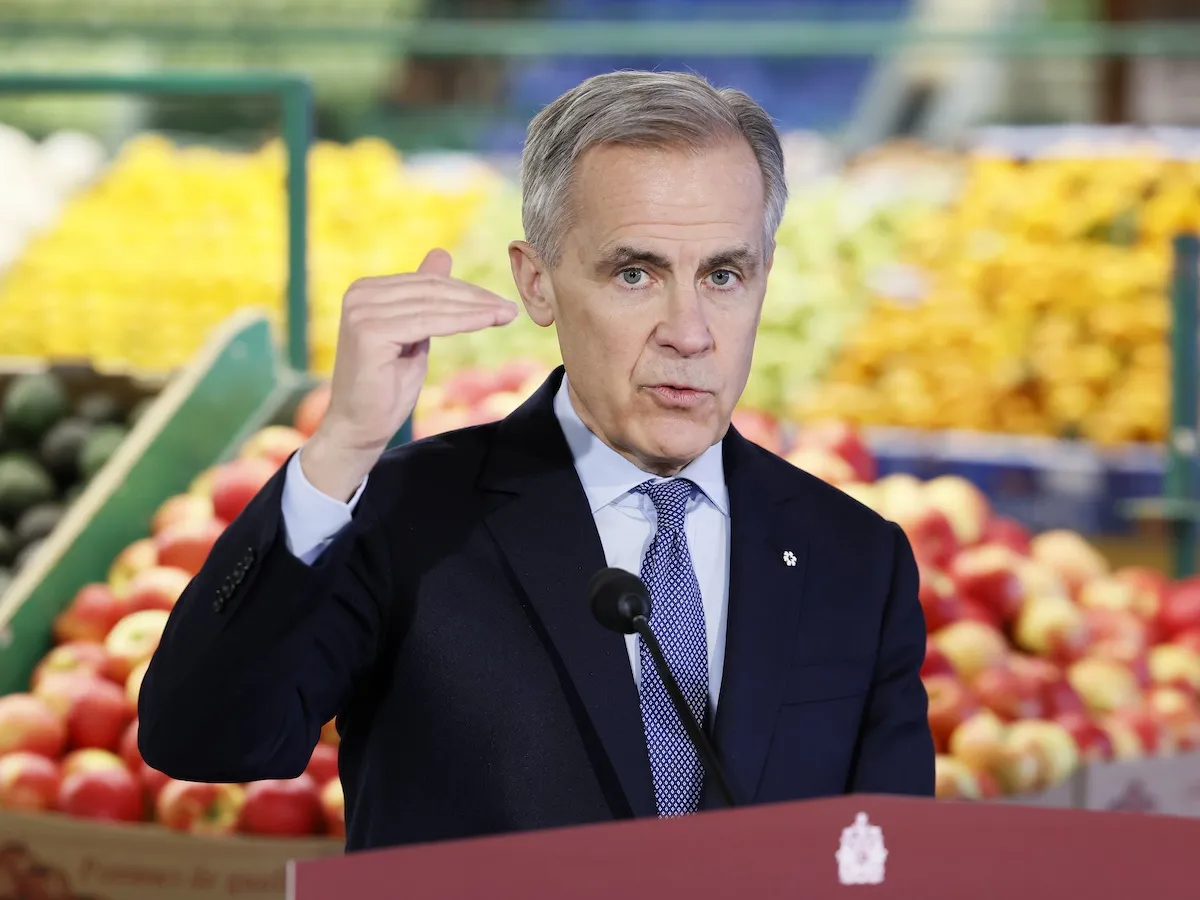
Skip to Content Subscribe Our Offers My Account Manage My Subscriptions FAQ Newsletters Canada Canadian True Crime Canadian Politics Health World Israel & Middle East Financial Post NP Comment Longreads Puzzmo Diversions Comics NP News Quiz New York Times Crossword Horoscopes Life Eating & Drinking Style Sponsored Play for Ontario Travel Travel Canada Travel USA Travel International Cruises Travel Essentials Culture Books Celebrity Movies Music Theatre Television Business Essentials Advice Lives Told Tails Told Shopping Buy Canadian Home Living Outdoor Living Kitchen & Dining Tech Style & Beauty Personal Care Entertainment & Hobbies Gift Guide Travel Guide Amazon Prime Day Deals Savings National Post Store More Sports Hockey Baseball Basketball Football Soccer Golf Tennis Driving Vehicle Research Reviews News Gear Guide Obituaries Place an Obituary Place an In Memoriam Classifieds Place an Ad Celebrations Working Business Ads Archives Healthing Epaper Manage Print Subscription Profile Settings My Subscriptions Saved Articles My Offers Newsletters Customer Service FAQ Newsletters Canada World Financial Post NP Comment Longreads Puzzmo Diversions Life Shopping Epaper Manage Print Subscription HomeNP CommentMichael Higgins: Mark Carney fails his own grocery testCanada leads the G7 in food inflationLast updated 41 minutes ago You can save this article by registering for free here. Or sign-in if you have an account.Canada's Prime Minister Mark Carney makes an announcement about affordability at a grocery store in Ottawa, Ontario January 26, 2026. Photo by Blair Gable / PostmediaIt’s been a year since Prime Minister Mark Carney said the cost of living was a key priority for his Liberal government — and every month since food prices have gone through the roof. Enjoy the latest local, national and international news.Exclusive articles by Conrad Black, Barbara Kay and others. Plus, special edition NP Platformed and First Reading newsletters and virtual events.Unlimited online access to National Post.National Post ePaper, an electronic replica of the print edition to view on any device, share and comment on.Daily puzzles including the New York Times Crossword.Support local journalism.Enjoy the latest local, national and international news.Exclusive articles by Conrad Black, Barbara Kay and others. Plus, special edition NP Platformed and First Reading newsletters and virtual events.Unlimited online access to National Post.National Post ePaper, an electronic replica of the print edition to view on any device, share and comment on.Daily puzzles including the New York Times Crossword.Support local journalism.Create an account or sign in to continue with your reading experience.Access articles from across Canada with one account.Share your thoughts and join the conversation in the comments.Enjoy additional articles per month.Get email updates from your favourite authors.Create an account or sign in to continue with your reading experience.Access articles from across Canada with one accountShare your thoughts and join the conversation in the commentsEnjoy additional articles per monthGet email updates from your favourite authorsSign In or Create an AccountorThe Liberals will put the blame on Ukraine, or Donald Trump or tariffs or climate change or just about anything, but what they won’t do is accept responsibility for a crisis that they most certainly have control over. Some of those issues may have an impact, but the main reason people are facing huge grocery bills is because of a lack of competitiveness driven by structural defects like interprovincial barriers and the carbon tax. This newsletter from NP Comment tackles the topics you care about. (Subscriber-exclusive edition on Fridays)By signing up you consent to receive the above newsletter from Postmedia Network Inc.We encountered an issue signing you up. Please try againSupply management, which is supposed to produce stable prices and a steady supply of things like poultry, is also failing in this crisis so perhaps we should call it supply mismanagement. Unfortunately, supply management is sacrosanct because of Liberal cowardice in not wanting to tackle that thorny issue. On Monday, Statistics Canada announced that food inflation reached 3.8 per cent (a rise of 0.3 per cent from the month before) and food purchased from grocery stores had risen by 4.3 per cent. Canada stands at the top of the G7 for food inflation, and not for the first time. When inflation numbers are released, gas prices tend to get the main headlines. But the numbers for fresh fruit, vegetables and other food items are startling. Tomatoes up 45 per cent, grapes up 23 per cent, carrots up 16.8 per cent, canned salmon up 14.3 per cent, coffee and tea up almost 13 per cent, a whole chicken up 12.5 per cent, beef chunk up 25 per cent, bananas up 12 per cent, lettuce up almost 11 per cent. Up and up and up with no end in sight. Soup was down 0.5 per cent so maybe that’s what we’ll all be eating for the next year. A year ago, Carney said Canadians had sent a clear message that their “cost of living must come down.” With “urgency and determination” his government would “bring down costs for all Canadians” and “make life more affordable.” “Canadians will hold us to account by their experiences at the grocery store,” he said. Canadians are currently experiencing shock at the grocery store, but thanks to Carney’s admission they can at least point to the Liberal government as being responsible. Sylvain Charlebois, a professor at Dalhousie University in Halifax and an expert on food distribution, security and safety, said a lot of the problem with food prices was “homegrown.” “Canada’s return to the top of the G7 food inflation rankings should concern policymakers. At 3.8 per cent, food inflation isn’t a crisis, but it is a signal. Most G7 countries face the same global pressures. The fact that Canada continues to underperform suggests our food affordability problem is increasingly homegrown, not imported,” he said in a post on X. In an interview with National Post, Charlebois said the problem in Canada came down to the lack of competitiveness with one major reason being interprovincial trade barriers that prevented businesses from expanding, “Basically, we have unscalable businesses, interprovincial trade barriers. We have poor logistics. We have bureaucratic barriers that are just suffocating companies,” he said. Charlebois said he knew one Halifax food company that only sold its food product in the United States. “It took four weeks for that company to get approval from 41 states while in Canada it could take 15 to 20 months,” he said. Last year, the Liberals were cock-a-hoop when they declared the One Canada Economy was breaking down interprovincial barriers. But there was one very important exclusion from the new rules: food. “Prime Minister Carney clearly explicitly stated that the elimination of interprovincial trade barriers were a priority. It was a priority with the exception of food. And the reason why he’s saying that is because of supply management,” said Charlebois. “It’s a huge barrier but no one wants to talk about that.” Charlebois pointed out that chicken prices had increased substantially, but supply management was supposed to create stable pricing. “We’re actually importing millions of kilos of chicken from the U.S. just to make sure we have enough chicken to support our processors,” he said. So, we are importing millions of chickens, prices are increasing and yet Carney “stands” by supply management. Charlebois was also critical of the government’s National Food Security Strategy launched to great fanfare a few weeks ago. Carney “seemed to suggest that we should be good at producing everything domestically, which shouldn’t be our goal. We should be letting the market speak and then see governments support vectors that are actually quite efficient and support winners and not support losers,” he said. The industrial carbon price was also impacting prices and creating a disadvantage to Canada’s agri-food sector, said Charlebois. Other countries are dealing with global crises such as the closure of the Strait of Hormuz, Ukraine or climate change, but it’s Canada that is top of the G7 food inflation index. Canadians can’t afford a steak dinner, not because of Iran, but because Carney hasn’t the political will to bring down grocery prices. National Post Join the Conversation This website uses cookies to personalize your content (including ads), and allows us to analyze our traffic. Read more about cookies here. By continuing to use our site, you agree to our Terms of Use and Privacy Policy.
Michael Higgins: Mark Carney fails his own grocery test
Canada leads the G7 in food inflation
1,364 words~6 min read