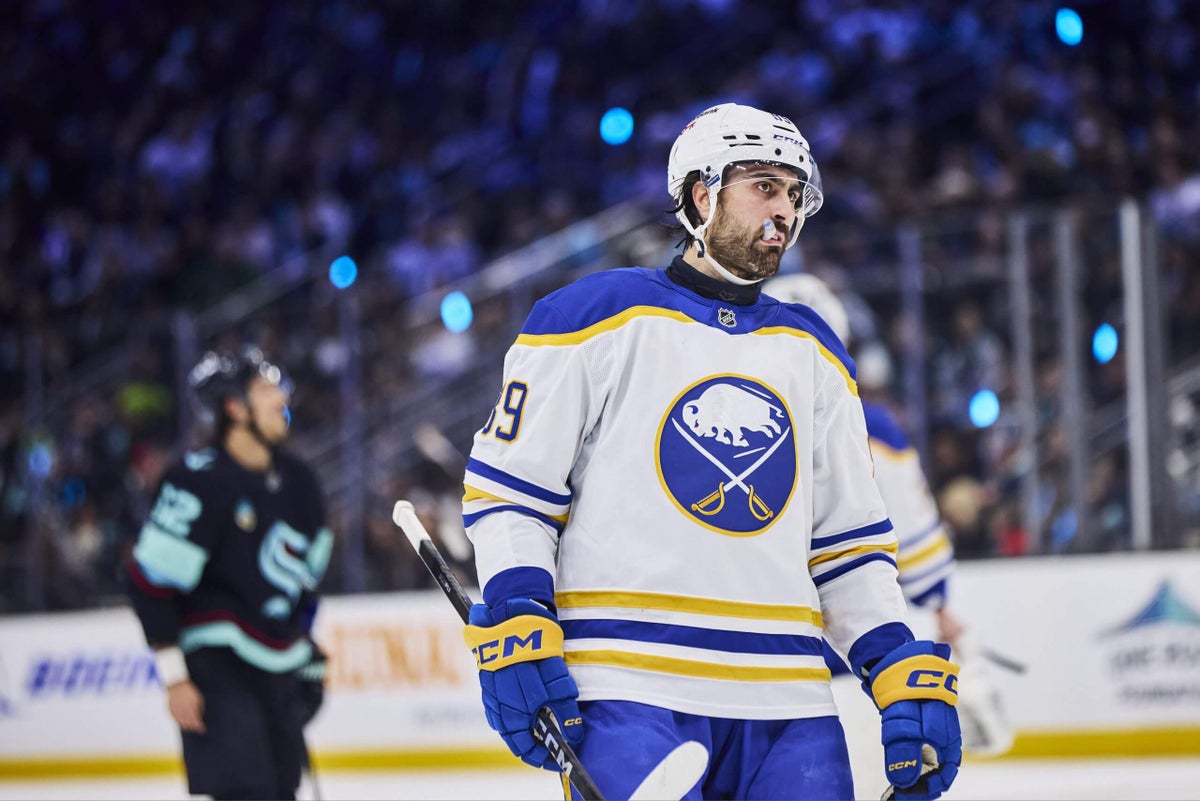
In July 2016, the Los Angeles Lakers infamously gave Timofey Mozgov — who ranked 137th in win shares the previous season — a four-year deal worth a whopping $64 million. That contract was fresh off the heels of a dramatic $24 million increase in the NBA’s salary cap. Is the NHL about to have a similar moment?The way things are going, it sure feels that way. Weak free-agent market? Check. Rapidly rising salary cap? Check. A whole lot of cap space available this summer? Check.While the NHL cap isn’t jumping the same amount as the NBA cap did in 2016, the leaps are starting to add up. The NHL’s salary cap is rising from $95.5 million to $104 million this offseason, with another planned jump to $113.5 million after next season. It was just three seasons ago that the cap was $83.5 million. But the big factor contributing to the NHL’s “Mozgovian” free-agent environment this summer is the number of players still serving out long-term, legacy contracts, making them unable to reap the rewards of an increasing financial pie.That leaves a whole lot of cap room and not that much player value to support it. It’s a perfect storm for teams to spend some really bad money.How to win a Stanley Cup without superstarsHarman DayalJust how much money is available? Let’s do some math.A $104 million salary cap for a 32-team league means more than $3.33 billion for player salaries. Teams have already committed roughly $2.55 billion to existing salaries, leaving about $779 million to spend in free agency.If you think that sounds like too much money for the contracts expected to be given out this summer, you’d be correct. According to AFP Analytics’ contract projections — based on how teams typically allocate dollars via player comparisons as a function of cap-hit percentage — the valuation of this year’s RFA class is $262 million. The UFA class comes in a shade higher, at $309 million.Add those numbers up, and the league as a whole is expected to have roughly $208 million of unused cap space during the 2026-27 season. That’s an average of $6.5 million of space per team, and only 94 percent of the total cap spent. That’s down from 95 percent last year, 97.5 percent the year before and right near 100 percent during the flat cap era (shout out to CapWages for that data).What that means: Teams have $779 million to spend on something that normally costs $571 million. In order for the league to use up all the space available — as was often the case during the flat cap era — every RFA and UFA this summer would receive a 36 percent raise over how free agents have previously been paid.We’re worried about $10 million for Buffalo Sabres winger Alex Tuch? Why not $13.6 million! Hell, we have him at a value of $7.8 million, based on how teams usually spend and in line with AFP’s valuations; a 36 percent bump, then, would put him at $10.6 million. With how much money is out there, it’s easier to imagine how Tuch can command a big chunk of it as this year’s biggest fish.There are two schools of thought stemming from the fact that all this extra money has to be spent eventually. The question is whether to splurge now, when there isn’t much available, or to wait for star players’ legacy deals to start expiring. Not every team spends to the cap, and for some teams, the ever-increasing ceiling creates less incentive to spend every dollar.But the league collectively using less than 95 percent of the total allotted cap space could create risky incentives for some exorbitant deals. Even if NHL franchises wind up spending 97 percent of total cap space after this year’s free-agency period, about $100 million will still be left over. A $5 million deal can turn into a $6 million deal like nothing, and most teams will barely notice.That could create a feeding frenzy in which teams prioritize player acquisition over cap efficiency, especially for franchises that already have strong portfolios (the Carolina Hurricanes, Florida Panthers and Montreal Canadiens come to mind). Teams that already have important players signed to favorable deals can potentially take bidding wars to dizzying heights.Fans will have to adjust to that in real time. Some deals will look bad on paper but wind up being worth it if the free-agent acquisitions meaningfully improve teams’ outlook for next season and beyond. That’s especially true with the cap expected to increase by another $10 million next summer. Winning a championship is still not going to come from free agency, but big-money deals might no longer create make-or-break pressure for teams to succeed at the highest level.But if the teams that already have cap efficiency wind up benefiting most from the salary-cap jump, an NHL franchise can still gain a competitive advantage by keeping its powder dry and splurging on the right player, rather than spending millions more for a third-liner. Picking the right spots will become as important as ever, especially as more legacy contracts expire. The right players will start to matter more than the right contracts, but teams will still need to build from a base of value.All of that makes it difficult to determine appropriate price points for this year’s free agents. It feels likely that when free agency opens up on July 1, the dollar amounts being offered won’t look like won’t be business as usual.With so much extra money to go around, there’s real potential for things to get silly, and it wouldn’t be a shock to see an NHL franchise have its own Mozgov moment this summer because of it.
Why NHL summer spending could get extra wild during free agency 2026
It's already clear the 2026 free-agency pool isn't very deep, but the rising salary cap could make for a fascinating July.
964 words~4 min read