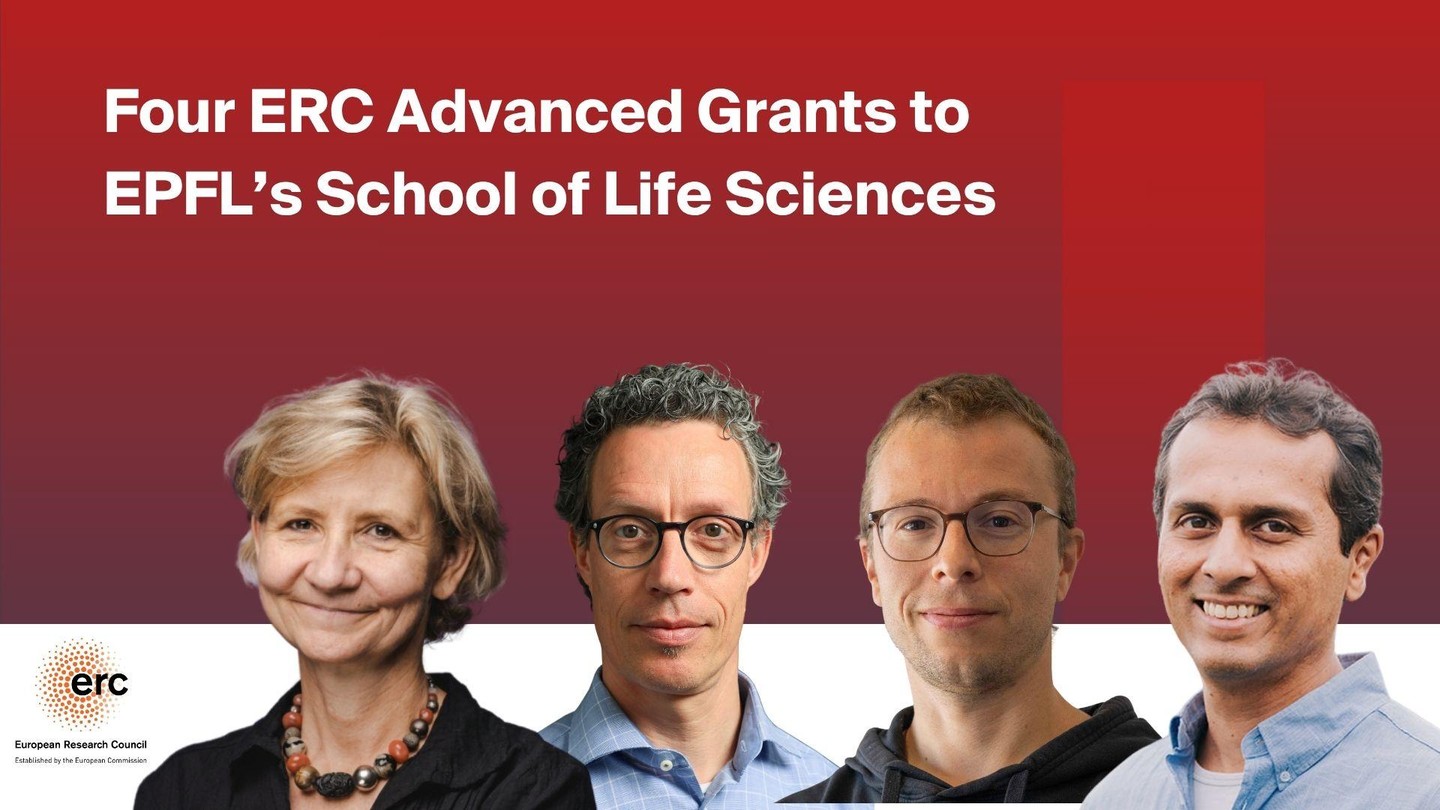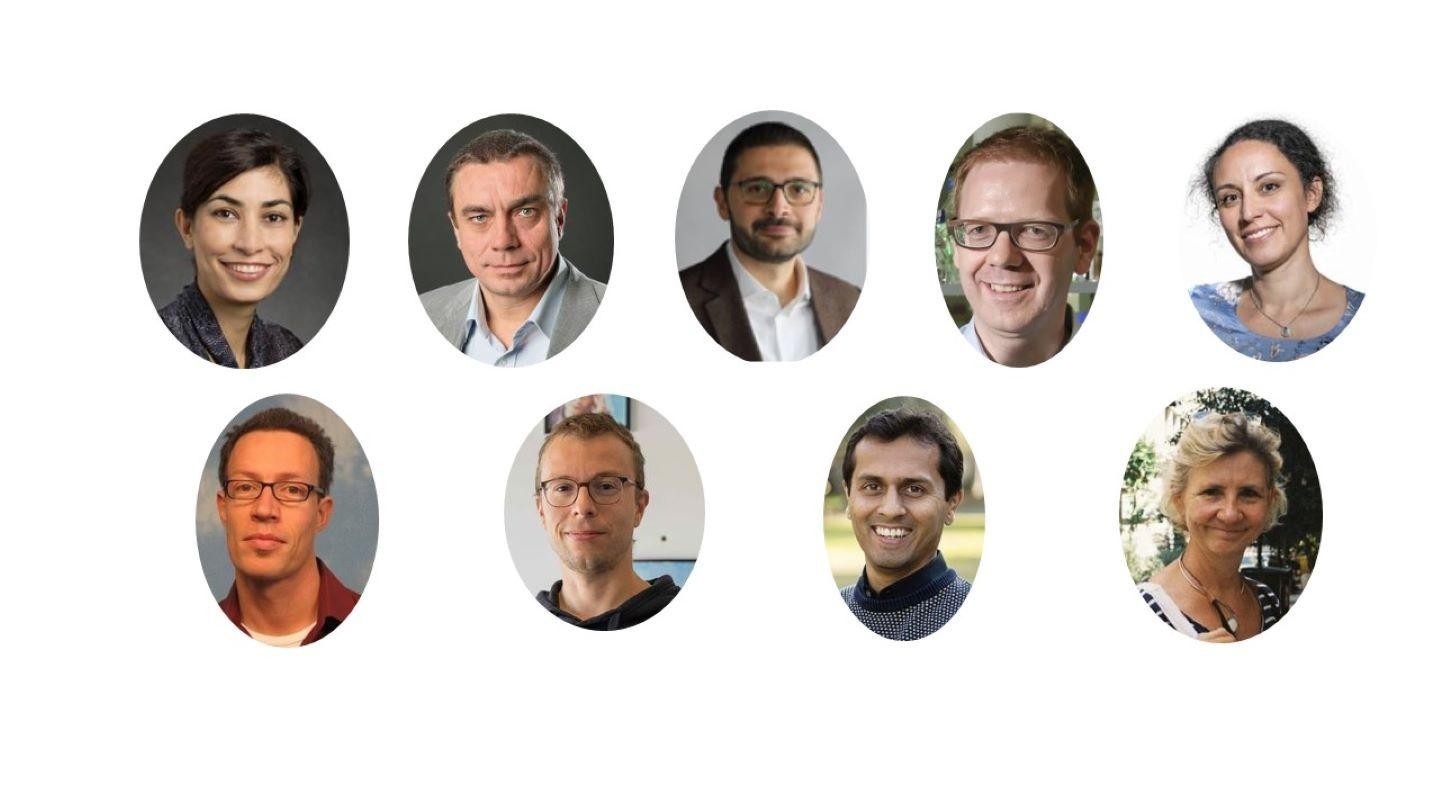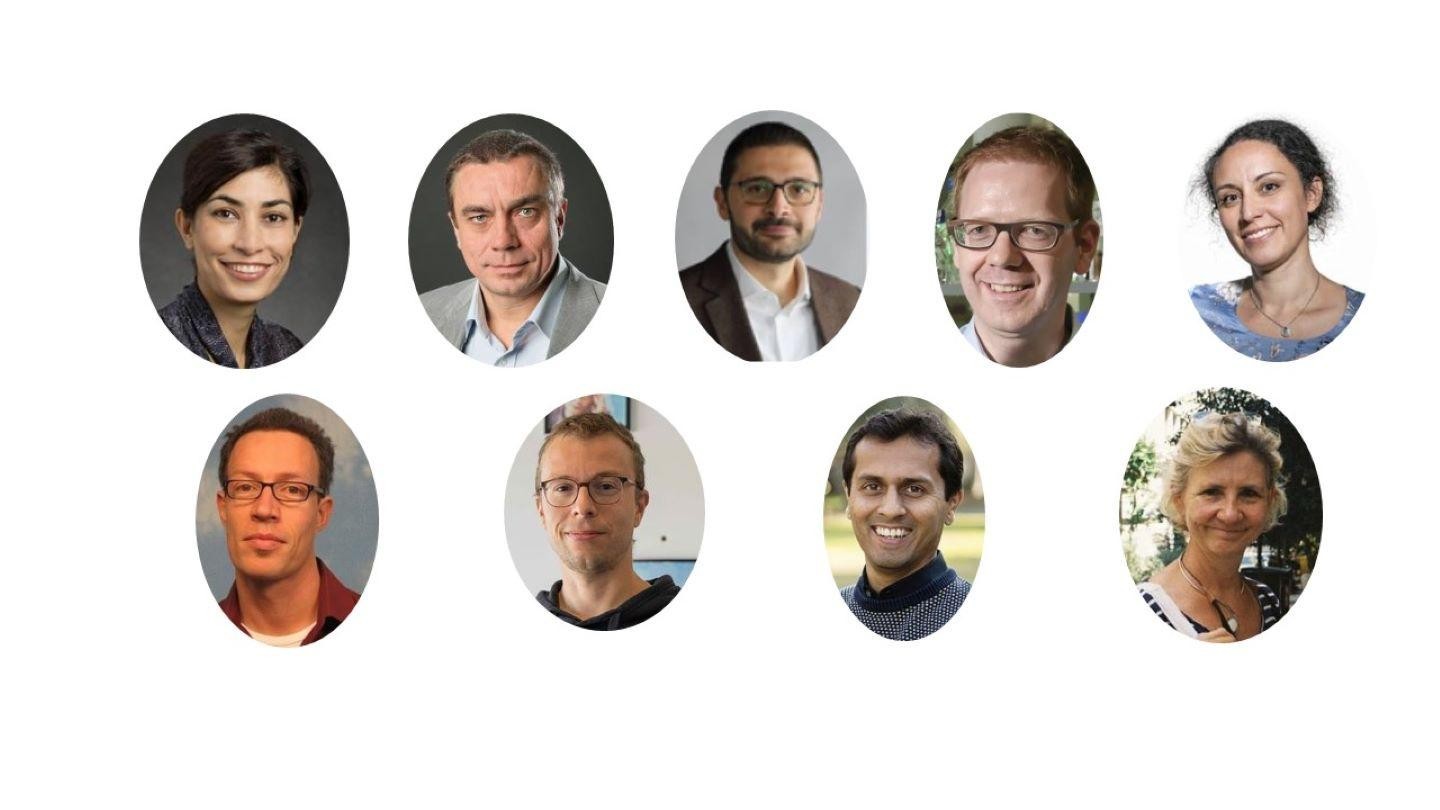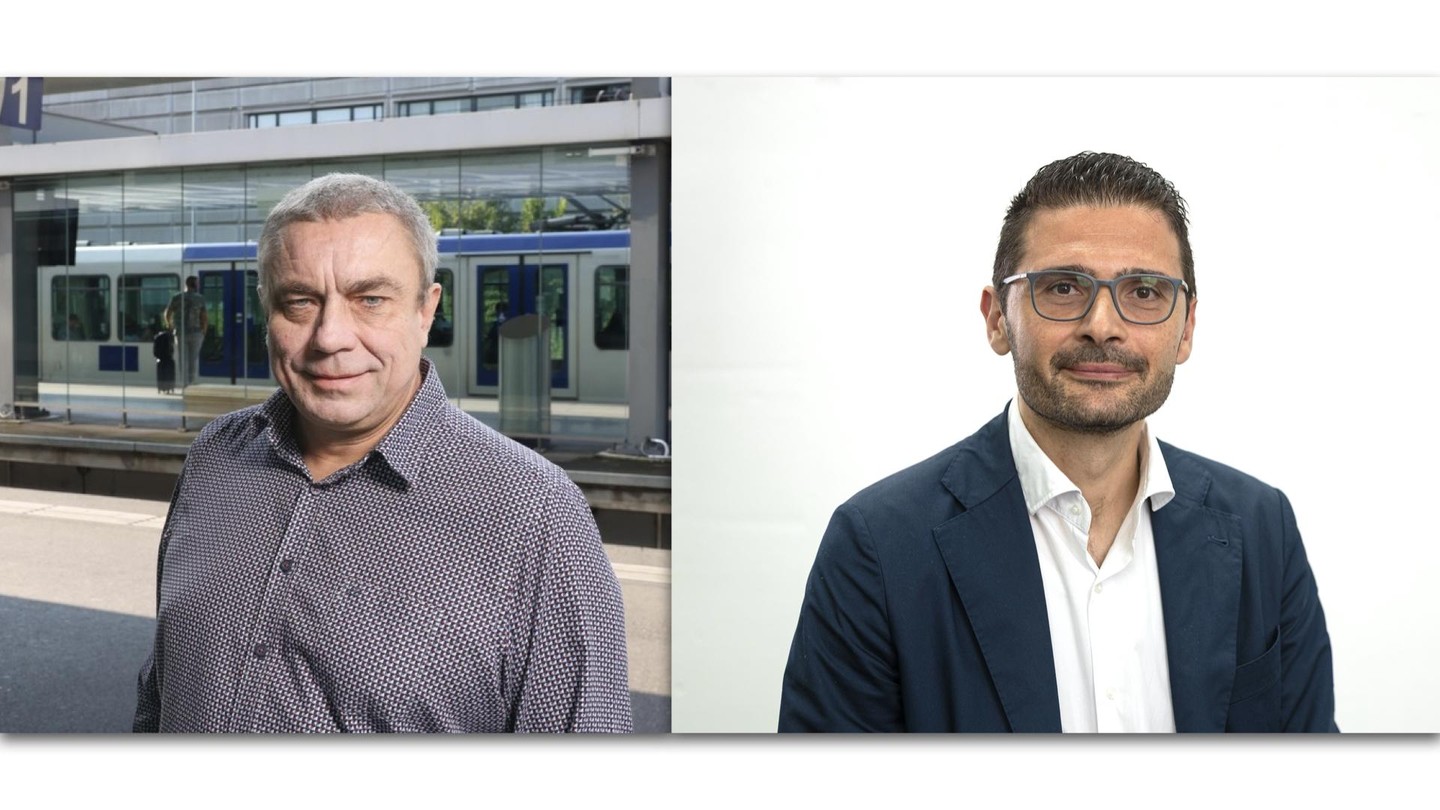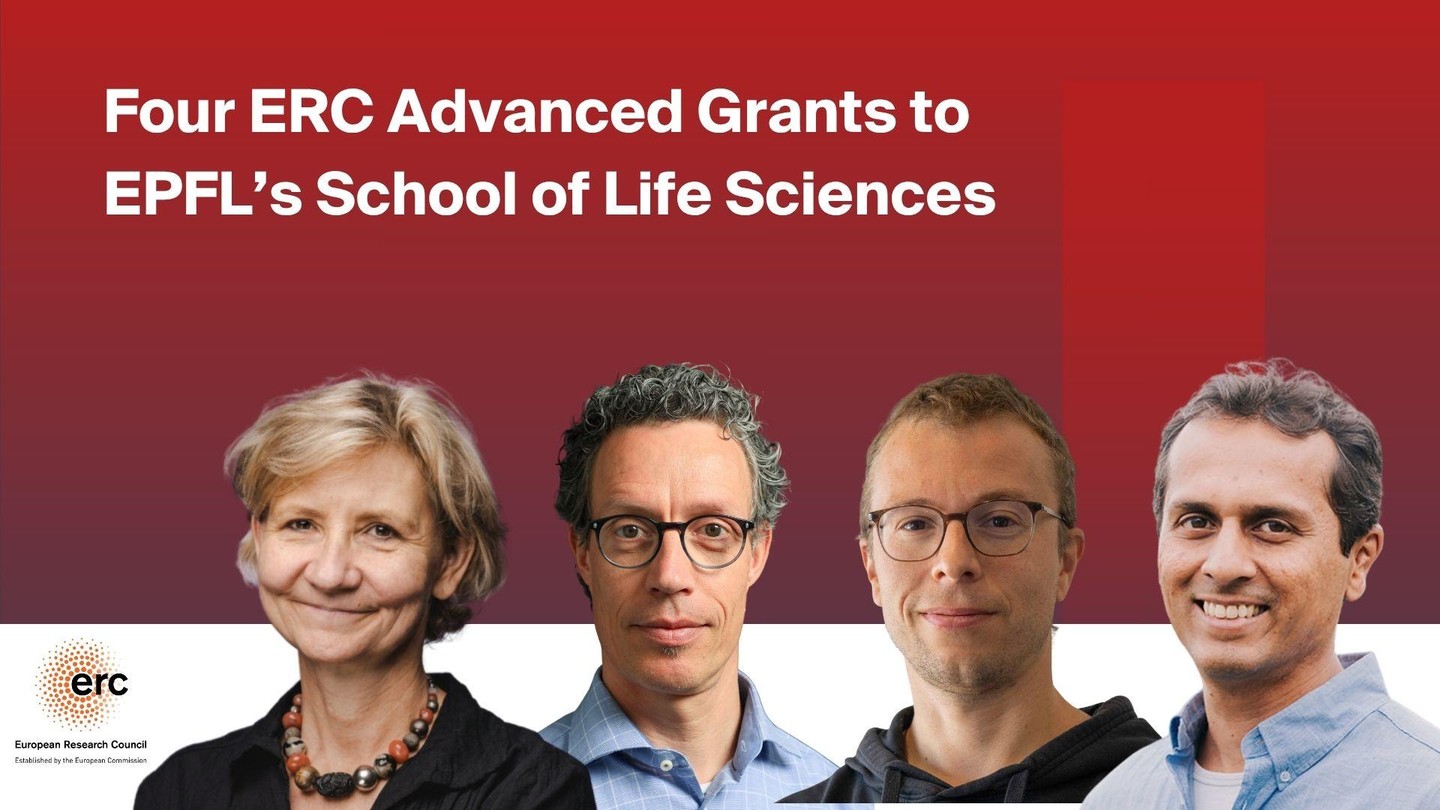
Four professors at EPFL’s School of Life Sciences, Gisou van der Goot, Felix Naef, Alexander Persat, and Pavan Ramdya, have been awarded Advanced Grants from the European Research Council (ERC).The ERC Advanced Grants are a highly prestigious funding scheme managed by the European Research Council (ERC) designed for active researchers with a proven track record of significant achievements who want to pursue long-term, groundbreaking, and high-risk frontier research projects in Europe. Each grant covers up to €2.5 million per project for a maximum of 5 years.The ERC has announced the Advanced Grant winners from the 2025 round of applications. Eight projects have been awarded at EPFL, four of which belong to researchers from the School of Life Sciences: Gisou van der Goot, Felix Naef, Alexander Persat, and Pavan Ramdya.Gisou van der GootProject: ExpLORDHow does a cell control the quality of its components and respond to their damage? Life on Earth depends on oxygen, yet its reactivity makes oxidative damage inevitable. While DNA and proteins have been the primary focus of damage response studies, lipids are equally vulnerable, and when lipid peroxides accumulate, they trigger ferroptosis, a regulated form of cell death with implications in cancer, inflammation, neurodegeneration, and aging. Although much is known about oxidative stress responses, how cells detect lipid peroxides and activate protective gene expression programs to prevent ferroptosis is not fully understood.Van der Goot’s group recently discovered the LORD (Lipid Oxygen Radical Defense) pathway, a lipid peroxide-triggered epigenetically controlled stress response that induces a broad antioxidant gene network. The goal of ExpLORD is to define how the LORD pathway contributes to safeguarding membrane integrity and redox homeostasis in mammals.“The LORD pathway is part of a previously unrecognized cellular defence system against lipid damage,” says van der Goot. “By uncovering how cells protect their membranes from oxidative stress, we hope to lay the foundations for new therapeutic strategies that strengthen tissue resilience in conditions ranging from neurodegeneration and inflammatory bowel disease to acute organ injury as well as aging.”Felix NaefProject: CircaSyncThe human body is coordinated by a network of biological clocks that synchronize the daily activity of cells, tissues, and organs. This internal synchrony is a fundamental organizing principle of physiology, ensuring that metabolism, immune function, and other biological processes occur at the right time and in the right sequence. Modern lifestyles, including shift work, jet lag, irregular eating schedules, and artificial light exposure, can disrupt this temporal organization, leading to internal desynchrony, where different organs of the body lose their natural coordination.The CircaSync project will develop new computational and experimental approaches to create molecular maps of internal circadian synchrony and desynchrony in humans and animal models. By integrating machine learning, single-cell genomics, and live imaging technologies, the project aims to uncover how disrupted biological timing contributes to metabolic diseases, while providing the conceptual and quantitative foundations for future precision chronomedicine.“We increasingly appreciate that health states depend not only on what happens inside our cells and organs, but also on whether the body's many biological clocks remain synchronized with each other,” says Naef. “The long-term goal of CircaSync is to understand how this internal temporal organization breaks down in modern lifestyles and disease, and to provide the concepts and methodological foundations for a future generation of precision chronomedicine.”Alexandre PersatProject: MUCOIDMUCOID investigates how physical forces shape infections caused by Klebsiella pneumoniae, one of the most threatening antibiotic-resistant pathogens. By combining advanced biophysics, microbiology, and human organoid models, the project will reveal how this bacterium uses mechanical properties such as mucoviscosity, tissue adhesion, and mechanosensing to colonize tissues, evade treatment, and cause disease. The work aims to establish mechanics as a fundamental but overlooked driver of bacterial pathogenicity.“For decades, we have studied infections primarily through the lens of chemistry and genetics,” says Persat. “MUCOID asks a different question: what if the physical forces experienced by bacteria are just as important? By uncovering how mechanics influences infection, we hope to reveal entirely new vulnerabilities in antibiotic-resistant pathogens and open the door to innovative therapeutic strategies that target the physical aspects of disease rather than the bacteria themselves.”Pavan RamdyaProject: NeuroPRIMEAnimals move far more robustly and flexibly than state-of-the-art robots. NeuroPRIME proposes that this is largely due to the intelligent deployment and dynamic recruitment of neuromuscular pathways driving elemental movements known as motor primitives. Until now, it has been impossible to deeply uncover these neuromuscular pathways due to the difficulty of comprehensively investigating and modeling neuromuscular systems in behaving animals.NeuroPRIME aims to overcome this barrier to uncover neuromuscular mechanisms and algorithmic principles underlying limb control and motor learning. The project will achieve this by studying the adult fly, Drosophila melanogaster, an animal that generates complex limb-dependent behaviors and whose motor system connectivity has recently been fully mapped and can be systematically experimentally recorded and perturbed.“This project will yield concrete circuit mechanisms and algorithmic principles for limb motor control,” says Ramdya. “These discoveries can have tremendous impact by revealing how one might design more robust, efficient, and flexible controllers for autonomous robots in inspection, search & rescue, and exploration.”
Four ERC Advanced Grants to EPFL's School of Life Sciences
Four professors at EPFL’s School of Life Sciences, Gisou van der Goot, Felix Naef, Alexander Persat, and Pavan Ramdya, have been awarded Advanced Grants from the European Research Council (ERC).
835 words~4 min read