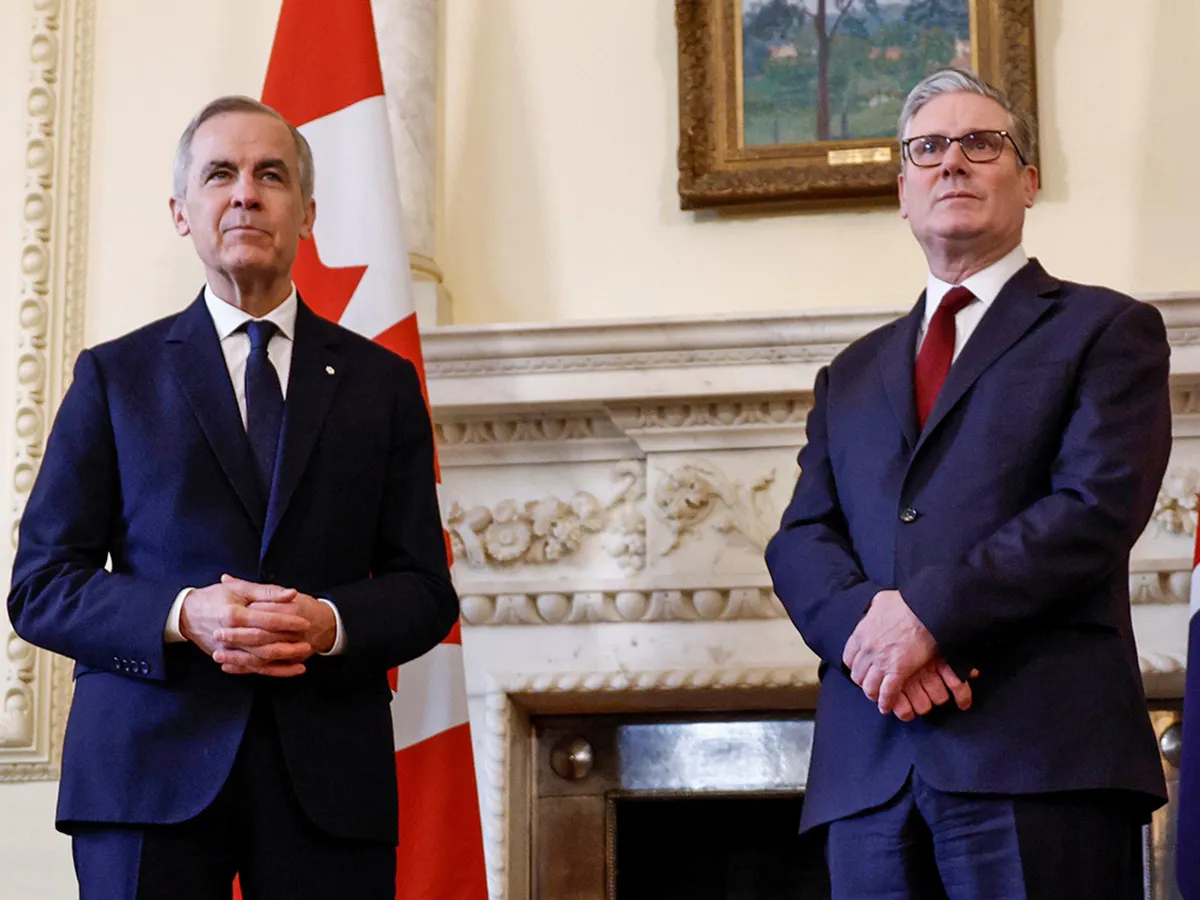
Skip to Content Subscribe Our Offers My Account Manage My Subscriptions FAQ Newsletters Canada Canadian True Crime Canadian Politics Health World Israel & Middle East Financial Post NP Comment Longreads Puzzmo Diversions Comics NP News Quiz New York Times Crossword Horoscopes Life Eating & Drinking Style Sponsored Play for Ontario Travel Travel Canada Travel USA Travel International Cruises Travel Essentials Culture Books Celebrity Movies Music Theatre Television Business Essentials Advice Lives Told Tails Told Shopping Buy Canadian Home Living Outdoor Living Kitchen & Dining Tech Style & Beauty Personal Care Entertainment & Hobbies Gift Guide Travel Guide Amazon Prime Day Deals Savings National Post Store More Sports Hockey Baseball Basketball Football Soccer Golf Tennis Driving Vehicle Research Reviews News Gear Guide Obituaries Place an Obituary Place an In Memoriam Classifieds Place an Ad Celebrations Working Business Ads Archives Healthing Epaper Manage Print Subscription Profile Settings My Subscriptions Saved Articles My Offers Newsletters Customer Service FAQ Newsletters Canada World Financial Post NP Comment Longreads Puzzmo Diversions Life Shopping Epaper Manage Print Subscription HomeNP CommentJohn Ivison: Starmer’s downfall is a warning to prime ministers who don’t deliverWidespread economic anxieties and distrust of institutions remain in Canada. There is the potential for Carney to suffer the same fateLast updated 13 minutes ago You can save this article by registering for free here. Or sign-in if you have an account.Prime Minister Mark Carney with British Prime Minister Keir Starmer at 10 Downing Street in London, England, on March 16, 2026. The two had a similar late, successful entry into politics, but, so far, Carney has been much more popular with voters. Photo by Brook Mitchell - WPA Pool/Getty ImagesBritish prime ministers have for the past 65 years had their public image satirized in Private Eye magazine, an often-unflattering pastiche that generally finds its way into the mainstream culture.Enjoy the latest local, national and international news.Exclusive articles by Conrad Black, Barbara Kay and others. Plus, special edition NP Platformed and First Reading newsletters and virtual events.Unlimited online access to National Post.National Post ePaper, an electronic replica of the print edition to view on any device, share and comment on.Daily puzzles including the New York Times Crossword.Support local journalism.Enjoy the latest local, national and international news.Exclusive articles by Conrad Black, Barbara Kay and others. Plus, special edition NP Platformed and First Reading newsletters and virtual events.Unlimited online access to National Post.National Post ePaper, an electronic replica of the print edition to view on any device, share and comment on.Daily puzzles including the New York Times Crossword.Support local journalism.Create an account or sign in to continue with your reading experience.Access articles from across Canada with one account.Share your thoughts and join the conversation in the comments.Enjoy additional articles per month.Get email updates from your favourite authors.Create an account or sign in to continue with your reading experience.Access articles from across Canada with one accountShare your thoughts and join the conversation in the commentsEnjoy additional articles per monthGet email updates from your favourite authorsSign In or Create an AccountorFrom the outset of his time in No. 10 Downing Street, Keir Starmer — who on Monday announced plans to resign — was portrayed as a dull, indecisive, overly cautious middle manager. It was a caricature not improved last May by his decision to cut expensive winter fuel subsidies for pensioners, only to change course after an internal rebellion of Labour MPs. The Private Eye cover that week featured the finance minister, Rachel Reeves, saying: “I thought we weren’t going to do a U-turn” and Starmer stammering: “I’ve changed my mind.”It may have been unfair but the British public formed the impression of a man who was so dull he was the cause of dullness in others. As former Labour health minister Aneurin Bevan once said of another former leader, Clement Atlee, “he makes a trumpet sound like a tin whistle and brings to the fierce struggle of politics the tepid enthusiasm of a lazy summer afternoon at a cricket match.”This newsletter from NP Comment tackles the topics you care about. (Subscriber-exclusive edition on Fridays)By signing up you consent to receive the above newsletter from Postmedia Network Inc.We encountered an issue signing you up. Please try againThe lack of confidence in Starmer’s ability to drag the U.K. out of its economic torpor saw his Labour Party fall between seven and 10 points behind Nigel Farage’s Reform UK party in public opinion polls, after winning a landslide majority in 2024.Those polls persuaded Starmer’s MPs that he could not win the next election and so on Monday, he said Labour will pick a new leader before Parliament returns in September.His rise closely mirrors that of Canada’s own prime minister, and yet they couldn’t be further apart in public esteem. Starmer has a net favourability of negative 56 per cent, compared to Carney’s 21 per cent positive score.Both arrived in politics in their 50s. Starmer was the U.K.’s director of public prosecutions until 2013. He was first elected in 2015.As he pointed out in his resignation speech on Monday, he inherited a Labour Party that was politically, financially and morally bankrupt. “We changed our policy, ripping out the poison of antisemitism and restored trust in the economy, defence and national security,” he said.He was elected prime minister in 2024 on a platform that pledged “to secure the highest sustained growth in the G7” and the Labour government has made some progress on that front: in the first quarter, the U.K. grew 2.3 per cent at an annualized rate.Starmer also promised to “smack the gangs” that were sending small boats filled with illegal migrants across the English Channel. Again, there has been progress, with the number of crossings down 41 per cent this year. Net migration has fallen significantly from the peak of 944,000 in 2023.But the government has been given little credit for its policy successes. It has appeared to be at the mercy of every wind, some of which (the appointment of Jeffrey Epstein buddy Peter Mandelson as the U.K. ambassador in Washington, for example) were self-generated.Labour was trounced in local elections in May, which persuaded health minister Wes Streeting to resign and call for Starmer’s resignation.The former mayor of Manchester, Andy Burnham, has emerged as the odds-on favourite to succeed Starmer, after beating Reform UK in a by-election in Makerfield last week.From a Canadian perspective, it is curious why Carney has succeeded (at least to this point) where Starmer failed.The answer is in part the messenger: it is hard to imagine Starmer being given the time of day to make a motivational speech in the locker room by England’s soccer players in the aftermath of a historic victory, as Carney was in the Canadian men’s team dressing room last week.But Carney’s relative success is also in the message. Tony Blair’s former spin doctor, Alistair Campbell, said on The Rest is Politics podcast on Monday that Starmer’s big message was growth, but he struggled to create a storyline that the public could follow.“It’s what I call ‘the big how’ — the means by which you turn your aspirations into an ongoing narrative … I’ve never been clear what that was over the last two years,” Campbell said.By contrast, Carney’s narrative was clear from the first days of the 2025 election: that the new U.S. president wanted to break Canada so that he could own it. He argued the best defence was to build a strong domestic economy and diversify internationally. He promised to “think big” and chart a new path forward. “We decide what happens here,” he said.Carney was articulating a consensus that was forming among Canadians who felt a sense of acute betrayal at their treatment by Donald Trump.Starmer was never able to unite his party, far less his nation.There is obviously the potential for Carney to suffer Starmer’s fate if he fails to deliver.The most immediate lesson for the Canadian prime minister is that MPs matter. Voters can’t vote against him until the next election; his caucus had 136 opportunities to vote against him in the parliamentary session that just ended.More broadly, the Canadian government has to start delivering on its promises if it wants to retain its lead in the polls.We still don’t have a new trade deal with the Americans, despite the looming deadline; we have a Major Projects Office but no major projects have been completed; we have a new Build Canada Homes Agency but national housing starts this year are forecast to fall; and the economy actually shrank marginally in the first quarter of the year. Inflation is rising again, up to 3.2 per cent in May, thanks to higher gas prices.But Carney has at least levelled with Canadians that in a time of ambition, there are challenges “that call for some sacrifices.”Widespread economic anxieties and distrust of institutions remain in Canada, as elsewhere, but populism’s snake-oil solutions are a harder sell these days.Starmer fell from grace, but there is a market for those who can deliver centrist, stable, moderate, and crucially, competent government.National Post Join the Conversation This website uses cookies to personalize your content (including ads), and allows us to analyze our traffic. Read more about cookies here. By continuing to use our site, you agree to our Terms of Use and Privacy Policy.
John Ivison: Starmer’s downfall is a warning to prime ministers who don’t deliver
Widespread economic anxieties and distrust of institutions remain in Canada. There is the potential for Carney to suffer the same fate.
1,540 words~7 min read