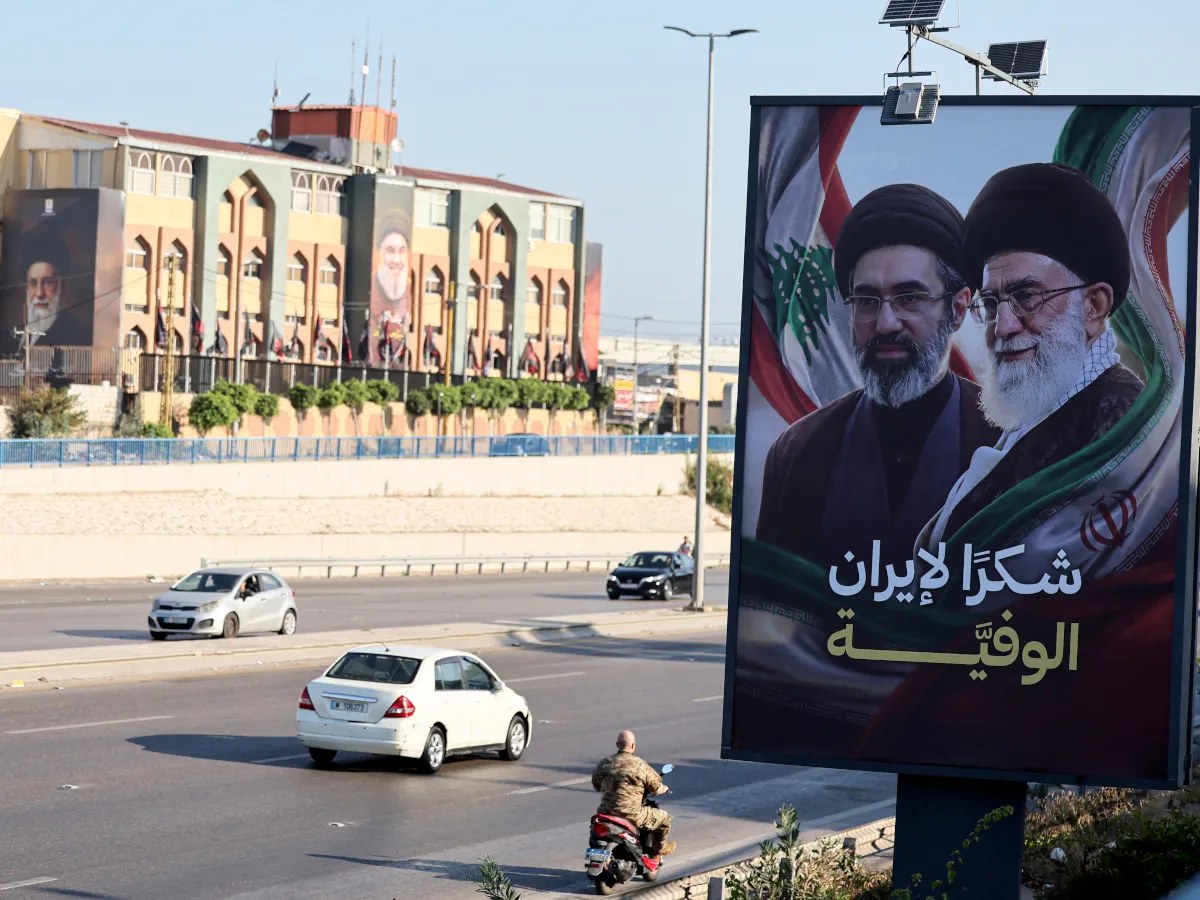
Skip to Content Subscribe Our Offers My Account Manage My Subscriptions FAQ Newsletters Canada Canadian True Crime Canadian Politics Health World Israel & Middle East Financial Post NP Comment Longreads Puzzmo Diversions Comics NP News Quiz New York Times Crossword Horoscopes Life Eating & Drinking Style Sponsored Play for Ontario Travel Travel Canada Travel USA Travel International Cruises Travel Essentials Culture Books Celebrity Movies Music Theatre Television Business Essentials Advice Lives Told Tails Told Shopping Buy Canadian Home Living Outdoor Living Kitchen & Dining Tech Style & Beauty Personal Care Entertainment & Hobbies Gift Guide Travel Guide Amazon Prime Day Deals Savings National Post Store More Sports Hockey Baseball Basketball Football Soccer Golf Tennis Driving Vehicle Research Reviews News Gear Guide Obituaries Place an Obituary Place an In Memoriam Classifieds Place an Ad Celebrations Working Business Ads Archives Healthing Epaper Manage Print Subscription Profile Settings My Subscriptions Saved Articles My Offers Newsletters Customer Service FAQ Newsletters Canada World Financial Post NP Comment Longreads Puzzmo Diversions Life Shopping Epaper Manage Print Subscription HomeNP CommentAdam Zivo: $300B investment fund will enrich Iran and constrain AmericaIt is based on the disproven theory that trade leads to peaceLast updated 17 minutes ago You can save this article by registering for free here. Or sign-in if you have an account.Cars drive past billboards showing Iran's new Supreme Leader Ayatollah Mojtaba Khamenei, left, and his late father Ali Khamenei, with the slogan, "Thank you, loyal Iran," erected along a highway leading to Rafic Hariri International Airport in Beirut on June 22. Photo by Anwar AMRO/AFP via Getty ImagesWhen Washington published its memorandum of understanding with Tehran last week, many were appalled by the inclusion of a $300-billion “reconstruction” fund. The clause was widely misunderstood as free cash for the Islamic Republic — reparations, essentially — but the truth is more complicated, albeit still disastrous.Enjoy the latest local, national and international news.Exclusive articles by Conrad Black, Barbara Kay and others. Plus, special edition NP Platformed and First Reading newsletters and virtual events.Unlimited online access to National Post.National Post ePaper, an electronic replica of the print edition to view on any device, share and comment on.Daily puzzles including the New York Times Crossword.Support local journalism.Enjoy the latest local, national and international news.Exclusive articles by Conrad Black, Barbara Kay and others. Plus, special edition NP Platformed and First Reading newsletters and virtual events.Unlimited online access to National Post.National Post ePaper, an electronic replica of the print edition to view on any device, share and comment on.Daily puzzles including the New York Times Crossword.Support local journalism.Create an account or sign in to continue with your reading experience.Access articles from across Canada with one account.Share your thoughts and join the conversation in the comments.Enjoy additional articles per month.Get email updates from your favourite authors.Create an account or sign in to continue with your reading experience.Access articles from across Canada with one accountShare your thoughts and join the conversation in the commentsEnjoy additional articles per monthGet email updates from your favourite authorsSign In or Create an AccountorDetails about the fund are still murky, but it appears that it will primarily consist of private investment in the Iranian market. This means that American financiers, and likely their counterparts in the Persian Gulf, will deploy their capital into the country in exchange for ownership stakes in recipient projects — a relationship that is fundamentally transactional, not charitable.To be clear: this is not some modern-day equivalent of the Marshall Plan, where the United States rebuilt postwar Europe largely through non-repayable grants. Rather, it resembles U.S. President Donald Trump’s earlier plans to pacify eastern Europe by launching joint investment funds with both Ukraine and Russia (these initiatives, being half-baked, never gained traction).This newsletter from NP Comment tackles the topics you care about. (Subscriber-exclusive edition on Fridays)By signing up you consent to receive the above newsletter from Postmedia Network Inc.We encountered an issue signing you up. Please try againYet that doesn’t mean that an Iranian fund would come at no cost to American taxpayers. Prospective investors will obviously be skeptical about sinking their money into a country that Washington just went to war with — especially if the final U.S.-Iranian peace deal seems brittle. Reciprocally, the Islamic Republic will fear losing control of important infrastructure and will presumably maintain a firm grip over western-backed ventures.In such an environment, the United States would need to incentivize foreign investment by compensating for elevated risk, which, in practice, would likely mean offering subsidies and government-backed loans. These handouts would represent only a fraction of the overall reconstruction fund and would often flow back into American hands, but would nonetheless come at public expense and represent a liability for the treasury.Even if the ultimate cost to American taxpayers is far less than $300 billion, would the return on investment be worth it? Would expanding economic ties with the Islamic Republic help de-radicalize its leaders and make the world safer? The answer is likely “no.”After the Cold War, many western policymakers assumed that globalization, with all the interdependence it engendered, would usher in an era of peace. Their theory was that impoverished autocracies would liberalize after their elites had more contact with western capitalism; that rising living standards would foster pro-democracy movements; and that it would be economically suicidal for major trading partners to war with each other.But the “peace through trade” strategy failed — mostly because it naively underestimated how cunning and brutal the west’s adversaries are. One need only look to China and Russia to understand this.For decades, Beijing accepted a deluge of foreign investment while merging its economy with that of the United States. Yet Chinese policymakers placed heavy restrictions on foreign capital and kept joint ventures firmly under their thumbs. Market reforms were implemented only if they did not threaten the hegemony of the Chinese Communist Party, and political liberalization was not pursued.Yes, a Chinese pro-democracy movement germinated, but it was suppressed through mass surveillance, political repression and ruthless violence (most infamously through the 1989 Tiananmen Square massacre). Rather than becoming more peaceful, China bided its time, rapidly expanded its military and embraced an aggressive foreign policy — knowing, of course, that trade interdependence constrained the West’s ability to respond.Now that Sino-American tensions have reached untenable levels, China and the United States are beginning to economically decouple, eroding what was supposed to be a barrier to war.A similar story played out with Russia: strong economic growth throughout the 2000s, driven in no small part by foreign investment, set the stage for failed pro-democracy protests in the early 2010s. While some hoped that western trade would turn Moscow into a peaceful — or at least restrained — ally, it only ended up weakening Europe by fostering an addiction to cheap Russian gas, which the Kremlin gleefully exploited during its full-scale invasion of Ukraine.If foreign investment and economic integration failed to liberalize both China and Russia, why would anyone expect different results with Iran — a country that, being ruled by religious fanatics, exhibits far less ideological flexibility?The mullahs in Tehran murdered tens of thousands of protesters earlier this year, filling the streets with corpses and blood. It would be foolish to imagine that such monsters could be persuaded to abandon their deeply held religious convictions, or to treat their own people with respect, simply through enhanced trade. Furthermore, Iranians, though impoverished, are already well-educated and hungry for democracy, which diminishes the cultural pay-offs of American-Iranian rapprochement.The most likely outcome of Trump’s $300-billion investment fund, should it ever launch, is that it will enrich the Islamic Republic without generating any significant reforms, setting the stage for a calamitous war in the future. Worse yet, it will create a class of American stakeholders who, being financially entangled in the Iranian market, will have strong incentives to lobby Washington to treat Tehran more meekly.The foundational issue is that Trump sees international affairs through the eyes of a businessman. Blind to wider cultural and political considerations, he seems to think that trade deals can solve anything. This approach is anachronistic — a relic of the 1990s and 2000s — and at odds with his own China policy, yet the president seems determined to ignore recent history.National Post Join the Conversation This website uses cookies to personalize your content (including ads), and allows us to analyze our traffic. Read more about cookies here. By continuing to use our site, you agree to our Terms of Use and Privacy Policy.
Adam Zivo: $300B investment fund will enrich Iran and constrain America
It is based on the disproven theory that trade leads to peace
1,405 words~6 min read