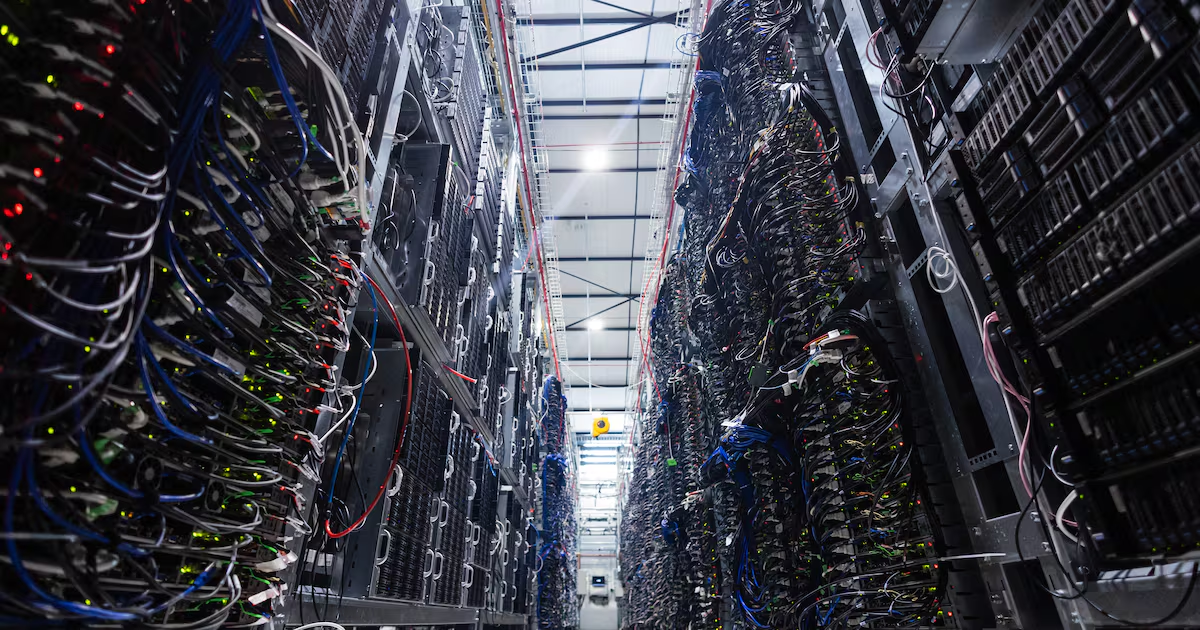
The United Nations University Institute for Water, Environment and Health (UNU-INWEH) published a study on June 3 calling on major AI companies to disclose the full environmental footprint of their operations, including energy consumption, carbon output, water usage, and land demands. The report also urges governments to enforce standardized reporting and push the industry toward renewable energy adoption.
Global data center electricity consumption was estimated at 448 TWh in 2025. By 2030, the report projects that figure will climb to 945 TWh. That’s more than double, and it’s roughly triple the combined annual energy consumption of Pakistan, Bangladesh, and Nigeria.
Water tells an equally sobering story. The projected water footprint of AI-related activities could hit 9.32 trillion liters by 2030. In English: that’s enough to cover the annual domestic water needs of 1.3 billion people in Sub-Saharan Africa.
Then there’s the land. The physical footprint of AI data centers is projected to exceed 14,500 square kilometers by the end of the decade. For context, that’s larger than the entire country of Montenegro.
One of the report’s more nuanced findings is that reducing carbon emissions alone won’t necessarily lower water or land usage. The relationship between these impacts depends heavily on local energy sources. A data center powered by hydroelectric might look clean on carbon metrics but could still be guzzling water at an unsustainable rate.