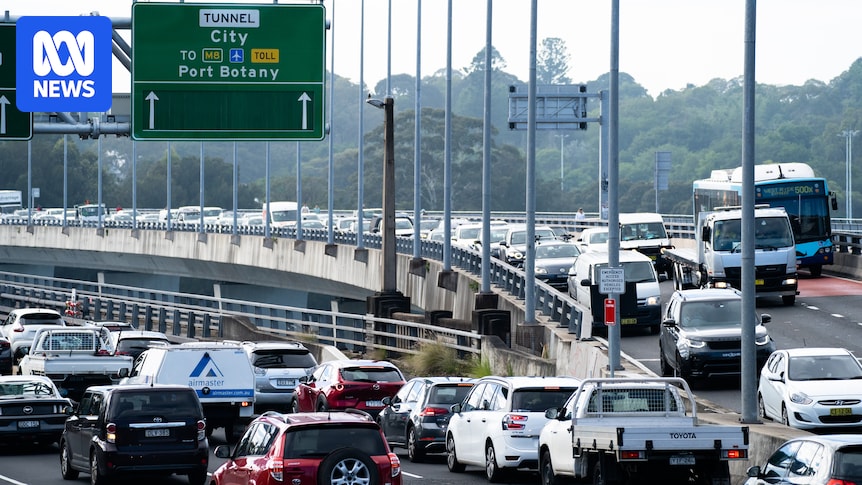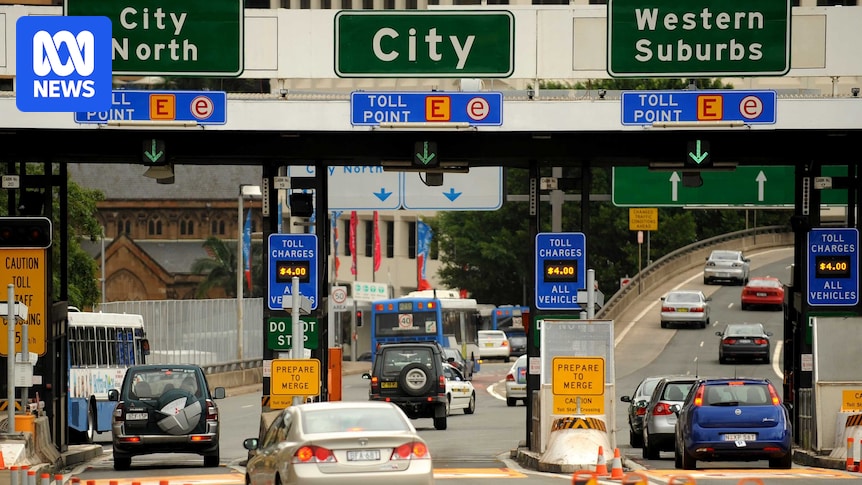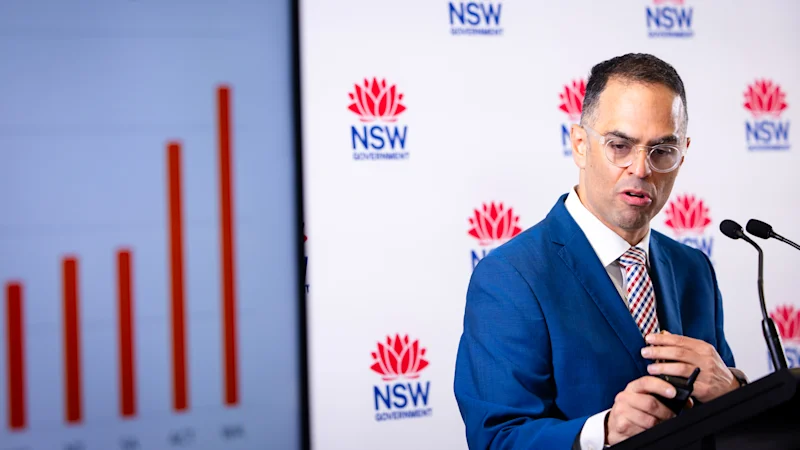
June 23, 2026 — 7:30pmThe Minns government pulled the easiest levers it could to ease financial pressures on households in the run-up to the state election next March.A freeze on Opal fares, temporary cuts to vehicle regos and a 12-month reduction of the weekly toll cap to $50 were among a suite of transport-focused sweeteners.The holders of power on Macquarie Street may not have gone as far as their Victorian counterparts did earlier this year in providing free fares for trains, trams and buses, but the transport carrots in the northern state will still cost taxpayers $561 million over the next 12 months.Aside from carrots to woo voters, the cost of completing transport mega-projects in Sydney hangs over the state’s finances like a cloud that threatens to turn into a southerly buster.The bill for a new metro rail line to Western Sydney Airport is forecast to blow out by $1 billion to $12 billion, while budget papers confirm that the final two stages of the M1 line between Chatswood and Bankstown will hit $22.3 billion – twice the original cost.Yet one of the most interesting aspects of the budget was the hundreds of millions of extra toll revenue the government expects to reap annually within the next few years.That will come courtesy of two-way charges on the Harbour Bridge and Harbour Tunnel from 2028, as well as the opening of two new tolled motorways.And after two years of negotiations with the state, toll road giant Transurban slipped out on budget day that it expects a final toll reform package to be “announced over the coming weeks”. A looming shake-up of toll pricing stands to be the big one for motorists in an election year.State budgets love a shiny new hospital. There’ll be almost $12 billion to spend on health infrastructure, including the new builds at Rouse Hill and Bankstown. They don’t seem to have the same affection for mental health care – even after the Westfield Bondi Junction stabbing inquest spotlighted the significant deficiencies in community mental health services, long wait times for appointments, inpatient bed shortages and violent patients absconding from hospitals after being diverted from the justice system. The budget offered $4.8 million for suicide prevention services, $4.2 million for Lifeline and $4.3 million split between peak bodies and community services.Tuesday’s budget reclaimed (kind of) what the NSW government liked to call “Commonwealth patients” – people stuck in public hospital beds waiting for federal government-funded aged care or NDIS placements. With any luck, the new pilot program offering about 700 elderly people interim aged care placements, in-home care, or early intervention packages will be a great success.Missing from the line-up of 9000 additional health workers will be more doctors, which doesn’t bode well for under-resourced public hospital departments.Regardless, the government says NSW hospitals will be able to handle 33,000 more ED visits and 2900 planned surgeries each year. For context, about 3.2 million people will present to NSW’s EDs this year, and more than 92,300 people were on planned surgery waitlists at the end of March.The Minns government has staked its entire first term on easing Sydney’s housing supply and affordability woes. Labor has spent the past three years pulling policy levers to enable higher-density development and speed up planning approvals – all aimed at delivering new homes.It hasn’t been enough. Although building approvals and commencements have ticked upwards, the government is expected to fall well short of its National Housing Accord target to build 377,000 new homes by mid-2029.This budget does not contain any new initiatives that will significantly shift the dial on housing supply and affordability in NSW. It does, however, chip away at housing supply. The government will invest in programs to streamline approvals and extend the pre-sale finance guarantee to not-for-profit community housing providers for affordable housing projects valued at up to $30 million. It will also partner with the private sector to deliver pre-fabricated and modular housing at scale to drive down material and building costs.These are modest measures that signal to developers – who have been lobbying for changes to taxes and charges – that the government has heard their concerns around feasibility.But the government’s inability to make significant inroads into the housing shortage, albeit in a tough economic climate, leaves it vulnerable to backlash as voters head to the polls in March.The finances of the NSW Department of Education in the state budget read like a tale of two cities.On the one hand, the government will build 16 new schools as part of a projected $9.2 billion education infrastructure spend in four years to deliver 1400 extra classrooms.New schools are not cheap – the sticker price of a high school at Jordan Springs in Sydney’s west will be $154 million when it opens in 2027. Other suburbs to get a new school include Bella Vista, a suburb which is earmarked for rezoning, attempting to address previous governments’ failure to provide public education options where new housing was being built.While there is a spending spree on one side of the education department, the wages bill for teachers and other staff is set to shrink next financial year. How is that possible after Education Minister Prue Car awarded teachers a once-in-a-generation pay rise of $10,000 soon after coming to power in 2023? The decline in public school enrolment share might offer some clues. The department’s annual reports show on a full-time equivalent metric, the number of school teachers in public schools fell slightly to 70,203 last year. More teachers on contracts have been offered permanent work.The number of teacher jobs sitting vacant has declined, falling from 3.3 per cent in 2023 to 1.6 per cent in 2026. More students are passing the year 1 phonic check and the proportion of students completing year 12 is also up.But the key performance indicator which really matters is how many parents make public school their first choice. While some families living on the fringes of Sydney and elsewhere in NSW never truly had that option, billions set to be spent in coming years might go some way to addressing that.Ask anyone in the west what’s making life hard and chances are you’ll get one of two responses. The first is that tolls, combined with high petrol prices, are bleeding dry drivers who often have no alternative transport options.So it makes sense that as we approach the state election, the government is proposing an easy-to-sell toll cap reduction from $60 to $50 a week, plus an offer to cut $100 from your car rego bill. These will be welcome changes: 65.5 per cent of western Sydney residents use cars to travel to work, compared to just 43 per cent of the rest of the city.But the other complaint that westies have is harder, and far more expensive to fix: a chronic lack of infrastructure. Has the government learnt the lessons of life on Sydney’s urban fringe, where schools are full and roads are clogged?There are signs it’s doing what it can, within a tight spending environment, to shift from playing catch-up to forward planning. It is investing in early enabling works for development around the aerotropolis to get ahead of future housing and manufacturing needs in the region as the airport opens this year. Schools, too: after years of underinvestment in some of the fastest-growing communities, 12 new public schools (primary or high) will be developed across the west.Will it be enough to show western Sydney voters that the government is listening to their concerns? As the treasurer put it: “If the voters are not happy, they’ll throw us out, as they have every right to do … we work for them.”Daniel Mookhey says his fourth budget has been prepared in the face of “gale-force headwinds” including an oil shock triggered by war in the Middle East and rising interest rates. But this is a pre-election budget so, despite the gale, the treasurer was able to find $560 million for a transport affordability package.The state will be in deficit by $2.3 billion in 2026-27, meaning NSW will be in the red for an eighth consecutive budget. A surplus is forecast in 2027-28 but even Mookhey says “lots of things need to go right” for that to be achieved.Perhaps the most worrying are the gloomy forecasts for the NSW economy. Only six months ago, the state’s growth rate was expected to accelerate to a robust 2.5 per cent over the next 12 months and 2.25 per cent the year after.Instead, growth of just 1 per cent is expected next year and the year after. The unemployment rate in NSW is forecast to climb gradually over the next two years and reach 4.75 per cent in 2027-28. That would be the state’s highest unemployment rate since the disruptions of the COVID-19 pandemic in 2020.Start the day with a summary of the day’s most important and interesting stories, analysis and insights. Sign up for our Morning Edition newsletter.From our partners
The Sydney project costs that hang over the state’s finances like a cloud
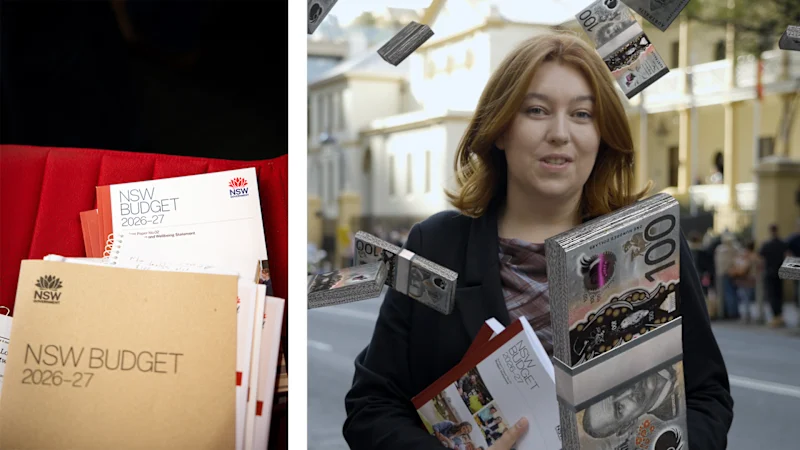
A freeze on Opal fares, shiny new hospitals but not much on housing: The Herald’s experts run their eyes over the budget and deliver their verdicts.
1,490 words~7 min read