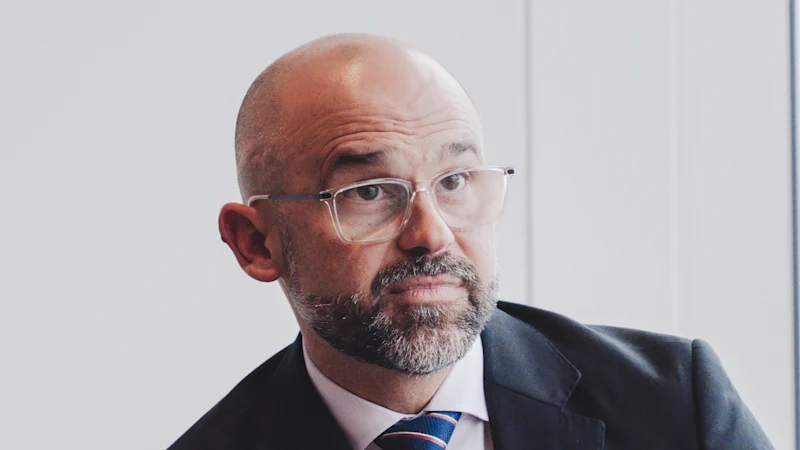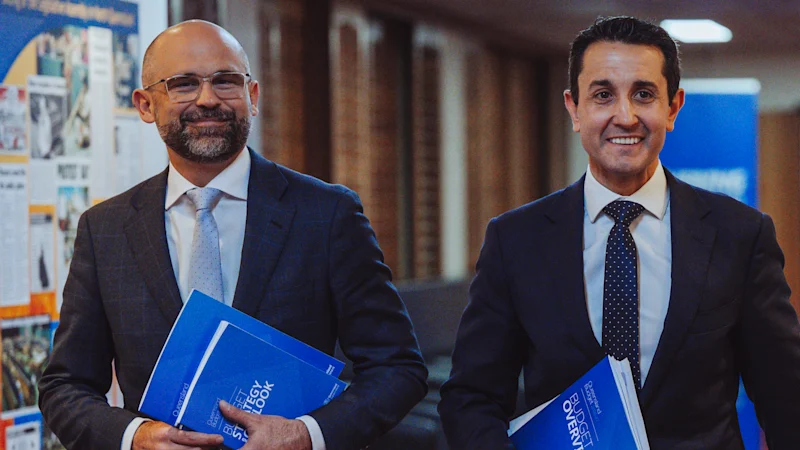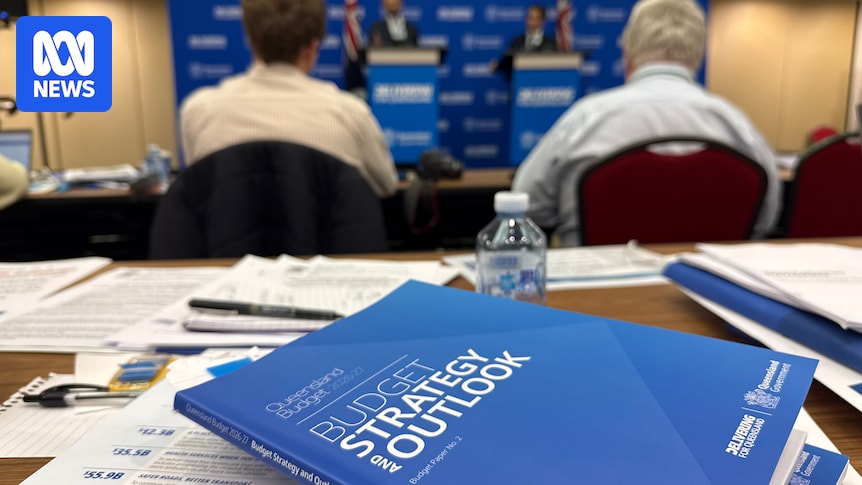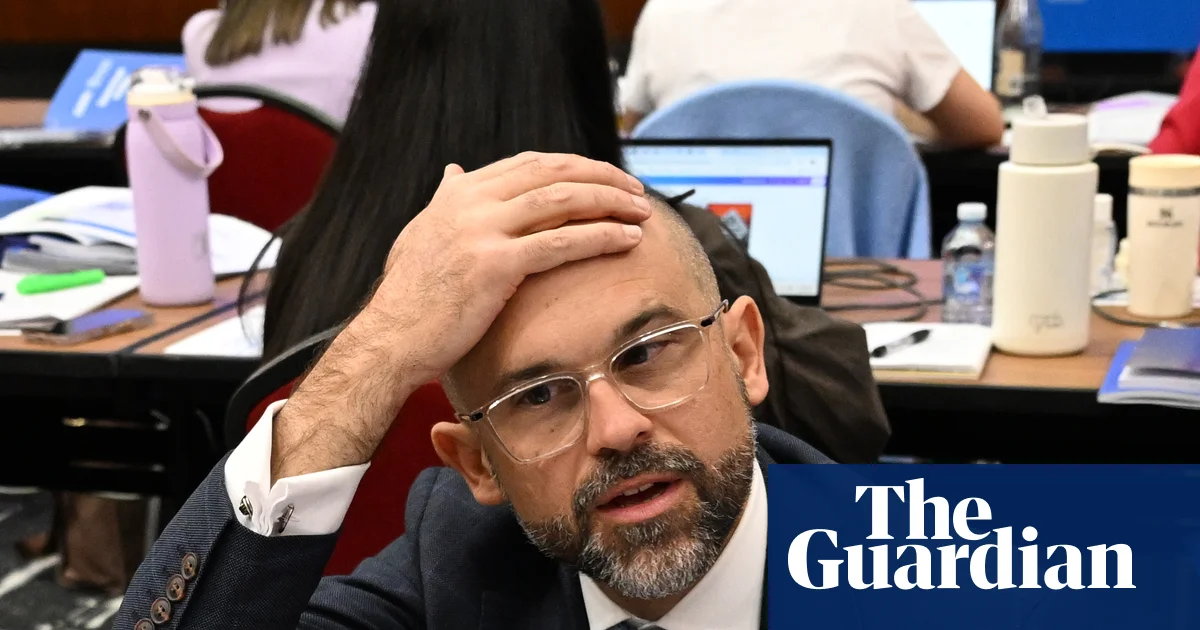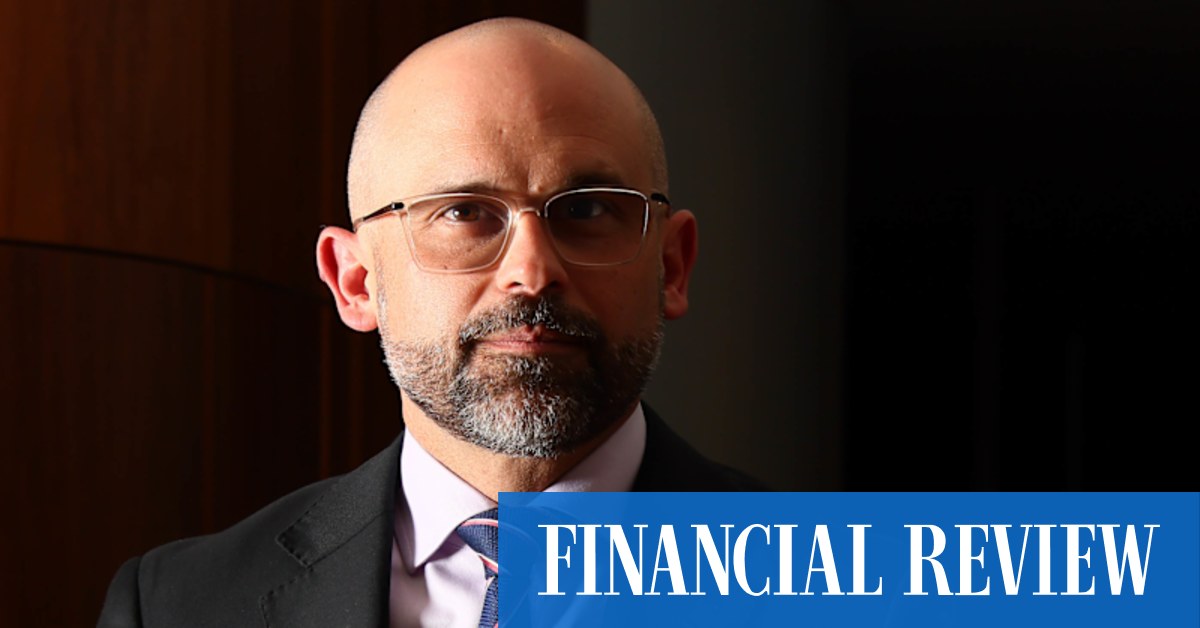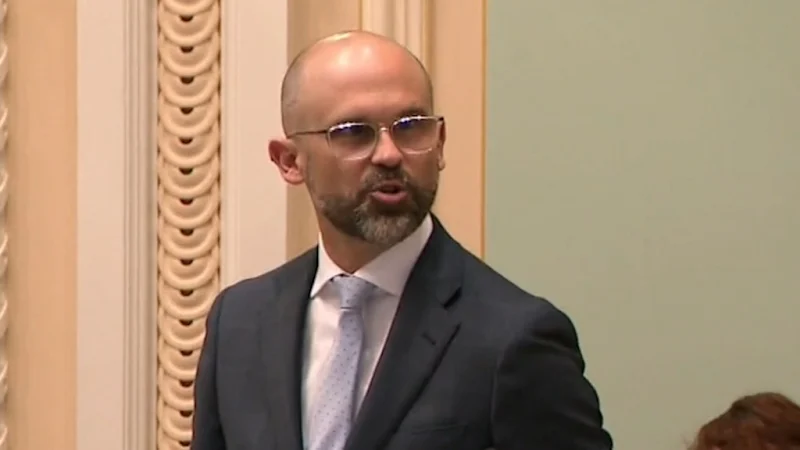
June 23, 2026 — 2:12pmThe Queensland government will heap more pressure on public service budgets to help deliver a surprise slim surplus in four years, Treasurer David Janetzki revealed in his second annual economic set-piece.Growth in state debt will continue to a reduced level of $216 billion as spending growth drops below revenue increases, but major infrastructure costs remain unclear or loom beyond the budget years.“This surplus is possible because of stable revenue improvements, the careful management of expense growth, and a growing Queensland economy,” Janetzki will tell parliament in his Tuesday budget speech.Treasurer David Janetzki’s second budget has revealed a surprise $600 million surplus – beyond the next state election.Aresna VillanuevaAmid global economic uncertainty, heightened inflation and unemployment outlooks for the coming 2026-27 financial year, the government has also announced some modest cost-of-living measures.These include lifting the back-to-school boost payment by 50 per cent to $150, and indexing fees and charges at a below-inflation rate of 3.4 per cent, along with previously announced measures.Changes to the government’s waste disposal levy and an increased focus on tax compliance and debt recovery will also tip more than $700 million into the state’s coffers over four years.A $500 million savings push in the public service, including an expanded cap on vacant senior executive positions worth $54.2 million plus consolidation of office space, is set to help bring expenses down.In doing so, Janetzki and Premier David Crisafulli have pointed to the government’s growth of “frontline” public service roles and their commitment to improving services for Queenslanders.“We are unashamedly focusing on frontline service delivery,” Crisafulli said during a budget lockup media conference fronted by the pair.The government has pointed to the Public Sector Commission’s State of the Sector report, also released on Tuesday, to show an increase in almost 8700 full-time-equivalent roles in the year to March.“Queensland taxpayers will be happy to know that only 34 of those 8693 jobs were corporate roles,” Janetzki will say in his budget speech.But the budget papers show full-time-equivalent roles funded in the 2026-27 financial year will only increase by about 2200 from this financial year – a proportional increase that’s less than population growth.While 11 of the state’s 25 departments will see headcount increases, including the departments of Premier and Cabinet, and Treasury, along with Education, Health, and Police, the other 14 will shed 222 roles.General government employee expenses will still grow 5.4 per cent in 2026-27, based on budget projections. But this growth will drop to about 3 per cent across the remaining years to 2029-30.By this point, after seesawing improvements in the general government operating deficit – and beyond the 2028 state election – the government has projected a $619 million surplus.Net debt will increase from $51.3 billion next financial year to $98 billion by 2029-30, while total government borrowings are expected to jump from $162.6 billion to $216.4 billion.Meanwhile, several major infrastructure projects, including 2032 Games-related venue and transport infrastructure projects, are yet to have costs announced while planning and procurement continue.“But the more we see prices coming in, the more I’m convinced that the change in the way we’re negotiating with the market, and the productivity that’s returning, is the reason we are getting more infrastructure built for the amount we’re putting out,” Crisafulli said.Start the day with a summary of the day’s most important and interesting stories, analysis and insights. Sign up for our Morning Edition newsletter.From our partners
Janetzki’s second budget flags $600m surplus – after the next election
Growth in the state’s debt will continue at a reduced level amid a focus on balance-sheet repair, as major infrastructure costs remain unclear.
567 words~3 min read