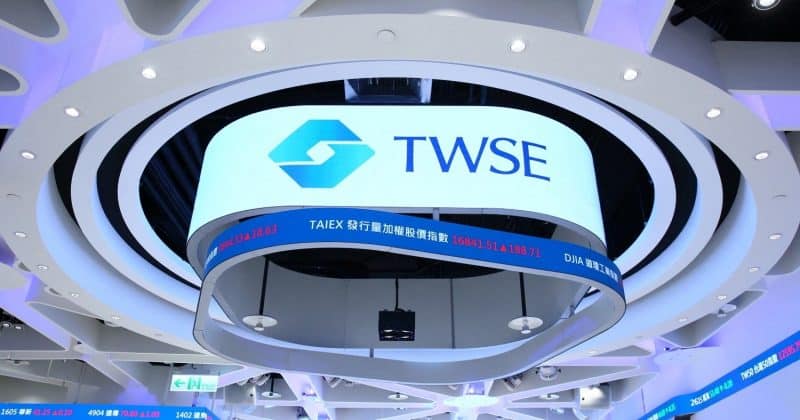
Skip to Content News Archives Economy Energy Oil & Gas Renewables Electric Vehicles Mining Commodities Agriculture Real Estate Mortgages Mortgage Rates Finance Banking Insurance Fintech Cryptocurrency Work Wealth Smart Money Wealth Management Investor Personal Finance Family Finance Retirement Taxes High Net Worth FP Comment Executive Women Puzzmo Newsletters Financial Times Business Essentials More Innovation Information Technology FP500 Podcasts Small Business Lives Told Tails Told Shopping Financial Post Store Obituaries Place a Notice Advertising Advertising With Us Advertising Solutions Postmedia Ad Manager Sponsorship Requests Classifieds Place a Classifieds ad Working Profile Settings My Subscriptions Saved Articles My Offers Newsletters Customer Service FAQ News Economy Energy Mining Real Estate Finance Work Wealth Investor FP Comment Executive Women Puzzmo Newsletters Financial Times Business Essentials HomePMN Business'FOMO Really Got Me': Taiwanese Go Deep Into Debt to Amp 100% Stock RallyTaiwan's locals are borrowing so much to invest in the TSMC-fueled AI stock frenzy it's raising fears of a bubble.Author of the article: You can save this article by registering for free here. Or sign-in if you have an account.Ada Hung Photographer: Lam Yik Fei/Bloomberg Photo by Lam Yik Fei /Photographer: Lam Yik Fei/Bloomb(Bloomberg) — Andy Cheng is 26, unemployed and, with the help of a little borrowed money, the proud owner of $60,000 worth of Taiwanese tech stocks. And in many ways, he speaks for the entire island of 23 million people when he doles out the following advice: “Buy any stock and you will make money.”AI mania has gripped any number of stock markets across the globe in recent months — South Korea, China, the US — but perhaps nowhere is at it as frenzied as here in Taiwan, the No. 1 producer of the chips that power the technology.Subscribe now to read the latest news in your city and across Canada.Exclusive articles from Barbara Shecter, Joe O'Connor, Gabriel Friedman, and others.Daily content from Financial Times, the world's leading global business publication.Unlimited online access to read articles from Financial Post, National Post and 15 news sites across Canada with one account.National Post ePaper, an electronic replica of the print edition to view on any device, share and comment on.Daily puzzles, including the New York Times Crossword.Subscribe now to read the latest news in your city and across Canada.Exclusive articles from Barbara Shecter, Joe O'Connor, Gabriel Friedman and others.Daily content from Financial Times, the world's leading global business publication.Unlimited online access to read articles from Financial Post, National Post and 15 news sites across Canada with one account.National Post ePaper, an electronic replica of the print edition to view on any device, share and comment on.Daily puzzles, including the New York Times Crossword.Create an account or sign in to continue with your reading experience.Access articles from across Canada with one account.Share your thoughts and join the conversation in the comments.Enjoy additional articles per month.Get email updates from your favourite authors.Create an account or sign in to continue with your reading experience.Access articles from across Canada with one accountShare your thoughts and join the conversation in the commentsEnjoy additional articles per monthGet email updates from your favourite authorsSign In or Create an AccountorTeenagers are rushing to open brokerage accounts; spikes in trading volumes are crashing firms’ websites; and the Taiwanese market, up over 100% in the past year, is rallying so fast that in a matter of weeks it overtook the UK, Canada and India to become the world’s fifth largest.Get the latest headlines, breaking news and columns.By signing up you consent to receive the above newsletter from Postmedia Network Inc.A welcome email is on its way. If you don't see it, please check your junk folder.The next issue of Top Stories will soon be in your inbox.We encountered an issue signing you up. Please try againMuch of this boom is, like in Cheng’s case, fueled by heaps of money borrowed at rock-bottom interest rates. So much so that many of the island’s brokerages have hit their internal limits on certain types of loans, forcing them to demand more collateral and bump up their rates, according to people familiar with the matter. Those investors who are rebuffed by their brokers often just turn to their banks for leverage instead, taking out new loans or canceling financial products to free up cash.The borrowing binge is so intense, and has spread so deeply across the financial system, that it even disrupted a recent central bank debt auction. Not enough buyers showed up to buy all the debt on sale on June 3, the first time that’s ever happened. This frenzy is what most worries the contrarians who see Taiwan as Exhibit A of the world’s rapidly inflating AI bubble. “Taiwan’s stock market is clearly overheated,” said Dachrahn Wu, professor at the department of economics at the National Central University. He fears that a sudden, deep sell-off would trigger “devastating losses” for young investors who “see equities as easy money.”Cheng scoffs at such talk. “It’s not a bubble,” he says, leaning forward to be heard over the din.It was a Monday evening, and Cheng was hanging out with a few friends at Pin Xian Rechao, a little stir-fry joint on the south side of Taipei that’s become a sensation ever since Nvidia Corp. Chief Executive Officer Jensen Huang was recently spotted grabbing dinner there. The stock market had sunk earlier that day, pushing the benchmark index down 3.5%, but the mood at Pin Xian was upbeat, almost raucous, as diners munched on deep-fried pork liver and pineapple shrimp balls.All across the restaurant, there was excited chatter about AI and the market and whether to take advantage of the day’s declines and buy more stocks on the cheap. In one corner, a middle-aged man could be heard lecturing his friends on the ins and outs of P/E ratios and how to use them to pick winners.At Cheng’s table, all deferred to him, an accountant by trade, when the conversation turned to stocks. He’s read up on how the dotcom boom of the 1990s ended in bust, he says, and is confident that this rally is very different. “This time it has substance.” This is a refrain often heard from bulls in Taipei.They point to the global dominance of Taiwan Semiconductor Manufacturing Co. and the large pack of companies behind it. Together, they produce 90% of the world’s most advanced chips — crucial cogs in the cutting-edge technology that goes into smartphones, laptops, robotics and, most importantly, the massive AI data centers that are popping up across the globe.Of course, should that frenetic AI buildout suddenly slow at some point, as some on Wall Street suspect, then the demand for those chips will cool, too. Moreover, the speculative mania sweeping Taiwan today is rapidly approaching the fevered pitch it reached during the dotcom days. Over the past 12 months, the amount of money investors borrowed from brokerages to finance stock purchases swelled 160%, leaving it near an all-time high set just before the 2000 crash. That surge in margin debt, as it is called, dwarfs the 50% increase recorded in the final 12 months of the bubble back then. It even tops the 94% rise posted recently in Asia’s other AI powerhouse, South Korea, a country where the government has worked relentlessly to fan stock-investing fever and drive the market higher.For many Taiwanese, it’s their first time borrowing money to amp their bets.“FOMO really got me,” Ada Hung said. Hung, 39, is part of the rapidly expanding community of social-media influencers who dole out stock tips in Taipei. Posting under the handle Banini, she’s up to nearly half a million followers.For years, she had refused to go into debt to goose returns but as she watched the market spike higher, day after day, and saw friends raking in far more than she was, she gave in to temptation and took out a NT$5 million ($158,302) loan in May. Better “to chase the opportunity,” she figured, “than let it slip away.” Sevenfold SurgeInvestor demand for loans has been so torrid that Taiwanese brokers have themselves embarked on a borrowing spree to shore up working capital. They’ve issued nearly $1.2 billion of bonds this year, more than seven times the amount raised in all of 2025, data compiled by Bloomberg show. Some of them are also turning to unconventional fundraising sources, like the syndicated loan market, where the pace of deals has been unprecedented this year, according to data compiled by Bloomberg.Nascent signs of trouble are emerging, even as the stock market continues to push higher. Investor defaults stemming from stock trades, for instance, have more than doubled in June to over NT$2 billion, the highest monthly total recorded since data were first released in 2019.To Wu, the economics professor, it’s clear that authorities need to take concrete steps to rein in the frenzy and avoid a crash later on. “Taiwan’s government should step in to cool the market,” he says.Stress TestsContacted by Bloomberg News for comment, a unit of the Financial Supervisory Commission that oversees brokerages said it was closely monitoring the market for risks but that leverage in the industry remains in check so far.The unit, the Securities and Futures Bureau, said in a statement that none of the 34 brokerages that are active in various forms of leverage financing had breached regulatory limits as of May. Moreover, the bureau said those defaults in the stock market remain less than 0.002% of all transactions.“We will continue to monitor securities firms’ business conditions and risk-control measures,” the regulator said, noting that some have already started taking action by cutting leverage ratios, suspending on-line loan applications and adjusting interest rates.Industry insiders say they’ve seen margin-loan rates get bumped up by 0.2 percentage point or more — a meaningful increase on that kind of leverage at a time when the central bank’s benchmark rate is just 2%. And on unrestricted loans, which allow investors to borrow cash by pledging their shares and exchange-traded fund holdings, the increases have been as big as one percentage point, they say.Some firms have instructed sales staff to push their most aggressive clients to rein in risk. Others have started stress-testing their loan portfolios against a sudden plunge in the market of, say, 20% or 30%.Reached for comment, some firms acknowledged taking concrete measures to safeguard their finances. KGI Securities, the island’s second-largest local brokerage, said it constantly monitors its leverage financing business and had lowered leverage ratios on some stocks before bumping them back up this month. Fubon Securities, Taiwan’s third-largest local brokerage, said it has recently adjusted certain lending rates and altered margin requirements for lower-rated, less liquid and more volatile securities, while financing terms for other securities remain steady.SinoPac Securities, the fourth biggest, said it reviews its overall funding position daily to manage lending quotas and make the necessary adjustments. Cathay Securities, the fifth largest, said it’s imposed limits on unrestricted loans tied to certain high-risk stocks.Yuanta Securities, Taiwan’s biggest brokerage, declined to comment on the matter. “If AI momentum fades, the spillovers wouldn’t just stay in the stock market,” said Alicia Garcia Herrero, chief economist for Asia Pacific at French bank Natixis SA. “You’d likely see pressure on brokerages, reduced household consumption and a hit to growth via exports.”Goldman’s Buy RatingFor now, though, this remains a remote concern for most here. The vast majority of analysts at banks and brokerages predict more stock gains in the coming months, including Goldman Sachs, which recently slapped a buy recommendation on the market.At Pin Xian that night, all giddily agreed with this sentiment. After Cheng, the unemployed accountant, finished laying out his bold prediction for an across-the-board rally, his friend Albert Chen, a 25-year-old law student, piped up to extoll the virtues of a market so heavily dominated by tech companies. They account for around 20% of the island’s economic output and have an 80% weighting in the benchmark stock index.Not even a month-long rout could dent his confidence in the market, Chen said. The fundamentals are just too strong to worry. “Taiwan,” he said, “is terrific.”—With assistance from Jin Wu, Yian Lee, Aileen Chuang and Andy Lin. Join the Conversation This website uses cookies to personalize your content (including ads), and allows us to analyze our traffic. Read more about cookies here. By continuing to use our site, you agree to our Terms of Use and Privacy Policy.
'FOMO Really Got Me': Taiwanese Go Deep Into Debt to Amp 100% Stock Rally
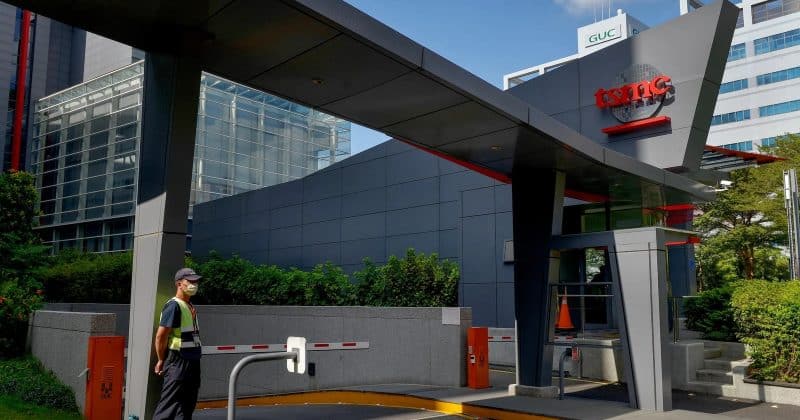
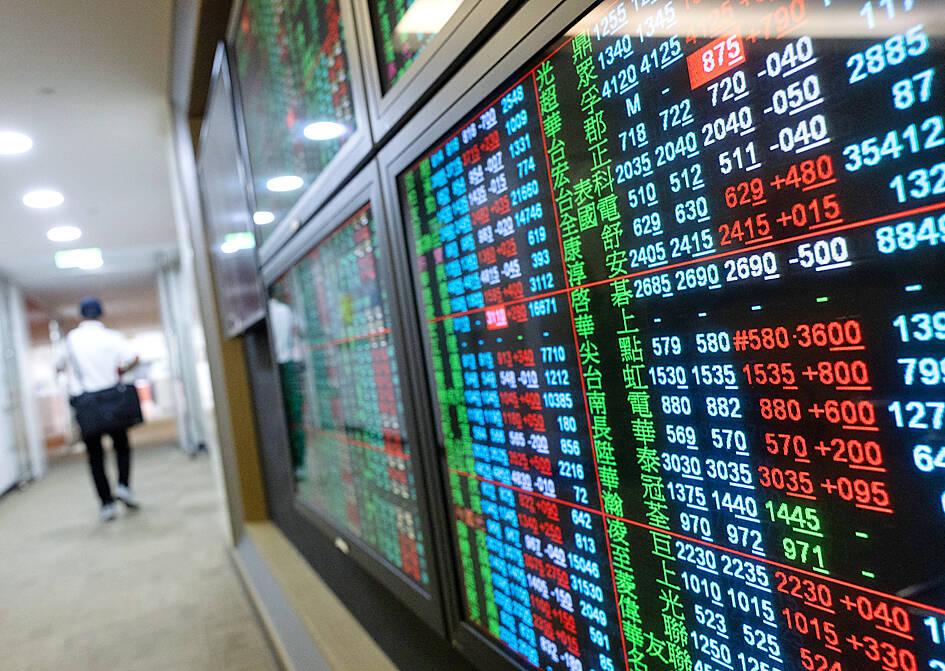
Taiwan's locals are borrowing so much to invest in the TSMC-fueled AI stock frenzy it's raising fears of a bubble.
TL;DRAI
Taiwan's 100%+ AI stock rally is driven by massive retail borrowing; brokerages hit leverage caps and the central bank just failed its first debt auction. For tech leaders, this signals dangerous systemic risk in margin-dependent markets during hype cycles.
2,052 words~9 min read