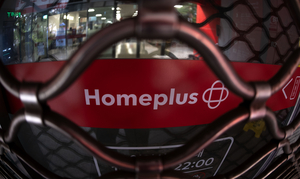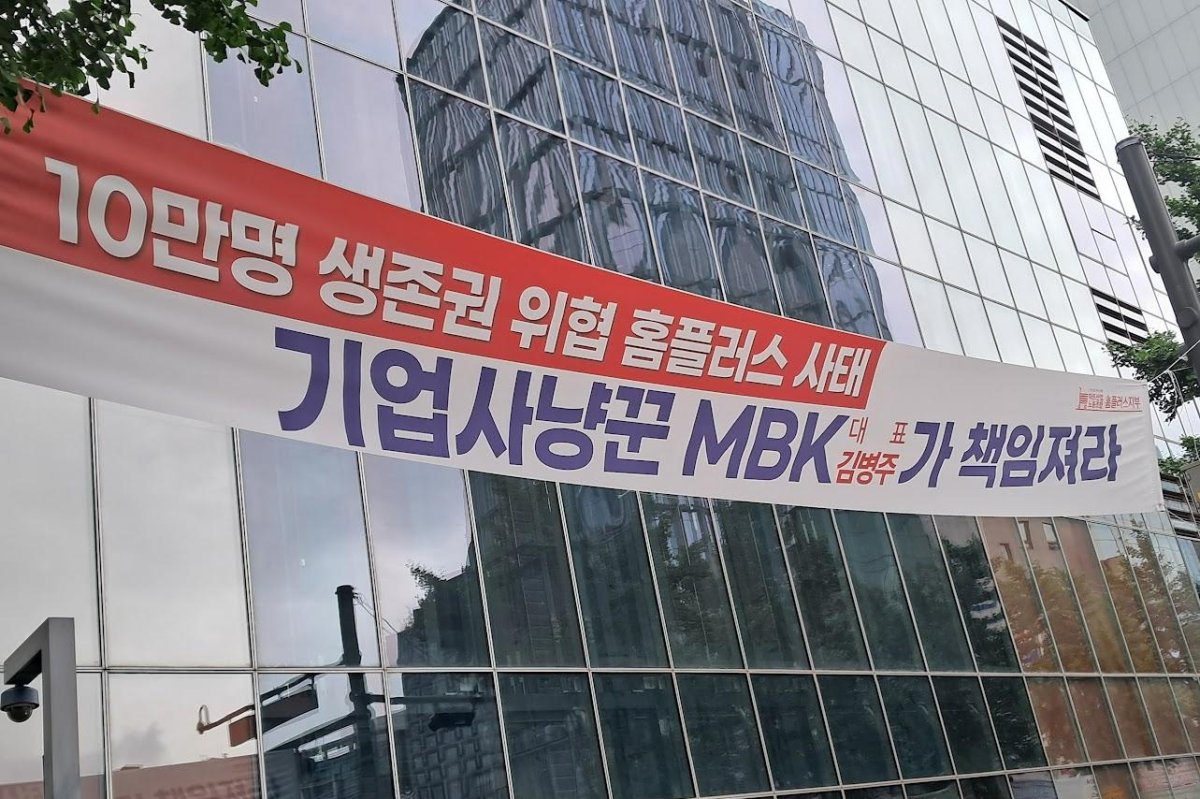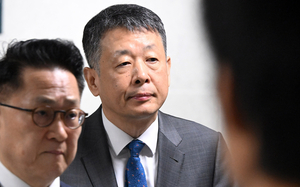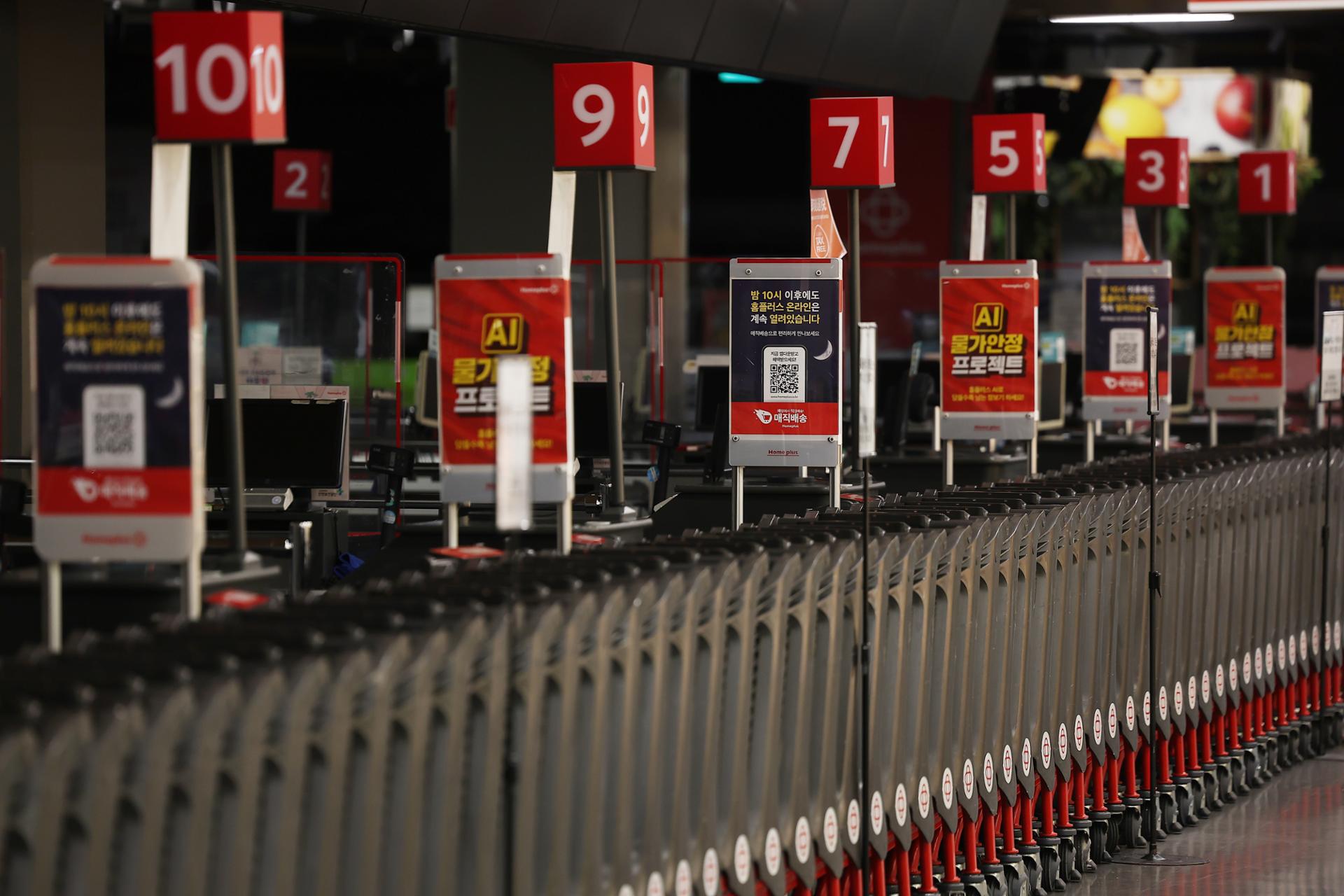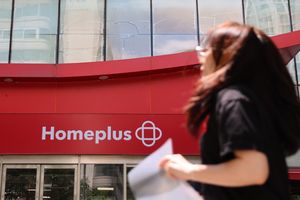
Meritz approves funding only with MBK guarantees, calls for greater shareholder responsibility A passerby walks past a Homeplus store in Songpa-gu, southeastern Seoul, on June 5. (Yonhap) MBK Partners is facing renewed questions over its responsibility as the largest shareholder of Homeplus, as the private equity firm clashes with Meritz Financial Group over the terms of emergency financing for the struggling retailer.Meritz recently approved 100 billion won ($65 million) in debtor-in-possession financing to support Homeplus' rehabilitation, on the condition that the funding is backed by legally valid guarantees from MBK and MBK Chairman Michael Byung-ju Kim.Meritz argues that MBK, as the controlling shareholder, should assume primary responsibility before creditors take on additional risk. The financial group also faces its own constraints, including shareholder backlash and potential legal issues tied to directors' duty to shareholders, as some Meritz shareholders have raised the possibility of collective legal action against further exposure to Homeplus.The dispute comes at a critical point for Homeplus, which needs emergency operating funds to keep stores running, pay suppliers and pursue a sale of its remaining business. The company has said it needs 200 billion won in DIP financing, while the deadline for approval of its rehabilitation plan is approaching in early July.MBK has pushed back, saying it has already provided substantial support to the retailer. It has also urged Meritz to proceed with the funding, arguing that Homeplus is not simply collateral but a growing concern tied to the livelihoods of employees and suppliers.According to MBK, it has shouldered about 400 billion won in cash, loans and credit support for Homeplus, including Kim's 40 billion won personal donation, DIP-related support and loan guarantees.Skepticism remains, however, over how much of that amount represents fresh cash. Market participants say a large portion appears to consist of loans or guarantees rather than direct capital injections.MBK's claim that it has limited room to provide additional support has also drawn scrutiny. Industry estimates say the firm manages about $33 billion in assets, with annual management fees believed to reach hundreds of billions of won. In its annual letter in March, MBK said it distributed $1.7 billion to investors in 2025. It also said Buyout Fund III, the fund that invested in Homeplus, posted a 15.4 percent return last year.Kim's personal wealth has further fueled the debate. Forbes ranked him second on its 2026 list of Korea's richest people, estimating his net worth at about $9.9 billion. Such figures have made it harder for MBK to argue that creditors should take on more risk while the largest shareholder limits its own exposure.The dispute escalated after Homeplus initially sought 300 billion won in DIP financing, to be split evenly among MBK, Meritz and Korea Development Bank. After KDB showed reluctance, Homeplus turned its focus to Meritz, while the National Assembly stepped in to mediate.Homeplus later asked Meritz to provide 200 billion won, including 100 billion won on top of the amount backed by MBK's guarantee. Meritz approved half of the request, saying the rest should be arranged by MBK or backed by further responsible support from the shareholder.The situation has raised questions over whether MBK is trying to limit its burden as the largest shareholder while pressing creditors to take on greater responsibility.Meritz is a major creditor that lent about 1.3 trillion won against key Homeplus stores as collateral. So far, it has reportedly recovered only about 260 billion won. Extending new loans to a company in rehabilitation carries substantial risk, and Meritz's shareholder and legal obligations make unconditional support difficult to justify without stronger commitments from MBK.MBK has argued that if Homeplus is liquidated, Meritz could secure additional collateral value of 1.56 trillion won and recover as much as 1.8 trillion won even after providing another 200 billion won. However critics argue that the figure is based on MBK's own estimate, not confirmed collateral value, and does not fully account for risks such as weaker property values, tenant claims and disposal delays."If the case for saving the company is so strong, the shareholder that acquired and managed it should be the first to take responsibility," an industry official said. "It does not seem reasonable for investors to enjoy the gains while creditors and society absorb the cost of failure."
Who should save Homeplus? MBK faces growing accountability questions
MBK Partners is facing renewed questions over its responsibility as the largest shareholder of Homeplus, as the private equity firm clashes with Meritz Financia
706 words~3 min read