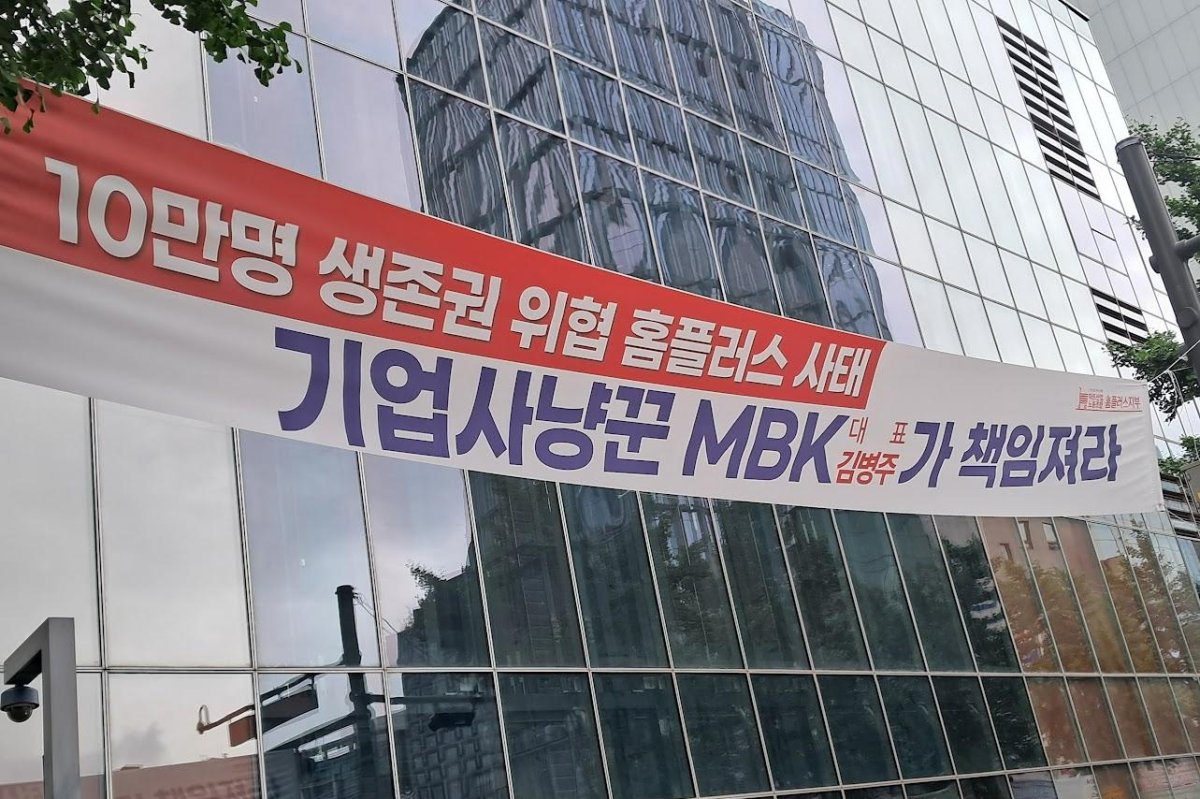
Governance, oversight questions widen as Homeplus remains under court-led rehabilitation MBK Partners Vice Chair Kim Kwang-il attends a meeting with MBK and Meritz executives on Homeplus’ rehabilitation at the National Assembly in Yeouido, Seoul, July 9. (Lee Sang-sub/The Korea Herald) MBK Partners is facing growing scrutiny over its management of portfolio companies, as controversies spread from Homeplus’ court-led rehabilitation to a business suspension at Lotte Card and workforce restructuring at Osstem Implant.Critics say the incidents raise questions about governance and internal controls at MBK-controlled businesses, as well as whether cost-cutting and investment recovery are being prioritized over long-term corporate value.Lotte Card handed unprecedented suspensionThe Financial Services Commission on Friday finalized a 45-day business suspension and a 5 billion won ($3.5 million) fine against Lotte Card over a cyberattack that exposed the personal information of about 2.97 million customers.It was the first time a Korean financial company had been suspended over a hacking incident. The leaked data reportedly included resident registration numbers, card numbers, expiration dates and security codes for some customers.The sanction has renewed attention on MBK’s role as Lotte Card’s controlling shareholder. Korea Retail Card Holdings, a special-purpose company established by MBK, owned 59.83 percent of the card issuer as of the end of March.MBK acquired Lotte Card through a consortium with Woori Bank in 2019.Lotte Card’s budget for information security fell from 14.2 percent of its total budget in 2020 to 9 percent last year, according to data submitted by the Financial Supervisory Service to Rep. Kang Min-kuk of the People Power Party.The decline has prompted questions over whether sufficient investment and oversight were provided to protect customer information.MBK Vice Chair Kim Kwang-il was serving as a nonexecutive director of Lotte Card when the breach occurred. He has also held board positions at other MBK portfolio companies, including Homeplus, Korea Zinc and outdoor apparel company Nepa.“Having one executive oversee multiple companies at the same time may have weakened effective risk management and oversight,” an industry official said.Osstem workforce changes draw criticismOsstem Implant, acquired by MBK and UCK Partners for about 2.5 trillion won in 2023, is separately facing criticism over workforce changes.The maker of dental implants has reportedly removed some employees from their existing duties and asked them to seek new positions internally. Employees have described the move as restructuring intended to encourage resignations.Critics have questioned whether the changes reflect a broader emphasis on cost reduction. Osstem’s operating profit fell to 80 billion won last year, about half the previous year’s level, while dividends totaled 100.1 billion won last year and 39.2 billion won this year.MBK said the reassignments were initiated by Osstem’s management to address accumulated inefficiencies, with major shareholders aligned on strengthening the company’s long-term growth and competitiveness.Calls grow for tighter private equity oversightThe developments have added to scrutiny already surrounding Homeplus and fueled political calls for tighter oversight of private equity acquisitions involving businesses considered important to public welfare or national infrastructure.Rep. Kang Jun-hyun of the Democratic Party of Korea called for minimum safeguards when private equity funds seek control of companies in such sectors.“When private equity funds take control of national infrastructure, public service- or livelihood-related businesses, they could eventually end up like Homeplus,” Kang said at a parliamentary committee meeting on July 29.He also criticized MBK for continuing to pursue management control of Korea Zinc while Homeplus remains under rehabilitation.
Lotte Card, Osstem controversies deepen scrutiny of MBK
MBK Partners is facing growing scrutiny over its management of portfolio companies, as controversies spread from Homeplus’ court-led rehabilitation to a busines
558 words~3 min read