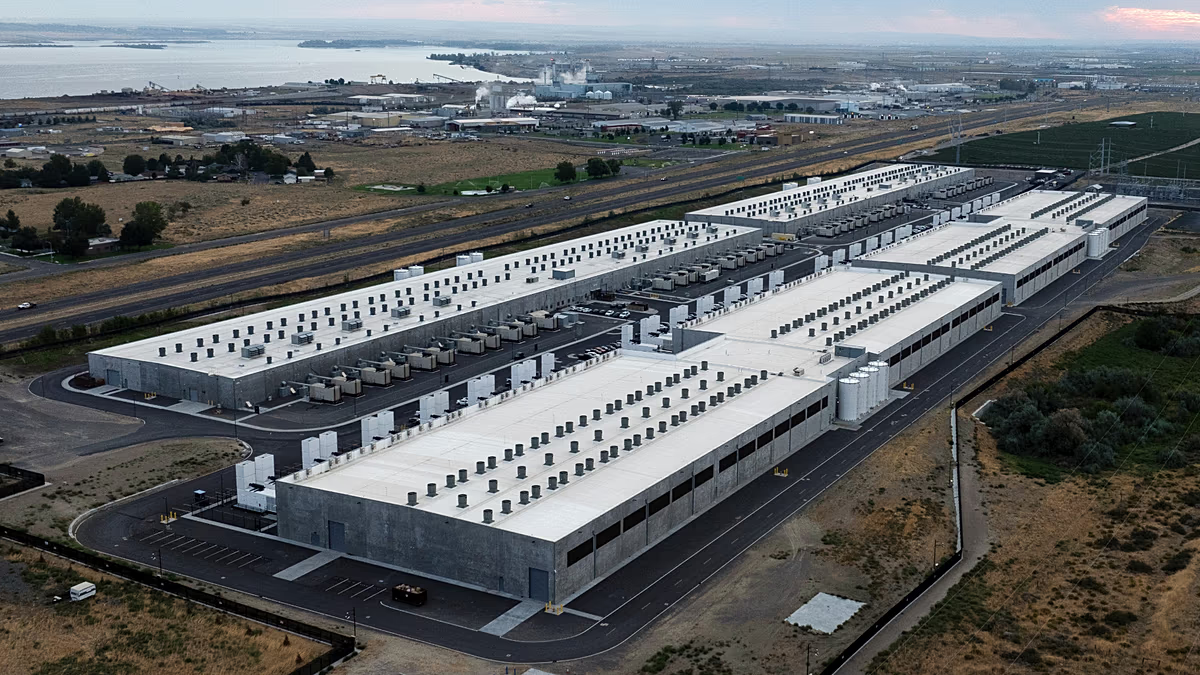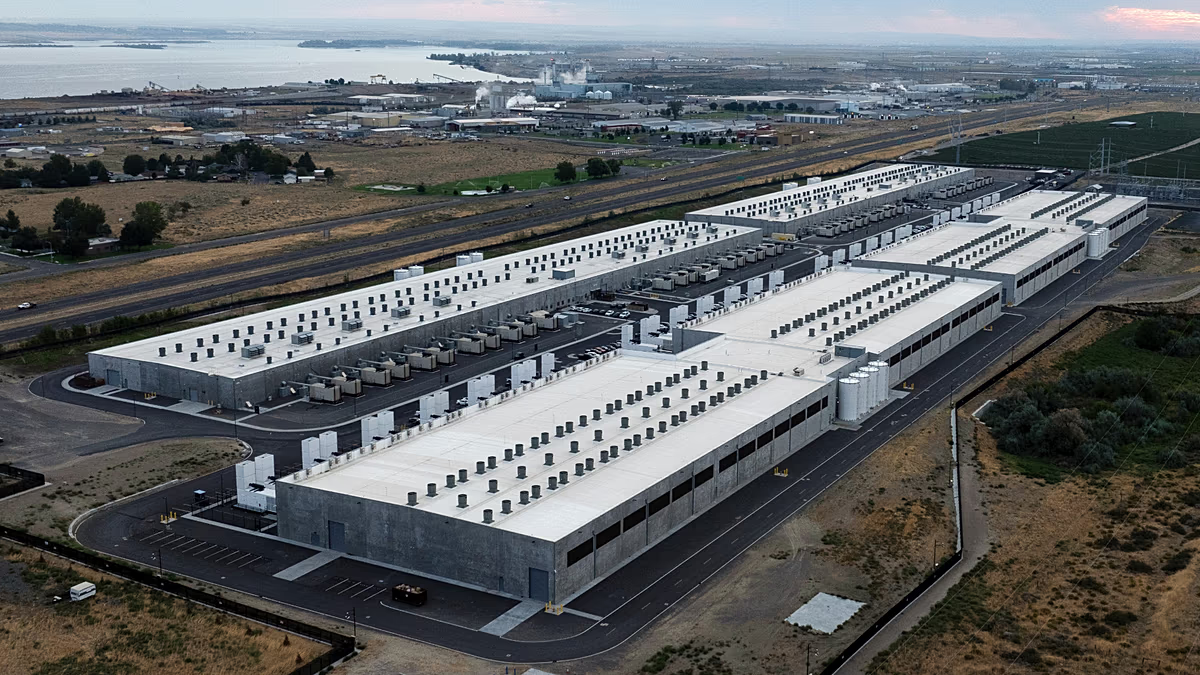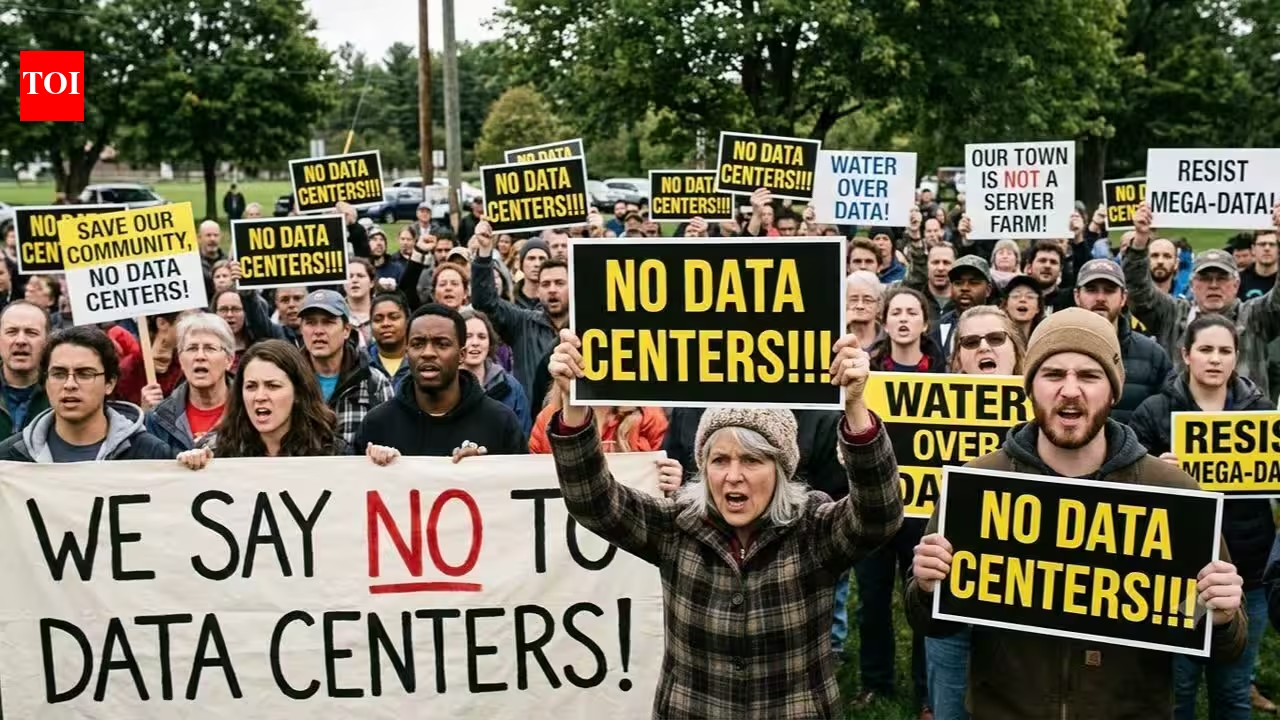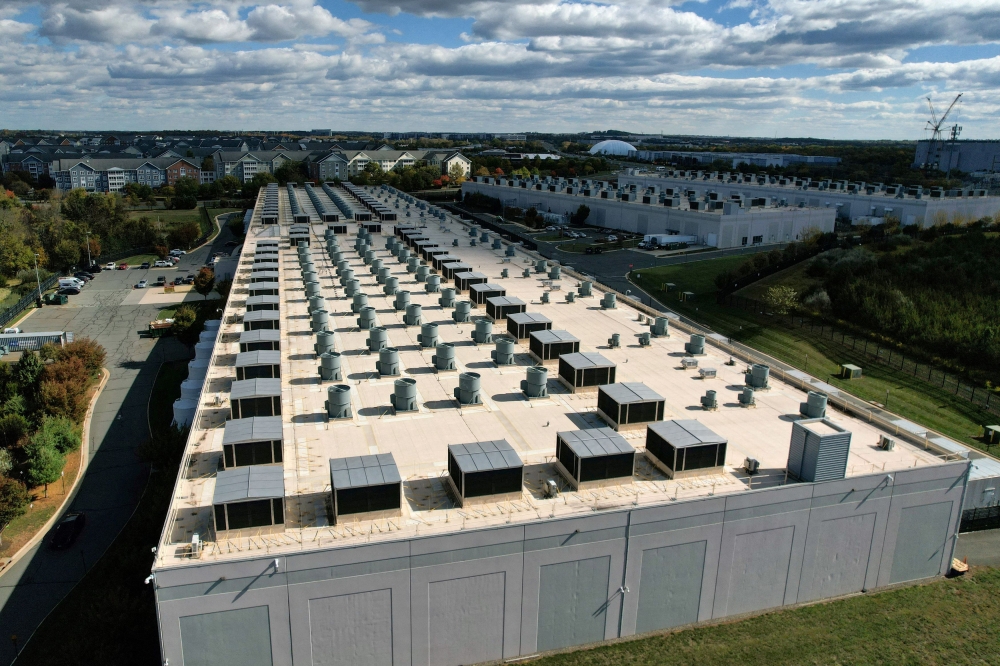
File picture of an aerial view of an Amazon Web Services Data Center known as US East 1 in Ashburn, Virginia, October 20, 2025. Tech firms are floating the idea of building data centres in space and tapping into the sun’s energy to meet out-of-this-world power demands in a fierce artificial intelligence race. — Reuters pic Earn a fixed rate of up to 4.2%* p.a. for 210 days with Versa Save! Plus, enjoy an additional FREE RM10 when you sign up using code VERSAMM10 with a min. cash-in of RM100 today. T&Cs apply. Tuesday, 23 Jun 2026 10:43 AM MYT LONDON, June 23 — Mayors from 40 cities, including London, Phoenix and Melbourne, have agreed to work together to curb the growing strain the rapid growth in data centres is placing on electricity grids, water supplies and local communities, city leaders said.A global surge in demand for computing power, much of it connected to artificial intelligence, is driving trillions of dollars in investment in new sites, sparking protests in countries from the United States to South Africa and Britain.The Global Urban Data Centres Pact, due to be launched on Tuesday at London Climate Action Week, aims to set standards to ensure data centres use clean energy and all resources more efficiently, and are better integrated into urban planning, mayors from Phoenix and Melbourne told Reuters.While the rules will be adapted to local conditions – cooling needs in Iceland differ from those in Manila – the mayors said the framework is meant to guide permitting and planning decisions, as well as negotiations with companies and governments.Melbourne Lord Mayor Nicholas Reece said around 50 major data centres already operate in the city and were projected to account for roughly 10 per cent of local power demand by 2030 and as much as 20 per cent by 2040 in a city of 5.5 million people.“Data centres are the biggest thing to hit the energy grid since air conditioning in the 1950s... where the rollout of air conditioning took decades, this is happening in a few short years,” Reece said.The centres could use around 20 billion litres of water a year, equivalent to 4 per cent of the city’s drinking supply, highlighting the pressure on local resources, he added.‘Race to the bottom’Reece said investment into data centres was happening at “breakneck speed”, outpacing regulation, leaving cities at risk of a “race to the bottom” as governments compete to attract investment, sometimes bypassing environmental scrutiny.Phoenix Mayor Kate Gallego said the city and surrounding region had 225 existing or planned data centres, with proposals that could double electricity demand.Gallego said utilities that experienced decades of steady demand were now facing growth in a few years comparable to the previous century, driven largely by AI-related computing needs.“The demand for electricity... is unprecedented,” she said.This has prompted disputes centred on noise, land use and safety risks from battery storage, alongside broader concerns about putting up infrastructure in residential neighbourhoods, she said.London Mayor Sadiq Khan, meanwhile, said in a statement that while AI and digital infrastructure would play “a major role in the future prosperity of cities around the world... residents are right to expect growth to be managed responsibly”.Data centres account for an estimated 2.5 per cent to 3.7 per cent of global greenhouse gas emissions, according to the World Economic Forum – more than aviation – with their electricity demand rising faster than overall power consumption.Coordinated by C40 Cities, a network of nearly 100 of the world’s biggest cities working together on climate action, others to sign up include Barcelona, Chennai and Boise in the US state of Idaho.“In the race to be smart cities, we don’t want to ruin the planet,” Reece said. — Reuters
‘Race to bottom’: 40 mayors sign global data centre pact to curb ‘unprecedented’ drain on power and water
LONDON, June 23 — Mayors from 40 cities, including London, Phoenix and Melbourne, have agreed to work together to curb the growing strain the rapid growth in data centres is...
TL;DRAI
Mayors of 40 cities launch the Global Urban Data Centres Pact to regulate AI-driven facility expansion consuming 10-20% of local electricity by 2040. The framework imposes clean energy standards and prevents regulatory arbitrage, reshaping location strategy and capex planning for infrastructure vendors globally.
619 words~3 min read