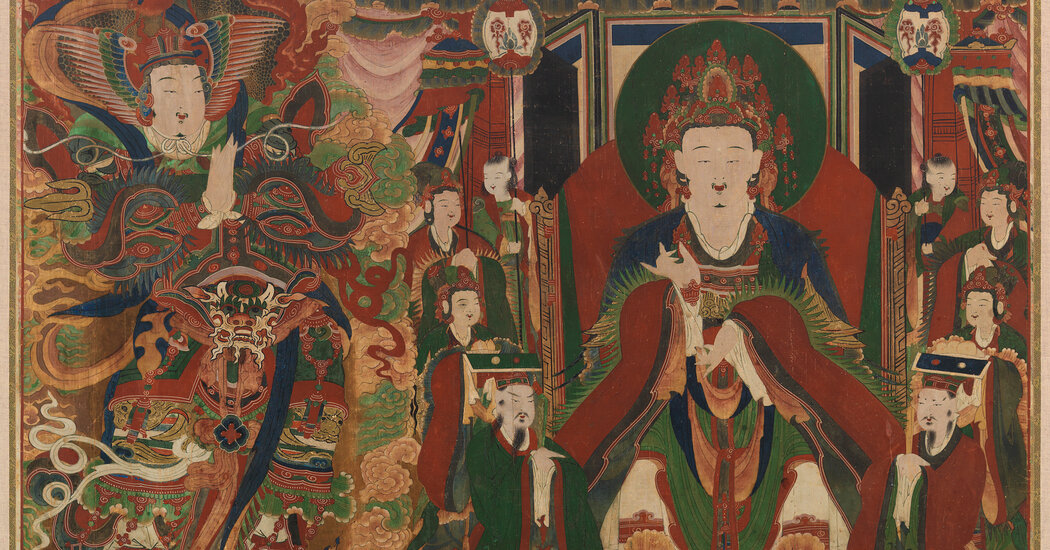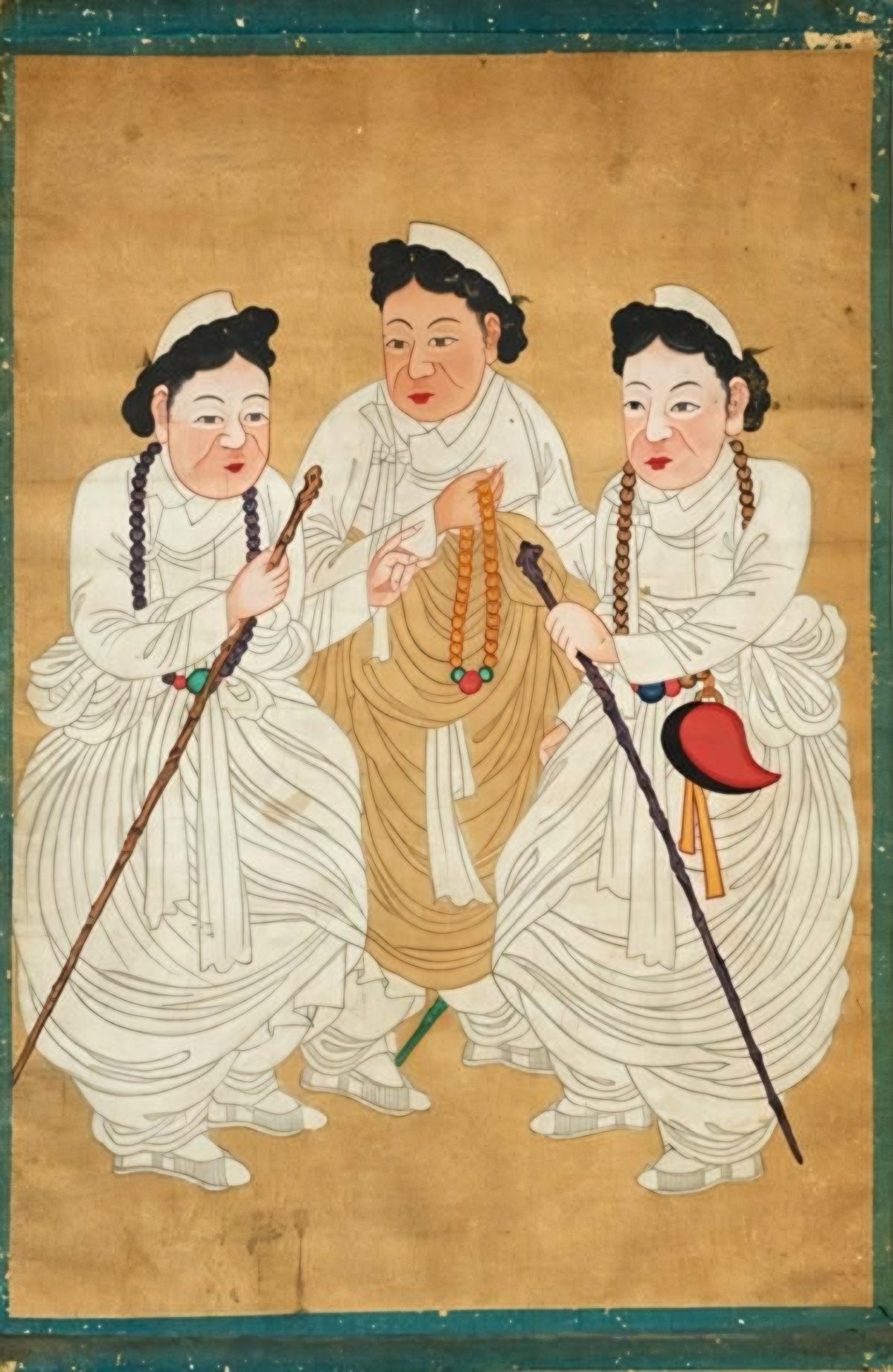
"Sambulsa Halmoni" (grandmother deity of Sambulsa), a shamanistic painting from the Geumseongdang collection of the the Eunpyeong History & Hanok Museum in Seoul / Courtesy of Korea Heritage Service
Korea has officially designated a rare set of 19th-century shamanic paintings as National Folklore Cultural Heritage, honoring a vibrant religious tradition that historically thrived on the fringes of the peninsula's rigid social hierarchies.
The collection, known as the Seoul Geumseongdang Mushindo, consists of eight hanging silk scrolls originally housed inside the Geumseongdang shrine in Seoul. The paintings depict an array of deities governing human destiny, including the blind Taoist, the goddess of smallpox and the patron spirit of musicians.
While Korea is celebrated as a high-tech powerhouse, its ancient animistic and shamanic roots remain deeply woven into the country's cultural fabric. For centuries, "mushindo", a genre of shamanic paintings, served as portals for the spirits during "the intense, ecstatic rituals performed by shamans to cure illnesses, pacify malevolent ghosts and bring good fortune.
According to the National Heritage Administration, which announced the designation Tuesday, these specific paintings hold immense historical weight because of their indisputable link to an active, registered ritual site. Most artifacts of this nature were destroyed or lost during 20th-century modernization drives, so the provenance of these paintings is exceptional.