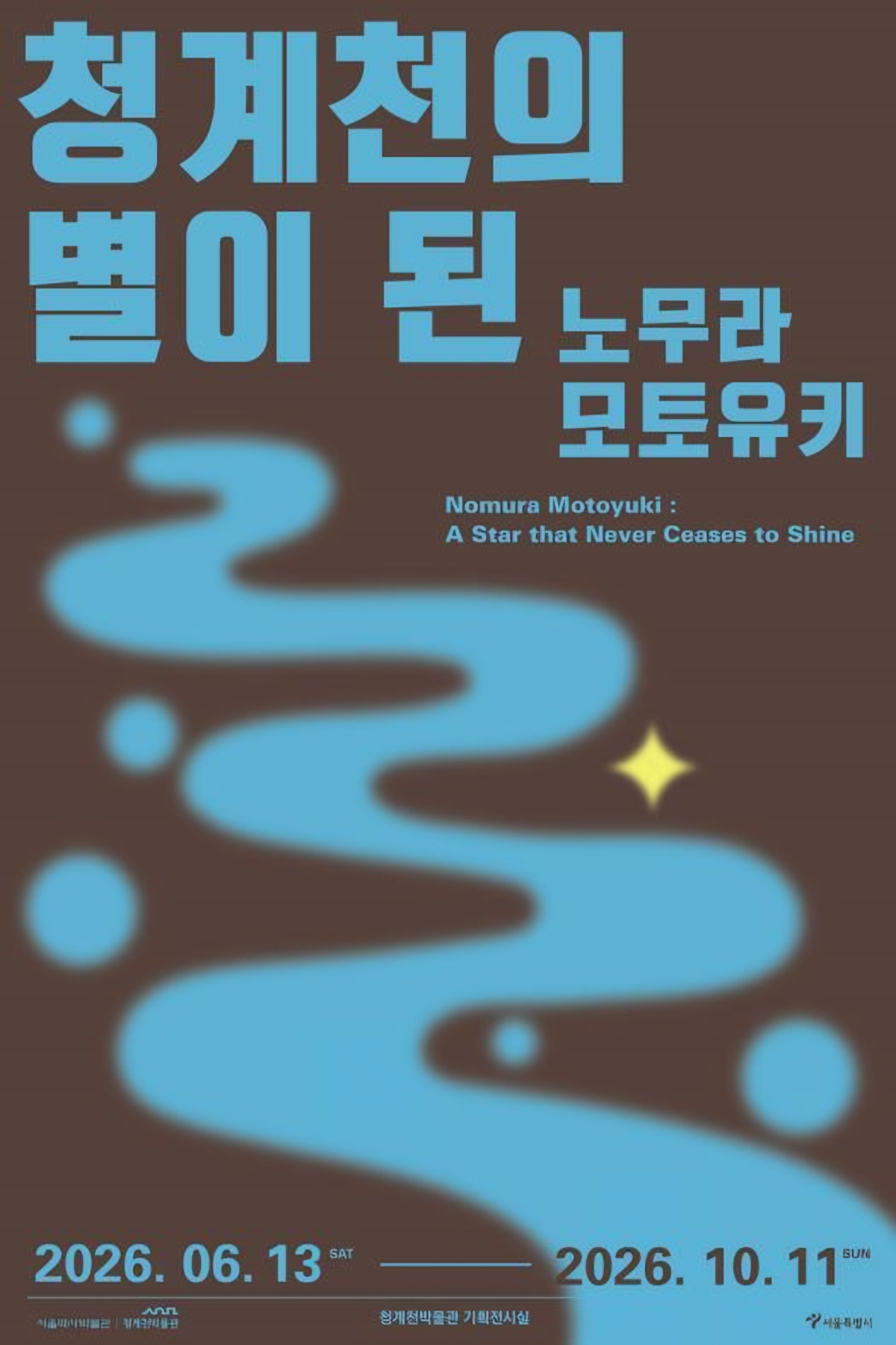
A promotional poster for an exhibition showcasing archival photographs by the late Rev. Motoyuki Nomura. Courtesy of Cheonggyecheon Museum
Long before Korea transformed into an economic juggernaut and a global cultural powerhouse, parts of its capital were defined by sprawling shantytowns where the displaced and impoverished lived on the margins of society. On Saturday, a poignant new exhibition at the Cheonggyecheon Museum will pay tribute to an unlikely guardian of that era: the Rev. Motoyuki Nomura, a Japanese pastor and social activist who dedicated decades of his life to Seoul’s poorest residents.
The special retrospective, titled "Nomura Motoyuki: The Star of Cheonggyecheon," opens June 13 to mark the first anniversary of his death at age 94. Drawing from a massive archive of roughly 3,800 photographs, diaries and scrapbooks donated by Nomura himself, the exhibition offers a rare, unflinching look at the final days of Seoul’s forgotten slums before they were erased by urban renewal.
Nomura first arrived in Korea in 1968. Driven by a deep sense of atonement for the historical injustices perpetrated during Japan's colonial rule, he returned to the country more than 50 times between 1973 and 1985 to conduct relief work along Cheonggye Stream.