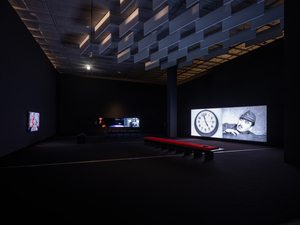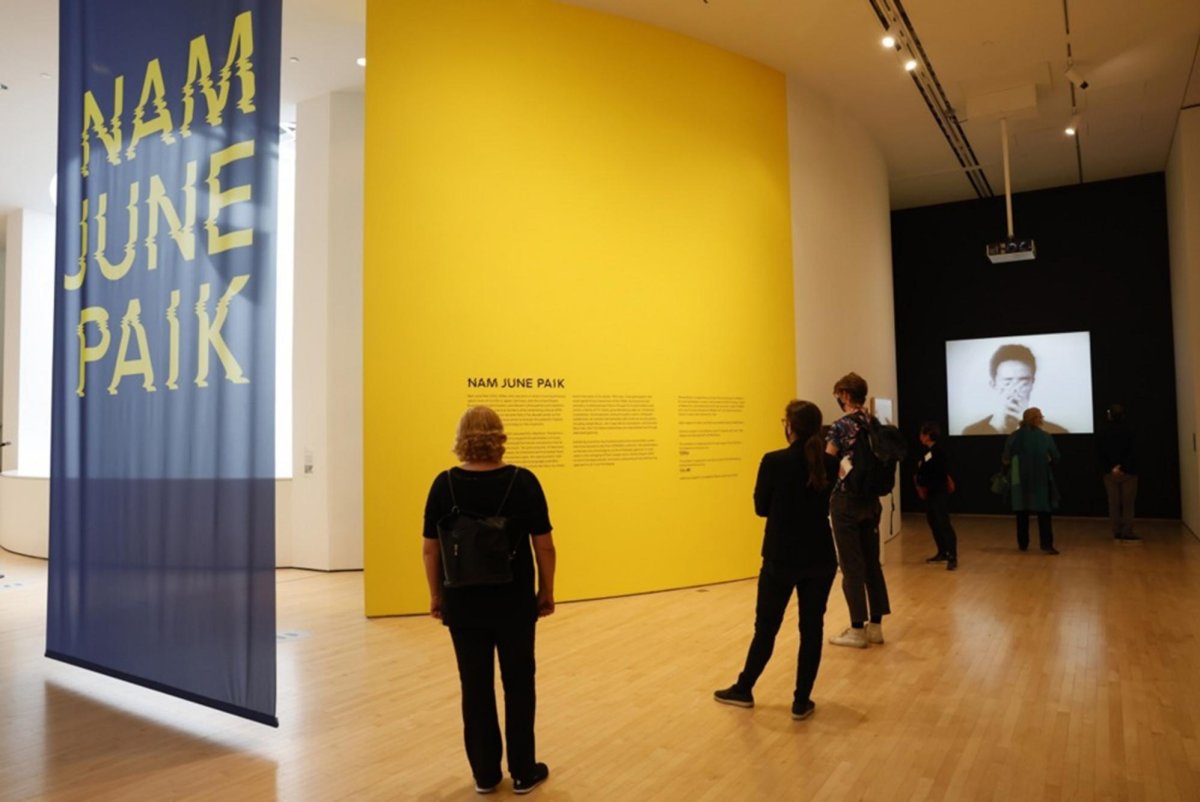
The San Francisco Museum of Modern Art (SFMOMA) presents the work of the late Nam June Paik, Korean American artist, who is considered to be the founder of video art, during a press preview of his first-ever retrospective exhibition in San Francisco, California. Photo by JOHN G. MABANGLO / EPA
June 12 (Asia Today) -- Nam June Paik connected Seoul, Tokyo and New York by satellite in 1986.
His project, "Bye Bye Kipling," brought Korean traditional dance, American popular music and Japanese avant-garde art together on one screen in real time. The work directly challenged British writer Rudyard Kipling's famous line that East and West could never meet, presenting instead the possibility of communication across borders and cultures.
That history of encounter and exchange is at the center of "Road movie: Art between Korea and Japan since 1945," now on view at the National Museum of Modern and Contemporary Art, Korea, in Gwacheon. The exhibition marks the 60th anniversary of normalized diplomatic relations between South Korea and Japan and traces 80 years of artistic exchange since Korea's liberation in 1945.
The exhibition features about 200 works by 43 artists and artist teams from both countries. It was jointly organized by the Korean museum and the Yokohama Museum of Art. The show first opened in Yokohama late last year and drew about 37,000 visitors before coming to South Korea.