The question used to be whether marketers should use AI. Now, that debate is over. The resulting tension is harder: On the one hand, the more unified and complete your customer data is, connected across touchpoints, channels and interactions, the more AI can deliver. But privacy and governance requirements raise the stakes: More data access requires tighter controls, clearer accountability and greater trust in how that data is used. Marketers today are grappling with competing priorities: Do we get value out of as much data as possible while still adhering to privacy needs? And how can we govern AI well enough to trust it at scale, and still move fast?
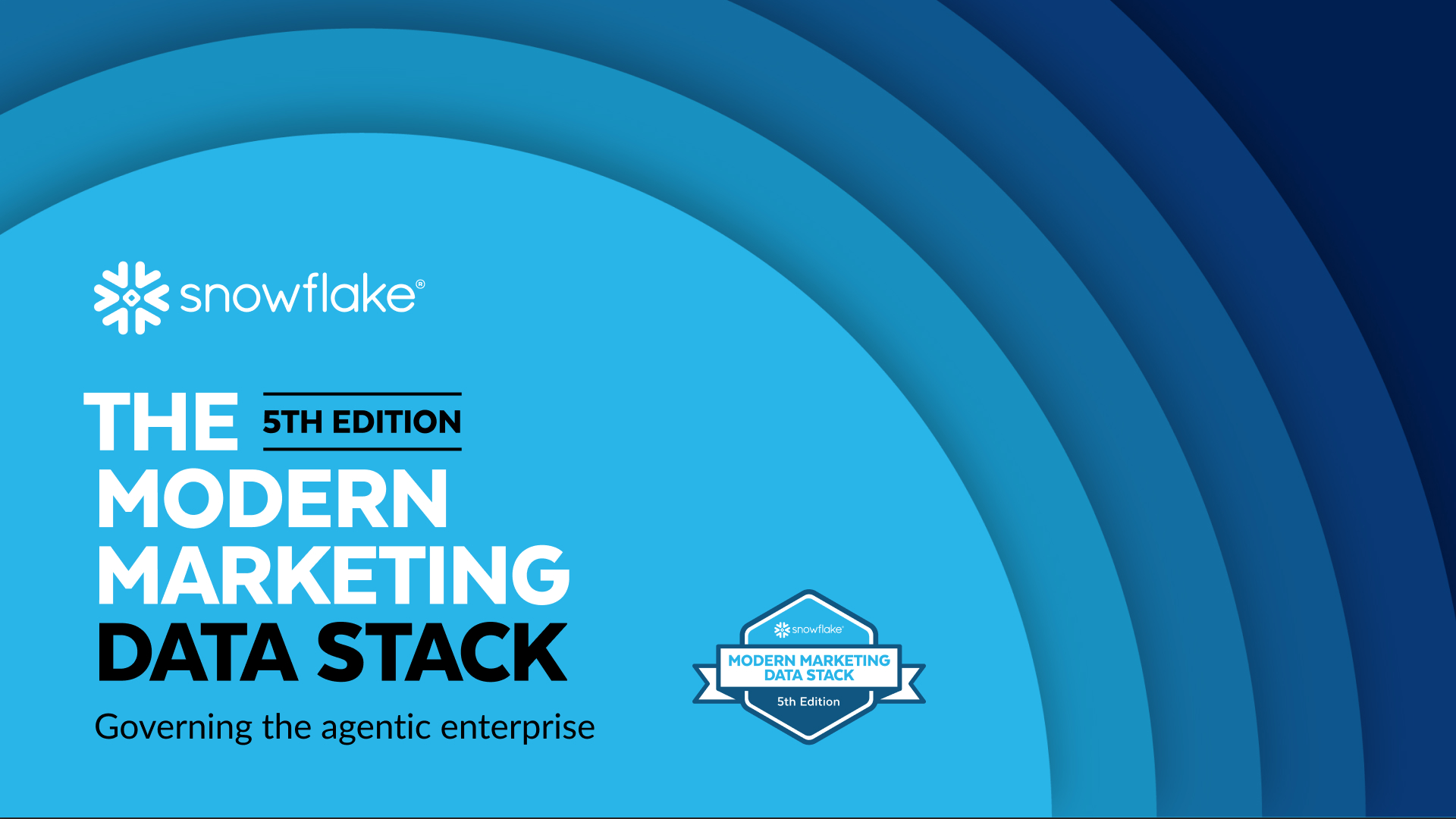
This week at Cannes Lions, we're launching the fifth edition of The Modern Marketing Data Stack report: Governing the Agentic Enterprise. I can see the arc of these reports and the marketing stack clearly. We started by asking whether organizations could unify their customer data. We moved on to asking whether AI could help them use it better. Now we’re diving into the tools and architectures that help you let AI agents act on your data while maintaining control and supporting compliance.
That is the defining challenge of the agentic era. As Scott Brinker, chief martec analyst, puts it in this year's report: "AI didn't reshape the stack mainly by replacing tools. It reshaped it by creating a new control plane above them."